
Stadium · England · Still standing
St James’ Park
St James' Park is a football stadium in Newcastle upon Tyne, England, and the home ground of Newcastle United. The ground comprises four main stands around a rectangular pitch and has been repeatedly redeveloped to reach its modern capacity and form.
First raised
1892
Its prime
2000
Today
Still standing
As it stood in 2000
What St James’ Park looked like in its prime.
Large rectangular bowl stadium with an emerald striped playing pitch at its centre, surrounded by four distinct stands of differing heights that produce a lop-sided silhouette. White-painted steel roof trusses and cantilevered roofs dominate the skyline, with filled-in corner seating creating continuous tiers. External facades show vertical white columns, glass and concrete entry levels; the ground sits tight within an urban block beside terraced housing and a tree-lined park.
Its story
The story of St James’ Park.
Grazing Land at the Gallowgate, 1880-1905
The site was sloping grazing land bordered by Georgian Leazes Terrace and near the Town Moor, owned by the Freemen of the city, with the council as landlord - factors that later affected the ground's development. The city gallows, last used in 1844, stood nearby and gave the Gallowgate End its name.
Newcastle Rangers were the first football team to play here, in 1880. Newcastle West End took the ground on in 1886, were wound up in 1892 and effectively merged into their rivals Newcastle East End, who took over the lease and became Newcastle United later that year; East End played their first game on the ground on 3 September 1892. Residents opposed football here from those first Football League seasons. A redeveloped Gallowgate and further stands in 1899 brought the first official capacity to 30,000, all standing, and in 1905 capacity was doubled to 60,000, with a main stand on Barrack Road that is now the Milburn Stand.
Leitch's Lost Stand to the Milburn, 1920-1987
Plans drawn up between 1920 and 1930 by the football architect Archibald Leitch for a double-tiered stand foundered in planning disputes; all that was achieved was a small roof over the Leazes Terrace side. The club record attendance, 68,386 against Chelsea, was set in 1930, when standing was still allowed on the terraces. Floodlights were first used on 25 February 1953, against Celtic. Planning difficulties continued into the 1960s, and lack of development was cited as the reason Newcastle failed to secure a 1966 World Cup group stage.
Plans to move to Gosforth, or to share a new stadium with Sunderland on Wearside, were withdrawn in 1971 after agreement to redevelop St James' Park, mediated by the then Minister for Sport, Denis Howell. Work on the East Stand began in 1972, fifty years after development was last permitted. The Leazes End was demolished in 1978, but relegation and financial difficulties left it unbuilt. Investigations after the 1985 Bradford City stadium fire identified a need to replace the ageing West Stand; it was demolished in 1986 and its replacement, named for Jackie Milburn, opened in 1987.
Sir John Hall, Leazes Park and the Second Tier, 1992-2000
In January 1992 Sir John Hall, who had led the Magpie Group consortium in a hostile takeover of the club, became chairman and invested heavily in the ground with money earned by success under the manager Kevin Keegan. The Leazes End was rebuilt at last, opening as the Sir John Hall Stand for Newcastle's first Premiership season in 1993; with the four corners filled in with seating, capacity reached 36,610 by 1995.
In 1995 the club submitted plans for a £65m, 55,000-seat stadium in Leazes Park, less than two pitch lengths north of the old ground. The park was historically part of the Town Moor, owned by the Freemen and protected by the Newcastle-upon-Tyne Town Moor Act 1988, and the pressure group No Business on the Moor gathered a petition of 36,000 signatures. Once it was clear the move needed a potentially long public enquiry, the club expanded St James' Park instead: permission for a second tier over the Milburn Stand, Leazes End and adjoining corner came in July 1998, and the £42m work was finished in July 2000, taking capacity to about 52,143. It also prompted the Save Our Seats campaign, after 4,000 season-ticket holders were told their seats would be repriced at corporate rates; two High Court cases followed.
Euro 96, Bobby Robson and the Rugby World Cup, 1996-2015
St James' Park staged three matches at Euro 1996 and hosted football at the 2012 Olympics. Sir Bobby Robson, a lifetime Newcastle fan who managed the club from 1999 to 2004, died of cancer aged 76 on 31 July 2009, five days after watching a charity match at the ground played in his honour and in aid of his cancer foundation; fans left floral tributes, shirts and scarves in the Leazes End for the following ten days. In 2015 the ground took over the Super League Magic Weekend on 30 and 31 May and hosted three Rugby World Cup pool matches, the last of them Scotland's 36-33 win over Samoa in front of 51,982.
Sports Direct Arena and the Name Restored, 2011-2028
On 10 November 2011 the club announced that the ground would be renamed the Sports Direct Arena, the St James' Park title dropped as not "commercially attractive". On 9 October 2012 the payday loan company Wonga.com became the club's main sponsor, bought the naming rights and restored the St James' Park name. After the Saudi-led takeover the Sports Direct branding was taken down. The ground is owned by Newcastle City Council, operated by Newcastle United, seats 52,350 - the ninth-largest club football stadium in England - and is to host matches at UEFA Euro 2028.
Step inside
8 places to explore in 2000.
The record describes 8 distinct spots at St James’ Park, including 6 interiors: pitch: halfway line view, milburn stand: seating tiers and sightlines, leazes end: upper tiers and roofline and more. Create your own photoreal reconstruction and explore every one, more scenes means more photos, more angles and more of the immersive experience.
Build Your Own Castle
Recreate St James’ Park with AI to explore it.
Rebuilds stop at 1945, so the artist raises this site as it stood in 1927, not today's building, as a photoreal reconstruction that belongs to you alone. Pay with coins, no subscription needed.
Recreate Stadium to Explore →Nearby
Castles within reach of St James’ Park.
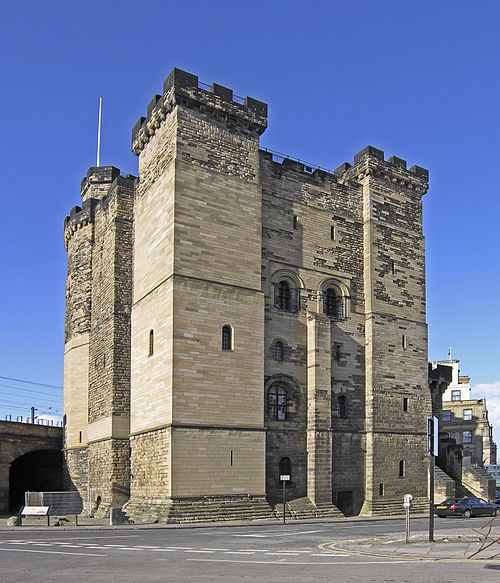


Landmarks within reach of St James’ Park.


More landmarks of England


Explore the city


