Historic Cities · England
Newcastle upon Tyne through the ages
Newcastle upon Tyne, or simply Newcastle, is a city and metropolitan borough in Tyne and Wear, England. It is England's northernmost city, located on the River Tyne's northern bank opposite Gateshead to the south. It is the most populous settlement in the Tyneside conurbation and North East England. The metropolitan borough had an estimated population of 320,605 in 2024.

Newcastle upon Tyne in 1400
Medieval Newcastle
Newcastle in 1400 is a walled riverside borough centred on its royal castle and the great church of St Nicholas, a busy entrepôt for coal, wool and Baltic trade. This walk follows the river and the steep chares up to the castle and town walls, passing friaries, markets and the bridge piled with houses and a chapel.
Stone keeps, stout town walls and timber-framed houses crowd a narrow ridge above the River Tyne. Roofs are mostly slate and thatch, shopfronts and jetties lean over the river, and smoky hearths tint the air. The medieval bridge carries lanes of houses and a small chapel; keels and oared barges cluster at the quays with coal and timber for export.
The route: 23 streets, squares and views
Gateshead Shore → Tyne Bridge → The Quayside → Sandhill → Bridgefoot → Lort Burn Mouth → Bridge Gate → The Close → St Nicholas Exterior → High Chare → …
Step inside, 13 interiors
Bridge Chapel · Quay Warehouse · Keelmen's Alehouse · Merchant's Hall · Lantern Chamber · Chare Tavern · Black Gate Guardroom · Castle Great Hall · Keep Chapel · Weigh House · Blackfriars Refectory · Cloister Garth · Whitefriars Scriptorium
Planned from the Wikipedia record: History of Newcastle upon Tyne.
Newcastle upon Tyne in 1860
Grainger's Newcastle
Newcastle in 1860 is a mid‑Victorian commercial boom built in stone: Grainger and Dobson's classical streets curve above a working river whose quays carry coal by the cart and the keeling collier. The walk visits the new iron High Level Bridge and Central Station, Grey Street and its theatre, the vaulted Grainger Market and the busy coal staiths along the Tyne.
The city reads as pale ashlar and carved stone: four‑storey classical terraces with domes, vertical dormers and small turrets, long rows of slate roofs and chimneys, a sweeping curve of Grey Street dropping to the river. Across the Tyne the iron ribs of the double‑deck High Level Bridge and the glass curved shed of the Central Station break the skyline, while quayside staiths, barges and steamers crowd the river.
The route: 22 streets, squares and views
Gateshead Quayside → Newcastle Staiths → High Level Bridge → Central Station Forecourt → Neville Street → Pilgrim Street → Grey's Monument → Grey Street → Theatre Royal → Grainger Market → …
Step inside, 13 interiors
Quayside Warehouse Loft · Coal Factor's Counting House · Curving Train Shed Concourse · Booking and Parcel Office · Stone Banking Hall · Grand Horseshoe Auditorium · Vegetable Market Hall · Eastern Meat Aisles · Union Club Smoking Room · Literary and Philosophical Library · Central Arcade Vaulted Passage · St Nicholas Nave · Castle Keep Great Hall
Planned from the Wikipedia record: Grainger Town.
Its story
The story of Newcastle upon Tyne.
Pons Aelius and Monkchester, AD 122-875
The place began as a crossing. In AD 122 the Romans built the first bridge over the Tyne here and named it Pons Aelius, the Bridge of Aelius, after the family name of the emperor Hadrian, whose wall ran across northern England through what is now the city. A stone-walled fort followed in 150, on the rocky outcrop above the crossing where the Castle Keep now stands. Pons Aelius was not among the more important northern stations, and is last mentioned in 400, in a Roman list of military outposts.
No evidence of an Anglo-Saxon settlement on or near the site survives, and at some unknown date it came to be called Monkchester, for reasons no one has explained: no monastery there is recorded, and Bede, writing at Jarrow, never mentions it. In 875 an army under Halfdan Ragnarsson, the Danish conqueror of York, pillaged monasteries in the area, and Monkchester is thought to have been sacked with them.
The New Castle and England's Northern Fortress, 1080-1400
Northumbria resisted the Normans hard, and in 1080, after the bishop of Durham was murdered at Gateshead, Odo of Bayeux devastated the country between the Tees and the Tweed in the Harrying of the North, destruction held to have kept the region poor at least until Tudor times. That same year William sent his eldest son, Robert Curthose, north against the Scots, and on his return Curthose began building a 'New Castle' at Monkchester, a wooden tower on an earthen mound within a stockade. It gave the town its name. When Robert de Mowbray, Earl of Northumbria, rose against William Rufus in 1095, an army was sent to retake the castle; from then on it was crown property, the earldom was abolished and a Sheriff of Northumberland administered the region. Henry II replaced the timber castle with a stone keep between 1172 and 1177.
Through the Middle Ages Newcastle was England's northern fortress and the assembly point for armies going into Scotland, and the border war ran intermittently for centuries. During the civil war between Stephen and Matilda, David I of Scotland and his son were granted Cumbria and Northumberland, so that from 1139 to 1157 the town was effectively in Scottish hands. The Scottish king William the Lion was imprisoned here in 1174 after his capture at Alnwick, Edward I brought the Stone of Scone and William Wallace south through the town, and it was successfully defended against the Scots three times during the fourteenth century.
Trade grew under that protection. Stone-faced jetties began pushing into the river around 1200, and by 1275 Newcastle was the sixth largest wool exporting port in England, much of it trading to the Baltic and Germany. The earliest known charter dates from 1175; in 1216 King John granted the town a mayor and twelve guilds. Coal was being exported by 1250, and by 1350 the burgesses held a royal licence to export it, a privilege they guarded jealously, trying to stop anyone else on the Tyne shipping coal or selling fish except through Newcastle, which brought them into conflict with Gateshead and South Shields. A Wall Tax granted in 1265 paid for a wall against Scottish invasion, finished early in the fourteenth century. In 1400 Henry IV made the town a county of itself, separate from Northumberland.
The Hostmen's Coal Monopoly, 1530-1625
From 1530 a royal act restricted all shipments of coal from Tyneside to the Newcastle Quayside, handing the trade to a cartel of burgesses called the Hostmen. The phrase 'taking coals to Newcastle' was first recorded in 1538. At the start of the sixteenth century wool exports were worth more than twice the coal, but the balance shifted fast: the Reformation opened up mines previously held by the priories of Tynemouth and Durham, and exports rose from 15,000 tons in 1500 to 35,000 in 1565 and 400,000 by 1625. Dissolving those priories also ended the long rivalry between town and church over control of trade on the Tyne.
Henry VIII's Reformation closed Newcastle's five friaries and its single nunnery, which between them held fewer than sixty inmates, and the land was sold to the corporation and to rich merchants. Around 10,000 people were living in the town by 1547, and plague struck four times in the century, killing 2,000 in 1579 and 1,700 in 1589. In 1600 Elizabeth I granted a charter creating an exclusive body of electors to choose the mayor and burgesses, and giving the Hostmen the sole right to load coal anywhere on the Tyne.
Plague, Siege and Occupation, 1636-1647
The bubonic plague outbreak of 1636 is thought to have arrived from the Netherlands aboard ships trading with the Tyne, appearing first in the lower town near the docks. The authorities boarded up houses containing infected people, locking whole families in with them, and put others in huts outside the walls to die; plague pits were dug beside the town's four churches for mass burials. The recorded death rate was 47 per cent, which may have been the most devastating loss in any British city of the period, though accounts differ on the totals: one gives 5,631 deaths out of an estimated 12,000 in the year itself, another about 7,000 out of 20,000 across the 1630s.
In 1637 Charles I tried to raise money by doubling the 'voluntary' tax on coal in return for letting the Hostmen regulate production and fix prices; London importers and East Anglian shippers boycotted Tyne coal and forced him to reverse it in 1638. In 1640, during the Second Bishops' War, a Scottish army took Newcastle and demanded £850 a day to billet its troops, trade on the Tyne stopping until they left in 1641. When the Civil War began in 1642 the King garrisoned the town, understanding what the coal trade was worth: Newcastle and King's Lynn were the only important seaports holding for the crown. Parliament blockaded the Tyne in 1644 and coal exports fell from 450,000 tons to 3,000, leaving London a hard winter without fuel.
Later in 1644 a Scottish army of 40,000 besieged the town for three months against a garrison of 1,500. When the Scottish commander threatened to bring down the steeple of St Nicholas's Church, the mayor, Sir John Marley, put Scottish prisoners in it and the steeple survived; the walls were breached by artillery and sapping and the town stormed and sacked. Charles I gave Newcastle the motto Fortiter Defendit Triumphans for the defence. The Scots then occupied Northumberland and Durham for two years, paid for out of the coal taxes, and Charles, having surrendered to them, was held prisoner in the town for some nine months.
Keelmen, Jacobites and Grainger's Streets, 1701-1882
In the Sandgate district east of the town lived the close-knit community of keelmen, who worked the keels that carried coal from the riverbanks out to the colliers bound for London; the Keelmen's Hospital was built there in 1701 with money they provided themselves. When a Jacobite army marched on Newcastle in 1715 the citizens arrested Jacobite supporters, took 700 extra recruits into the militia and shut the gates, delaying an attack until reinforcements arrived and pushing the rebels across to the west coast; in 1745 the town blocked most of its gates again and billeted 20,000 regulars on the Town Moor. Newcastle's declaring for George I in 1715, against the run of the region, is the most likely source of the nickname 'Geordie' for people of Tyneside, though another account traces it to George Stephenson's safety lamp of 1815.
Newcastle was the country's fourth largest print centre after London, Oxford and Cambridge, and the Literary and Philosophical Society, founded in 1793, predated the London Library by half a century; some of its founding members were abolitionists.
In 1834 the builder Richard Grainger won a competition to replan central Newcastle. Working with John Dobson and other architects, he laid out Grey Street, Grainger Street and Clayton Street across twelve acres, with the Central Exchange, the Grainger Market and Grey's Monument. Robert Stephenson's High Level Bridge opened in 1849, carrying rail on an upper deck and road on a lower; Queen Victoria opened it, and Dobson's Central Station a year later. On 6 October 1854 a fire on the Gateshead quayside and the explosion that followed spread across the river, destroying the homes of 800 families, killing 53 people and injuring hundreds. In 1876 the Swing Bridge, paid for by William Armstrong so that warships could reach his Elswick works, let sizeable ships pass up-river for the first time, and Newcastle was granted city status on 3 June 1882.
Glasshouses, Locomotives and Warships, 1615-1960
When restrictions were placed on burning wood to make glass in 1615, it was found that local coal would serve, and glasshouses multiplied on Tyneside. Huguenot glassmakers came over from France as refugees from persecution and set up at Skinnerburn; in 1684 the Dagnia family, Sephardic Jewish emigrants from Altare, arrived from Stourbridge and built glasshouses along the Close to make high-quality flint glass. The years from 1730 to 1785 were the high point of Newcastle glassmaking.
In 1823 George Stephenson and his son Robert established a locomotive factory near Forth Street, described as the world's first. It built engines for the Stockton and Darlington and the Liverpool and Manchester railways, made Rocket for the Rainhill Trials, and sold locomotives into Europe and America; the works went on building until 1960. It was the demand for collier brigs to carry the coal that made the Tyne a shipbuilding river, and by 1800 Tyneside was the third largest producer of ships in Britain, with Elswick to the west and Walker to the east the main yards in Newcastle itself.
William Armstrong built a large works at Elswick in 1847, first for hydraulic cranes and then for guns for the army and navy; from 1882 Elswick built ships as well as arming them. Charles Algernon Parsons, who invented the steam turbine, founded C. A. Parsons and Company at Heaton in 1889 and the Parsons Marine Steam Turbine Company at Wallsend in 1897, where he built Turbinia and ran her rings around the British fleet at that year's Spithead review; his turbines went first into warships and then into passenger ships including the Mauretania, which held the Atlantic blue riband until 1929.
After the Yards, 1928-2024
The Tyne Bridge, built by Dorman Long and opened by George V in 1928, carried a road deck 84 feet above the river, the existing crossings having been strained to their limit. During the Second World War Newcastle was largely spared what was inflicted on other British cities: the armaments works and shipyards were targeted by the Luftwaffe but largely escaped, and the bombing of 1941 fell on Manors goods yard and the suburbs of Jesmond and Heaton, killing 141 people and injuring 587. Lack of modernisation and competition from abroad brought the shipbuilding industry down after the war.
As the heavy industries went, large sections of the city centre and many areas of slum housing were demolished. T. Dan Smith, the dominant political figure of the 1960s, oversaw a building programme of high-rise estates and authorised the demolition of a quarter of Georgian Grainger Town for the Eldon Square shopping centre; his control collapsed when it emerged that he had used public contracts to benefit himself and his associates, and he and the developer John Poulson were imprisoned. Much of Grainger Town survived and was largely restored in the late 1990s. The city gained its own university in 1963 and a second in 1992.
Newcastle became a metropolitan borough of the new county of Tyne and Wear on 1 April 1974, taking in Gosforth, Newburn and several outlying parishes. The Tyne and Wear Metro opened in August 1980 and was extended to Sunderland in 2002. Trade on the quaysides had fallen away until both banks were derelict by the 1980s; a master plan carried out through the 1990s replaced closed shipping offices and empty warehouses with offices, restaurants, bars and housing, and the Gateshead Millennium Bridge was completed in 2001. The city's estimated population in 2024 was 320,605, within a Tyneside conurbation of about 880,000, and in the 2010s the council began regenerating impoverished inner-city estates, among them those along the Ouseburn Valley.
From the archive
Newcastle upon Tyne on paper: the old town as it was mapped.
A period plan or bird's-eye view of the old town, drawn between 1500 and 1850, the streets this page's reconstructions walk. Public domain, with its source named.
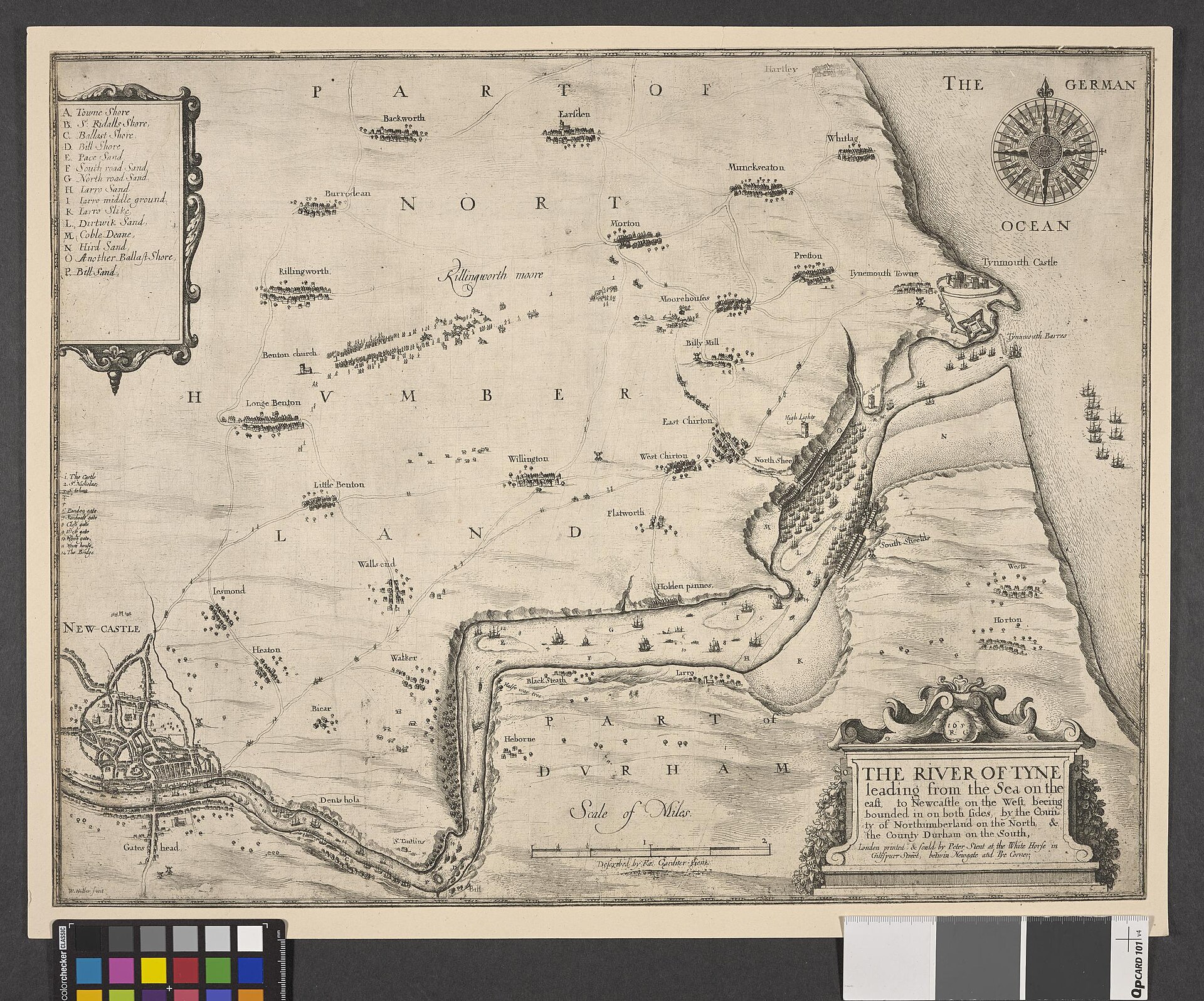
The River of Tyne leading from the Sea to Newcastle, etching by Wenceslaus Hollar
Depicts Newcastle's walled riverside town with street pattern, castle, and the River Tyne mouth with North and South Shields.
1651 · Print made by: Wenceslaus Hollar Published by: Peter Stent · Wikimedia Commons
Public domain (plate dated 1651)
In this city
Landmarks of Newcastle upon Tyne, see each in its prime


Ships tied to Newcastle upon Tyne
- HMS Nelson: Laid down at Armstrong Whitworth's Low Walker yard, Newcastle upon Tyne, in 1922
- RMS Mauretania: Built at Wallsend on the Tyne; a model stands in Newcastle's Discovery Museum
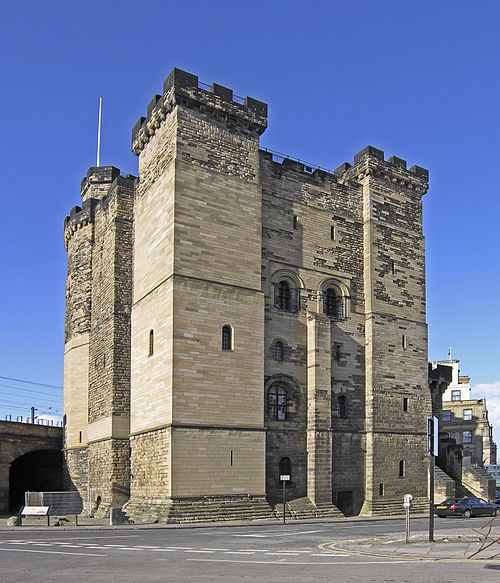
Castles of Newcastle upon Tyne


More cities to explore
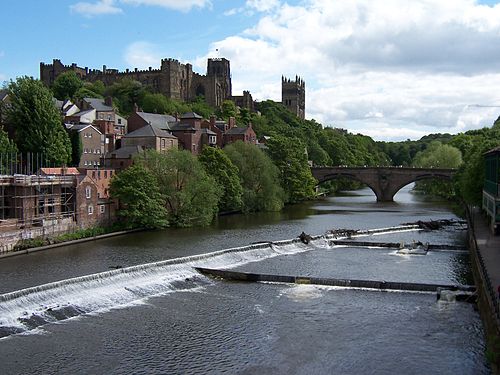 EnglandDurhamExplore it in 1400
 EnglandYorkExplore it in AD 300 · AD 950 · 1420 · 1800
 EnglandLondonExplore it in AD 200 · 1390 · 1600 · 1885
 EnglandBathExplore it in AD 100 · 1500 · 1790
Castles of Europe · Landmarks of Europe · create your own reconstruction.