Historic Cities · England
York through the ages
York is a cathedral city in North Yorkshire, England, with Roman origins, sited at the confluence of the rivers Ouse and Foss. It has many historic buildings and other structures, including the minster, castle and city walls, all of which are Grade I listed. It is the traditional county town of Yorkshire, and the administrative centre of the City of York district.

York in AD 300
Roman Eboracum
Eboracum in 300 is a large legionary fortress and the provincial capital in northern Britannia, its stone walls and interval towers enclosing a permanent garrison while a flourishing colonia spreads on the river slopes across the Ouse. The walk follows river wharves, military ramparts and the colonia's streets to view the principia façade, the Multangular Tower, temples to Mithras and Serapis, workshops and the busy riverside trade.
The skyline is a low, crenellated band of limestone walls and polygonal towers punctuated by the Multangular Tower; behind them timber-framed roofs and clay tiles slope down to the River Ouse. Street surfaces are compacted clay and beaten gravel; smoke and kiln fires rise from glass and tile workshops near Coppergate and Aldwark. Colours are pale Magnesian Limestone, sun-baked earth, dark wooden beams and the bronze glint of armour and ship fittings at the crowded wharves.
The route: 22 streets, squares and views
River Ouse Approach → South-bank Wharves → Colonia Decumanus → Coney Street Warehouses → Coppergate Quarter → Tanner Row Workshops → Aldwark Kilns → Mithraeum at Micklegate → Micklegate Gate → Roman Bridge over Ouse → …
Step inside, 12 interiors
Riverside Warehouse · Smith's Workshop · Tannery Beam House · Mithraeum Sanctuary · Praetorium Audience Hall · Principia Sacellum · Hall of Records · Contubernium Dormitory · Caldarium · Upper Watch Chamber · Granary Shed · Colonia Triclinium
Planned from the Wikipedia record: Eboracum.
York in AD 950
Viking Jorvik
A compact riverside entrepôt rebuilding itself under Scandinavian rule, where Roman fabric and wooden Viking houses sit side by side. This walk passes timber longhouses and wattle workshops, the Ouse crowded with knarrs, patched Roman walls, bustling markets and smoky interiors of smithies, amber-and-antler shops and a crowded ale-hall.
Low, close-knit roofs of thatch and timber rise behind a patched Roman curtain of stone, with narrow, muddy plank streets threading between them. Colours are raw: pale straw, dark oiled timber, smoke-grey skies and the brown sheen of the Ouse, bristling with clinker-hulled knarrs. Church towers and the Minster’s massing punctuate a generally horizontal skyline; workshops press against the river where quays and simple jetties meet boats and barges.
The route: 23 streets, squares and views
Naburn Approach → Skeldergate Landing → Ouse Bridge → King's Staith → Micklegate Bar → Micklegate → The Shambles → Stonegate → Petergate → York Minster → …
Step inside, 12 interiors
Skeldergate Boat-builder's Shed · King's Staith Warehouse · Micklegate Gate Chamber · Shambles Meat Hall · Minster's Stone Nave · Timber and Wattle Workshop · Coppergate Longhouse Hearth · Amber and Antler Bench · Stonegate Smithy Forge · Fossgate Market Stall · Walmgate Longhouse Hearth · Petergate Ale-hall
Planned from the Wikipedia record: Scandinavian York.
York in 1420
Medieval York
York in 1420 is a thriving northern cathedral city of wool merchants, guilds and river trade, its Minster rising in stone above a grid of narrow streets. This walk moves from the open floodmeadows into the gates, through markets, snickelways and guild halls, along the wharves and to the castle motte, showing craftsmen, clerics and riverside labour that shape the city's life.
Low-slung medieval roofs of timber and tile press close to narrow lanes; the Massed stone of York Minster rises above surrounding houses as a pale, ash-coloured silhouette with scaffolding and hoardings at its pinnacles. The river Ouse and the Foss slice open the plan with timber wharves and stone bridges; red-brown clay tiles, soot-darkened timbers, plastered jetties and the ochres of market stalls define a compact skyline under cool northern light.
The route: 22 streets, squares and views
Clifton Ings Approach → Bootham Bar Gate → Bootham Street → St Mary's Abbey Precinct → Minster Yard (South) → York Minster Exterior → Minster Nave → Chapter House → Stonegate → Mad Alice Lane Snickelway → …
Step inside, 13 interiors
Bootham Bar Guardroom · St Mary's Abbey Refectory · Minster Nave under Scaffolds · Chapter House Circle · Stonegate Merchant's Hall · Barley Hall Great Hall · Shambles Butcher's Shop · Merchant Adventurers' Great Hall · Fossgate Carpenter's Workshop · King's Staith Warehouse · Ouse Bridge Chapel · Castle Great Hall · Clifford's Tower Chamber
Planned from the Wikipedia record: History of York.
York in 1800
Georgian York
York in 1800 is a prosperous Georgian provincial city where the medieval Minster towers over tightly packed brick and timber houses and the sound of horses and sedan chairs fills the streets. The walk moves from the river and raceground into the city, passing coaching inns on Micklegate, the Assembly Rooms and Fairfax House, finishing at a broad riverside view beneath the Minster's silhouette.
The city shows layered ages: the stone bulk of York Minster rising above three- and four-storey brick townhouses, narrow timber-framed lanes like the Shambles, and broad Georgian facades around St Helen’s Square. Streets are cobbled or beaten earth, roofs of pantile or slate, walls of red brick and pale ashlar. Horse-drawn coaches, grooms, sedan chairs and market traders animate avenues under a cool northern light and frequent river mist from the Ouse.
The route: 22 streets, squares and views
Fulford Approach → Knavesmire (Raceground) → Micklegate Bar → Micklegate → Coaching Inns Yard → Petergate → The Shambles → Stonegate → Minster and Yard → Minster Close → …
Step inside, 13 interiors
Race Stand Pavilion · Coaching Inn Yard · Front Parlour · Apothecary Shop · Butcher's Shop Interior · Haberdasher's Front Room · Minster Choir · Chapter House · Deanery Dining Room · Egyptian Hall · Assize Courtroom · Fairfax Saloon · Riverside Warehouse
Planned from the Wikipedia record: History of York.
Its story
The story of York.
The Ninth Legion's Fortress, AD 71–400
York was founded in AD 71, when Quintus Petillius Cerialis and the Ninth Legion pushed north of the Humber against the Brigantes and built a fortress on flat ground above the Ouse, close to its junction with the Foss. Its walls were later rebuilt in stone, enclosing fifty acres garrisoned by 6,000 legionary soldiers; the headquarters building lay under what became York Minster. The earliest known mention of the place by name is a stylus tablet from Vindolanda, dated to about AD 95–104, which calls it Eburaci, a Latinisation of the Brittonic *Eburācon, which may mean 'place of yew trees', though as Eburos is also recorded as a personal name an alternative reading is 'property of Eburos'.
The Ninth Legion's garrison was replaced by the Sixth between AD 109 and 122; the Ninth leaves no documented trace after 117, and various theories have been proposed about what became of it. The Sixth stayed until Roman occupation ended around AD 400. The military presence set the town's economy: workshops supplied the troops with pottery until the mid-third century, tile from kilns around Aldwark and Peasholme Green, glass from Coppergate, and metal and leather equipment from Tanner Row. Local people built a permanent civilian settlement on the south-west bank opposite the fortress, and by 237 it had been made a colonia, one of only four in Britain, self-governing under a council of wealthy locals, merchants and veteran soldiers.
During his stay between AD 207 and 211 the emperor Septimius Severus proclaimed the town capital of the province of Britannia Inferior, and it was probably he who granted it the privileges of a colonia. Constantius I died in York in AD 306 and his son Constantine the Great was proclaimed emperor by the troops in the fortress. A Christian community existed, though it is not known when it formed and there is virtually no archaeological trace of it; the first evidence is the attendance of Bishop Eborius of Eboracum at the Council of Arles in 314. By AD 400 winter floods came off the Ouse and Foss, the wharf-side facilities lay buried under silt, and the main bridge to the fortress may have fallen derelict. The colonia stood above flood level but was largely abandoned.
Eoforwic and Jórvík, 500–954
Angles settled the area in the early sixth century (cremation cemeteries of that date have been excavated on The Mount and at Heworth), though whether York itself was occupied then remains unclear. It became the Anglian capital of Deira and, after Deira united with Bernicia, one of the capitals of Northumbria. Reclamation of the flooded ground began in the seventh century under Edwin of Northumbria, who was baptised in 627 in the wooden church Paulinus set up here, the precursor of the Minster; Edwin ordered it rebuilt in stone but was killed in 633, leaving Oswald to finish the work. The see became an archbishopric in 735. York grew into a centre of learning around its library and school, the ancestor of St Peter's School, whose most distinguished pupil and later master was Alcuin, afterwards adviser to Charlemagne. By the eighth century it traded with other parts of England, northern France, the Low Countries and the Rhineland.
In November 866 a large Danish army, the force the Anglo-Saxons called the Great Heathen Army and led by Ivar the Boneless and Halfdan, took York unopposed while Northumbria was consumed by its own conflicts. The assault fell on All Saints' Day, when most of the town's leaders were in the cathedral. The Northumbrians tried and failed to retake the city the next year; the army withdrew, leaving a puppet king over the territory it held, and returned in 875 when Halfdan took control directly.
Under Viking rule the renamed Jórvík became the capital of Scandinavian territory in Britain and a river port on trading routes across northern Europe, with Danes settling in large numbers. At its peak it held more than 10,000 inhabitants, a population second only to London within Great Britain. Coin was struck at the Jórvík mint, and excavation around Coppergate has found workshops for textiles, metalwork, carving, glasswork and jewellery-making, alongside materials brought from as far as the Persian Gulf. In 954 the last Viking king, Eric Bloodaxe, was driven out by King Eadred and the kingdom was absorbed into the consolidating Anglo-Saxon state.
The Harrying of the North and the Massacre of 1190
The people of York rebelled in 1068, two years after the Norman conquest, and succeeded until William the Conqueror arrived and put the rising down. He raised a wooden fortress on a motte at once, and after a further rebellion in 1069 built a second timber castle across the Ouse. Both were destroyed that year and rebuilt in the course of the harrying of the north, William's punitive campaign that laid waste the country from York to Durham. The first stone minster was badly damaged by fire during the uprising, and around 1080 Archbishop Thomas began, on a new site, the cathedral that became the present Minster. The city recovered as the administrative centre of Yorkshire, the seat of an archbishop and, at times in the later thirteenth and fourteenth centuries, an alternative seat of royal government.
As a possession of the crown it also came to house a substantial Jewish community, under the protection of the sheriff. On 16 March 1190 a mob of townsfolk forced the Jews of York to take refuge in the castle keep, on the site later occupied by Clifford's Tower. The castle was set on fire and the Jews were massacred. Accounts of the toll differ: at least 150 people were killed, and some authorities put the number as high as 500. Local magnates who were in debt to the Jews are likely to have instigated the killings or at least done nothing to prevent them; the massacre came during a period of widespread attacks on Jews in Britain. The community did recover afterwards, and a Jewish presence remained in York until the expulsion of the Jews from England in 1290.
Wool, Wine and the Mystery Plays, 1212–1500
Its position on the Ouse and its nearness to the Great North Road made York a major trading centre. King John granted the city its first charter in 1212, confirming trading rights in England and Europe. Through the later Middle Ages its merchants imported wine from France, cloth, wax, canvas and oats from the Low Countries and timber and furs from the Baltic, and exported grain to Gascony and grain and wool to the Low Countries. The city became a cloth-manufacturing centre in its own right, and Edward I stimulated its economy by using it as a base for his war in Scotland. There was significant unrest here during the Peasants' Revolt of 1381. York steadily won autonomy from central government, including privileges granted by a charter of Richard II in 1396, and was designated a county corporate, giving it effective county status.
The later fourteenth and earlier fifteenth centuries were a period of particular prosperity. It was then that the York Mystery Plays grew up, a cycle of religious pageants attached to Corpus Christi and performed by the craft guilds. Among the leading figures of the period was the merchant Nicholas Blackburn senior, Lord Mayor in 1412, shown with his wife Margaret in glass at All Saints', North Street. From the later fifteenth century the economy appears to have contracted and York's regional importance to have dwindled; the new Guildhall built around the middle of that century can be read as an attempt to project civic confidence against growing uncertainty.
Dissolution, Recusancy and the Siege of 1644
York declined economically under the Tudors. The dissolution of the monasteries closed every monastic institution in the city, including St Leonard's Hospital (the largest such institution in the north of England), and, in 1539, St Mary's Abbey. It helped provoke the Pilgrimage of Grace, a rising of northern Catholics in Yorkshire and Lincolnshire against religious reform, after which Henry VIII reasserted his authority by establishing the Council of the North in the dissolved abbey; from 1537 to 1641 it sat in the King's Manor. In 1547 fifteen parish churches were closed, cutting the number from forty to twenty-five, a measure of the fall in population. Although the Reformation made Roman Catholicism illegal, a largely secret Catholic community persisted. Margaret Clitherow was executed in 1586 for harbouring a priest. Guy Fawkes, baptised in the rebuilt church of St Michael le Belfrey in 1570, was born and educated in York and joined the group that planned to blow up Parliament in 1605.
After his break with Parliament, Charles I moved his court to York in 1642 and held it there for six months. The city was treated as a Royalist stronghold, and in 1644 the Parliamentarians besieged it; many medieval houses outside the walls were lost. The barbican at Walmgate Bar was undermined and explosives laid, but the plot was found out. Prince Rupert arrived with 15,000 men and lifted the siege, pursued the retreating Parliamentarians some six miles, and was then turned on and heavily defeated at Marston Moor, losing 4,000 men killed and 1,500 captured. The siege was resumed and the city surrendered to Fairfax on 15 July. York slowly regained its standing in the north, and by 1660 was the third-largest city in England after London and Norwich. The Bar Convent was founded in 1686, in secret because of the anti-Catholic laws.
Genteel Decline, Hudson's Railway and the Cocoa Works, 1660–2006
With the monarchy restored in 1660 and the garrison removed in 1688, the city was dominated by its gentry and merchants. Competition from Leeds and Hull, together with the silting of the Ouse, cost York its pre-eminence as a trading centre, while its role as the social and cultural capital for wealthy northerners grew: the Mansion House, Fairfax House, the Assembly Rooms, the Theatre Royal and the racecourse all date from this time. In 1796 the Quaker William Tuke founded The Retreat outside the walls, a hospital for the mentally ill run on moral treatment.
George Hudson brought the railway to York in 1839, and his promotion of the city over Leeds, and of his own York and North Midland Railway, established it as a major railway centre by the late nineteenth century, though his own career ended in disgrace and bankruptcy. Engineering followed: by the turn of the twentieth century the North Eastern Railway's headquarters and works employed more than 5,500 people, and the York Carriage Works had employed 5,500 at its height in the 1880s. The railway also carried the growth of Rowntree's Cocoa Works, founded in 1862 by Henry Isaac Rowntree and joined in 1869 by his brother Joseph; Terry's was the other large confectioner. By 1900 railways and confectionery were the city's two major industries. Both went. The Carriage Works closed in the mid-1990s and its site was redeveloped as offices; Terry's factory closed on 30 September 2005 when Kraft Foods moved production to Poland; and on 20 September 2006 Nestlé announced 645 job cuts at Rowntree's.
The Baedeker Blitz and the Tourist City, 1942–2021
On 29 April 1942 York was bombed by the Luftwaffe as part of the retaliatory Baedeker Blitz. Ninety-two people were killed and hundreds injured. The buildings damaged included the railway station, Rowntree's factory, St Martin-le-Grand Church, the Bar Convent and the Guildhall, which was gutted and left unrestored until 1960.
As tourism grew, the historic core became one of the city's principal assets and was designated a conservation area in 1968. The University of York took its first students in 1963; the National Railway Museum opened in 1975 and the Jorvik Viking Centre in 1984. In October and November 2000 the Ouse rose and the city flooded severely, more than 300 houses affected. York holds 34 conservation areas, 2,084 listed buildings and 22 scheduled ancient monuments, and sits on the tentative list for World Heritage inscription. It is the traditional county town of Yorkshire and the administrative centre of the City of York district; at the 2021 census the built-up area had 141,685 people and the wider city about 202,800.
From the archive
York on paper: the old town as it was mapped.
A period plan or bird's-eye view of the old town, drawn between 1500 and 1850, the streets this page's reconstructions walk. Public domain, with its source named.
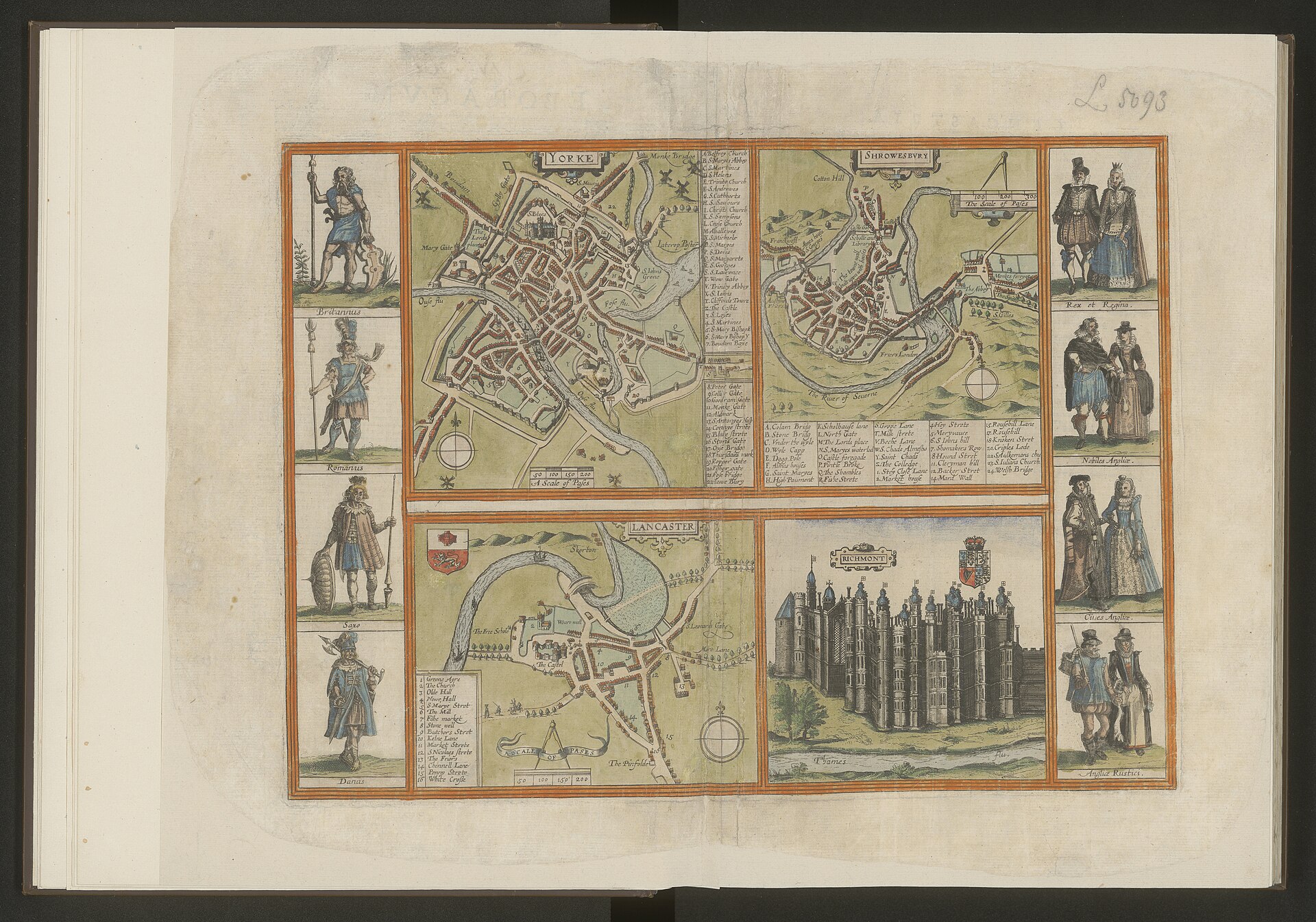
Bird's-eye view of York, from Georg Braun & Frans Hogenberg's Civitates Orbis Terrarum
Shows York's medieval street plan with city walls and gates, the River Ouse and prominent church spires including York Minster.
1618 · Georg Braun · Wikimedia Commons
Public domain (plate dated 1618)
In this city
Landmarks of York, see each in its prime
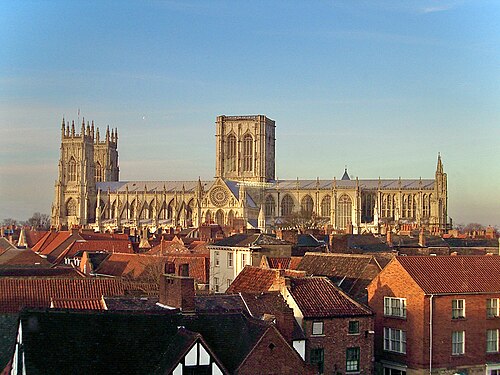


Castles of York


More cities to explore
 EnglandLincolnExplore it in 1320
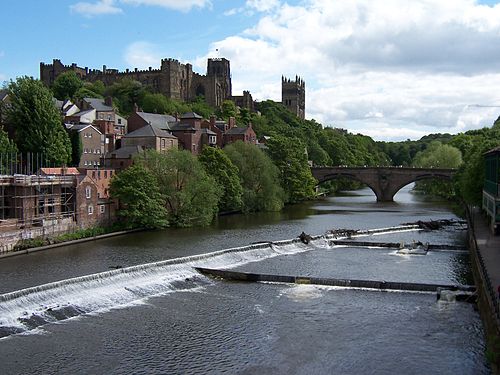 EnglandDurhamExplore it in 1400
 EnglandLondonExplore it in AD 200 · 1390 · 1600 · 1885
 EnglandBathExplore it in AD 100 · 1500 · 1790
Castles of Europe · Landmarks of Europe · create your own reconstruction.