
France · Demolished
Château de Choisy
Château de Choisy-le-Roi
The Château de Choisy was a royal residence on the Seine at Choisy-le-Roi near Paris, built and altered for members of the royal family in the 17th–18th centuries. Enlarged by Ange-Jacques Gabriel under Louis XV, it included a Petit Château, a theatre, orangerie and extensive parterres facing the river. The main buildings were demolished in the nineteenth century; only ancillary pavilions and fragments of service wings remain on the site today.
First raised
1678
Its prime
1752
Today
Demolished
As it stood in 1752
What Château de Choisy looked like in its prime.
A long, symmetrical rectangular corps de logis two storeys high with a mansard attic roof pierced by regular dormer windows; a central three-bay projection with a classical pediment bearing sculptural reliefs; rows of tall, evenly spaced windows and pilaster-like vertical divisions across the façade. In front, a broad terrace and formal parterres step down to a ha-ha and the Seine; two small flanking pavilions mark the edges of the former cour d'honneur. No towers or crenellations.
Its story
The story of Château de Choisy.
La Grande Mademoiselle Builds on the Seine, 1678-1693
Choisy was the property of Louis XIV's first cousin Anne Marie Louise d'Orléans, Duchess of Montpensier, La Grande Mademoiselle, who laid out 40,000 livres for a maison de plaisance on the bank of the Seine. She swept away the existing corps de logis, by her own account in her Mémoires, and had a new house built between 1678 and 1686 to plans by Jacques Gabriel. 'Who made my house to my fashion,' she noted of him, 'without any ornament or architecture', an assertion that overlooked the sculptural enrichments Étienne Le Hongre carved in the pediment. Charles de la Fosse decorated the interiors between 1682 and 1686; the gallery ceiling was to have been painted by La Fosse, her favourite painter, but the project came to nothing and the ceiling was left white.
André Le Nôtre was consulted on the gardens. Called in before the few existing buildings were cleared away, he found the site shut in by dense woodland: 'There one only saw the riverbank as if through a dormer window,' he told the king, who passed the remark on, and he advised beginning in this 'vilaine situation' by laying low all the woods that were there. The princess did not follow his instructions and kept what little cover she had. It was the river she wanted. 'As I had my house built in order to go there in summer,' she wrote, 'I took measures in order that one might see the river in the time of year when it is at its lowest; from my bed I see it and all the boats that pass.' The lost château is known today through engravings by Pierre-Jean Mariette, Gabriel Perelle and Pierre Aveline, and its interiors through her Mémoires.
From the Grand Dauphin to the Princesse de Conti, 1693-1739
At her death in 1693 Choisy went to Monseigneur, the Grand Dauphin, Louis de France (1661-1711), who had some interior modifications executed. In 1695 he exchanged it for Meudon with Anne de Souvré, widow of Louvois, the king preferring that his son should not be far from Versailles. Anne de Souvré held Choisy from 1695 to 1715, and the Le Tellier family made it their family château after having to give up Meudon and then Chaville.
In 1716 it was sold to Marie Anne de Bourbon (1666-1739), dowager princesse de Conti, the legitimised daughter of Louis XIV and Louise de La Vallière, who extended the house with a long wing onto the garden. Peter the Great, curious about the splendours of France, passed through in her time. After her death in 1739 her heir, the duc de La Vallière, sold Choisy with its furniture in the same year to Louis XV, who bought the manor and its château in October 1739 and gave the commune its present name of Choisy-le-Roi.
Louis XV's Family House, 1739-1774
The king's original motivation for buying Choisy was the hunting in the neighbouring forest of Sénart, which stayed good in spite of the loss of the immediately surrounding woods in favour of parterres with the Seine as backdrop and bosquets punctuated by statuary. He enlarged the château from 1740 under Ange-Jacques Gabriel, premier architecte du Roi, who was carrying on his father's work on the house, and was able to use it by 1741. The central block was doubled in depth in the modern way, a theatre was added and the stables greatly enlarged; Mlle de Montpensier's belle orangerie was rebuilt, and Edmé Bouchardon's Love shaping his bow from the club of Hercules was installed in its central salon in 1752. A bathing pavilion followed, and in 1754 Gabriel raised the Petit Château, the king's own house and an intimate refuge for him and Madame de Pompadour, which held the celebrated table volante that rose from the basement ready laid.
Louis XV always regarded Choisy as his family house, as against the official residences of Versailles, Fontainebleau and Compiègne. Madame de Pompadour stayed there frequently from 1746 and had an apartment on the first floor above the king's. The furnishings were intentionally kept simple: the writing table delivered by the royal ébéniste Antoine Gaudreau in 1744 is no grander, its gilt-bronze mounts aside, than those of many a contemporary aristocrat, and in 1765 Chardin supplied emblematic still lives free of rhetoric or pomp as overdoors. Lambert Sigisbert Adam fared less well. On his own initiative he placed his marble bust of Louis XV as Apollo in the Galerie, which Charles Parrocel was to decorate with a series of Conquests of Louis XV, a project that came to nothing, and he asked 7,000 louis for the bust; the king's reaction in September 1762 was that he did not want to see it at Choisy on his next visit and that Adam should pack it up and remove it.
The surrounding parish took an influx of business from the royal presence and gained a new church, which Gabriel rebuilt from 1748 and which still stands. For fêtes on the river the king had gondolas brought from Venice. In 1755 the marquis de Marigny, directeur des Bâtiments du Roi, commissioned a Venus for Choisy from Christophe-Gabriel Allegrain; the marble was finished in 1767 and won Diderot's praise at that year's Salon, and Louis XV gave it in 1772 to Madame du Barry, who set it up in the park at Louveciennes.
Marie Antoinette, the Stripping of 1787 and the Revolution
After Louis XV's death Marie Antoinette came often to Choisy, though at the time of the purchase of the Château de Saint-Cloud from the House of Orléans it was briefly suggested that Choisy form part of the exchange. Louis XV had installed there in 1773 the portrait he commissioned from Drouais of Marie Antoinette as Dauphine. In 1777, wanting a little theatre at Versailles for the private performances she joined in, the queen instructed the architect Richard Mique to take as his model the theatre Gabriel had built at Choisy for Madame de Pompadour; the Théâtre de la Reine was finished in 1779.
Building campaigns ran on at Choisy as late as 1777, though Louis XV had lost interest in the place after Pompadour's death. Louis XVI used it less and less, and in 1787 ordered it emptied of its furniture. Because the château and the Petit Château were royal residences, the château was confiscated as a bien national at the Revolution, when the commune became Choisy-sur-Seine; its contents were sold off at auction as part of the Revolutionary sales, and its terrains were divided into individual lots and sold. A dealer in building materials appears to have bought lots in order to extract the most saleable of them; not paying for his purchase, he was evicted.
Ruin, the Railway of 1839 and the Demolitions of the 1960s
The precious interior decoration appears to have been dismantled only under the Empire, an age quite indifferent to Louis XV panelling, of which no trace has been found. Stripped and abandoned, the buildings fell gradually into ruin and were carried away by the laying of the Orléans railway in 1839, the demolition going on piecemeal through the nineteenth century. Gabriel's handsome service buildings were taken over by the Boulenger faience works, which used them until it closed, and they disappeared only in the 1960s.
The two entrance pavilions flanking the former cour d'honneur have carried a monument historique listing since 2 May 1927, amended by an order of 3 November 2020; a range of the former service wing also survives, and the old town hall of Choisy-le-Roi now occupies the site. The last remains of the Petit Château came to light in the 1960s, found by Georges Poisson, curator of the musée de l'Île-de-France. After a press campaign he proposed to the town that its façades be moved to the park at Sceaux, as those of the pavillon de Hanovre had been; the municipality hesitated at length, did not take the proposal up and did not oppose the destruction of the remains to clear the way for a large planning scheme said to be drawn from Le Corbusier's theories. The modern town of Choisy, built in the 1960s and made up of numerous tower blocks, completed the work of rendering the old site unreadable.
Step inside
8 places to explore in 1752.
The record describes 8 distinct spots at Château de Choisy, including 3 interiors: pavillon particulier (petit château), circular vestibule and salon, théâtre interior by gabriel, orangerie central salon with sculpture. Create your own photoreal reconstruction and explore every one, more scenes means more rooms, more angles, and more of the place to stand in.
Build Your Own Castle
Recreate Château de Choisy with AI to explore it.
The artist rebuilds it as it stood in 1752, a photoreal reconstruction that belongs to you alone. Pay with coins, no subscription needed.
Recreate this castle →Defend this castle →Whose castle
Clans who held Château de Choisy.
The families that held Château de Choisy for a decade or more across its history, follow a name to its clan.
Bourbon
A Bourbon royal residence, the princesse de Conti held it from 1716, then Louis XV from 1739 until the Revolution confiscated it.
From the archive
Château de Choisy on paper: the measured plan and period views.
The survey plan and photographs below are the ground truth this page's reconstructions are checked against, drawn and photographed while the castle was still a working garrison. Every image is public-domain or openly licensed, with its source named.
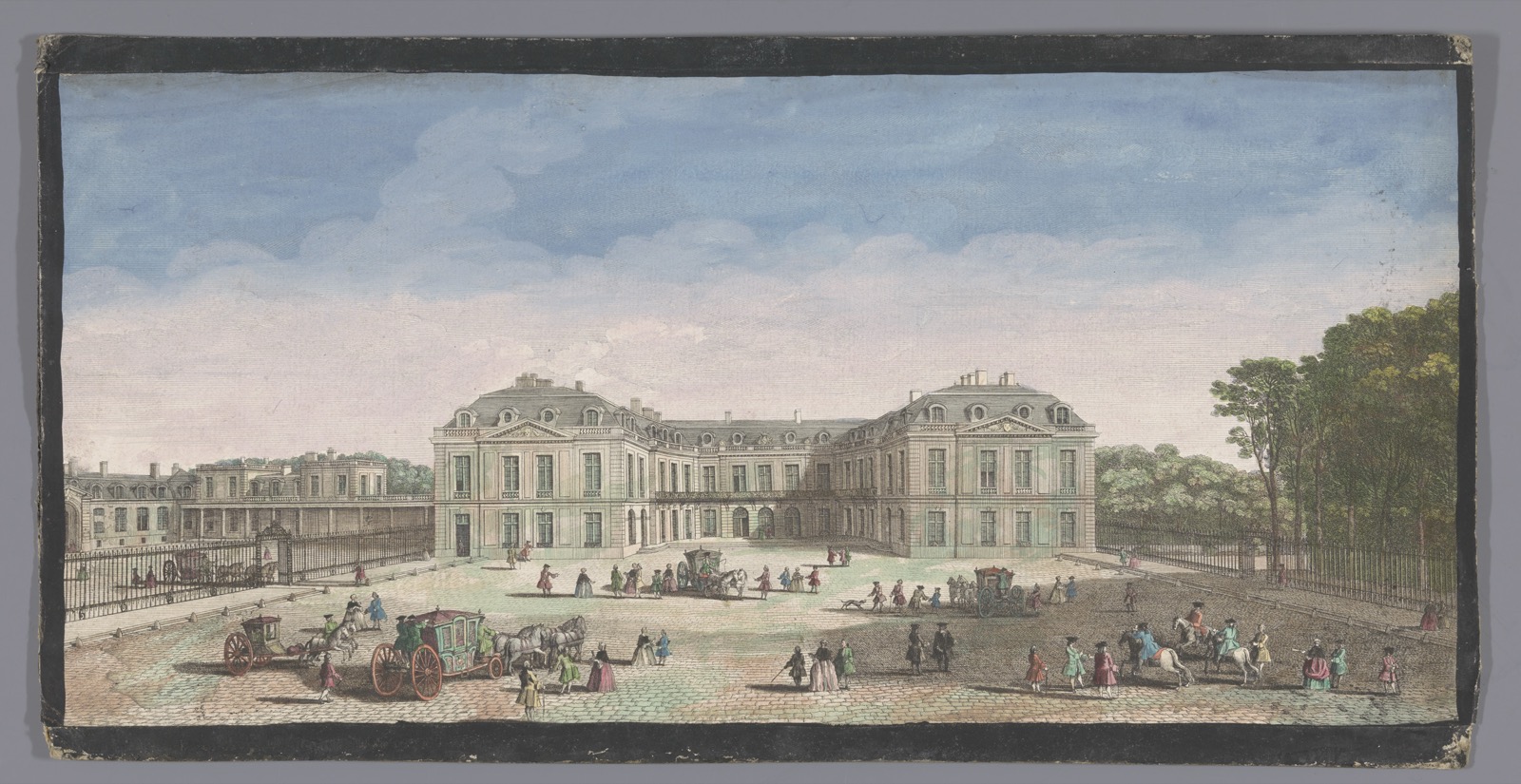
Gezicht op het Château de Choisy
· Rijksmuseum (via Europeana)
Public domain
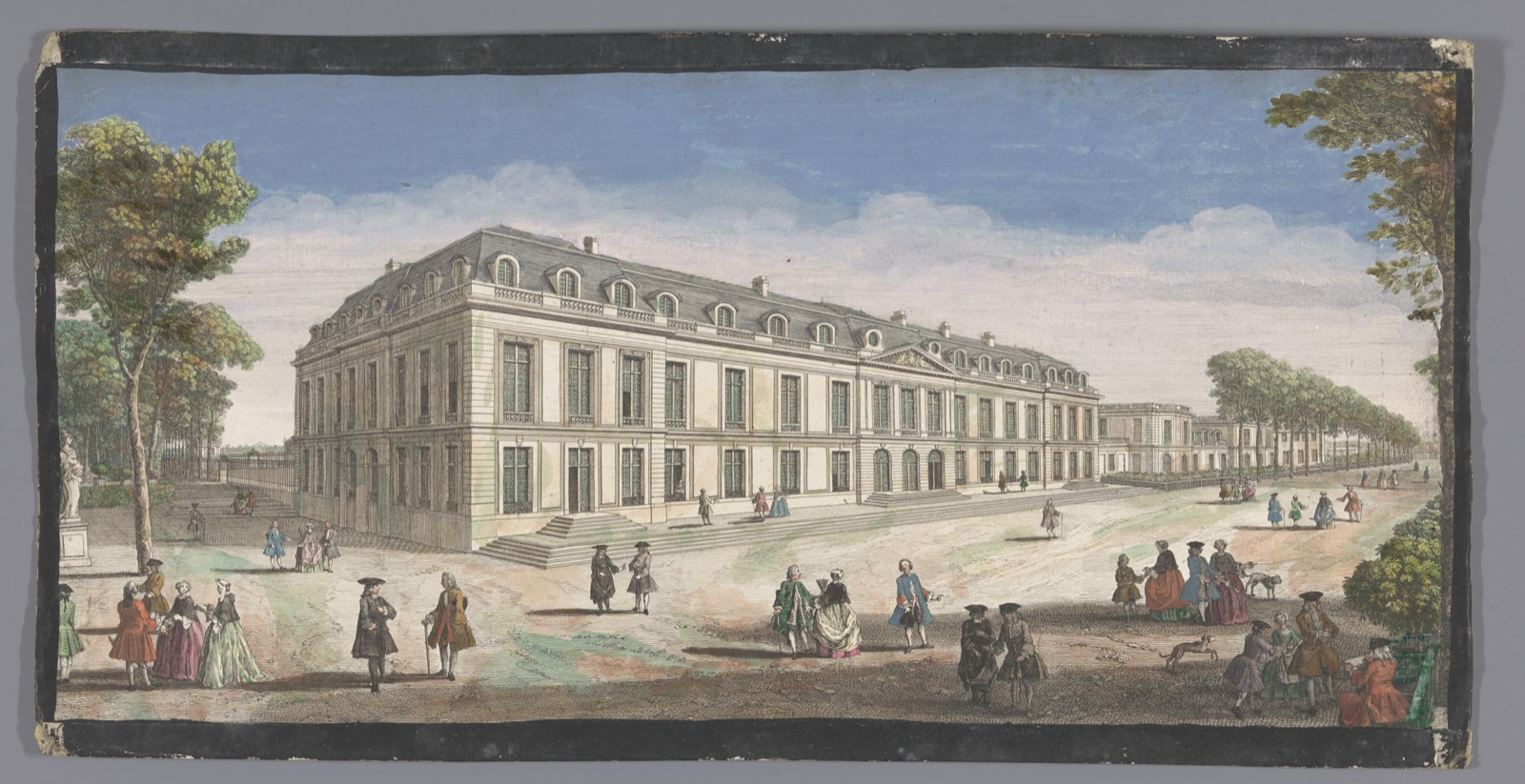
Gezicht op het Château de Choisy gezien vanaf de tuin
· Rijksmuseum (via Europeana)
Public domain
Nearby
Landmarks within reach of Château de Choisy.


Questions about Château de Choisy
What is the history of Château de Choisy?
What is inside Château de Choisy?
Why was Château de Choisy built, and what was it used for?
Where is Château de Choisy?
When was Château de Choisy built?
Which family or clan held Château de Choisy?
What did Château de Choisy look like in its prime?
Is Château de Choisy still standing or is it a ruin?
Who built Château de Choisy?
More castles of France


Explore the city


