
France · Ruin
Château de Kaysersberg
Château de Kaysersberg is a medieval hilltop castle overlooking the town of Kaysersberg in Haut-Rhin, France. Originating in the early 13th century, its most recognisable feature is a massive circular keep; the site is today preserved as a ruined monument historique.
First raised
1227
Its prime
1480
Today
Ruin
As it stood in 1480
What Château de Kaysersberg looked like in its prime.
Triangular hilltop castle of rough grey granite dominated by a thick, cylindrical stone keep rising above the curtain walls; the keep has a restored low crenellated parapet and narrow slit openings. Curtain walls of irregular granite blocks form a high enceinte with merlons and a continuous round-walk; small rectangular window openings and an arched eastern entrance with barbican are visible. The castle sits above the town with a dirt approach track and old vine terraces on the slope below.
Its story
The story of Château de Kaysersberg.
The site was acquired in 1227 by the lords of Horbourg and Ribeaupierre, and in the 14th century the castle served as the residence of the imperial provost or bailiff. Its granite keep, 11 metres across, with walls 4.42 metres thick, crowns the highest point of a triangular plan that dominates the town from 50 metres above.
The keep had a purely military function; the main residential buildings stood against the east curtain wall, with a large lower courtyard towards the town, and the castle's enceinte joined the town walls by curtains with a round walk. The entrance, to the east, was an arched doorway with a barbican, flanked by a cruciform cannon opening and a circular firing hole.
After the French Revolution the castle was declared a national asset and sold to François Joseph Boecklin de Boecklinsau, who planted vines; it later passed to the Bastard family. Listed as a monument historique since 1841, the ruin keeps its original parapet, with the crenels and merlons since restored.
Step inside
10 places to explore in 1480.
The record describes 10 distinct spots at Château de Kaysersberg, including 3 interiors: site of main residential buildings against east curtain, keep spiral staircase, third-floor storeroom and access to platform. Create your own photoreal reconstruction and explore every one, more scenes means more rooms, more angles, and more of the place to stand in.
Build Your Own Castle
Recreate Château de Kaysersberg with AI to explore it.
The artist rebuilds it as it stood in 1480, a photoreal reconstruction that belongs to you alone. Pay with coins, no subscription needed.
Recreate this castle →Defend this castle →Whose castle
Clans who held Château de Kaysersberg.
The families that held Château de Kaysersberg for a decade or more across its history, follow a name to its clan.
Horbourg
With the lords of Ribeaupierre, the lords of Horbourg acquired the site in 1227.
Ribeaupierre
With the lords of Horbourg, the lords of Ribeaupierre acquired the site in 1227.
From the archive
Château de Kaysersberg on paper: the measured plan and period views.
The survey plan and photographs below are the ground truth this page's reconstructions are checked against, drawn and photographed while the castle was still a working garrison. Every image is public-domain or openly licensed, with its source named.
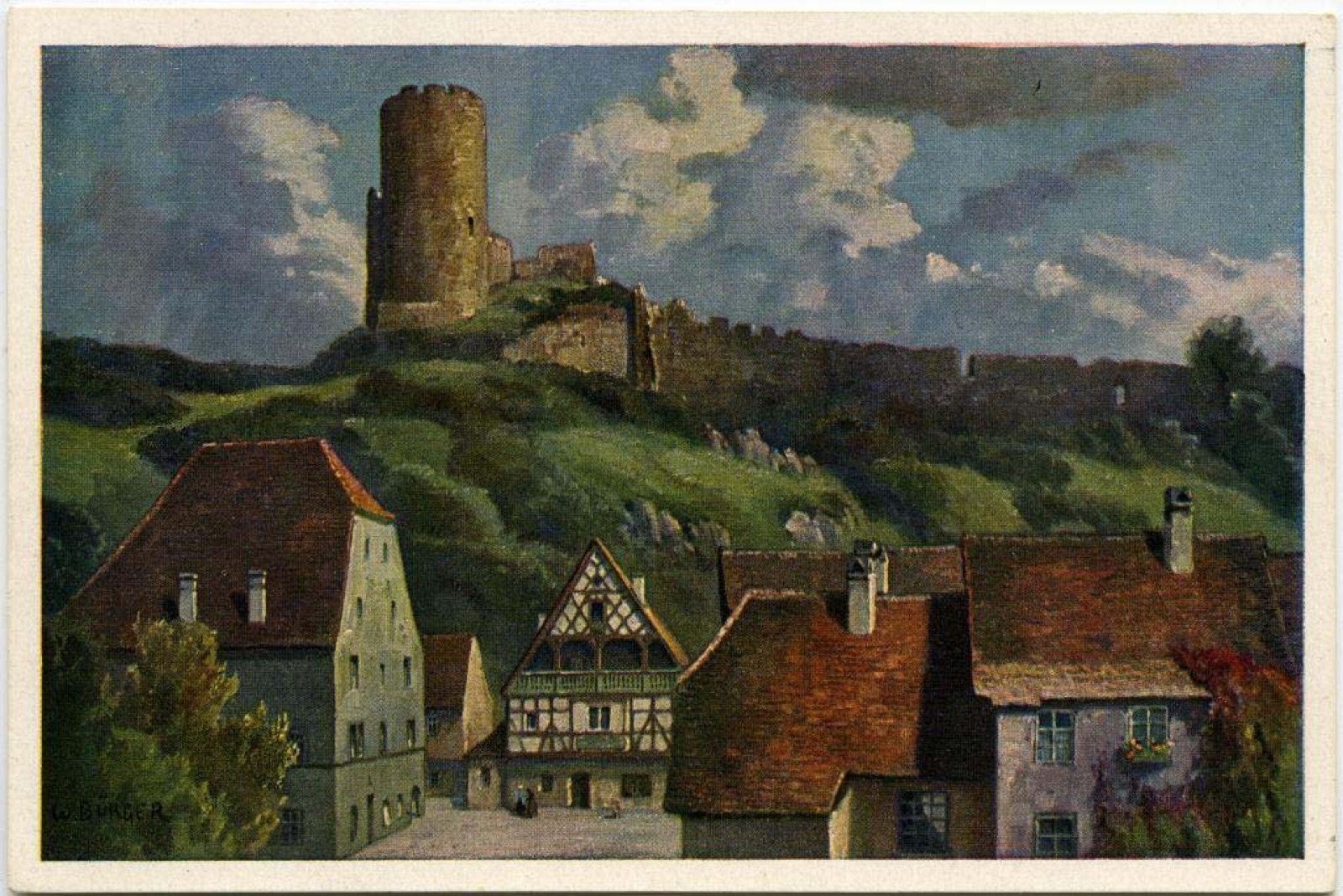
"Kaysersberg"
· Badisches Landesmuseum Karlsruhe (via Europeana)
CC0 (no rights reserved)
Questions about Château de Kaysersberg
What is the history of Château de Kaysersberg?
What is inside Château de Kaysersberg?
Why was Château de Kaysersberg built, and what was it used for?
Where is Château de Kaysersberg?
When was Château de Kaysersberg built?
Was Château de Kaysersberg ever attacked or besieged?
Which family or clan held Château de Kaysersberg?
What did Château de Kaysersberg look like in its prime?
Is Château de Kaysersberg still standing, or is it a ruin?


Explore the city


