
Germany · Ruin
Wirtemberg Castle
Burg Wirtemberg
Wirtemberg Castle is a hilltop castle that served as a principal seat of the House of Württemberg. It stood on the Württemberg mountain near present-day Rotenberg, Stuttgart; three successive castles occupied the site between 1080 and 1819. The third castle was dismantled in 1819 and the Württemberg Mausoleum was later erected on the site (1820–1824).
First raised
1080
Its prime
1092
Today
Ruin
As it stood in 1092
What Wirtemberg Castle looked like in its prime.
Perched on a rounded, wooded hill, the castle is formed of concentric stone curtain walls stepping up the slope; the lower ring features a wide arched gate set into thick pale‑grey masonry. Above the inner wall sits a rectangular stately manor with a steep red‑tiled gabled roof and simple chimneys. Grassy approaches and scattered oaks frame the hill; crenellated wall tops and narrow wall‑walks encircle the baileys. At its prime the manor and service buildings were roofed and continuous with the enclosing walls.
Its story
The story of Wirtemberg Castle.
Three Ring Walls on the Rotenberg, 1080-1092
The castle went up in 1080 on a 411-metre rise in the Stuttgart district of Rotenberg, a spur of the Schurwald between Cannstatt and Esslingen am Neckar, after the ancestors of the Württemberger dynasty had probably given up their first seat at Beutelsbach, also called Kappelberg. It became the chief seat of the dynasty that was named after it, and the land of Württemberg took its name from the castle in turn. The new castle was described as a stronghold with three ring walls, extensive stables and several outbuildings, a fine inner courtyard and a stately manor house. Its chapel was consecrated on 7 February 1083 by Bishop Adalbert II of Worms in honour of Saint Nicholas; the consecration stone, which survives in the Russian Orthodox burial church now standing on the castle's ground, is the earliest documentary witness to the House of Württemberg, and because it records the chapel's consecration the castle was probably largely finished by then.
The castle's name changed repeatedly over the centuries, written Wirdeberch, Werdenberc and Wirtinsberk, and its origin was puzzling people as early as the Middle Ages. Conrad of Wirtinsberk appears as a witness in a charter of 2 May 1092, the oldest documentary mention of the name Württemberg.
Seat of the Counts, 1092-1311
From 1092 to 1495 the castle repeatedly served as the seat of the counts of Württemberg, though the counts' ministerials lived there too - one, Swenegar von Wirtenberg, is known by name. In 1311 the neighbouring free imperial cities, acting under Emperor Henry VII, destroyed Wirtemberg Castle for the first time.
Burned by the Swabian League, 1519
Rebuilding began after 1311, on smaller dimensions than before. That second castle went up in flames in 1519, when the Swabian League under the command of Duke William of Bavaria occupied almost the whole of Württemberg. Militarily the burning was pointless: by the start of the sixteenth century the castle counted for nothing and was occupied at most by a steward, so the destruction of the old ancestral seat is taken to have been purely symbolic.
Duke Ulrich of Württemberg was married to Sabina of Bavaria, William's sister, and the marriage had broken down over Ulrich's affairs and acts of violence. When Ulrich murdered Hans von Hutten, the husband of his mistress, with his own hand, the rupture was complete and Sabina fled to her brother in Munich. The marital quarrel weighed so heavily on the relationship between the two men that during the intervention William had "das schloß wierttenberg (…) in der nacht anzünden und verprennen" - set alight and burned by night. Ulrich had to leave the country.
A Prestige Seat, a Prison and a Fire Watch, 1534-1816
Ulrich returned to Württemberg in 1534 with the help of the Landgrave of Hesse and had the castle at least partly restored, stationing a small permanent garrison of up to three men. The rebuilt ancestral seat was a prestige project without any function, and after Ulrich's death Duke Christoph withdrew the castle guards in 1554.
The buildings were still kept in repair and housed court servants and forestry officials, and for a time the site was used as a prison. Because of the good view it served in the seventeenth and eighteenth centuries as an observation post for the fire watch, and the ruling princes came only rarely. King Friedrich I, who reigned from 1797 to 1816, was the first to take an interest in the old seat again and had it partly restored.
Taken Down for Queen Katharina, 1819-1907
When his wife died in the winter of 1819, King Wilhelm I ordered the castle taken down so that a burial chapel for Queen Katharina could be raised on the spot. How much there was left to demolish is told two ways: as a ruin fallen in after several hundred years of neglect, or as a building still comparatively well preserved in 1819. Wilhelm had drawings and plans of the surviving fabric made first. The castle had become a favourite excursion for Stuttgart's citizens in the Romantic period and there were protests against the demolition, which achieved nothing; by 1 April 1820 the old castle was completely gone.
From 1820 to 1824 Giovanni Salucci built the mausoleum on the site in neoclassical form, and it has been open to the public since 1907. In that same year King Wilhelm II officially renamed the Rotenberg "Württemberg".
Step inside
7 places to explore in 1092.
The record describes 7 distinct spots at Wirtemberg Castle, including 4 interiors: gatehouse arch and forecourt, stately manor (great hall) exterior and entrance, castle chapel interior and more. Create your own photoreal reconstruction and explore every one, more scenes means more rooms, more angles, and more of the place to stand in.
Build Your Own Castle
Recreate Wirtemberg Castle with AI to explore it.
The artist rebuilds it as it stood in 1092, a photoreal reconstruction that belongs to you alone. Pay with coins, no subscription needed.
Recreate this castle →Defend this castle →Whose castle
Clans who held Wirtemberg Castle.
The families that held Wirtemberg Castle for a decade or more across its history, follow a name to its clan.
Württemberg
Second family seat of the House of Württemberg; the counts held it repeatedly as their seat from 1092 to 1495.
From the archive
Wirtemberg Castle on paper: the measured plan and period views.
The survey plan and photographs below are the ground truth this page's reconstructions are checked against, drawn and photographed while the castle was still a working garrison. Every image is public-domain or openly licensed, with its source named.
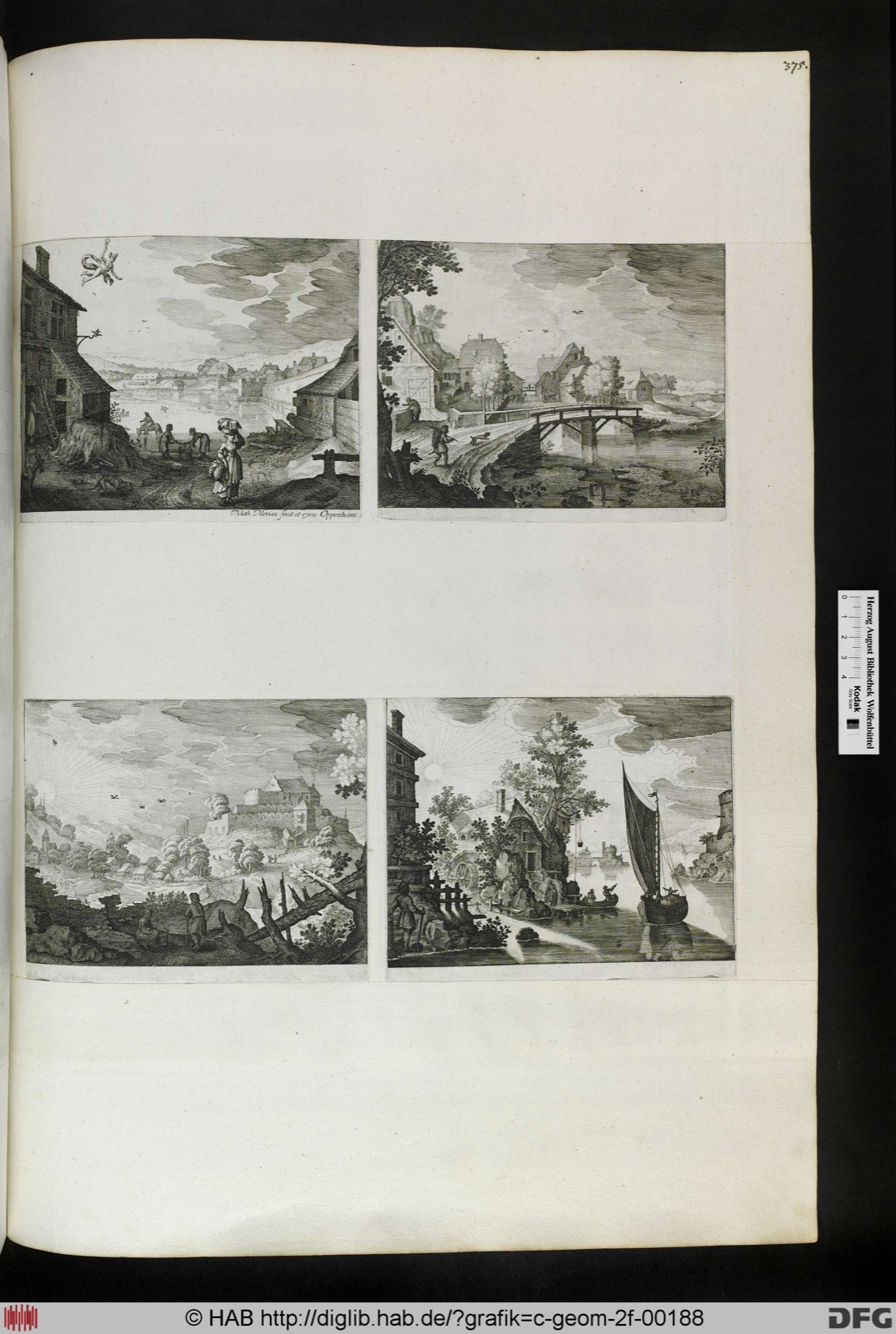
Schloss Wirtemberg bei Sonnenaufgang
· Herzog August Library (via Europeana)
CC BY-SA


