Scotland · Ruin
Ardrossan Castle
Ardrossan Castle is a ruined medieval castle on a rocky ridge above the town of Ardrossan, North Ayrshire, Scotland. Originating in the 12th century and rebuilt in the 15th century, substantial remains include a tall keep fragment, vaulted ranges (kitchen and cellars), a deep passageway with a well, and traces of gatehouse and curtain walls.
Its prime
1500
Today
Ruin
As it stood in 1500
What Ardrossan Castle looked like in its prime.
A tall rectangular keep fragment of red-brown sandstone with a jagged top, rising from rubble and lower curtain-wall remnants on a grassy rocky ridge above the town. Masonry shows large ashlar blocks and rougher rubble infill; corbels from the parapet remain. A vaulted opening and narrow slits puncture the face, with a deep vertical gap where stair or entrance once stood. Low ruined curtain walls and grassy forecourt slope away toward the town and sea.
Its story
The story of Ardrossan Castle.
Castle Crags and the Barclays
The name is descriptive: ard for height, rossan for a rocky promontory. The castle sits on a ridge above the town of Ardrossan in North Ayrshire, on the west coast, defended by a moat. The castle is believed to have been built in four phases, the first of them in the 12th century. The present ruins stand on the site of an earlier castle held by the Barclay family. By the thirteenth century the property had passed to the Ardrossan family. Thomas and Edward Gilks, writing in 1847, record that the place was originally called "Castle Crags" and took the name Ardrossan from the family who owned it.
Wallace's Larder and the First War of Independence
The original castle was partly destroyed during the Wars of Scottish Independence, in an episode in which the English garrison was slaughtered. It is remembered as "Wallace's Larder", a name still applied to the surviving vaults. In the second phase of building the gatehouse was completely reconstructed from the first floor, work taken to be the repair of damage done to the castle in the First War of Scottish Independence.
Montgomery's Rebuilding and the Privy Council of 1546
Clan Montgomery rebuilt Ardrossan in the 15th century. The third phase of construction is placed in the 15th or early 16th century: the gatehouse was transformed into a heightened keep, and there are some indications that a chapel was raised in the same campaign. A fourth phase blocked the entrance to the castle from the keep and added a wide-mounted gun port.
On 18 June 1546 the Privy Council of Scotland met at Ardrossan Castle, a break from its traditional meeting places at Edinburgh, Stirling and St Andrews.
From Eglinton's Masons to Scheduled Monument, 1617-1973
The Earls of Eglinton kept the castle, and their accounts for 1617 include "seventeen feet of rigging-stone" worked by a stonemason for repairs. In 1648 Oliver Cromwell's troops destroyed the castle, removing much of its stone and taking it to Ayr to build the fort known as the Ayr Citadel.
By the time the Gilks wrote in 1847 the castle was already ruined, standing next to an old churchyard and still the property of the Eglintoun family; their handbook sets it down as a marker of regional identity and a subject of antiquarian interest, with beautiful views of the ocean from it. The ruins were designated a scheduled monument in 1973 and remain in hazardous condition.
The De'il of Ardrossan
Sir Fergus Barclay, known as "the De'il of Ardrossan", was famous around the lands for his horsemanship; the secret of his skill was a magical bridle given him by the Devil in exchange for his soul. Barclay tricked the Devil into giving the soul back, and the Devil, infuriated, attacked the castle in his rage and is said to have left his hoof prints on one of the rocks. Barclay is buried in the castle chapel, a few hundred yards inland from the castle and further down the hill. The ruins are also said to be haunted by the ghost of William Wallace, who wanders them on stormy nights.
Step inside
9 places to explore in 1500.
The record describes 9 distinct spots at Ardrossan Castle, including 5 interiors: gatehouse and entrance passage, vaulted kitchen range and cellars, the vaults ("wallace's larder") and more. Create your own photoreal reconstruction and explore every one, more scenes means more rooms, more angles, and more of the place to stand in.
Build Your Own Castle
Recreate Ardrossan Castle with AI to explore it.
The artist rebuilds it as it stood in 1500, a photoreal reconstruction that belongs to you alone. Pay with coins, no subscription needed.
Recreate this castle →Defend this castle →Whose castle
Clans who held Ardrossan Castle.
The families that held Ardrossan Castle for a decade or more across its history, follow a name to its clan.
Barclay
The original 12th-century castle was owned by Clan Barclay.
Ardrossan
The castle had passed to the Ardrossan family by the thirteenth century, and took its name from them.
Montgomery
Clan Montgomery rebuilt Ardrossan in the 15th century.
From the archive
Ardrossan Castle on paper: the measured plan and period views.
The survey plan and photographs below are the ground truth this page's reconstructions are checked against, drawn and photographed while the castle was still a working garrison. Every image is public-domain or openly licensed, with its source named.
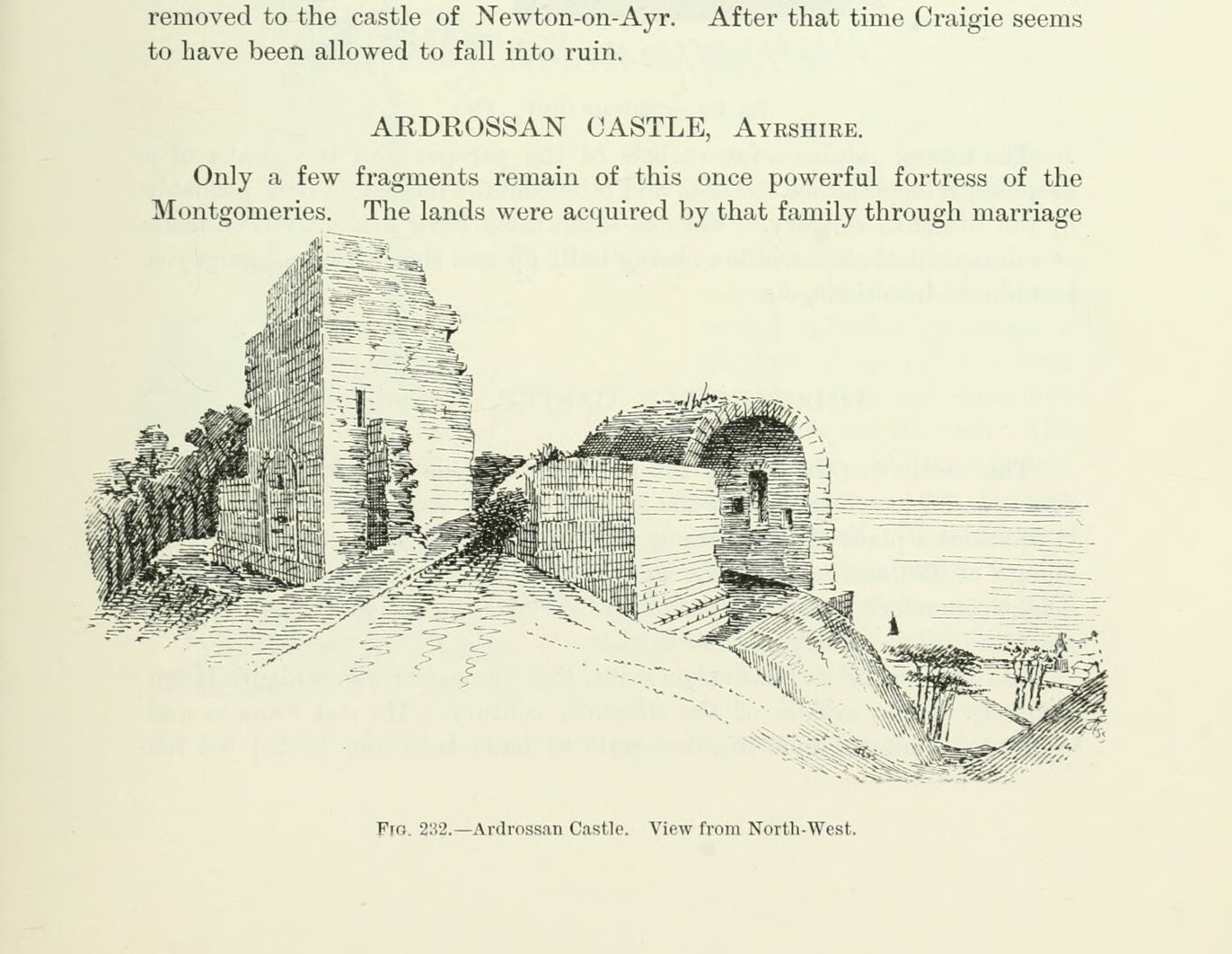
Fig. 232. Ardrossan Castle. View from North-West.
1889 · MacGibbon & Ross, vol. 3 (1889)
Public domain
Nearby