
Scotland · Still standing
Clackmannan Tower
Clackmannan Tower is a five-storey Scottish tower house standing on the summit of King's Seat Hill in Clackmannan, Clackmannanshire. The stone tower comprises an older lower block with a taller contiguous extension and is a scheduled historic monument preserved on its hilltop site.
Its prime
1450
Today
Still standing
As it stood in 1450
What Clackmannan Tower looked like in its prime.
A compact, five-storey tower house of warm buff sandstone in two joined rectangular blocks: an earlier lower tower adjoined by a taller, slightly offset extension. Walls are coursed rubble and ashlar with small slit and rectangular windows. The taller tower is finished with a corbelled parapet and machicolation-like corbels beneath the roofline. A ground-level arched entrance sits in the base; a low enclosing stone projection with a later brick-topped parapet abuts the main tower. Sited on a grassy hilltop against open sky.
Its story
The story of Clackmannan Tower.
The Bruces on King's Seat Hill, 1359-1400s
Clackmannan Tower sits on the summit of King's Seat Hill, at Clackmannan in Clackmannanshire, with wide views over the surrounding country. David II of Scotland lived here during the fourteenth century, and in 1359 the king sold the tower to his cousin Robert Bruce, 2nd Baron of Clackmannan. The exact date of building is not known. The first tower was finished around 1365, some six years after that sale, and a second and taller extension was built during the 1400s. The tower house stands five storeys, the older and lower block set contiguous to the taller extension.
Catherine Bruce and the Rising of 1745
Catherine Bruce of Clackmannan (1696-1791) lived in the tower. Her husband, Henry Bruce, fought for the Jacobites in the rising of 1745, and Catherine supported the movement herself.
Scheduled Monument from 30 June 1921
The tower has been protected as a scheduled monument since 30 June 1921.
Step inside
6 places to explore in 1450.
The record describes 6 distinct spots at Clackmannan Tower, including the full exterior approach. Create your own photoreal reconstruction and explore every one, more scenes means more rooms, more angles, and more of the place to stand in.
Build Your Own Castle
Recreate Clackmannan Tower with AI to explore it.
The artist rebuilds it as it stood in 1450, a photoreal reconstruction that belongs to you alone. Pay with coins, no subscription needed.
Recreate this castle →Defend this castle →Whose castle
Clans who held Clackmannan Tower.
The families that held Clackmannan Tower for a decade or more across its history, follow a name to its clan.
Sold by David II to his cousin Robert Bruce, 2nd Baron of Clackmannan, in 1359.
From the archive
Clackmannan Tower on paper: the measured plan and period views.
The survey plan and photographs below are the ground truth this page's reconstructions are checked against, drawn and photographed while the castle was still a working garrison. Every image is public-domain or openly licensed, with its source named.
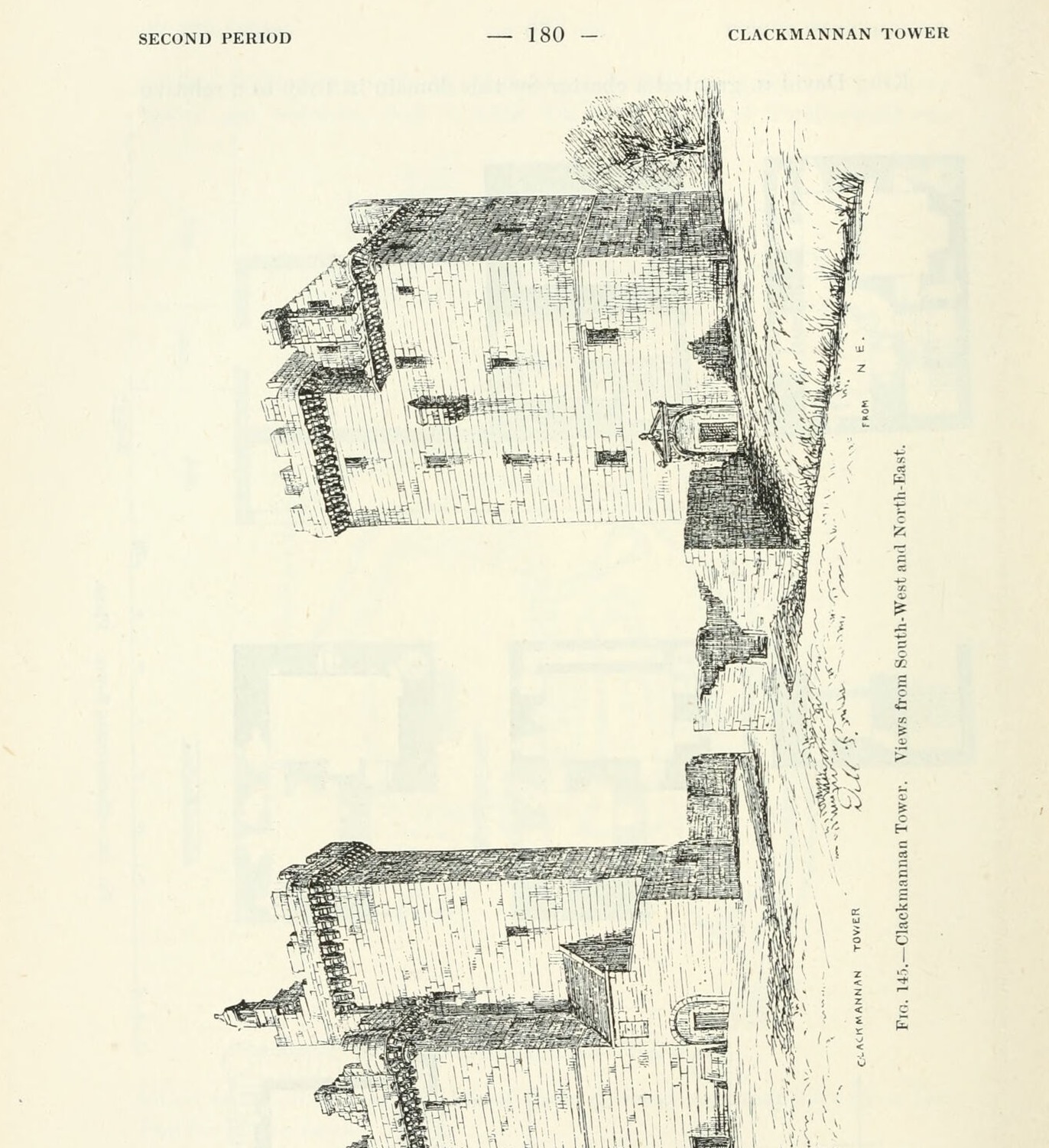
Fig. 145. - Clackmannan Tower. Views from South-West and North-East.
1887 · MacGibbon & Ross, Castellated and Domestic Architecture of Scotland, vol. 1 (1887)
Public domain
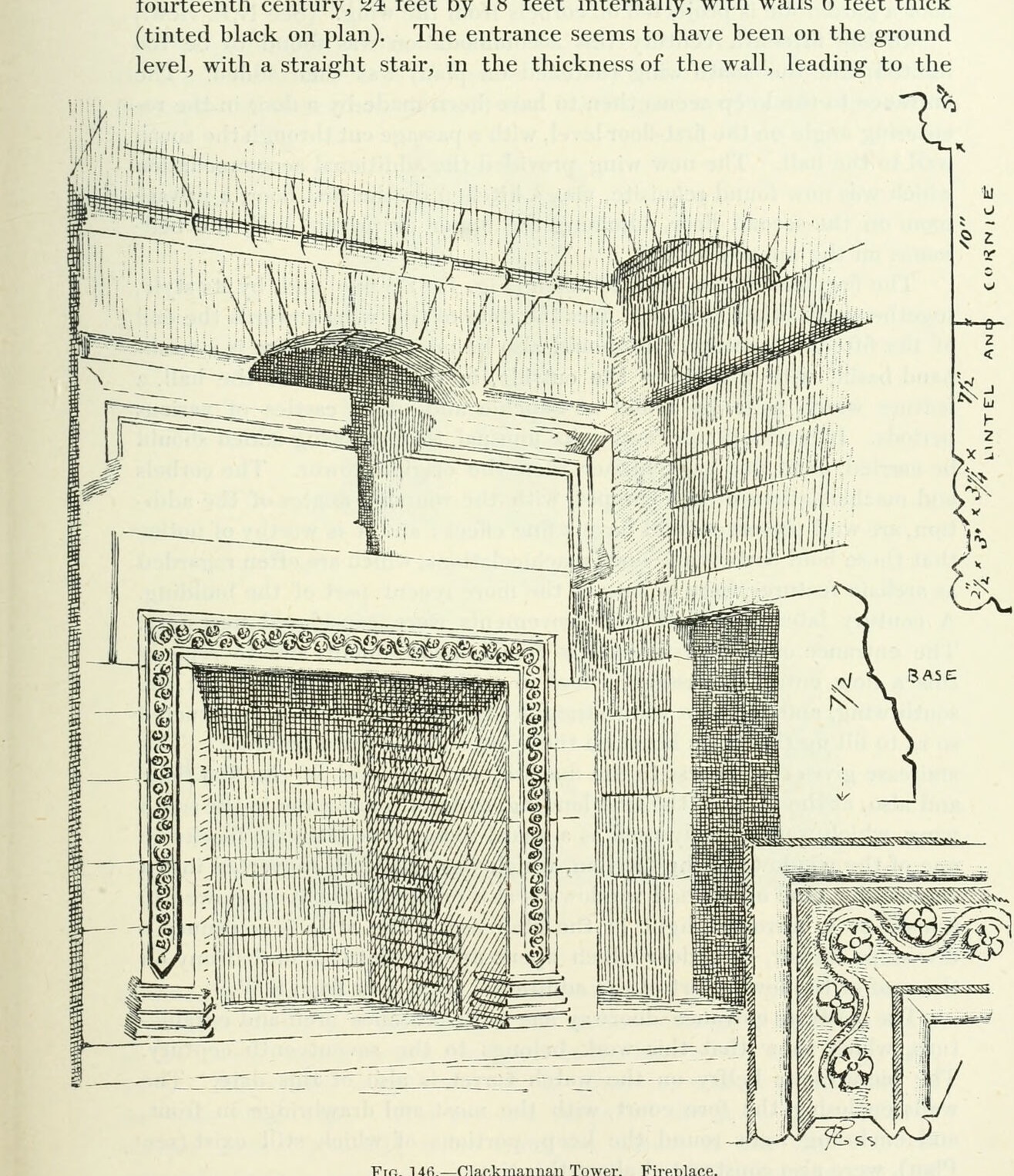
Fig. 146. Clackmannan Tower. Fireplace.
1887 · MacGibbon & Ross, Castellated and Domestic Architecture of Scotland, vol. 1 (1887)
Public domain
Nearby
Landmarks within reach of Clackmannan Tower.


Questions about Clackmannan Tower
What is the history of Clackmannan Tower?
Why was Clackmannan Tower built, and what was it used for?
Where is Clackmannan Tower?
When was Clackmannan Tower built?
Which family or clan held Clackmannan Tower?
What did Clackmannan Tower look like in its prime?
Is Clackmannan Tower still standing, or is it a ruin?
More castles of Scotland


Explore the city


