Scotland · Restored
Hunterston Castle
Hunterston Castle is a medieval tower house and attached manor on the Hunterston estate in North Ayrshire, Scotland, long associated with the Chiefs of Clan Hunter. The tall rectangular stone keep dates to the late 12th or early 13th century, with an 18th-century manor added to its side; the complex remains standing and is a Category A listed building.
Its prime
1760
Today
Restored
As it stood in 1760
What Hunterston Castle looked like in its prime.
A tall rectangular stone keep of reddish-brown rubble stands at the castle's east end with narrow, irregularly placed slit and sash windows and a corbelled parapet at roof level. Attached to its west is a lower, multi-storey manor block with slate roofs, gabled dormer windows and regular sash windows. A stone external stair leads to a timber balcony and first-floor entrance; a small round turret with a conical roof sits to the far west. The building faces a close-mown lawn with trees behind.
Its story
The story of Hunterston Castle.
Royal Huntsmen since David I
The original Hunters were Norman French in origin, granted the lands around Hunterston by King David I in the 12th century. In the Middle Ages the chief of Clan Hunter was granted the hereditary title of Royal Huntsman. The castle at West Kilbride in North Ayrshire is the historic home of the lairds of Hunterston and chiefs of Clan Hunter, and the heads of the clan have lived on the estate for the 900 years since that grant.
From the Keep to Lorimer's Restoration, 12th century–1971
The tower dates from the late 12th or early 13th centuries, although earlier buildings existed nearby. In the 18th century a house was added to the tower to provide additional accommodation; in the 19th century this was considered insufficient, and a Neoclassical house, Hunterston House, was built to the north of the castle. Robert Lorimer undertook an extensive restoration of the castle in 1926. It was listed Category A on 14 April 1971.
Hunterston A and B, and the Closing of the Castle
The family has owned the castle ever since that 12th-century grant, although much of the estate was compulsorily purchased by the government in the 20th century to enable the construction of the Hunterston A and Hunterston B nuclear power stations. Between 1974 and 1985 the castle was open to the general public. That ended with new rules and legislation from the neighbouring power stations, which held that too many people in the area would be a security risk and impossible to evacuate quickly in the event of an emergency.
Access was afterwards by case-by-case advance request only, until in 1994 the castle became off limits to the public and only Clan Hunter members were allowed to visit. In the 2000s it opened one day a year as part of the open-days event, but the vicinity of the power stations caused the same problems and it was dropped from future events, reverting to clan members only. It can still be viewed from outside, standing next to a public right of way and a Sustrans cycle route.
Step inside
7 places to explore in 1760.
The record describes 7 distinct spots at Hunterston Castle, including the full exterior approach. Create your own photoreal reconstruction and explore every one, more scenes means more rooms, more angles, and more of the place to stand in.
Build Your Own Castle
Recreate Hunterston Castle with AI to explore it.
The artist rebuilds it as it stood in 1760, a photoreal reconstruction that belongs to you alone. Pay with coins, no subscription needed.
Recreate this castle →Defend this castle →Whose castle
Clans who held Hunterston Castle.
The families that held Hunterston Castle for a decade or more across its history, follow a name to its clan.
Hunter
Granted to the Hunters by David I in the 12th century; seat of the Chiefs of Clan Hunter for 900 years.
From the archive
Hunterston Castle on paper: the measured plan and period views.
The survey plan and photographs below are the ground truth this page's reconstructions are checked against, drawn and photographed while the castle was still a working garrison. Every image is public-domain or openly licensed, with its source named.
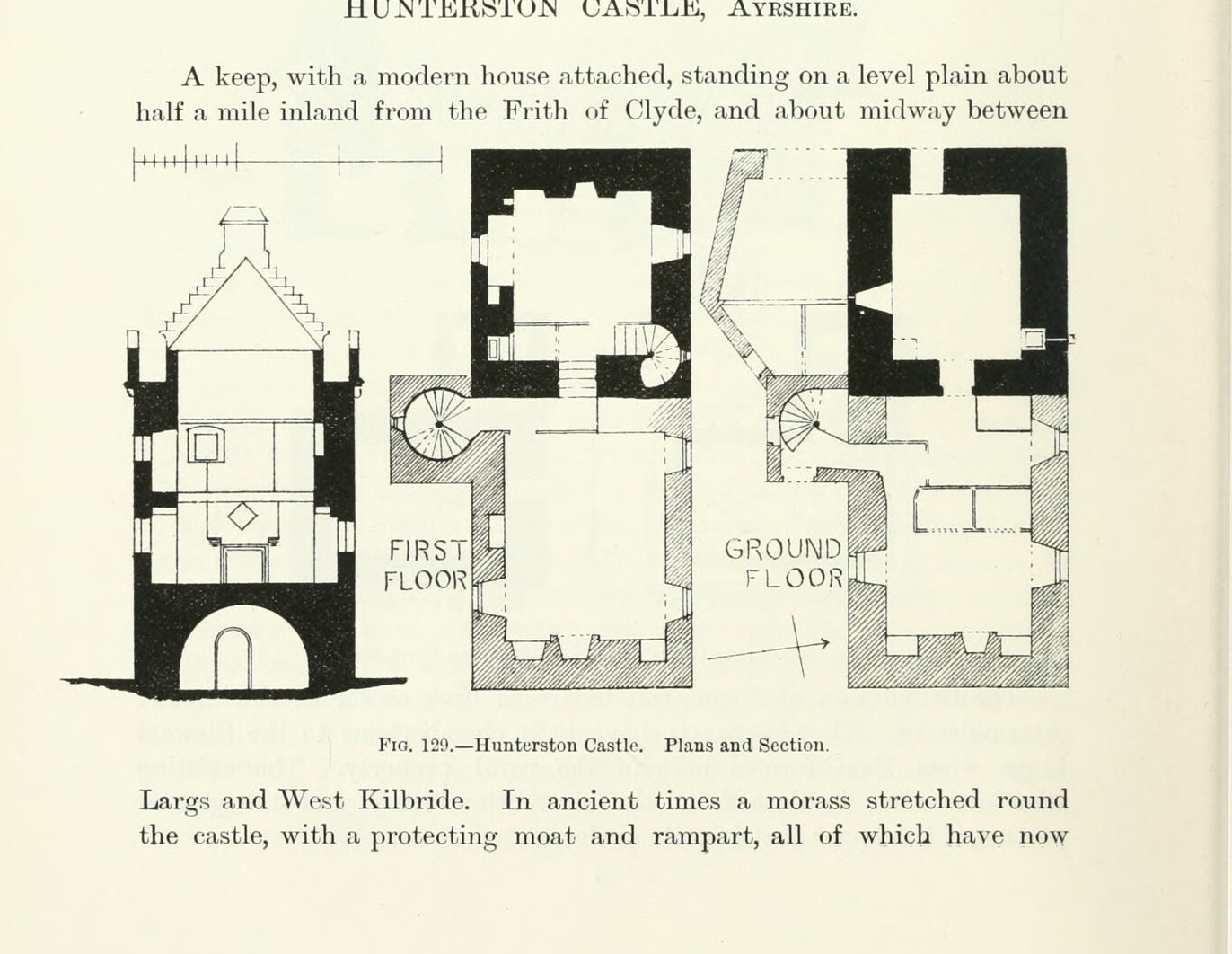
Fig. 129. Hunterston Castle. Plans and Section.
1889 · MacGibbon & Ross, vol. 3 (1889)
Public domain
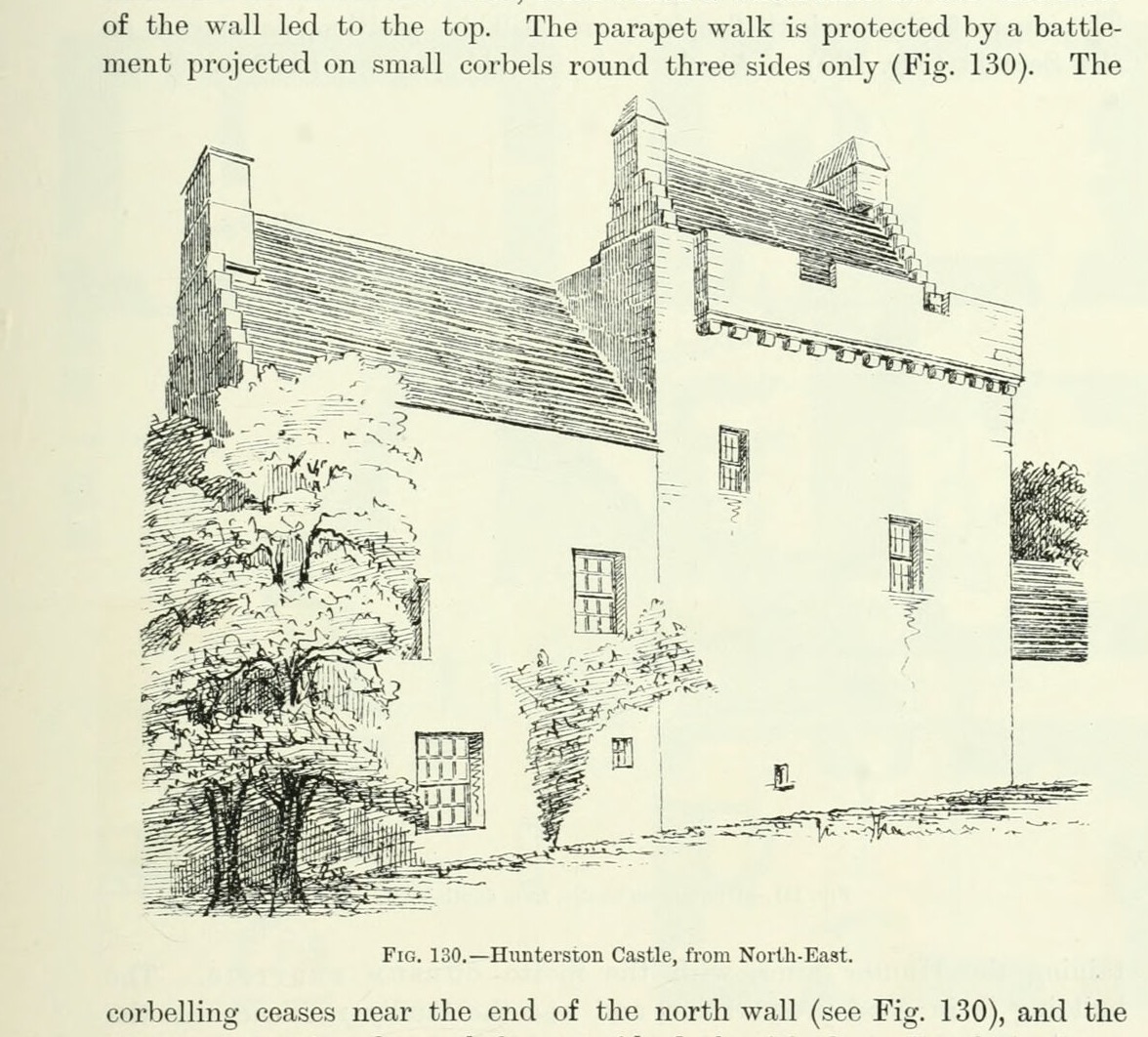
Fig. 130. Hunterston Castle, from North-East.
1889 · MacGibbon & Ross, vol. 3 (1889)
Public domain
Nearby