Scotland · Still standing
Ballindalloch Castle
Ballindalloch Castle is a Scottish country house-style castle on the Ballindalloch estate in Banffshire, long held by the Macpherson-Grant family since the 16th century. The building retains its Z-plan core with later 18th- and 19th-century extensions and sits amid parkland through which the rivers Spey and Avon run. It remains a lived family home and is open to visitors in summer.
Its prime
1878
Today
Still standing
As it stood in 1878
What Ballindalloch Castle looked like in its prime.
A pale ashlar-stone Z-plan castle with a long low principal range and several cylindrical stair-towers punctuating the roofline; the largest round tower sits near the centre with narrow slit windows and a conical cap, smaller round turrets anchor the wings and crow-stepped gables punctuate the roofline. Slate roofs, multiple chimneys and dormers rise above ivy-clad lower walls. The castle faces a broad trimmed lawn with specimen trees and woodland beyond; the estate rivers run through the grounds.
Its story
The story of Ballindalloch Castle.
From the Ballindallochs to the Grants, 1499–1546
The lands of Ballindalloch in Banffshire were originally held by the Ballindalloch family before passing to the Grants in 1499. The first tower of its Z-plan castle was built in 1546, beginning a family tenancy (held down the centuries by the Russell and Macpherson-Grant families), that continues today; the castle is known as the "pearl of the north".
The Huntly-Moray Feud, November 1590
John Grant, the estate's former Tutor, or administrator, killed a servant, and the killing started a feud between the Earl of Huntly and the Earl of Moray. Huntly came to Ballindalloch in November 1590 to arrest the Tutor. John Grant of Freuchie, chief of the Grants, promised to deliver the Tutor and his accomplices, accused of murder and other crimes, to Huntly Castle, but instead joined the Tutor's men and the Earl of Moray at Darnaway Castle, where pistols and cannon fire killed John Gordon, brother of the Laird of Cluny.
Montrose's Sack After Inverlochy, 1645
In 1645 Ballindalloch was sacked, plundered and burned by James Graham, 1st Marquess of Montrose, in the aftermath of the Battle of Inverlochy, but was restored the same year.
Extensions, Listing and the Ballindalloch Distillery, 1770–2014
Extensions followed in 1770, commissioned by General James Grant, a veteran of the American War of Independence whose ghost is said to haunt the castle, and again in 1850 by the architect Thomas MacKenzie; further additions made in 1878 were mostly removed during a 1965 modernisation. The castle, a Category A listed building since 1972, keeps its Z-plan core beneath these later extensions and holds a collection of 17th-century Spanish paintings; in its grounds, where the Spey and the Avon both run, stand a 17th-century dovecote and a 20th-century rock garden. With the help of a £1.2 million grant from the Scottish Government, the estate opened the Ballindalloch distillery, which began production in September 2014. The castle remains home to the Macpherson-Grant family and is open to visitors in summer.
The Cow Haughs Legend and the Green Lady
Local tradition holds that the castle's builders found whatever they raised each day thrown down again overnight, until a voice told the laird to build in the "cow haughs" instead, where the work then went ahead without interruption. Ballindalloch's ghostlore also names a "Green Lady" said to haunt the dining room, a recurring figure across Scottish castle tradition.
Step inside
7 places to explore in 1878.
The record describes 7 distinct spots at Ballindalloch Castle, including 2 interiors: dining room, picture room with 17th-century spanish paintings. Create your own photoreal reconstruction and explore every one, more scenes means more rooms, more angles, and more of the place to stand in.
Build Your Own Castle
Recreate Ballindalloch Castle with AI to explore it.
The artist rebuilds it as it stood in 1878, a photoreal reconstruction that belongs to you alone. Pay with coins, no subscription needed.
Recreate this castle →Defend this castle →Whose castle
Clans who held Ballindalloch Castle.
The families that held Ballindalloch Castle for a decade or more across its history, follow a name to its clan.
Ballindalloch
Original holders of the lands until 1499.
The lands passed to the Grants in 1499.
Macpherson-Grant
Family home of the Macpherson-Grants since 1546.
From the archive
Ballindalloch Castle on paper: the measured plan and period views.
The survey plan and photographs below are the ground truth this page's reconstructions are checked against, drawn and photographed while the castle was still a working garrison. Every image is public-domain or openly licensed, with its source named.
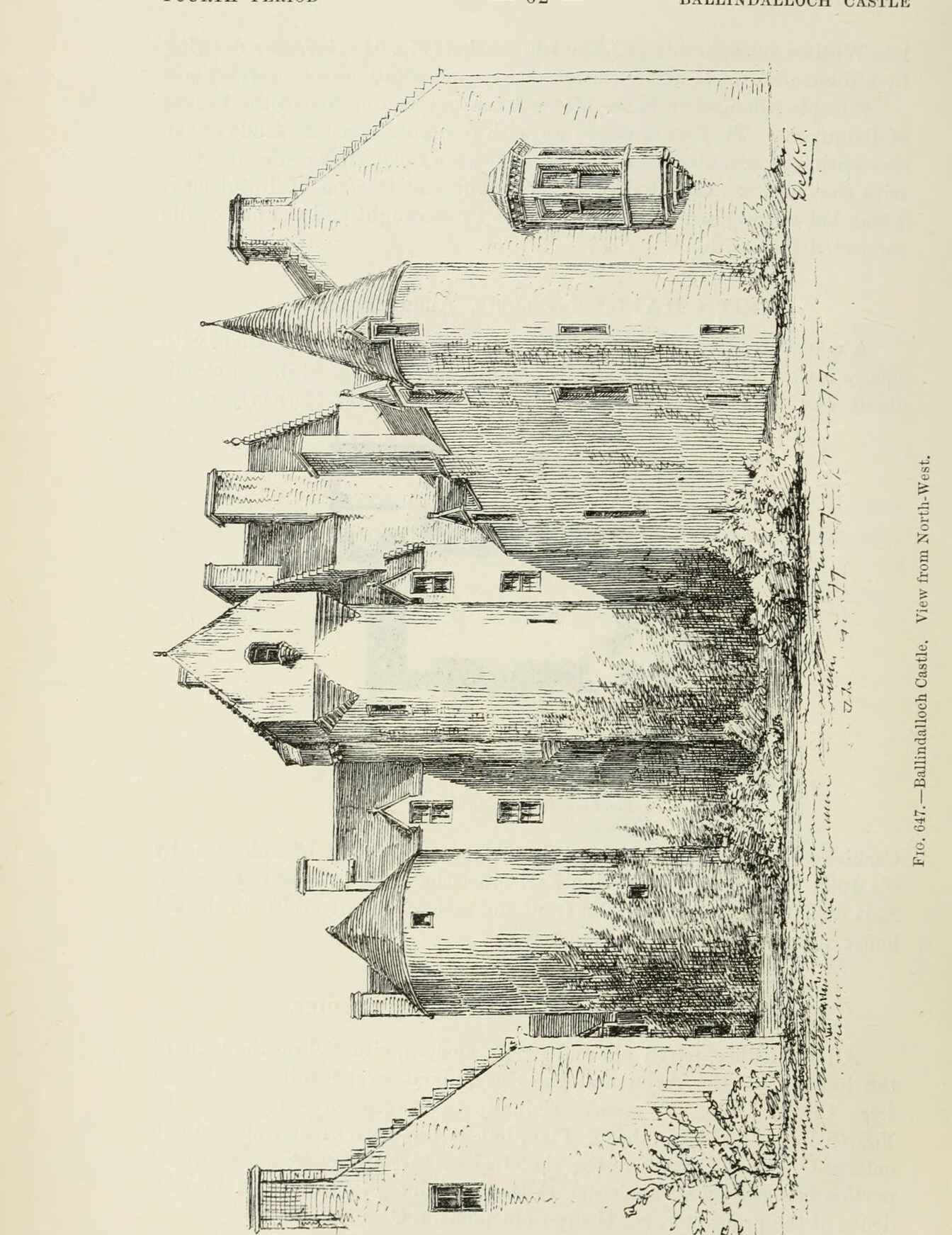
Fig. 647. -- Ballindalloch Castle. View from North-West.
1892 · MacGibbon & Ross, vol. 4 (1892)
Public domain