Scotland · Restored
Darnaway Castle
Darnaway Castle is a country seat in Darnaway Forest near Forres in Moray, Scotland, long associated with the Earls of Moray. The present exterior dates from a rebuilding of 1810 but retains the medieval banqueting (great) hall of 1450 with its original hammerbeam roof. The estate includes extensive planted pine woods and a riverside gorge known as Randolph's Leap.
Its prime
1810
Today
Restored
As it stood in 1810
What Darnaway Castle looked like in its prime.
A broad, symmetrical three-storey stone country house with a central projecting three-bay block rising a storey above flanking wings, regular rows of tall sash windows and a raised entrance reached by broad stone steps; warm brown sandstone ashlar walls, low-pitched slate roofs and multiple grouped chimneys punctuate the roofline. The house sits on a gentle lawn and terrace, backed by mature trees of Darnaway Forest; a small domed pavilion/folly is visible to the right from the approach.
Its story
The story of Darnaway Castle.
The Randolph Earldom and the Douglas Forfeiture, 1346-1455
Darnaway was Comyn land before Robert I granted it, with the earldom of Moray, to Sir Thomas Randolph, who probably built the first castle here; the castle has remained the seat of the Earls of Moray ever since. When John, 3rd Earl, died at the Battle of Neville's Cross in 1346 without male heirs, the earldom passed to Patrick Dunbar, husband of one of his daughters. The Dunbar male line failed around 1430 and the earldom went to the Douglases. Archibald Douglas, Earl of Moray, died in battle on 1 May 1455 fighting alongside his brothers against James III, who had set out to curb Douglas power; the title and estates were forfeited and passed to the Murrays, then to the Stuarts, whose descendants hold Darnaway still.
The Great Hall, 1450-1562
The banqueting hall, the only surviving portion of the medieval castle, was erected in 1450 by Archibald Douglas and keeps its original hammerbeam roof, one of only two medieval halls in Scotland to retain its roof. Darnaway's forest supplied timber for the crown: in March 1497 James IV sent the priest David Arnot to supervise carpenters cutting "great trees" for the royal artillery, and in 1508 and 1509 more timber was felled to build the king's ships. James IV had the hall re-roofed with wooden shingles, "spune thak," and used Darnaway as a retreat, keeping his mistress Janet Kennedy and their children there and sending musicians to entertain them, including a lutenist in 1502 and, in October 1504, four Italian minstrels and an African drummer known as the "More taubronar".
By 1562 the hall was celebrated enough that an English visitor called it "verie fayer and large builded"; Mary, Queen of Scots came that September, held a meeting of the Privy Council there, and sent an order to John Gordon to surrender the castles of Findlater and Auchindoun.
The Huntly-Moray Feud, 1590
In 1590 the marriage of the widowed Grant of Ballindalloch to John Gordon, son of Thomas Gordon of Cluny, set off a feud between the Earl of Huntly and James Stewart, 2nd Earl of Moray. The administrator of the Ballindalloch estate, John Grant, killed a servant, and Huntly rode to Ballindalloch in November 1590 to arrest him. The Grant chief, John Grant of Freuchie, promised to hand the killer over to Huntly Castle but instead joined him and the Earl of Moray at Darnaway; when Huntly's men arrived, the defenders shot pistols and fired cannon from the castle, killing John Gordon, brother of the Laird of Cluny.
Rebuilding and the Estate, 1767-present
Between 1767 and 1781 Francis Stuart, 9th Earl of Moray, planted the estate with more than eight million pine trees. The house was rebuilt in 1810, but the medieval banqueting hall was kept and still seats up to a thousand people. Darnaway has been a Category A listed building since 1971, and the forest estate includes the River Findhorn gorge known as Randolph's Leap, probably jumped not by Earl Randolph but by his quarry, Alastair Comyn of nearby Dunphail.
Step inside
7 places to explore in 1810.
The record describes 7 distinct spots at Darnaway Castle, including 2 interiors: medieval great hall (banqueting hall), little hall with high table. Create your own photoreal reconstruction and explore every one, more scenes means more rooms, more angles, and more of the place to stand in.
Build Your Own Castle
Recreate Darnaway Castle with AI to explore it.
The artist rebuilds it as it stood in 1810, a photoreal reconstruction that belongs to you alone. Pay with coins, no subscription needed.
Recreate this castle →Defend this castle →Whose castle
Clans who held Darnaway Castle.
The families that held Darnaway Castle for a decade or more across its history, follow a name to its clan.
Randolph
Given to Thomas Randolph with the Earldom of Moray by Robert I; held until the 3rd Earl died without male heirs in 1346.
Dunbar
The earldom went to Patrick Dunbar in 1346, husband of a daughter of the 3rd Earl.
Held by the Douglas Earls of Moray until the forfeiture of 1455.
Passed to the Murrays after the Douglas forfeiture of 1455.
Seat of the Stuart Earls of Moray, with whose descendants Darnaway remains.
From the archive
Darnaway Castle on paper: the measured plan and period views.
The survey plan and photographs below are the ground truth this page's reconstructions are checked against, drawn and photographed while the castle was still a working garrison. Every image is public-domain or openly licensed, with its source named.
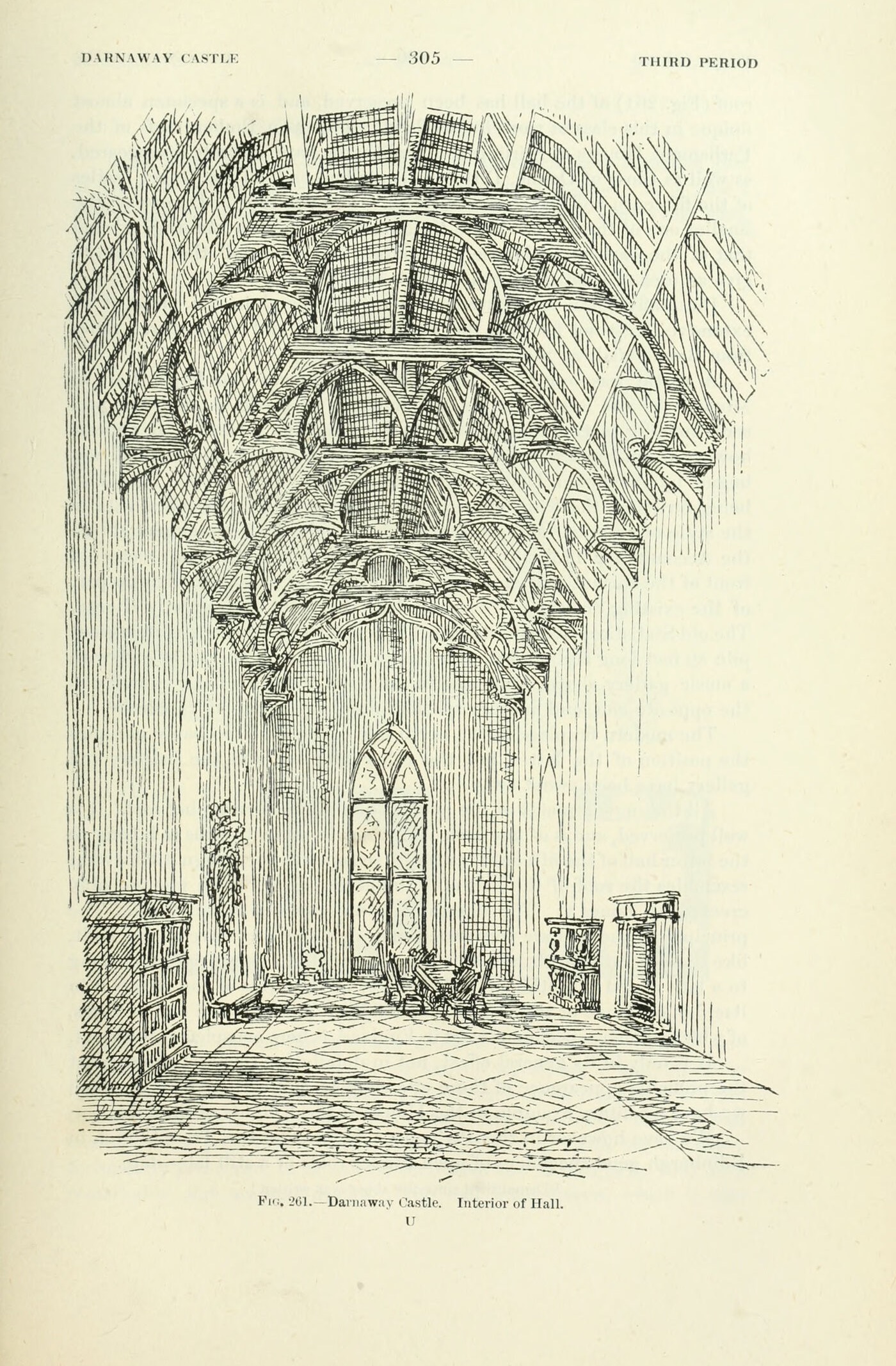
Fig. 261. Darnaway Castle. Interior of Hall.
1887 · MacGibbon & Ross, Castellated and Domestic Architecture of Scotland, vol. 1 (1887)
Public domain