Scotland · Ruin
Douglas Castle
Douglas Castle was the ancestral seat of the Douglas family in South Lanarkshire, rebuilt and altered several times from the 13th century onwards. In the 18th century an ambitious castellated mansion by the Adam brothers replaced earlier works; that mansion stood until demolition in 1938 and today only a single corner tower of the 17th-century castle survives. The site occupies a rise in the valley south of the Douglas Water.
Its prime
1800
Today
Ruin
As it stood in 1800
What Douglas Castle looked like in its prime.
A large 18th-century castellated mansion of pale sandstone rising five storeys, with crenellated roofline, round towers on the front elevation and square towers to the rear; the long, regular ashlar facades sit within an extensive formal park spanning a river valley. At one corner a separate cylindrical 17th-century stone tower (three storeys) projects above a low enclosing wall around a roughly 40 m courtyard; the group sits on a grassy rise with mature trees and the Douglas Water below.
Its story
The story of Douglas Castle.
Douglas' Larder, 1307
The Douglas family built the first castle at Douglas, of either wood or stone, sometime before 1288. In 1307, during the Wars of Scottish Independence, it was captured and garrisoned by the English under Lord Clifford. Sir James Douglas, companion of Robert the Bruce, took his family seat back by storming the castle on Palm Sunday while the garrison were at chapel. He had the garrison killed and thrown into a cellar before burning the building, an episode remembered ever since as "Douglas' larder".
Stronghold of the Black Douglases, 1357–1574
Robert the Bruce rewarded Sir James's loyalty with vast holdings, and in 1357 his nephew Sir William Douglas was created Earl of Douglas. In 1384 Sir James's illegitimate son Archibald became the 3rd Earl, and Douglas Castle was rebuilt as one of the strongholds of the "Black" Douglases. By the 15th century the family's power had come to threaten the Stewart monarchy itself. In 1455 James II led an expedition against the rebellious 9th Earl, defeated his forces at the battle of Arkinholm, sacked Douglas Castle and declared the family's lands and titles forfeit.
The "Red" Douglases, Earls of Angus, had sided with the king against the senior branch of their own family, and it was they who gained the Douglas lands in Lanarkshire. The castle was probably rebuilt soon after 1455, and in June 1574 Regent Morton came to Douglasdale to survey the Earl of Angus's house with a view to repairing it and living there.
Fire and the Adam Brothers' Unfinished Colossus, 1703–1761
In 1703 Archibald Douglas, 3rd Marquess of Douglas, was created Duke of Douglas, with Douglas Castle as his principal seat. The castle was rebuilt around this time as a tower house with an enclosed courtyard and corner tower, but fire destroyed it in 1755, all except the corner tower.
From 1757 the Duke began an enormous castellated mansion on the site, designed by the Adam brothers, James, John and Robert. Had it been finished, it would have been the largest castle in Scotland; but the Duke died in 1761 and only around half of the design was ever built. The five-storey house, with round towers to the front and square towers behind, stood in an extensive park spanning the valley of the Douglas Water.
The Douglas Cause, the Homes and Demolition, 1761–1938
The Duke's estate became the prize in a famous and bitter legal battle, the "Douglas Cause", fought between his nephew Archibald James Edward Douglas and the Duke of Hamilton. Douglas eventually won, and was ennobled as Baron Douglas in 1790; the castle then descended through his daughter and granddaughter to the Earls of Home, making it in time the family seat of the Prime Minister Sir Alec Douglas-Home.
In the 1930s Charles Douglas-Home, 13th Earl of Home, allowed coal mining in the park beside the castle in an attempt to relieve desperate local unemployment. The workings caused dangerous subsidence beneath the house, and in 1938 the mansion had to be demolished. Only the three-storey corner tower of the 17th-century castle, once kept as a garden folly, was left standing. Sir Walter Scott had drawn on the site and its early history for his novel Castle Dangerous, a name by which the castle is still sometimes known.
Step inside
7 places to explore in 1800.
The record describes 7 distinct spots at Douglas Castle, including 1 interior: small cellar block with glazed tiles. Create your own photoreal reconstruction and explore every one, more scenes means more rooms, more angles, and more of the place to stand in.
Build Your Own Castle
Recreate Douglas Castle with AI to explore it.
The artist rebuilds it as it stood in 1800, a photoreal reconstruction that belongs to you alone. Pay with coins, no subscription needed.
Recreate this castle →Defend this castle →Whose castle
Clans who held Douglas Castle.
The families that held Douglas Castle for a decade or more across its history, follow a name to its clan.
Stronghold and seat of the Douglas, later Douglas-Home, family from before 1288 to the 20th century; forfeited by the senior 'Black' line in 1455, the Lanarkshire lands passing to the 'Red' Douglas Earls of Angus.
From the archive
Douglas Castle on paper: the measured plan and period views.
The survey plan and photographs below are the ground truth this page's reconstructions are checked against, drawn and photographed while the castle was still a working garrison. Every image is public-domain or openly licensed, with its source named.
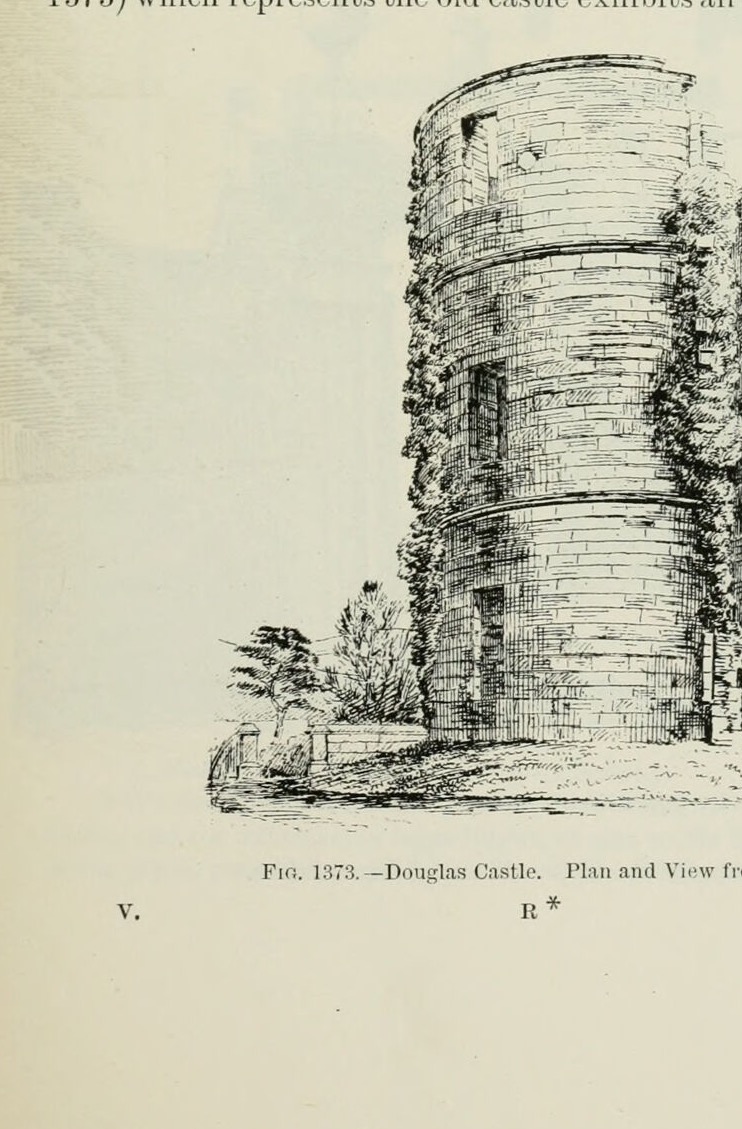
Fig. 1373. Douglas Castle. Plan and View from South-West
1892 · MacGibbon & Ross, vol. 5 (1892)
Public domain
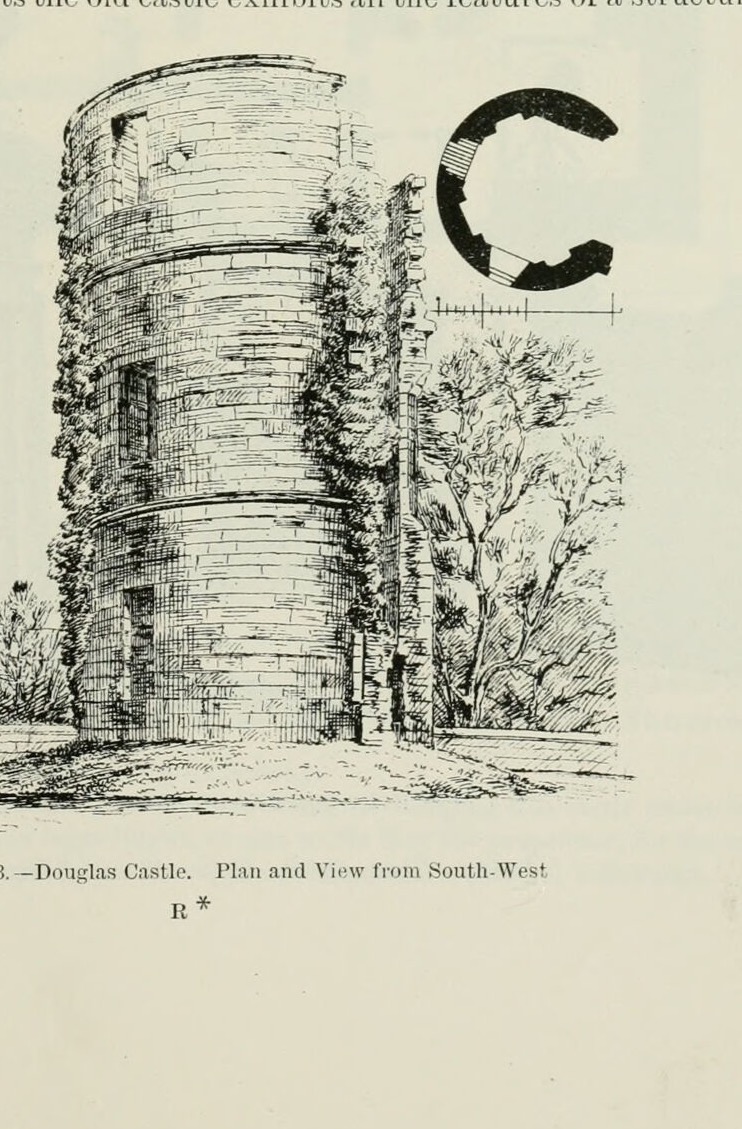
Fig. 1373. Douglas Castle. Plan and View from South-West
1892 · MacGibbon & Ross, vol. 5 (1892)
Public domain
Nearby