
Scotland · Partial ruin
Castle Campbell
Castle Campbell is a medieval hilltop castle above the town of Dollar in Clackmannanshire, central Scotland. It was the lowland seat of the Earls and Dukes of Argyll from the 15th to the 19th century and comprises a tower house with attached east and south ranges arranged around a courtyard, set above narrow gorges overlooking the Devon Valley.
Its prime
1595
Today
Partial ruin
As it stood in 1595
What Castle Campbell looked like in its prime.
A rectangular stone tower house with a pitched roof stands with attached ranges around a grassy courtyard; the east range features a two-arched loggia with an ashlar façade above. Large south-facing windows in the south range overlook terraced gardens and the Devon Valley. The castle perches on a rocky crag between two narrow gorges (the former 'Gloom'), with mixed woodland on the slopes below and a wide rural panorama beyond. Masonry is grey-brown dressed stone; roofs on the main tower and ranges are present in the prime state.
Its story
The story of Castle Campbell.
Castle Gloom and the Papal Bull of 1461
The naturally defended spur above Dollar, flanked by narrow gorges (the name Castle Gloom may derive from the Gaelic glom, "a chasm") may have carried a motte as early as the 12th century. The present tower was built around 1430 for John Stewart, Lord Lorne, or one of his kinsmen, and in about 1460 Colin Campbell, 1st Earl of Argyll, acquired the property during his marriage to Lord Lorne's daughter Isabel Stewart. The castle's first appearance in the record came the following year, when Pope Paul II issued a bull against Walter Stewart, son of Lord Lorne, for attacking and damaging the "Place of Glom"; Campbell, then at the papal court, may himself have organised the pope's intervention. The tower shows signs of early rebuilding after this episode.
In February 1490 Campbell petitioned the newly crowned James IV to change the name from Gloom, and an act of parliament duly made it Castle Campbell, a change that suggests the very word "castle" carried prestige enough to need royal approval.
A Lowland Seat for the House of Argyll
The acquisition extended Campbell power from Argyll in the west into central Scotland, and suited Colin Campbell's post as Master of the Household to James III, which demanded his frequent presence at court. The east range was probably added first; sometime after the 2nd Earl succeeded in 1493 the large south range was begun, showing the influence of contemporary work at Stirling Castle, with a state apartment of hall, outer chamber and bedchamber lit by large south-facing windows over the gardens and the Devon valley.
In the more peaceful 1590s the 7th Earl rebuilt the east range with a two-arched loggia facing the courtyard, polished ashlar above and fashionable galleries behind. An inventory of 1595 lists the furnishings room by room, 47 beds in all, and in 1584 the 6th Earl and his wife Agnes Keith had hung the castle with 18 pieces of tapestry. In 1605 the Earl arranged with his tenants for coal to be brought from the pits at Sauchie to keep the castle warm.
Knox, Queen Mary and the Chaseabout Raid
The 4th Earl embraced the Reformation and became one of the leading Protestant lords of his day; John Knox preached at Castle Campbell in 1556 and returned in February 1564 to meet the 5th Earl. In January 1563 Mary, Queen of Scots, stayed three days for the marriage of the Earl's sister Margaret to James Stewart, Lord Doune, celebrations that included a masque of courtiers and musicians dressed as shepherds playing lutes. Knox disapproved of the dancing.
In July 1565 the Earls of Moray and Argyll were said to have plotted to seize Mary and Lord Darnley as they rode past Loch Leven, with Darnley to be held at Castle Campbell to prevent their marriage. The plan came to nothing; after the wedding Argyll joined the Protestant rebellion known as the Chaseabout Raid, and Mary and Darnley received the surrender of Castle Campbell.
Montrose's Raid and the Burning of 1654
The 8th Earl led the Presbyterian Covenanters against the Royalist Marquess of Montrose, and in 1645 Montrose's troops (many of them MacLeans, long-standing adversaries of the Campbells) laid waste the lands around the castle, including Dollar and Muckhart, on their way to the Battle of Kilsyth. The castle itself was undamaged and no siege was attempted; Argyll answered by ordering the destruction of the Royalist seats at Menstrie and Airthrie.
After the execution of Charles I, Argyll placed the crown of Scotland on Charles II's head at Scone in 1651, but opposed his invasion of England and submitted to Cromwell's Commonwealth in 1652. Cromwell's forces were garrisoned in Castle Campbell in 1653, and in July 1654 Royalist rebels attacked and burned it over two nights. Argyll was executed after the Restoration of 1660.
Abandonment, Harviestoun and State Care
The 9th Earl built Argyll's Lodging in Stirling rather than renovate the burned castle, and apart from a brief garrison during the Jacobite rising of 1715 it was abandoned. In 1805 the 6th Duke of Argyll sold it to Crauford Tait of the adjacent Harviestoun estate, and in 1859 Harviestoun and the castle were bought by Sir Andrew Orr, a former Lord Provost of Glasgow, whose son James had excavations carried out in the 1870s that turned up stained glass from the south range windows. In 1948 the owners of Harviestoun gave Dollar Glen to the National Trust for Scotland and the castle passed into state care; excavations in the 1980s revealed timbers still charred from the 1654 burning, and the castle is now managed by Historic Environment Scotland as a scheduled monument.
Step inside
8 places to explore in 1595.
The record describes 8 distinct spots at Castle Campbell, including 2 interiors: state apartment, hall, outer chamber and bedchamber, east range galleries and stairways. Create your own photoreal reconstruction and explore every one, more scenes means more rooms, more angles, and more of the place to stand in.
Build Your Own Castle
Recreate Castle Campbell with AI to explore it.
The artist rebuilds it as it stood in 1595, a photoreal reconstruction that belongs to you alone. Pay with coins, no subscription needed.
Recreate this castle →Defend this castle →Whose castle
Clans who held Castle Campbell.
The families that held Castle Campbell for a decade or more across its history, follow a name to its clan.
Lowland seat of the Campbell Earls of Argyll from 1465.
From the archive
Castle Campbell on paper: the measured plan and period views.
The survey plan and photographs below are the ground truth this page's reconstructions are checked against, drawn and photographed while the castle was still a working garrison. Every image is public-domain or openly licensed, with its source named.

Castle Campbell, Dollar, Scotland-LCCN2001705971
ca. 1890-1900 · Photochrom Prints Collection (via Wikimedia Commons)
Public domain
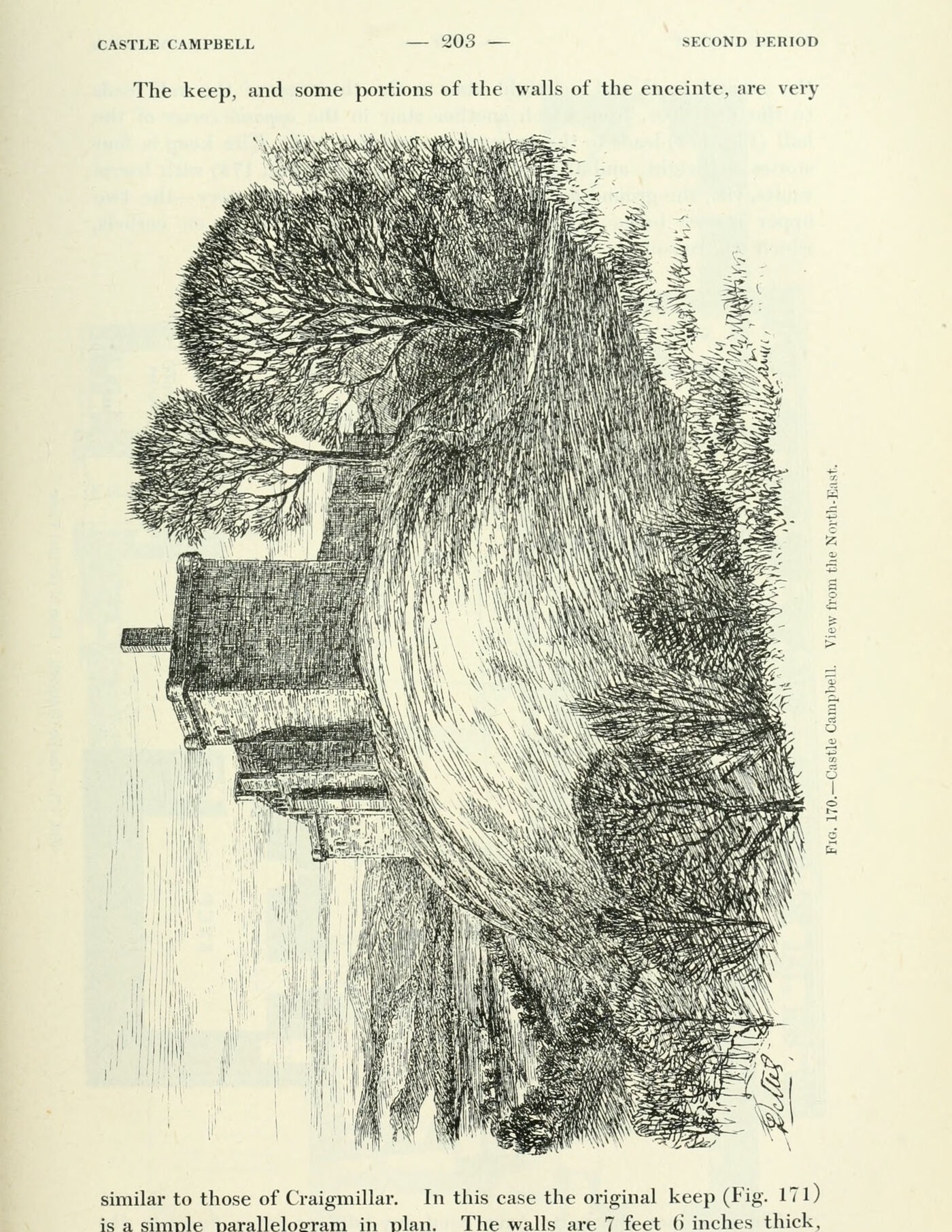
Fig. 170. Castle Campbell. View from the North-East.
1887 · MacGibbon & Ross, Castellated and Domestic Architecture of Scotland, vol. 1 (1887)
Public domain
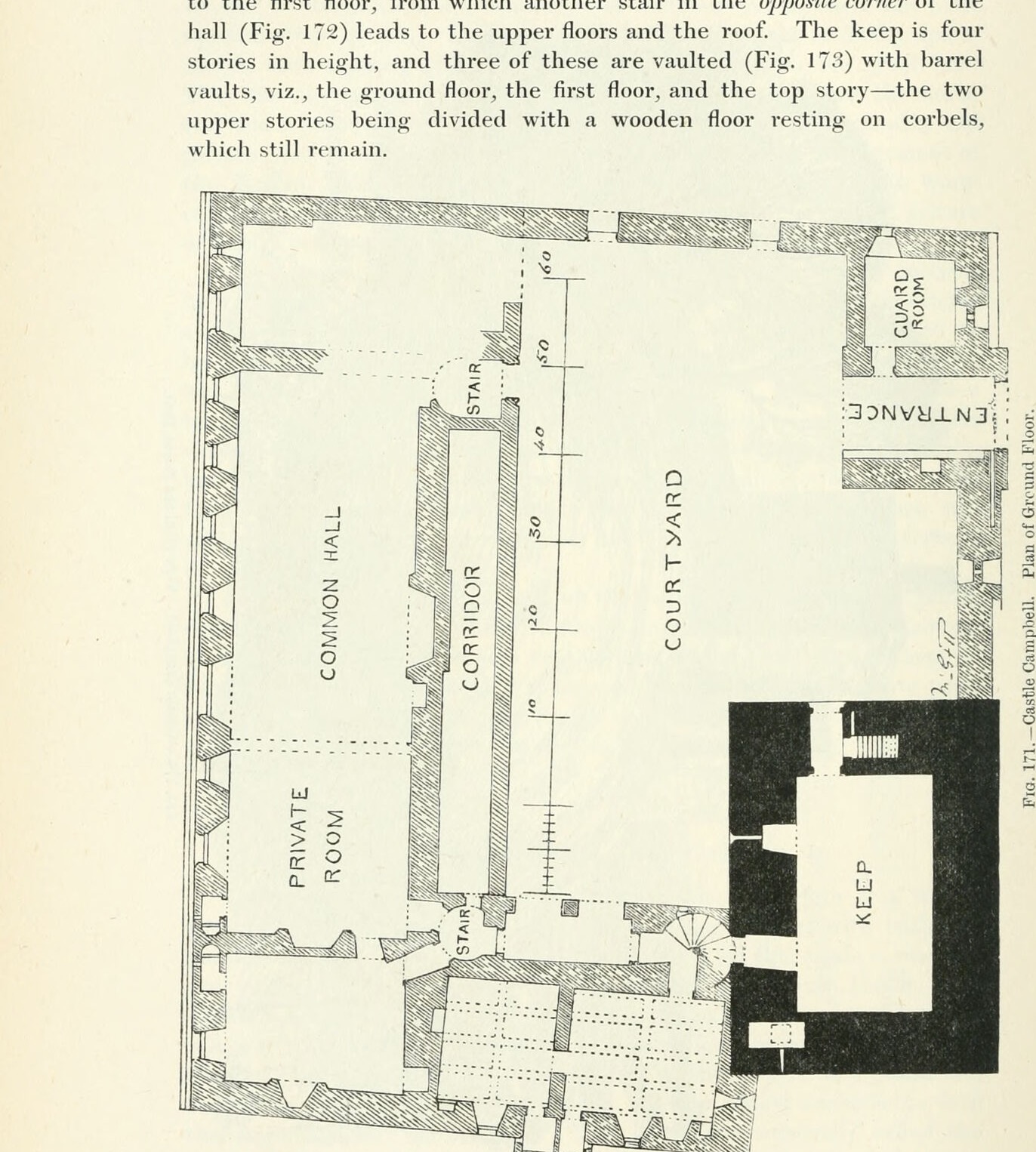
Fig. 171. Castle Campbell. Plan of Ground Floor.
1887 · MacGibbon & Ross, Castellated and Domestic Architecture of Scotland, vol. 1 (1887)
Public domain
Nearby


