Scotland · Ruin
Lochmaben Castle
Lochmaben Castle is a medieval castle ruin at the south end of Castle Loch in the town of Lochmaben, Dumfries and Galloway, Scotland. Built in the late 13th/early 14th century and remodelled in the early 16th century, it was occupied and altered through the 16th century before being gradually abandoned; its remains are a scheduled monument.
First raised
1488
Its prime
1504
Today
Ruin
As it stood in 1504
What Lochmaben Castle looked like in its prime.
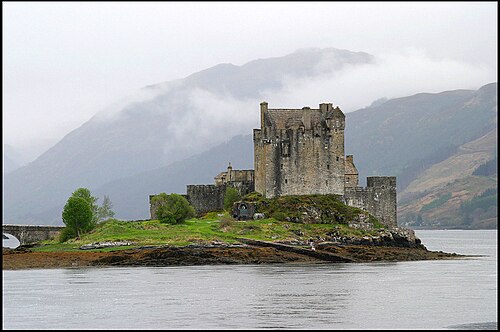
A compact complex of weathered grey-brown rubble masonry: thick curtain walls and the stumpy remains of at least one multi-storey tower rise from a grassy, gently sloping bank beside Castle Loch. Much of the interior area is reduced to low stone foundations and piled rubble. Surviving masonry shows rough coursing of local stone with occasional larger squared blocks; no rooflines survive in the present photo, and trees and earthworks enclose the site on the landward side.
Its story
The story of Lochmaben Castle.
The Bruce Motte and Edward I's Castle, c. 1160–1300
The first castle at Lochmaben was a motte and bailey raised around 1160 by the Bruce family, Lords of Annandale, on ground just south of where the present ruin stands. Edward I replaced it around 1300 with a far sturdier structure at the south end of Castle Loch, and the remains still show the strength of its defences.
Archibald Douglas's Nine-Day Siege and Crown Custody, 1383/4–1512
On 4 February 1383/4, Archibald Douglas, Lord of Galloway, took the castle from its English garrison after a nine-day siege, with the help of the Earls of March and Douglas, and "razed it to the ground". The castle and barony passed to the Earls of March; when the 10th Earl was forfeited and then reinstated in 1409, Lochmaben and the Lordship of Annandale were excepted from the restoration. By July 1455 both were held by Alexander Stewart, Duke of Albany, and after his death in 1485 they were annexed to the Crown by Act of Parliament on 1 October 1487.
A mason named Gluffar built a hall at the castle in 1504, roofed with local timber, and James IV visited that August to play cards with Lord Dacre. Robert Lauder of The Bass was appointed Captain and Keeper in January 1509 and reappointed for a further seven years in March 1512.
War and Rebellion under James V and Mary, Queen of Scots, 1542–1568
James V was at Lochmaben in November 1542, watching fires set by the Scottish army from Burnswark Hill; on learning of the defeat at Solway Moss he returned to Stirling Castle. Because Lord Maxwell had let the English garrison his castles during the Rough Wooing, Regent Arran besieged Lochmaben in November 1545, with James Crawford bringing artillery from Edinburgh Castle. Mary, Queen of Scots and Lord Darnley came to Lochmaben in October 1565 at the conclusion of the Chaseabout Raid.
Regent Moray sent an army against Mary's supporters in the south-west, and Lochmaben surrendered on 23 June 1568, with a garrison installed under James Douglas of Drumlanrig. Maxwell supporters hidden inside the castle overpowered Douglas's men the following day.
Maxwell's Rising and Bothwell's Disguise, 1588–1592
In 1588 the castle was held by Lord Maxwell, seeking to overthrow the Protestant monarchy; James VI besieged Lochmaben with English assistance, with gunpowder sent from Edinburgh. The keeper David Maxwell and five others were hanged despite efforts by William Stewart of Monkton to negotiate a surrender. In June 1592 Francis Stewart, 5th Earl of Bothwell, said to have been dressed as a woman, infiltrated and captured the castle, then kept by Sir John Carmichael, during an uprising against James VI, though it was soon returned to crown control.
Decline, Abandonment and Scheduled Monument Status, 1605–1937
Sir William Cranstoun of that Ilk, Depute Lieutenant of the Borders, was Keeper of Lochmaben in 1605. The castle saw its last siege in the early seventeenth century and was gradually abandoned. James VI allocated £1,600 sterling for repairs in 1624, though nothing seems to have been done. The castle has been a scheduled monument since 1937, and the Earl of Mansfield holds the hereditary title of Keeper of Bruce's Castle of Lochmaben.
Step inside
6 places to explore in 1504.
The record describes 6 distinct spots at Lochmaben Castle, including 1 interior: great hall (built 1504). Create your own photoreal reconstruction and explore every one, more scenes means more rooms, more angles, and more of the place to stand in.
Build Your Own Castle
Recreate Lochmaben Castle with AI to explore it.
The artist rebuilds it as it stood in 1504, a photoreal reconstruction that belongs to you alone. Pay with coins, no subscription needed.
Recreate this castle →Defend this castle →Whose castle
Clans who held Lochmaben Castle.
The families that held Lochmaben Castle for a decade or more across its history, follow a name to its clan.
From the archive
Lochmaben Castle on paper: the measured plan and period views.
The survey plan and photographs below are the ground truth this page's reconstructions are checked against, drawn and photographed while the castle was still a working garrison. Every image is public-domain or openly licensed, with its source named.
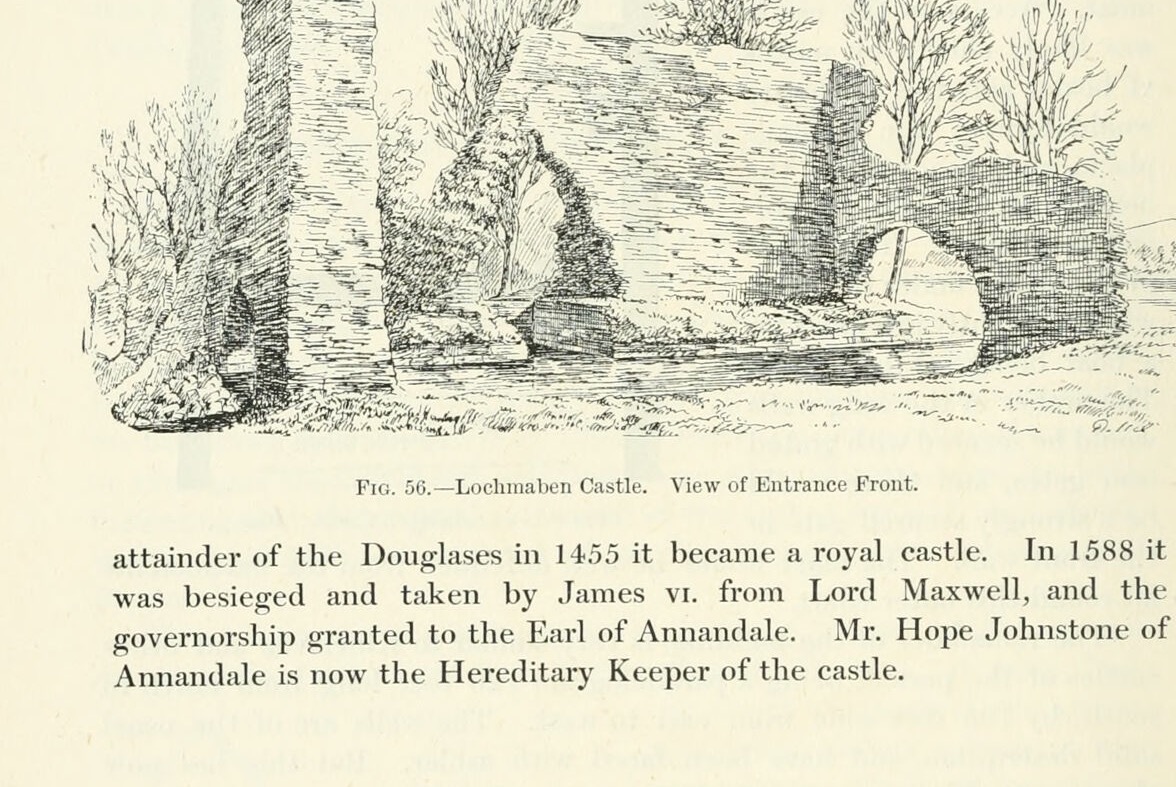
Fig. 56. Lochmaben Castle. View of Entrance Front.
1887 · MacGibbon & Ross, Castellated and Domestic Architecture of Scotland, vol. 1 (1887)
Public domain