
Spain · Restored
Bellver Castle
Castillo de Bellver
Bellver Castle is a 14th-century circular Gothic castle on a wooded hill west of Palma de Mallorca, built as a royal residence for the Kings of Majorca. Its plan is a round curtain wall with a circular inner courtyard surrounded by a two-storey palace and several round towers, including a larger donjon linked by a high bridge over a surrounding moat.
First raised
1310
Its prime
1311
Today
Restored
As it stood in 1311
What Bellver Castle looked like in its prime.
A near-perfect circular stone fortress of pale local rock set atop a wooded hill, with a round outer curtain wall pierced by evenly spaced narrow windows and topped by crenellated battlements; three smaller cylindrical towers ring the curtain and a larger cylindrical donjon stands attached by a high bridge over a surrounding moat. The interior is built as a two-storey ring around a circular central courtyard with a well at its centre and a gallery of Gothic semicircular arches facing the yard.
Its story
The story of Bellver Castle.
James II's Round Castle, 1300–1311
Bellver was raised between 1300 and 1311 on a wooded hill above Palma for King James II of Majorca, its name, medieval Catalan bell veer, taken from its sweeping view over the city, its harbours and the Serra de Tramuntana. The author of the original design of the central block is not recorded, but the castle's account books document Pere Salvà, who also worked on the Royal Palace of La Almudaina, as the master drawing the highest fees around 1309. With Restormel in Cornwall, Montaner in Gascony and Michelstetten in Lower Austria, which took Bellver as its model, it is one of only four circular-plan castles in Europe: a round two-storey palace about a circular courtyard, three attached round towers, and a free-standing donjon joined to the main drum by a high bridge over the rock-cut moat. Its double arches show clear Islamic influence, and its stone was quarried from the hill itself, quarrying that has since opened cracks in the building.
Two Sieges Resisted, One Assault Lost: 1343, 1391, 1521
Built as a residence for the Kings of Majorca (James II, Sanç and James III lived here when not on the European mainland, and John I of Aragon sheltered here from the plague in 1394) Bellver was nonetheless tested as a fortress. It resisted a siege in 1343, when Peter IV of Aragon campaigned to fold the Majorcan kingdom back into the Crown of Aragon, and again in 1391 during the revolt against the city's Jewish quarter. It fell to an enemy only once in its history, taken by assault in 1521 during the second Revolt of the Brotherhoods, and by 1523 the defeated rebels were themselves locked up inside it. With the coming of artillery the battlements of the drum and barbican were removed, then those of every tower, and loopholes for guns were cut instead.
Wardens, a Charterhouse and a Captive Queen
The castle was usually governed by a Lord Warden. In 1408 King Martin I gave the lordship of Bellver to the charterhouse of Valldemossa, which thereafter named its castellan; in 1459 Charles of Viana arrived to take possession of the island's castles under the pact with his father, John II, but the king never granted him Bellver. The enclosed site made a natural prison from the 14th century: after James III of Majorca fell at the Battle of Llucmajor in 1349, his queen, Violante of Vilaragut, her stepchildren James and Isabella, and other loyalists of the fallen king were held here.
Jovellanos, the Political Prison and the Prisoners of 1936
During the War of the Spanish Succession Bellver held supporters of Philip of Anjou, then, after the Bourbon victory, partisans of the Habsburg pretender. The minister Gaspar Melchor de Jovellanos, imprisoned from 1802 to 1808, wrote the first description of the castle and commissioned its first plans and drawings. Prisoners taken at the Battle of Bailén followed during the Peninsular War, then the anti-absolutist general Luis de Lacy, shot here in 1817, the Catalan republican Valentí Almirall in 1869, Arsenio Martínez Campos in 1874, and a succession of Carlists.
In 1931 the Second Republic ceded the castle and its surrounding forest to the city of Palma (a transfer won in parliament by the deputy Alexandre Jaume), and it opened as a museum in 1932. After the rising of 1936, eight hundred republican political prisoners were confined here and forced to build the present access road; among them were Jaume himself and Emili Darder, Palma's mayor at the time of the cession, both of whom were later shot. Restored in 1976, the castle now houses Palma's History Museum.
Step inside
10 places to explore in 1311.
The record describes 10 distinct spots at Bellver Castle, including 4 interiors: circular central courtyard with well, arcaded gallery overlooking the courtyard, royal apartment window facing the courtyard and more. Create your own photoreal reconstruction and explore every one, more scenes means more rooms, more angles, and more of the place to stand in.
Build Your Own Castle
Recreate Bellver Castle with AI to explore it.
The artist rebuilds it as it stood in 1311, a photoreal reconstruction that belongs to you alone. Pay with coins, no subscription needed.
Recreate this castle →Defend this castle →From the archive
Bellver Castle on paper: the measured plan and period views.
The survey plan and photographs below are the ground truth this page's reconstructions are checked against, drawn and photographed while the castle was still a working garrison. Every image is public-domain or openly licensed, with its source named.
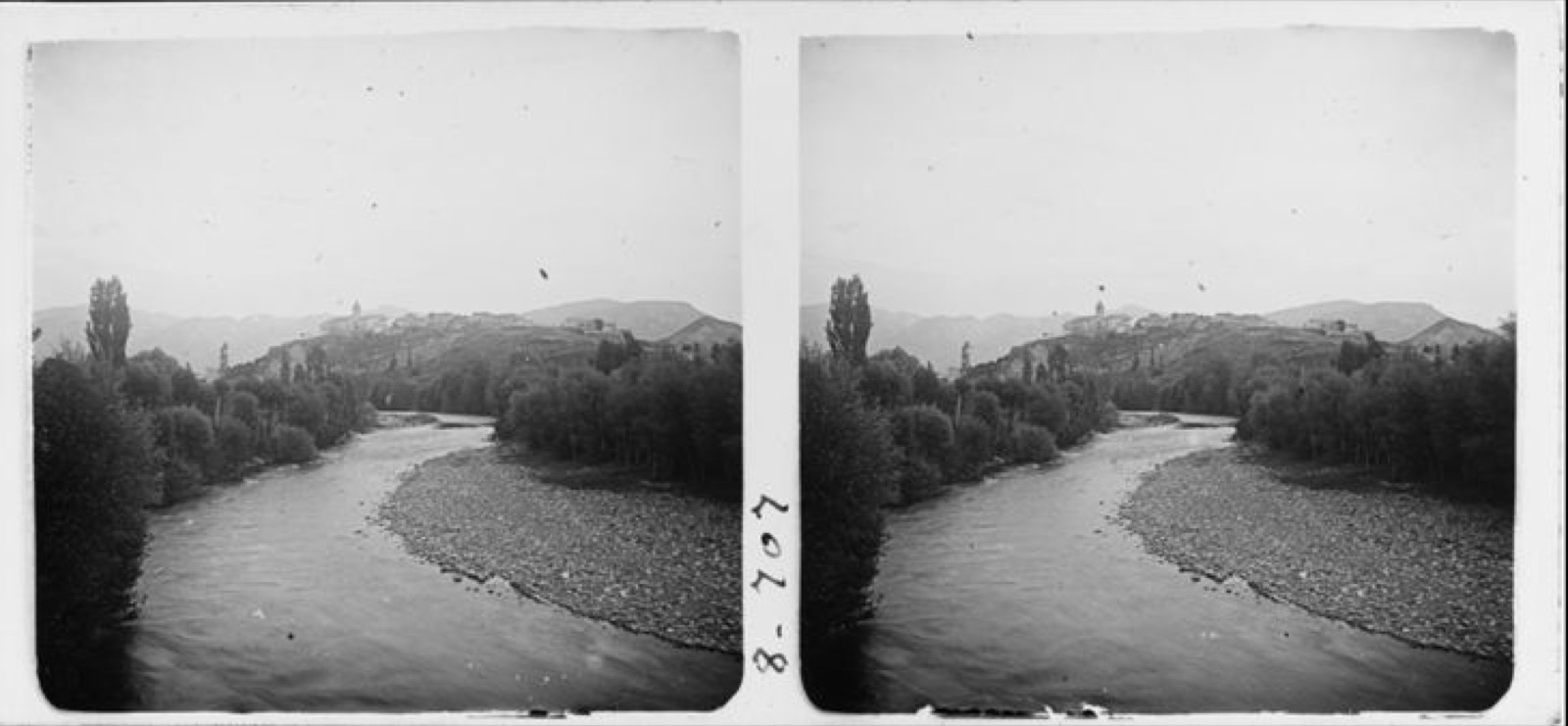
Vista general de Bellver
1923 · Digital Memory of Catalonia (via Europeana)
Public domain
Nearby


