
Switzerland · Restored
Aarburg Castle
Schloss und Festung Aarburg
Aarburg Castle is a medieval fortress perched on a steep rocky ridge above the town of Aarburg in the canton of Aargau, Switzerland. Built around the 13th century and expanded in the 16th–17th centuries into a large baroque fortress, it dominates the narrow crossing of the Aare River and today houses a cantonal youth institution.
First raised
1659
Its prime
1673
Today
Restored
Ranked among Europe’s castles
As it stood in 1673
What Aarburg Castle looked like in its prime.
Sited on a narrow, elongated limestone ridge above the town and the Aare, the castle presents a compact cluster of thick-walled stone buildings and towers. A 13th-century keep and tower house with walls 3–3.5 m thick anchor the core; additional living ranges and a stair tower extend along the ridge. Large, heavily fortified wings stand on the northeast and west. Red-brown tiled roofs and a white twin-towered baroque façade face the town; lower levels are built directly onto exposed rock.
Its story
The story of Aarburg Castle.
Frohburg, Büron and the Aare Narrows, 1123-1330
The year the first castle rose on the steep spur above the Aare narrows is not known. It appears indirectly in a document of 1123, in connection with Count Adalbero I of Frohburg, and a fortification is thought to have stood there from early in the 12th century. The Bürons held it from about the middle of the 12th century, and shortly before 1200 the Frohburgs took it back and installed ministeriales. The first direct mention is from 1255, some fifteen years after a Frohburg partition carried it to the family's Waldenburg branch; the oldest surviving fabric, the main tower known as the Harzer and the palas, dates from about that time. The castle watched the north-south route and the river harbour at the Aarewaage, and blood justice went with it. In 1299 the Frohburgs sold castle and office to the Habsburgs, and from 1330 the von Kriech family, lesser Habsburg service nobility, held both in pledge and lived there.
Bern Takes the Castle, 1415-1460
Bern overran parts of what is now the Aargau in April 1415. How Aarburg changed hands is told two ways: by one account it fell to a brief siege on 20 April; by another its holder, Johannes Kriech, resisted long after the little town below had been taken, and sold the castle to Bern only in 1416, once word reached him that the rest of the Aargau had fallen. His brother-in-law Rudolf von Landenberg pressed a claim in 1446 and was refused. From 1416 the new Bernese office of Aarburg was run by Landvögte, resident in the castle from 1419; at first the bailiff administered the whole Bernese Aargau, and only as Bern pushed back the rights of nobility and clergy were further bailiwicks added, beginning with Lenzburg in 1442 and Schenkenberg in 1460.
Rebuilt for Comfort, then for Artillery, 1470-1673
The palas was gutted, re-floored and raised in 1470; in 1534-35 its top storey was heightened and the present roof truss built, while the top floor of the main tower came down for a barrel vault and a breastwork, and a tent roof followed in 1557. The works of 1621 to 1627 were for comfort and display, adding a hexagonal stair tower at the south-west corner of the palas.
After the First Villmergen War the Zurich fortress engineer Johann Georg Wertmüller drew up a scheme for a fortress, holding it urgent to fortify the ridge running away eastward, too easily taken; the cost sank the project. Bern's council resolved on the full build-out to an artillery fortress in 1661, the foundations were finished by 1663 and the building itself dragged on ten more years, producing a work more than 400 metres long. Its purpose was to guard the link between the Reformed towns of Bern and Zurich at the narrowest point of Bernese territory and to make an attack by the Catholic neighbours harder.
Garrison, State Prisoners and the Decline to 1864
From 1666 the fortress carried a permanent garrison, with the Landvogt as its commander. Part of it was a prison, used above all for political prisoners; the best known was Jacques-Barthélemy Micheli du Crest, held from 1749 to 1766. On 10 March 1798 the Bernese handed the fortress to the French without a fight, and state prisoners went on being held there through the Helvetic Republic, among them Alois von Reding.
The new canton of Aargau took over in 1804, using the works as arsenal and barracks until 1826 and as a prison after that. The execution ground in the eastern works, between tenaille and hornwork, served under Bernese rule for court hearings and death sentences, and the canton had executions carried out there too, the last in 1863. When the penitentiary at Lenzburg opened in 1864 the rooms here fell empty; the canton let them to people without means and kept up only the barest repairs.
The Cantonal Youth Home, 1891-1988
In 1891 the Grosser Rat resolved to set up an "institution for juvenile criminals and scoundrels" in the fortress. The compulsory-education institution that opened in 1893 was the first of its kind in Switzerland. Discipline, order and punishment governed it at first; under Adolf Scheurmann, director from 1905, the inmates were treated as pupils given schooling and a trade apprenticeship, and from the 1930s the educational purpose came further to the fore. A complete rebuild between 1946 and 1959 took in the main tower, the palas and the barracks wings; a second general renewal finished in 1988. Aarburg is classed as a Swiss cultural property of national significance and is described as the only fortress of the early modern period preserved in the country; the Kantonale Jugendheim still occupies it.
Step inside
9 places to explore in 1673.
The record describes 9 distinct spots at Aarburg Castle, including 5 interiors: keep lower chamber carved from rock, 13th-century tower house, palace range rebuilt 1470 and more. Create your own photoreal reconstruction and explore every one, more scenes means more rooms, more angles, and more of the place to stand in.
Build Your Own Castle
Recreate Aarburg Castle with AI to explore it.
The artist rebuilds it as it stood in 1673, a photoreal reconstruction that belongs to you alone. Pay with coins, no subscription needed.
Recreate this castle →Defend this castle →Whose castle
Clans who held Aarburg Castle.
The families that held Aarburg Castle for a decade or more across its history, follow a name to its clan.
Frohburg
In the possession of the Counts of Frohburg from the early 13th century until 1299.
Habsburg
The Frohburgs sold the castle and its entire Vogtei to the Habsburgs in 1299.
From the archive
Aarburg Castle on paper: the measured plan and period views.
The survey plan and photographs below are the ground truth this page's reconstructions are checked against, drawn and photographed while the castle was still a working garrison. Every image is public-domain or openly licensed, with its source named.
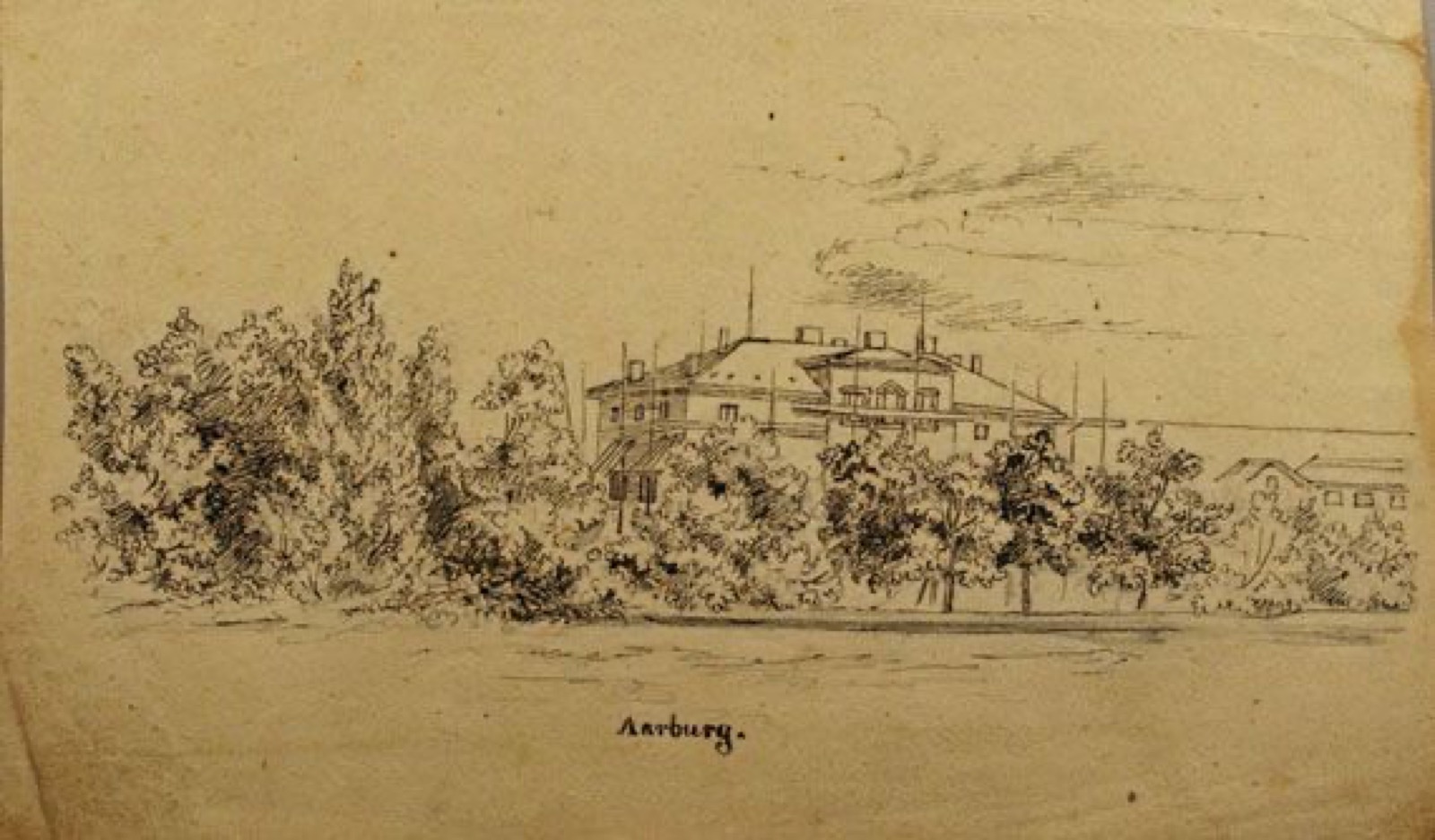
Karl Jauslin (1842-1904) - Federzeichnung, Aarburg
· Museums Muttenz (via Europeana)
CC BY-SA
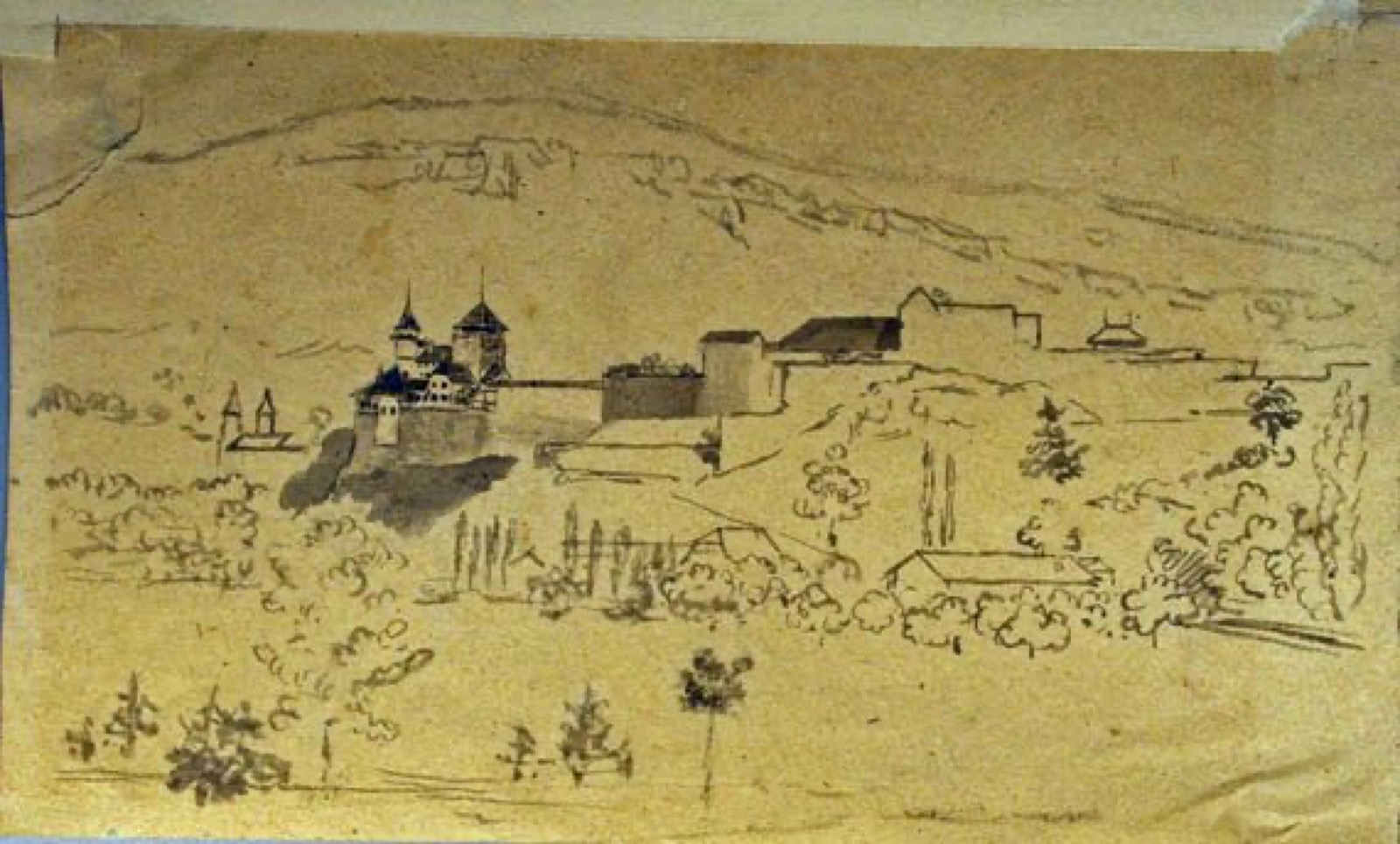
Karl Jauslin (1842-1904) - Zeichnung, Aarburg
· Museums Muttenz (via Europeana)
CC BY-SA
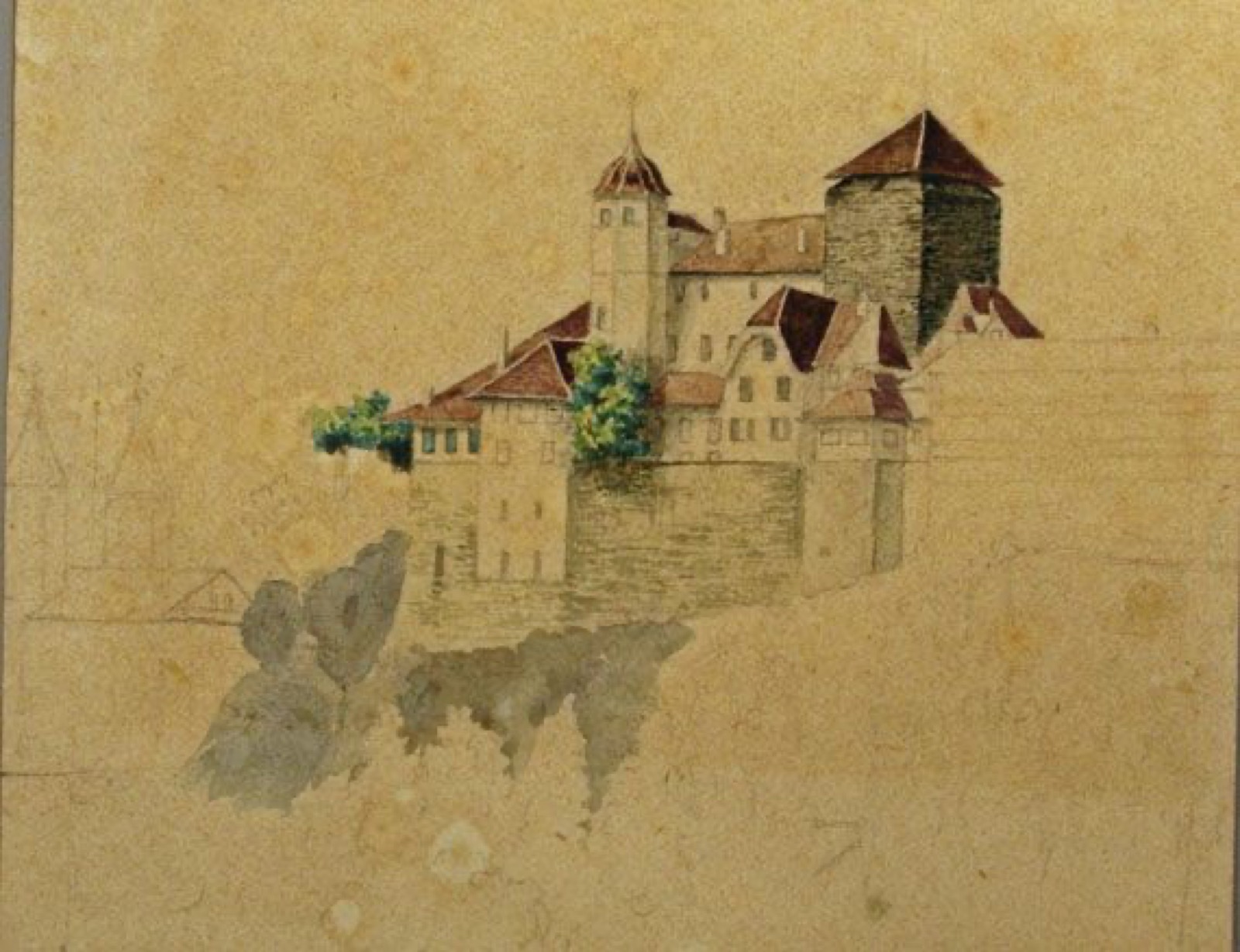
Karl Jauslin (1842-1904) - Zeichnung, Aarburg
· Museums Muttenz (via Europeana)
CC BY-SA


