Historic Cities · Germany
Berlin through the ages
Berlin is the capital and largest city of Germany. With 3.7 million inhabitants, it has the highest population within its city limits of any city in the European Union. The city is also one of the states of Germany, being the third-smallest state in the country by area. Berlin is surrounded by the state of Brandenburg, bordering Brandenburg's capital Potsdam to the southwest.

Berlin in 1750
Frederician Berlin
This Berlin is a rising Prussian capital under Frederick II, where royal building projects and a packed garrison are reshaping a compact, riverside town. The walk follows Unter den Linden and the new Forum Fridericianum, passes the recently raised opera and St. Hedwig's, and moves through the Spree quays, market lanes and parade grounds of mid‑eighteenth‑century Berlin.
Low, closely packed rooflines of timber‑framed and plastered houses cluster along the Spree; new stone façades and domes of royal projects punctuate that medieval silhouette. Unter den Linden's young lime allee cuts a pale green ribbon toward the palace, sandy streets crunch under carriages, and narrow canals take barges to quays lined with warehouses. Soldiers in Prussian coats and caparisoned carts are constant notes against scaffolding, smoke and river reflections.
The route: 22 streets, squares and views
Road from Potsdam → Potsdam Gate → Oktagon (Leipziger Platz) → Leipziger Straße → Friedrichstraße → Unter den Linden (west end) → Unter den Linden at Opera → Royal Opera House → St. Hedwig's Cathedral → Forum Fridericianum → …
Step inside, 14 interiors
Grenadier mess hall · Gazette printing shop · Tailor's workshop · Coffee house with gazettes · Main auditorium · Royal library reading room · Academy lecture hall · Royal tobacco chamber · Audience chamber · River warehouse · Fishmongers' hall · Nikolaikirche nave · Huguenot silk‑weaver's workshop · Ministerial counting room
Planned from the Wikipedia record: History of Berlin.
Berlin in 1871
Imperial Berlin
This is the city at the moment it becomes the capital of a newly proclaimed German Empire: a centre of court ceremony, booming industry and feverish building. The walk follows broad avenues, river quays and market squares where gaslight, horse traffic and uniformed troops meet Gründerzeit façades and older medieval lanes.
The skyline is a low city of chimneys, spirelets and the compact mass of the Royal Palace by the Spree; scaffolds and new masonry add a serried second layer of roofs. Wide boulevards such as Unter den Linden are lined with lime trees and gas lamps; trampling horses, omnibuses and soldiers animate the streets. Quays of the Spree, small bridges and the Tiergarten’s belts of mature trees break the masonry; colours favour ochres, dark brick, slate and the gleam of new brass.
The route: 22 streets, squares and views
Potsdamer Bahnhof → Potsdamer Platz → Leipziger Platz → Leipziger Straße → Wilhelmstraße → Brandenburger Tor → Unter den Linden (west) → Opernplatz → Royal Opera House → Humboldt University → …
Step inside, 12 interiors
Arrival Concourse · Main Café Salon · Main Opera Auditorium · Philosophy Lecture Hall · White Audience Hall · Ceremonial Staircase · Antiquities Rotunda · Egyptian Sculpture Room · Saint Nicholas Choir · Panorama Rotunda · Municipal Council Chamber · Gilded Dome Hall
Planned from the Wikipedia record: History of Berlin.
Berlin in 1928
Weimar Berlin
Berlin in 1928 is at the height of the Weimar decade: an electrified, noisy metropolis where modern architecture, cinema palaces and neon-lit avenues sit beside older Gründerzeit streets. This walk moves from the western boulevards and department stores across the Stadtbahn and Potsdamer Platz to the civic axes and museums, showing the city’s public life: trams, early S‑Bahn, street vendors, postered façades and neon marquees.
A low, dense skyline of late‑19th‑century stone façades, church spires and the broad outline of civic domes is punctuated by new, flat‑roofed modernism and the bright, artificial light of cinema signs and neon along the Kurfürstendamm. Streets are layered: tram rails and shiny automobiles below, the Stadtbahn viaduct with electric S‑Bahn above, always postered, often damp with coal soot, with colours of varnished wood, painted shopfronts, plaster ochres and sharp white Bauhaus render.
The route: 23 streets, squares and views
Charlottenburg Palace Approach → Kurfürstendamm Boulevard → Breitscheidplatz and Gedächtniskirche → Zoologischer Garten Forecourt → Tauentzienstraße and KaDeWe → Nollendorfplatz Junction → Motzstraße, Schöneberg → Potsdamer Straße Theatre Row → Potsdamer Platz Traffic Tower → Anhalter Bahnhof Forecourt → …
Step inside, 14 interiors
Romanisches Café Salon · Parish Nave and Galleries · UFA‑Palast Cinema Auditorium · KaDeWe Grand Atrium · Eldorado Cabaret Club · Traffic Tower Control Room · Anhalter Bahnhof Great Hall · Staatsoper Auditorium · Hotel Adlon Lobby · Schauspielhaus Concert Hall · Main Revue Stage · Hackesche Höfe Arcade · Altes Museum Antiquities Gallery · Victory Column Spiral Stair
Planned from the Wikipedia record: 1920s Berlin.
Its story
The story of Berlin.
Berlin and Cölln: Two Towns, One Palace, 1237–1539
German merchants founded two settlements on the Spree at the end of the twelfth century: Berlin, where the Nikolaiviertel now stands, and Cölln, on the island now known as Museum Island. Which is older is unclear; Cölln is first recorded in 1237, later taken as the city's founding year, and Berlin appears in 1244. Both stood on two important trade routes (the Via Imperii, and the road from Bruges to Novgorod), and profited from the staple right on them. The name Berlin is of Slavic origin, from a root usually read as "bog, swamp". The towns allied in 1307, lost most of their written records to a fire in 1380, and formally merged in 1432 as a place of some 8,000 people.
Frederick I became elector of Brandenburg in 1415, and Hohenzollerns went on ruling in Berlin until 1918. Protests against the palace begun on the Spree embankment in 1443 culminated in the "Berlin Indignation" of 1448, which failed, and the citizenry lost many of its political and economic privileges. In 1451 Berlin became the electors' residence and had to give up its status as a free Hanseatic city, its main business shifting from trade to luxury goods for the court. In 1510 one hundred Jews were accused of stealing and desecrating hosts: thirty-eight were burned to death and others were banished and stripped of their possessions, which later margraves returned. The electors and the city became Lutheran in 1539.
Devastation and the Edict of Potsdam, 1618–1700
The Thirty Years' War damaged a third of Berlin's houses and cost the city half its population. Frederick William, the "Great Elector", succeeded in 1640 and rebuilt it deliberately through immigration and religious toleration, founding the suburbs of Friedrichswerder and Dorotheenstadt and taking the population to 20,000. Fifty Jewish families from Austria were given a home in the city in 1671. With the Edict of Potsdam in 1685 he invited the French Calvinist Huguenots into Brandenburg: more than 15,000 came, 6,000 of them settling in Berlin, where by 1687 they made up a fifth of the population and included bankers, industrialists and investors. Refugees also arrived from Bohemia, Poland and Salzburg. The capital Prussia would govern from was substantially rebuilt by people driven out of somewhere else.
Garrison, Armoury and Imperial Capital, 1701–1914
In 1701 Elector Frederick III crowned himself Frederick I in Prussia and made Berlin the capital of the new kingdom in place of Königsberg; five towns were united as the Royal Capital and Residence of Berlin in 1710, with 60,000 people. Frederick William I, from 1713, drew in Protestant immigrants from across Germany, France and Switzerland, introduced universal primary education so that soldiers would be literate, and founded the Charité hospital in 1720. The city had largely become a garrison town and armoury, with the crown subsidising arms manufacture, a policy that produced the mechanics, engineers and entrepreneurs who later made Berlin industrial. Under Frederick II, from 1740, it became a centre of the Enlightenment; by 1755 it held 100,000 people, 26,000 of them soldiers. French troops marched in during 1806, after which Berlin was granted self-government, its university was founded in 1810 under Johann Gottlieb Fichte as rector, and in 1812 Jews were granted the right to practise all occupations.
Lacking waterpower, Berlin's entrepreneurs were early adopters of the steam engine after 1815, building textiles, clothing, railway gear, chemicals and machinery, and electrical machinery after 1880; the city's central place in the German railway network after 1850 fed the works and carried their products away. The population rose from 172,000 in 1800 to 826,000 in 1870, and industrial suburbs such as Wedding and Moabit were incorporated in 1861. The revolution of 1848 was suppressed by Frederick William IV, who then raised the income requirement for voting until only five per cent of the population qualified, an arrangement that lasted until 1918. Berlin became capital of a unified Germany in 1871 and its bureaucracy and military grew faster still, while sanitary conditions (among the worst in Europe in 1870, with waste water running in gutters along the kerbs) were answered by a sewer system built late in that decade. The districts around the centre filled with tenement blocks.
Revolution, Greater Berlin and the Street War, 1914–1932
The hope of a short victorious war was dashed within weeks. The British blockade cut off raw materials and food while conscription took farmers, horses and miners. The meat ration fell from 31 per cent of peacetime levels in late 1916 to 12 per cent in late 1918, and after the poor harvest of 1917 Germans fell back on almost inedible turnips; the "turnip winter" was remembered with bitter distaste for generations. By December 1917 half the workers in the city's chemicals, metals and machine-tool plants were women.
The revolution reached Berlin on 9 November 1918: councils of workers and soldiers occupied key buildings, Philipp Scheidemann proclaimed a republic from the Reichstag, and hours later Karl Liebknecht declared a "Free Socialist Republic of Germany" at the Berlin Palace. The violence did not stop. The Spartacist uprising of January 1919 failed, and on 15 January right-wing Freikorps members killed Rosa Luxemburg and Karl Liebknecht; the March Battles cost about 1,200 lives; and on 13 January 1920 security police fired on a workers' demonstration outside the Reichstag, killing 42 in the deadliest demonstration in German history.
The Greater Berlin Act of 1 October 1920 absorbed Charlottenburg, Schöneberg, Neukölln, Spandau, Köpenick and other towns, roughly doubling the population to 3.8 million and making Berlin the third most populous city in the world after London and New York. Walther Rathenau, Germany's Jewish foreign minister, was assassinated in the city on 24 June 1922 by members of the far-right Organisation Consul, and a million people marched in protest. Berlin became the largest industrial city on the continent, and then the economy broke: 450,000 Berliners were unemployed in February 1929, before the Wall Street crash, and 630,000 by December 1932. Joseph Goebbels had become Nazi Gauleiter in 1926 and the party won its first council seats in 1929, the year a banned Communist May Day demonstration ended in 42 deaths.
Nazi Rule and the Destruction of Berlin's Jews, 1933–1945
Hitler was appointed chancellor in January 1933. The Reichstag fire of 27 February (blamed on a left-wing radical, but later believed to have been set by the Nazis themselves) gave him the opportunity to set aside the constitution; tens of thousands of political opponents fled into exile or were imprisoned, and every civic organisation except the churches came under Nazi control. Hitler and Albert Speer planned to rebuild Berlin as a world capital renamed Germania; the war stopped it.
Around 1933 some 160,000 Jews lived in Berlin, a third of all German Jews and four per cent of the city's population; a third of them were poor immigrants from Eastern Europe living mainly in the Scheunenviertel near Alexanderplatz. In March all Jewish doctors had to leave the Charité, and in the first week of April officials ordered Germans not to buy from Jewish shops. The 1936 Summer Olympics, awarded to Germany before 1933, were used as a showcase for the regime, and signs forbidding Jews were temporarily removed so as not to alienate foreign visitors. After the Kristallnacht pogrom of 1938 thousands of the city's Jews were imprisoned. About 75,000 remained around 1939. In early 1943 the majority were taken to Grunewald railway station and shipped in stock cars to death camps such as Auschwitz, where most were murdered; only some 1,200 survived in Berlin by hiding and approximately 800 in the city's Jewish Hospital. Thirty kilometres to the north-west stood Sachsenhausen concentration camp, where political opponents, Jews, Poles and Russian prisoners of war were held and tens of thousands died; seventeen of its subcamps stood in Berlin beside industries that used the prisoners as labour, and the city also held a camp for Sinti and Romani people and the Stalag III-D prisoner-of-war camp.
The RAF concentrated on Berlin from November 1943 and broke off at the end of March 1944 after sixteen mass raids, by which point about half a million people had been made homeless and a quarter of the population evacuated. In all the Allies dropped 67,607 tons of bombs on the city and killed around 125,000 civilians; by May 1945 some 1.7 million people, forty per cent of the population, had fled. Hitler refused to consider surrender and killed himself in the Führerbunker on 30 April; Berlin capitulated on 2 May. Hundreds of thousands of women were subjected to rape by Soviet soldiers.
Four Sectors, the Airlift and the Wall, 1945–1989
Only 300,000 of Berlin's 1,500,000 homes were undamaged. Greater Berlin was divided into four sectors under the London Protocol of 1944, and between May and July 1945 the Soviets dismantled industry, transport and railway track in the western sectors as reparations for war damage in the Soviet Union, continuing the practice in their own zone afterwards. Refugees from the east kept arriving and residents depended heavily on the black market. With the drawing of the Oder–Neisse line and the complete expulsion of the Germans east of it, Berlin lost its traditional hinterlands of Farther Pomerania and Lower Silesia.
On 26 June 1948, responding to Western plans for a federal state and to a currency reform undertaken without Soviet approval, the Soviets blocked ground access to West Berlin; American and British aircraft supplied the western sectors for almost a year by the airlift West Berliners called die Luftbrücke, and access was restored on 11 May 1949. East Germany made East Berlin its capital in October 1949, a step the Western allies rejected. On 16 June 1953 sixty construction workers on the Stalin-Allee struck against increased work quotas and called a general strike; it became a demand for democratic rights, spread across East Germany, and was put down by Soviet tanks and live ammunition on 17 June, killing at least 153 people.
On 13 August 1961 the East German government began building a wall overnight and without warning, in response to the numbers escaping through West Berlin; it called the barrier the "anti-fascist protection wall", and families were separated for as long as it stood. There were around 5,000 successful escapes over its existence; 136 people were officially killed attempting to cross and around 200 seriously injured. The division ended on the evening of 9 November 1989, when Günter Schabowski announced that border restrictions would be lifted and left the impression that this was immediate; crowds gathered, and at 11.30 pm the guards let people through at Bornholmer Strasse. The checkpoints never closed again.
Capital Again, 1990 Onwards
Germany and Berlin were reunited on 3 October 1990. In June 1991 the Bundestag voted by 338 to 320 to move the capital back from Bonn; an attempt in 1996 to merge the state of Berlin with Brandenburg failed in a referendum on Brandenburg opposition; and in 1999 the ministries and about twenty government authorities moved east, though most ministry employees stayed in Bonn. The banking scandal of 2001 brought the city's worst financial crisis since the Second World War and austerity measures under the finance senator Thilo Sarrazin.
In 2016 a truck was deliberately driven into a Christmas market beside the Kaiser Wilhelm Memorial Church, killing 13 people and injuring 55. Berlin holds the largest Turkish community outside Turkey, from immigration in the 1950s, 1960s and 1970s, and took in more Ukrainian refugees than any other German city after the 2022 invasion, an estimated 85,000 registered by that November. It is the capital and largest city of Germany and a federal state in its own right, with 3.7 million inhabitants inside the city limits.
From the archive
Berlin on paper: the old town as it was mapped.
A period plan or bird's-eye view of the old town, drawn between 1500 and 1850, the streets this page's reconstructions walk. Public domain, with its source named.
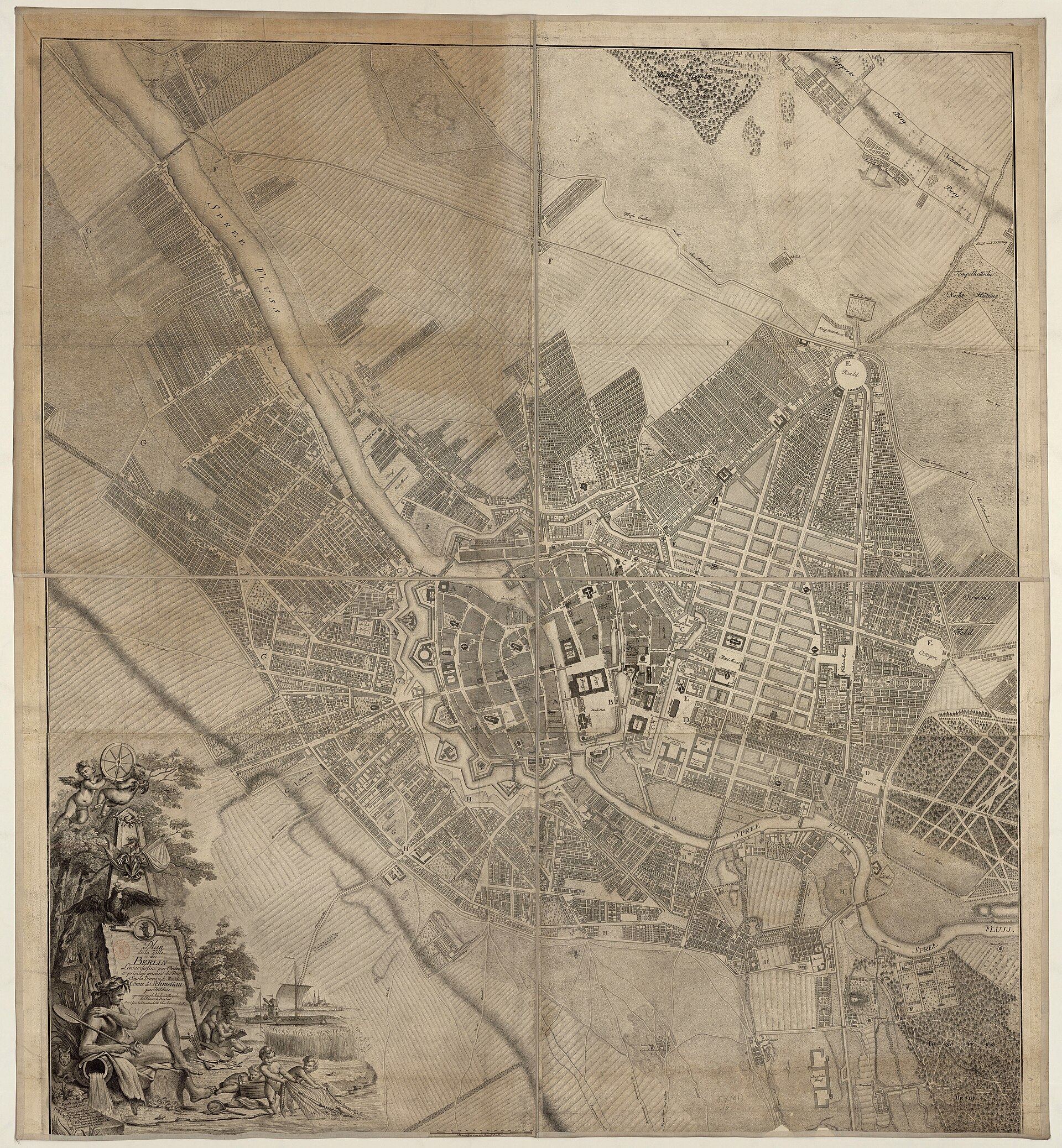
Plan of the city of Berlin by Samuel Graf von Schmettau (1748)
Detailed town plan showing bastioned city walls and ramparts, the Spree River, street blocks and central palace and churches.
Public domain (plate dated 1748)
In this city
Landmarks of Berlin, see each in its prime


More cities to explore
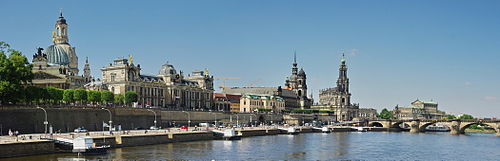 GermanyDresdenExplore it in 1560 · 1750 · 1905
 GermanyLübeckExplore it in 1500 · 1900
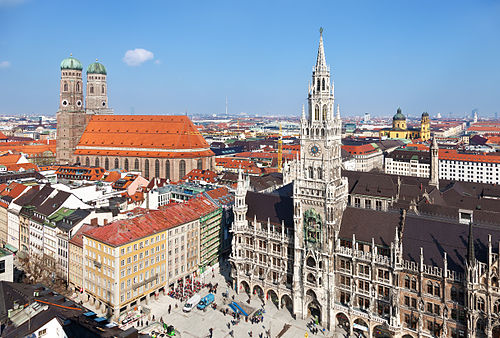 GermanyMunichExplore it in 1500 · 1700 · 1900
 GermanyCologneExplore it in AD 150 · 1250 · 1880
Castles of Europe · Landmarks of Europe · create your own reconstruction.