Historic Cities · Germany
Cologne through the ages
Cologne is the fourth-most populous city of Germany and the largest city of the German state of North Rhine-Westphalia with nearly 1.1 million inhabitants in the city proper and over 3.1 million people in the Cologne Bonn urban region. Cologne is also part of the Rhine-Ruhr metropolitan region, the second biggest metropolitan region by GDP in the European Union.

Cologne in AD 150
Roman Cologne
This is Colonia at the height of its Roman prosperity as the capital of Germania Inferior, ringed by a high stone wall and served by the long Eifel aqueduct. The walk follows the riverfront, the forum and the governor’s praetorium along the eastern wall, passes domestic houses with polychrome mosaics and the busy river port, and reaches the naval fort road to the Rhine fleet.
Low tiled roofs and packed clay yards fill the island city, its skyline punctuated by the eight-metre stone wall and regular watchtowers, the columned lines of the forum, and the broad riverside port. Pale plastered houses, colonnaded shops and painted wooden façades face tight grid streets; the governor’s praetorium runs along the eastern wall in dressed trachyte, while a distant stone aqueduct channel crosses the plain from the Eifel.
The route: 22 streets, squares and views
Rhine Approach → Oppidum Ubiorum → Northern Gate (CCAA) → Cardo Maximus → Forum and Ara Ubiorum → Decumanus Maximus → Market at the Forum → House of Dionysus Mosaic → Portus Coloniae → Ship Sheds → …
Step inside, 13 interiors
Forum Basilica Hall · Ara Ubiorum Sanctuary · Inn Hall on Decumanus · Market Macellum Hall · Dionysus Mosaic Triclinium · River Port Granary · River Fleet Long-shed · Praetorium Audience Hall · Castellum Aquae Reservoir · Iron-smith's Forge · Potter's Wheel and Kiln · Glass-blower's Furnace Room · Bathhouse Caldarium Chamber
Planned from the Wikipedia record: Colonia Claudia Ara Agrippinensium.
Cologne in 1250
Medieval Cologne
Cologne in 1250 is a thriving Rhine merchant city and an archiepiscopal centre where an ambitious new cathedral has been set out to receive the famed Shrine of the Three Kings. The walk shows stone Romanesque towers and timber houses crowding narrow streets, busy river quays and the stout city wall with its dozen gates as pilgrims, masons and merchants move through the city.
The skyline is a tangle of squat Romanesque towers, Great St. Martin, St. Gereon, St. Maria im Kapitol and many others, puncturing a roofscape of steep timber-framed houses and tile roofs. The new cathedral works rise in dressed stone and scaffold; the Rhine ripples with cogs and riverboats at a busy quayside. Streets narrow between overhanging jettied houses; the city is ringed by a high stone wall pierced by substantial gates and flanking towers.
The route: 21 streets, squares and views
Deutz Riverbank View → Severin Gate → Heumarkt Square → Great St. Martin Church → Fish Market → Old Market → Town Hall → Hohe Straße → Schildergasse → Cathedral Works → …
Step inside, 15 interiors
Severin Gate Guardroom · Great Meat Hall · Nave of Great St. Martin · Fishmongers' Shed · Town Hall Guild Hall · Cloth Merchant's Shop · Goldsmith's Workshop · Shrine of the Magi · Cathedral Masons' Lodge · Rhine Wine Tavern · Choir of St. Maria im Kapitol · Westwork Chapel · Apse Chapel of St. Gereon · Crypt of St. Pantaleon · Aisle and Tombs of St. Kunibert
Planned from the Wikipedia record: History of Cologne.
Cologne in 1880
Cathedral-completion Cologne
The city is celebrating the completion of its medieval cathedral: the twin spires are finally crowned and the Dom dominates the skyline. This walk follows the footsteps of citizens and visitors in 1880, from the Rhine approach and the new cathedral bridge to the narrow lanes, perfume houses and river steamers that shape Cologne's daily life.
The skyline is dominated by two needle-like Gothic spires rising above a compact carpet of red-brown tile roofs and stepped gables. An iron cathedral bridge spans the Rhine with sculpted equestrian kings on its balustrade, while coal-fired steamers and barges thread the river. Narrow medieval streets open onto busy market squares; shopfronts and perfume houses crowd stone-fronted lanes beneath the cathedral's blackened limestone façade. Light is often cool and clear, steel-grey against the new ironwork and the dark cathedral stone.
The route: 21 streets, squares and views
View from Deutz → Dombrücke East Arch → Hauptbahnhof Forecourt → Domplatz and West Façade → South Portal and Steps → Center Span of Dombrücke → Rheinufer by the Dom → Fischmarkt Quay → Heumarkt Square → Alter Markt → …
Step inside, 12 interiors
Central Station Arrival Hall · Finished Cathedral Nave · Shrine of the Three Kings · Belfry and Great Bell · Rhine Steamer Saloon · Hansasaal Council Chamber · Textile Merchant's Showroom · 4711 Perfume Workshop · Romanesque Nave Interior · Gürzenich Great Hall · Choir of St. Maria im Kapitol · Neumarkt Coffeehouse Salon
Planned from the Wikipedia record: Cologne Cathedral.
Its story
The story of Cologne.
Colonia Claudia Ara Agrippinensium, AD 50
In 39 BC the Germanic Ubii came to terms with the forces of Marcus Vipsanius Agrippa and settled on the left bank of the Rhine, their centre at Oppidum Ubiorum doubling as a Roman military base. In AD 50 Agrippina the Younger, born there and married to the emperor Claudius, had her home raised to the rank of colonia, a city under Roman law, as Colonia Claudia Ara Agrippinensium. Five Roman trunk roads met the Rhine at this point, and the river itself served as a transport route. It became capital of the province of Germania Inferior and held some 45,000 people, and from 260 to 271 was capital of the breakaway Gallic Empire under Postumus, Marius and Victorinus.
Constantine I bridged the Rhine here in 310, guarded by the fort of Divitia, which later became the Cologne district of Deutz. A Jewish presence is documented in 321, when an edict of Constantine allowed Jews to be elected to the city council; that edict is the oldest documented evidence of Jews in Germany. Franks pillaged the city repeatedly in the fourth century and it fell to the Ripuarian Franks in 462. Where most Roman towns in the Rhineland were abandoned when Roman power broke, Cologne stayed inhabited, with about 3,000 people in the year 700 against perhaps 20,000 in late antiquity.
Archbishops, Relics and the Battle of Worringen, 795–1288
Charlemagne's chaplain Hildebold was raised to the new archbishopric in 795. Vikings burned the city in the winter of 881 to 882, and Henry the Fowler's reconquest early in the tenth century settled its future as a city of the Holy Roman Empire rather than of France. In 953 Otto I made his younger brother, Archbishop Bruno I, a duke, endowing him and his successors with the prerogatives of secular princes. That created the Electorate of Cologne, and by the end of the twelfth century the archbishop was one of the seven electors of the emperor.
Merchant traffic on the Rhine drove the growth: about 10,000 people in the year 1000, quadrupled to 40,000 by 1200. In 1164 Archbishop Rainald of Dassel brought the relics of the Three Kings from Milan to the cathedral, which made the city a destination for pilgrims; before the century was out Archbishop Philip von Heinsberg had walled the whole of it. The commune was formed in 1074. After the Battle of Worringen in 1288 the forces of Brabant and the citizenry captured Archbishop Siegfried of Westerburg, who bought his liberty by recognising the city's political independence, keeping only the administration of justice. The archbishops moved to Bonn and later Brühl and did not return until 1821. Building of the Gothic cathedral began in 1248 under Konrad von Hochstaden.
Free Imperial City: the Steelyard, the Silk Office and the Rising of 1513
Cologne was a Hanseatic city from 1367 to 1669 and a leading member of the League, above all for its English trade. Its stronghold there was the Steelyard in London, a trading post with privileges the city guarded jealously: it stayed neutral in the Anglo-Hanseatic War of 1469 and accepted exclusion from the League in 1471, being taken back in 1476 once the Steelyard had been restored. Its merchants largely monopolised English tin, dominated the English trade in swords, armour and spears, and sold their wine into the same market.
Around 1500 silk cloth was probably the city's most successful export. Production was controlled by the Seidenamt, a guild in which women predominated, a practice kept up nowhere else but Paris, and a number of female guild masters grew wealthy on it; the best known, Fygen Lutzenkirchen, was among the richest citizens of Cologne around 1498. Twenty printing houses were at work by 1500, more than 1,200 editions having come off them since Ulrich Zell printed the city's first book in 1464.
Formal freedom was won at ruinous cost: when a quarrel between Archbishop Ruprecht of the Palatinate and the cathedral chapter became war in 1474, Ruprecht called in Charles the Bold of Burgundy, who besieged Neuss and threatened Cologne; the burghers armed the city and got Emperor Frederick III to intervene, and the emperor then elevated Cologne to free imperial city, a status it held until the French annexation. The war costs wrecked the city's finances for decades. A small circle of families ran the 49-member council, and the corruption became proverbial as Kölscher Klüngel; in January 1513 the burghers organised in the Gaffeln seized power, ten former councilmen were executed for misconduct, and new rules extending burghers' rights were codified that December in the Transfixbrief.
Expulsion, Book-Burning and the Cologne War
The first pogrom against the Jews of Cologne came in 1349, when they were used as scapegoats for the Black Death; in 1424 they were evicted from the city, and were not allowed back until 1798. A pamphlet war launched from Cologne early in the sixteenth century pressed for Jewish books, and the Talmud in particular, to be confiscated and burnt in order to stifle the Jewish faith. It was driven by Johannes Pfefferkorn, a Jewish convert to Catholicism, and by the Dominican inquisitor Jacob van Hoogstraaten; its target was the humanist and Hebraist Johannes Reuchlin, and it exposed the Cologne theologians to the ridicule of the Letters of Obscure Men.
Luther's writings were burned in the cathedral courtyard at the coronation of Charles V in 1520, the council resolved in 1527 to banish all Lutherans, and the preachers Adolf Clarenbach and Peter Fliesteden were handed to the archbishop and sentenced to death at the stake. Cologne remained the only one of the major imperial cities to stay Catholic. Work on the cathedral stalled after 1525 as the indulgence trade that financed it dried up, was suspended by 1560 and was not resumed until 1823. Thirty-seven people were executed for witchcraft in the city between 1435 and 1655, most under Archbishop Ferdinand of Bavaria between 1626 and 1631; one was Katharina Henot, the first known female postmaster in Germany. When Archbishop Gebhard Truchsess von Waldburg converted to the Reformed faith in 1582 the Wittelsbachs opposed him by force in the Cologne War, and the city was spared the worst of the devastation suffered by the country around it.
Antwerp Takes the Trade, France Takes the City, 1526–1815
From the middle of the sixteenth century long-distance trade shifted away from the Rhine to the sea routes. Antwerp passed 50,000 inhabitants by 1526 and doubled again by 1560, the Hanseatic League moved its Flanders Kontor there in 1545, and Cologne merchants found it harder to compete. The League's syndic from 1556, Heinrich Sudermann of Cologne, could not persuade Elizabeth I to renew the Steelyard's privileges, and it dwindled. Portuguese, Italian and Flemish merchants avoiding the unrest in the Spanish Netherlands after 1566 settled in Cologne, and at times such outsiders handled a third of the city's long-distance trade; refugees from Antwerp settled there too, among them Jan Rubens and Anna of Saxony, wife of William of Orange.
Emperor Rudolf II convened a peace conference in the Gürzenich in 1579 that ended without agreement. The unrest cut the trade routes to Flanders, and Dutch control of the sea approaches brought the English trade almost to a halt. The city held near 40,000 people into the eighteenth century and was thought impregnable during the Thirty Years' War, profiting from the arms trade, but it had little share in the Atlantic trade and by 1700 had dropped out of western Europe's thirty largest cities. French revolutionary armies occupied Cologne and the Rhineland in 1794; the university was closed in 1798, the city became an arrondissement of the Département de la Roer, and in 1801 its citizens were granted French citizenship. The occupation ended in 1814, and the Congress of Vienna allocated Cologne to Prussia in 1815.
Prussian Rule, the Cathedral Finished, and the British Occupation, 1815–1933
Prussian rule set a Catholic Rhineland against an overwhelmingly Protestant state. In 1837 Archbishop Clemens August von Droste-Vischering was imprisoned for two years over the legal status of marriages between Catholics and Protestants, and in 1874, during the Kulturkampf, Archbishop Paul Melchers was imprisoned before taking asylum in the Netherlands. Industrialisation doubled the population from 45,000 in 1810 to 90,000 in 1846, and the railway that crossed the Rhine in the heart of the city carried it to 650,000 by the First World War, partly by absorbing surrounding towns. Cologne was also made a fortress of the German Confederation, ringed by two fortified belts that blocked expansion and forced dense building within. The cathedral, begun in 1248 and abandoned around 1560, was completed in 1880, not only as a church but as a national monument to the new German empire.
After the First World War the city was occupied by the British Army of the Rhine until 1926; Konrad Adenauer, mayor from 1917 to 1933, credited the comparatively lenient British approach and Britain's opposition to a permanent occupation of the Rhineland. Demilitarisation required the fortifications to be dismantled, and the belts became two green belts of public park, finished in 1933; the university, closed in 1798, was refounded in 1919.
Nazi Rule, the Bombing and the Rebuilding, 1933–2010
Local elections on 13 March 1933 gave the Nazi Party 39.6 per cent of the vote, ahead of the Catholic Zentrum on 28.3, the Social Democrats on 13.2 and the Communists on 11.1. The next day Nazi followers occupied the city hall and took over the government, Communist and Social Democrat members of the city assembly were imprisoned and Mayor Adenauer was dismissed. The Jewish population was about 20,000 when the Nazis came to power. By 1939, 40 per cent of the city's Jews had emigrated, and the great majority of those who stayed had been deported to concentration camps by 1941. The trade fair grounds beside the Deutz railway station were used to herd the Jewish population together for deportation to the death camps and to dispose of their household goods by public sale. On Kristallnacht in 1938 the city's synagogues were desecrated or set on fire. Essentially all of the pre-war Jewish population of 11,000 was deported or killed and all six synagogues were destroyed; the synagogue on Roonstraße was rebuilt in 1959. On 10 November 1944 a dozen members of the anti-Nazi Ehrenfeld Group were hanged in public, six of them sixteen-year-old boys of the Edelweiss Pirates, among them Barthel Schink.
On the night of 30 to 31 May 1942 Cologne was the target of Operation Millennium, the first thousand-bomber raid of the war: more than a thousand heavy bombers dropped some 1,455 tons of explosive, two thirds of it incendiary, in about seventy-five minutes. The reported death toll is between 469 and 486, around nine tenths of them civilians, with more than 5,000 injured and tens of thousands made homeless. In all the Allies flew 262 raids against Cologne and dropped 44,923.2 tons of bombs, destroying 61 per cent of the built-up area and almost the whole centre, and causing about 20,000 civilian deaths. By May 1945 only 20,000 residents remained of a 1939 population of more than 770,000, most of the loss through evacuation. American troops took the inner city on the left bank in half a day on 6 March 1945; because retreating German engineers had destroyed the Hohenzollern bridge, the boroughs on the right bank stayed under German control until mid-April.
In 1945 the architect and planner Rudolf Schwarz called Cologne the world's greatest heap of rubble; his 1947 master plan cut new thoroughfares through the centre while most downtown lots lay empty. Rebuilding the twelve Romanesque churches, among them St Gereon and Great St Martin, was disputed at the time, but the work went ahead and ran into the 1990s, finishing with St Kunibert. With Düsseldorf made political capital of North Rhine-Westphalia and Bonn the provisional federal capital, Cologne took in a large number of federal agencies. Its population regained pre-war numbers in 1959 and passed a million for about a year from 1975 and again from 2010, making it the fourth largest city in Germany. On 3 March 2009 the building of the Cologne city archive, which held the city's records since the Middle Ages, collapsed during construction of an underground railway extension.
From the archive
Cologne on paper: the old town as it was mapped.
A period plan or bird's-eye view of the old town, drawn between 1500 and 1850, the streets this page's reconstructions walk. Public domain, with its source named.
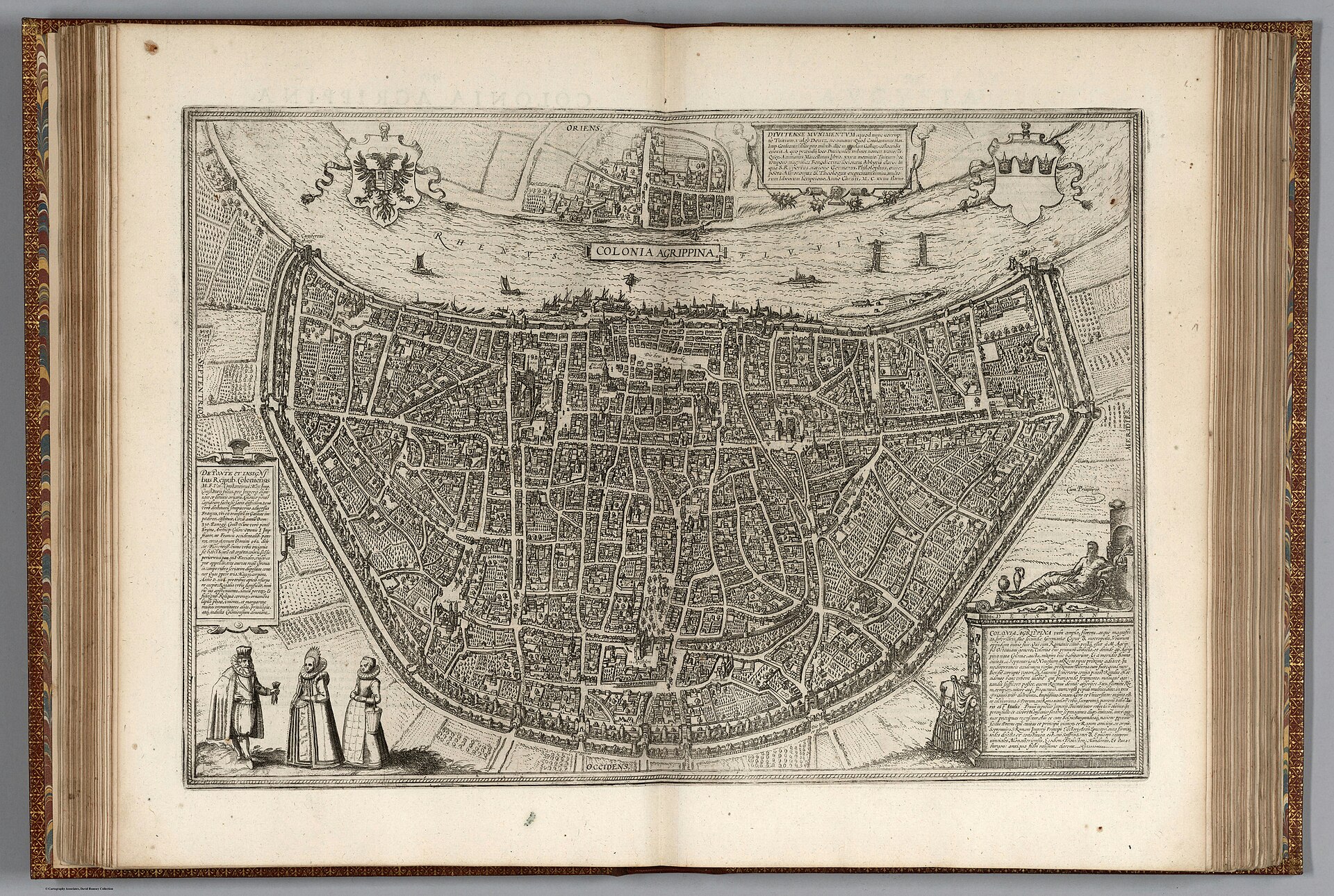
Bird's-eye view of Colonia Agrippina (Cologne), from Braun & Hogenberg's Civitates Orbis Terrarum
Walled medieval core on the Rhine showing city walls and bastions, multiple gates, a dense street grid and the cathedral spire.
Public domain (plate dated 1640)
In this city
Landmarks of Cologne, see each in its prime


More cities to explore
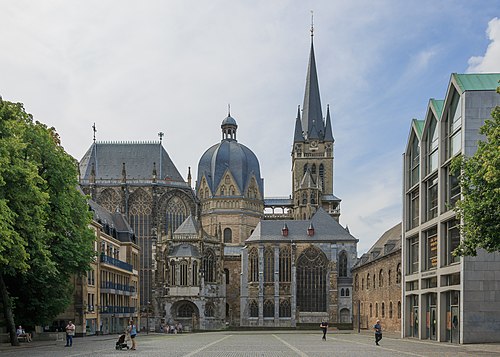 GermanyAachenExplore it in AD 800 · 1500
 NetherlandsMaastrichtExplore it in 1770
 GermanyBerlinExplore it in 1750 · 1871 · 1928
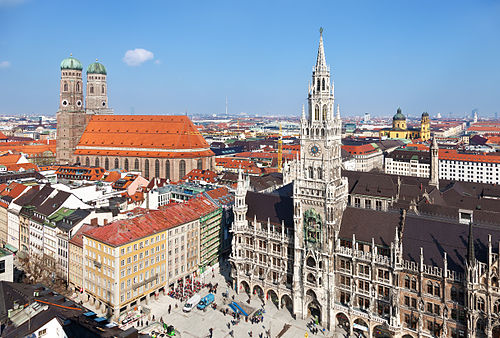 GermanyMunichExplore it in 1500 · 1700 · 1900
Castles of Europe · Landmarks of Europe · create your own reconstruction.