
Bridge · England · Still standing
Clifton Suspension Bridge
The Clifton Suspension Bridge is a wrought-iron suspension bridge spanning the Avon Gorge and River Avon, carrying a roadway between Clifton (Bristol) and Leigh Woods (North Somerset). Its pair of stone towers support triple wrought-iron eyebar chains from which the deck is hung; the crossing opened in 1864 and remains in use.
First raised
1864
Its prime
1864
Today
Still standing
As it stood in 1864
What Clifton Suspension Bridge looked like in its prime.
A long single-span suspension bridge strung across a deep, wooded limestone gorge; two rough-dressed stone towers (not identical) rise above the cliff edges, the Leigh side set on a red sandstone-clad abutment. Three parallel wrought-iron eyebar chains run between tower saddles, with many vertical iron suspension rods holding a narrow wooden-plank carriageway edged by low railings. The setting is steep rock faces and tree cover, the structure complete and in regular use.
Its story
The story of Clifton Suspension Bridge.
William Vick's Bequest and the Admiralty's Hundred Feet, 1753–1829
The bridge began as a legacy. In 1753 the Bristol merchant William Vick left £1,000 in his will, invested with instructions that once the interest had accumulated to £10,000 it should pay for a stone bridge between Clifton Down, which lay in Gloucestershire and outside the City of Bristol until the 1830s, and Leigh Woods in Somerset. There was little development on either side of the gorge before the late 18th century, but as Bristol grew prosperous Clifton became fashionable and wealthier merchants moved out to it.
Crossing the Avon nearer the city was already a fraught business. The first stone bridge, Bristol Bridge, was built in the 13th century and carried houses with shopfronts whose income paid for its maintenance. A bill to replace it was carried through parliament in the 1760s by the Bristol MP Sir Jarrit Smyth, and the replacement, designed by James Bridges and finished by Thomas Paty, was built in 1769 and 1776. Resentment at the tolls exacted to cross it produced the Bristol Bridge Riot of 1793.
Other crossings were considered but restricted by Admiralty rules, which stipulated that any bridge stand at least 100 feet above the water so that tall-masted warships could reach Bristol Harbour. Anything built between Bristol Bridge and the Avon Gorge would have needed massive embankments and viaducts; the alternative was to leap the narrowest point of the gorge, well above the height shipping required. In 1793 William Bridges published plans for a stone arch with factories inside its abutments to pay for the upkeep, but the French Revolutionary Wars broke out soon after, trade and commerce suffered and the scheme was shelved. Sarah Guppy patented a design for a suspension bridge across the gorge in 1811; it was never realised. By 1829 Vick's money had reached £8,000, and a stone bridge was reckoned to cost more than ten times that.
Telford Overruled and Brunel's Contract, 1829–1831
A competition was held to find a design, with a prize of 100 guineas, and 22 designers entered, among them Samuel Brown, James Meadows Rendel, William Tierney Clark and William Hazledine. Several proposed stone bridges costing between £30,000 and £93,000. Brunel submitted four entries. The judging committee rejected 17 of the 22 on grounds of appearance or cost, then called in the Scottish civil engineer Thomas Telford to choose between the five that remained. Telford rejected all of them, arguing that 577 feet was the greatest span possible, and was then asked to produce a design himself. He proposed a suspension bridge carried on tall Gothic towers, at a cost of £52,000.
The Bridge Committee sponsored a bill that received royal assent on 29 May 1830 as the Clifton Suspension Bridge Act 1830, which allowed a wrought iron suspension bridge to be built instead of a stone one and tolls to be levied to recoup the cost. The act named three trustees: the Master of the Society of Merchant Venturers, the Senior Sheriff of the City and County of Bristol, and Thomas Daniel. Meeting on 17 June 1830, they appointed more, bringing the number to 23, and by early July there were 31 in all, not all of them formally sworn in, among them George Daubeny, John Cave, John Scandrett Harford, George Hilhouse, Henry Bush and Richard Guppy. At the first full meeting, held on 22 June 1830 in the Merchants Hall with Alderman Thomas Daniel in the chair, 86 people had committed £17,350 between them, an average of a little over £200 each.
It was not enough to build with. Brunel produced a fresh proposal costing £10,000 less than Telford's and gained support for it in the local press, while Rendel, William Armstrong and William Hill submitted cheaper schemes of their own and complained that the committee had never set a budget. A second competition followed in 1831, with new judges including Davies Gilbert and John Seaward examining the engineering qualities of the entries. Of the thirteen designs submitted, only Telford's chains achieved the weight per square inch the judges required, and his was rejected as too expensive; the winner was declared to be Smith and Hawkes of the Eagle Foundry in Birmingham. In producing his own design Brunel had taken no advice from his father, Sir Marc Isambard Brunel, who had offered to help, as newly discovered letters and documents revealed in 2010: the elder Brunel did not believe a single span of that length could be constructed and recommended a central support, and his son chose to ignore him. Brunel met Gilbert in person and persuaded him to change the decision, the committee then declared Brunel the winner, and he was awarded a contract as project engineer for a suspension bridge with fashionably Egyptian-influenced towers.
Stopped by the Bristol Riots and Stripped of Its Ironwork, 1831–1859
A ceremony marked the start of the works on Monday 20 June 1831, and blasting began on St Vincent's Rock on the Clifton side of the gorge. Four months later the work halted. The House of Lords had rejected the second Reform Bill, which aimed to eliminate some of the rotten boroughs and give parliamentary seats to fast-growing industrial towns such as Bristol, and five to six hundred young men took part in the Bristol riots that followed. Brunel was sworn in as a special constable. The riots severely dented commercial confidence in the city, subscriptions to the bridge company ceased, and further construction ceased with them.
The Great Western Railway Act 1835 reestablished enough financial confidence for work to resume in 1836, but the investment that followed proved woefully inadequate. The main contractors went bankrupt in 1837; even so, the towers were built in unfinished stone, and a contract went to Dowlais Ironworks for 600 tons of bar iron, to be carried to the Copperhouse foundry and forged into bar chains. By 1843 the funds were exhausted and another £30,000 was needed; the work had exceeded the time limit stated in the act, and everything stopped. Brunel proposed a deep water pier at Portbury that would make the bridge an essential road link, but the money for it was not forthcoming.
In 1851 the ironwork was sold and used instead on the Royal Albert Bridge, Brunel's crossing on the railway between Plymouth and Saltash. The towers remained, and through the 1850s intrepid passengers could be hauled over the gorge in a basket slung from an iron bar that had been drawn across it by capstan. Brunel died in 1859 without seeing the bridge completed.
Barlow, Hawkshaw and the Completion of Brunel's Bridge, 1859–1864
Brunel's colleagues at the Institution of Civil Engineers felt that completing the bridge would be a fitting memorial to him, and began raising fresh funds. In 1860 Brunel's Hungerford suspension bridge over the Thames was demolished to make way for a new railway bridge to Charing Cross station, and its chains were purchased for use at Clifton. William Henry Barlow and Sir John Hawkshaw drew up a revised design with a deck wider, higher and sturdier than Brunel had intended, and triple chains in place of double. It has been argued that the size and technology of these revisions were great enough that the design credit belongs to Barlow and Hawkshaw. The towers were left in rough stone rather than finished in the Egyptian style Brunel had intended, and the sphinxes he proposed for their tops were never constructed.
Work restarted in 1862, beginning with a temporary footway of wire ropes and planks along which the workers ran a light wheeled frame, carrying the chain links over the gorge one at a time. The strength of the finished structure was tested by spreading 500 tons of stone across it, which made it sag by 7 inches, within the expected tolerances. During the same period a tunnel was driven through the rock beneath the bridge on the Leigh Woods side to carry the Great Western Railway's Portishead branch. The work was completed in 1864, 111 years after a bridge at the site was first planned. Two men were killed during the construction.
For the ceremonial opening on 8 December 1864 the bridge was lit by four electric arc lamps together with magnesium flares and limelights, the earliest use of external electric lighting in Bristol. The lighting levels were inconsistent and the wind blew the magnesium lamps out.
Tolls, the Trustees and Deaths on the Bridge, 1860–2024
The Clifton Bridge Company was set up in 1860 to oversee the final stages of completion and then to manage the bridge, paying £50 a year to the trustees, who gradually bought up its shares and in 1949 purchased all the outstanding shares and debentures. The bridge has been a toll bridge since it opened, the income paying for its maintenance; revenues were minimal at first for want of traffic, and rose after 1920 as car ownership grew. The charitable trust that manages it was originally formed by the Society of Merchant Venturers following Vick's bequest, and its authority to run the bridge and collect tolls rests on the Clifton Suspension Bridge Acts of 1952, 1980 and 1986. Human toll collectors were replaced by automated machines in 1975, the £0.05 toll the act allowed for cyclists and pedestrians is no longer collected, and in February 2012 the trustees applied to the Department for Transport to raise the toll to £1, which was implemented on 24 April 2014.
Toll money has paid for the strengthening of the chain anchor points, done in 1925 and again in 1939, and for the regular painting and maintenance carried out from a motorised cradle slung beneath the deck. The bridge has been a Grade I listed building since January 1959 and carries part of the B3129 road; by 2008 over four million vehicles were crossing it each year. Members of the University of Oxford Dangerous Sports Club made the first modern bungee jumps from it on 1 April 1979. In 2003 and 2004 the weight of crowds travelling to and from the Ashton Court Festival and the Bristol International Balloon Fiesta put such strain on the structure that it was closed to motor traffic and pedestrians during the events, and closures for major annual events have continued each year since. The last Concorde flight passed overhead on 26 November 2003 before landing at Filton Aerodrome; in April 2006 the bridge was the centrepiece of the Brunel 200 weekend marking the 200th anniversary of Brunel's birth, which climaxed with a firework display launched from it; and the Olympic torch relay crossed on 23 May 2012, two torchbearers meeting in the middle to exchange the flame. A visitor centre at the Leigh Woods end, costing nearly £2 million, was announced in November 2011, and the 150th anniversary of the opening was celebrated on 8 December 2014.
The bridge is well known as a suicide bridge and is fitted with plaques giving the telephone number of the Samaritans. Between 1974 and 1993, 127 people fell to their deaths from it. Suicide barriers installed in 1998 reduced the rate over the following four years from eight deaths a year to four. Nicolette Powell, formerly the Marchioness of Londonderry and the wife of the rhythm and blues singer Georgie Fame, jumped to her death from the bridge on 13 August 1993. Not every fall was fatal: in 1885 a 22-year-old woman named Sarah Ann Henley survived an attempt on her own life when her billowing skirts acted as a parachute and she landed in the thick mud banks of the tidal Avon at low tide, and she lived into her eighties. In 1957 an RAF Vampire jet of 501 Squadron, based at Filton and flown by Flying Officer John Greenwood Crossley, flew under the deck while performing a victory roll and crashed in Leigh Woods, killing the pilot; the accident caused a landslip that temporarily closed the nearby Portishead Railway. Wind closed the bridge to traffic on 12 February 2014 for the first time in living memory, and on 11 July 2024 it was closed to all traffic and pedestrians after the discovery of human remains, during a manhunt that led to the arrest of a murder suspect.
From the sea
Ships that came to Clifton Suspension Bridge.
- SS Great Britain: Towed home up the Avon under Brunel's Clifton Suspension Bridge
Step inside
7 places to explore in 1864.
The record describes 7 distinct spots at Clifton Suspension Bridge, including 1 interior: inside leigh woods tower vaulted chamber. Create your own photoreal reconstruction and explore every one, more scenes means more photos, more angles and more of the immersive experience.
Build Your Own Castle
Recreate Clifton Suspension Bridge with AI to explore it.
The artist rebuilds it as it stood in 1864, a photoreal reconstruction that belongs to you alone. Pay with coins, no subscription needed.
Recreate Bridge to Explore →Nearby
Castles within reach of Clifton Suspension Bridge.


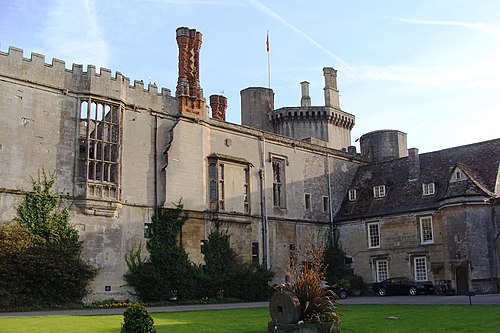
Landmarks within reach of Clifton Suspension Bridge.


More landmarks of England


Explore the city


