Clan Rising
Hochburg today

Germany · Ruin

Hochburg

Hochburg (formerly Hachberg) is a medieval hilltop castle ruin in Baden, Germany, originating in the 11th–12th centuries and historically the seat of the Margraves of Baden-Hachberg. Heavily enlarged in the 16th–17th centuries with bastions and renaissance-era living ranges, it was demolished in the late 17th century and survives today as a preserved ruin open to visitors.

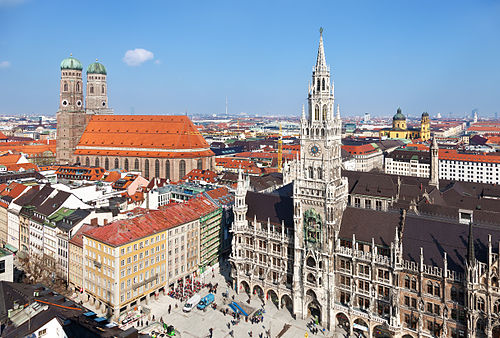
Photograph via Wikimedia Commons

First raised

1127

Its prime

1660

Today

Ruin

As it stood in 1660

What Hochburg looked like in its prime.

As it stood in its prime, Hochburg presented a compact hilltop fortress of coarse reddish-beige masonry: a long multi-storey residential range punctuated by regular rectangular window openings, a taller square central tower rising above the main façade with a large banner, continuous curtain walls linking projecting angular bastions, and an inner courtyard enclosed by roofed ranges; roofs covered in steep gabled tiles and protective battlement walks ran along the walls.

Its story

The story of Hochburg.

The Hochburg, originally castle Hachberg, was presumably built in the eleventh century between Emmendingen and Sexau in Baden; Dietrich von Emmendingen, who later called himself von Hachberg, most likely founded it to harvest the surrounding forests for lumber. The castle gave its name to an entire line of nobles: the Margraves of Baden-Hachberg, a side branch of the house of Baden.

By 1161 Hermann IV von Baden was reigning lord of castle Hachberg, and from 1212 to 1415 the Margraves of Baden-Hachberg ruled from the Hochburg, two centuries that ended when Margrave Bernhard I of the main family of Baden acquired the castle from the highly indebted Otto II, last Margrave of Baden-Hachberg.

Enlarged in the sixteenth and seventeenth centuries with bastions and Renaissance living ranges, the Hochburg became the second largest fortification in Baden before the French razed it in the late seventeenth century. A volunteer conservation society has cared for the ruin since 1971 and bought the tenancy of the castle in 2007.

Step inside

7 places to explore in 1660.

The record describes 7 distinct spots at Hochburg, including 1 interior: vaulted cellar beneath the residential range. Create your own photoreal reconstruction and explore every one, more scenes means more rooms, more angles, and more of the place to stand in.

Exterior approach and front façadeCentral tower and main entranceCurtain wall battlement walkInner courtyard enclosed by residential rangesOne of the outer bastions (e.g., Sausenberg)Vaulted cellar beneath the residential rangeHilltop panorama looking back to the fortress

Build Your Own Castle

Recreate Hochburg with AI to explore it.

The artist rebuilds it as it stood in 1660, a photoreal reconstruction that belongs to you alone. Pay with coins, no subscription needed.

Recreate this castle →

Castle Siege

Play Castle Siege at Hochburg.

A strategy game played on Hochburg’s real ground plan: the same surveyed walls shown in the archive below. Post your finite garrison on the battlements between assaults, then hold out as rams, siege towers, trebuchets and sappers arrive in ever-worse waves.

Sign in free to see the garrison muster. One castle costs 150 Clan Coins and is yours forever.

Sign in to take command →

See every castle’s leaderboard →

Whose castle

Clans who held Hochburg.

The families that held Hochburg for a decade or more across its history, follow a name to its clan.

  • Baden-Hachberg

    The Margraves of Baden-Hachberg, who took their name from the castle, ruled from the Hochburg from 1212 to 1415.

  • Baden

    Margrave Bernhard I of the main line of Baden acquired the castle in 1415 from the indebted Otto II.

From the archive

Hochburg on paper: the measured plan and period views.

The survey plan and photographs below are the ground truth this page's reconstructions are checked against, drawn and photographed while the castle was still a working garrison. Every image is public-domain or openly licensed, with its source named.
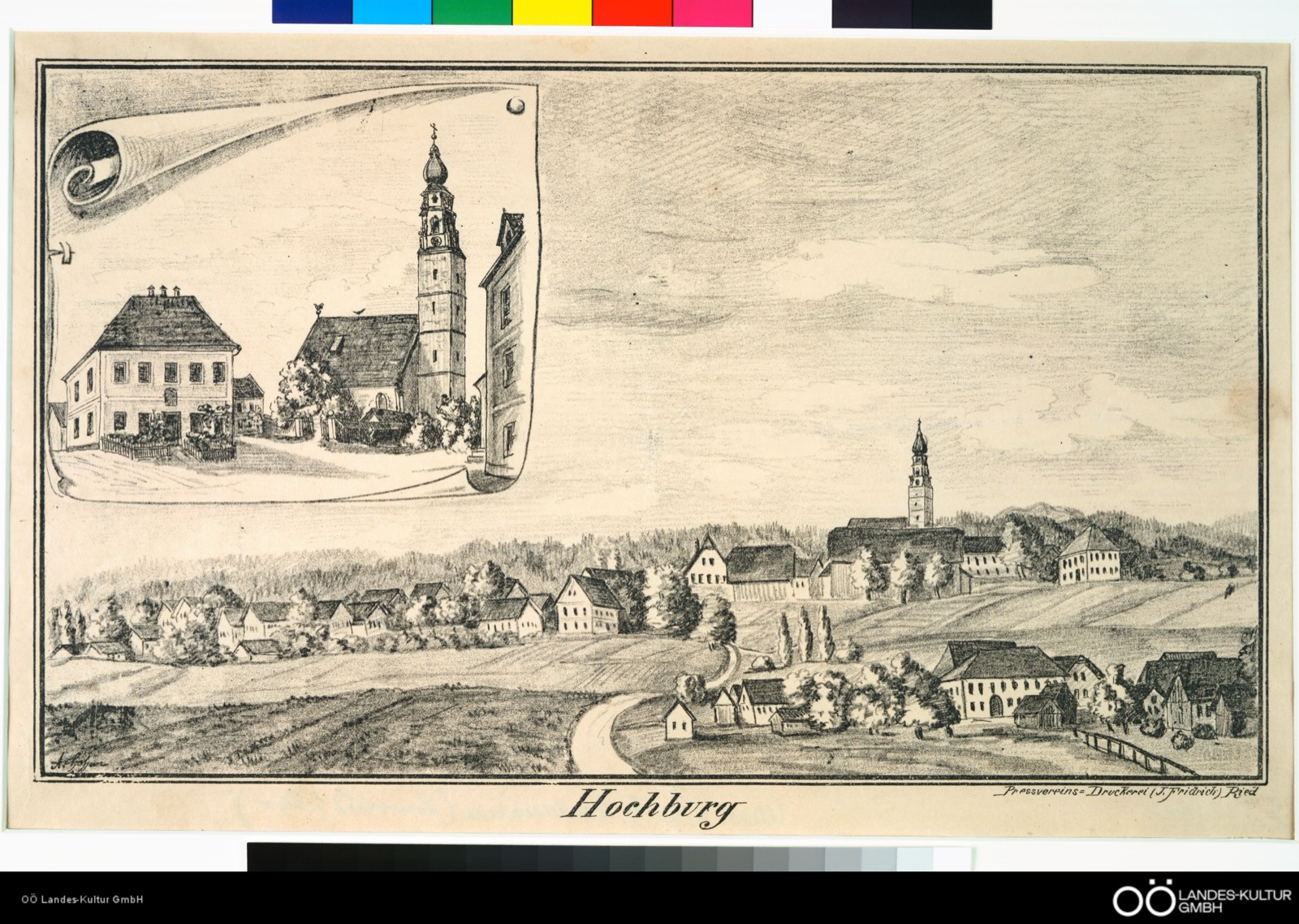
Hochburg, Hochburg

Hochburg

· OÖ Landes-Kultur GmbH (via Europeana)

CC BY-SA
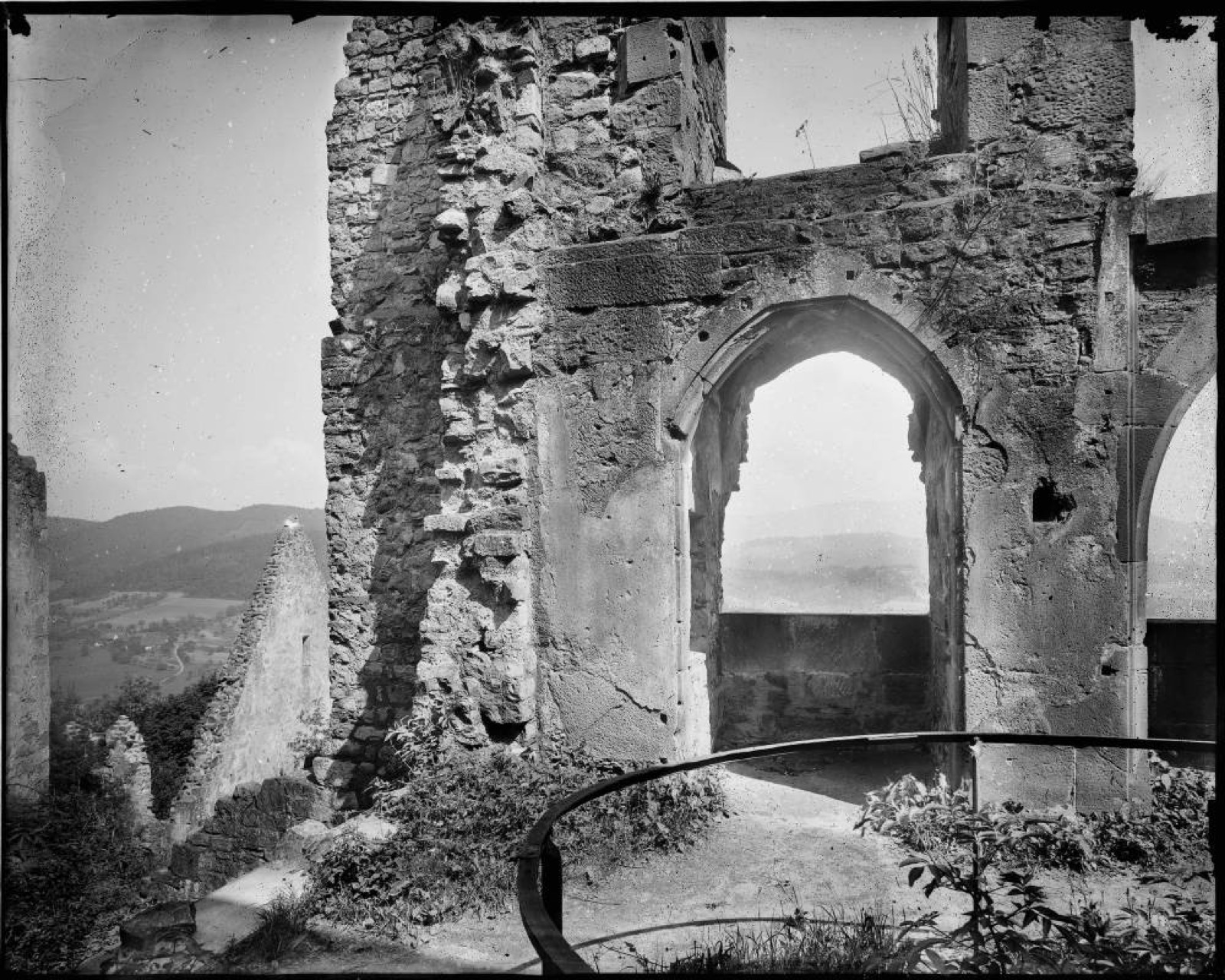
Hochburg Außenansicht, Hochburg

Hochburg Außenansicht

· State Archives of Baden-Württemberg (via Europeana)

CC BY
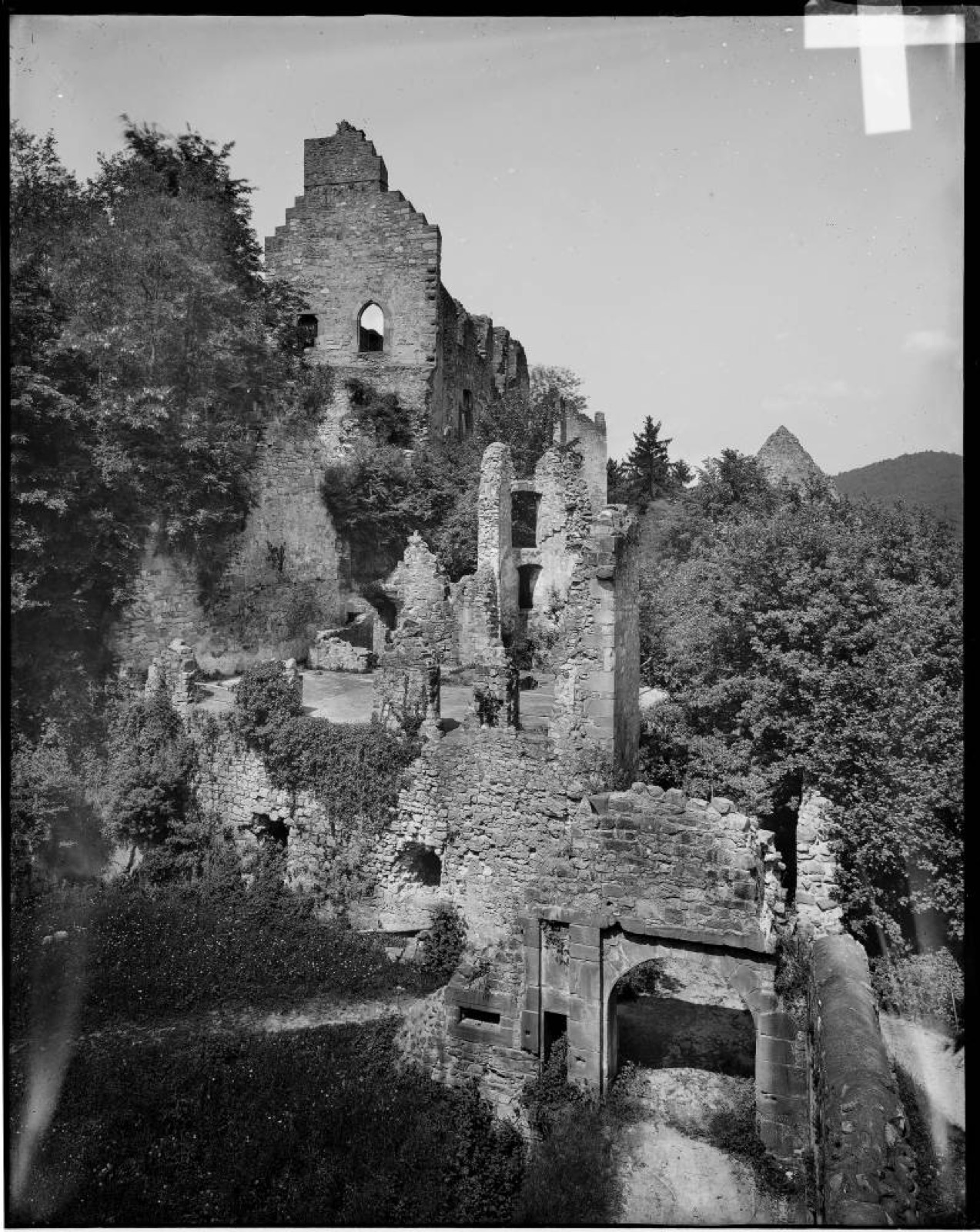
Hochburg Außenansicht, Hochburg

Hochburg Außenansicht

· State Archives of Baden-Württemberg (via Europeana)

CC BY

Nearby

Landmarks within reach of Hochburg.

Questions about Hochburg

What is the history of Hochburg?

Hochburg was probably founded in the 11th century as a timber-harvesting castle. Dietrich von Emmendingen, who later called himself von Hachberg, most likely established it for this purpose. From 1212 to 1415 it was the centre of power for the Margraves of Baden-Hachberg. It was enlarged into a Renaissance fortress, rebuilt after a 17th-century siege, and finally destroyed by French forces in the late 17th century.

What is inside Hochburg?

Inside Hochburg, visitors can see a vaulted cellar beneath the residential range and a small castle museum in the cellar of the upper castle. The surviving site also includes an inner courtyard enclosed by residential ranges. The castle’s documented interior is limited because Hochburg is now a ruin.

Why was Hochburg built, and what was it used for?

Hochburg was built as a castle associated with clearing and harvesting the surrounding forests for timber. It later served as the seat and centre of power of the Margraves of Baden-Hachberg. From the sixteenth century it was enlarged into a Renaissance-style residential and defensive fortress with bastions.

Where is Hochburg?

Hochburg stands between Emmendingen and Sexau, in the Baden region on the edge of the Black Forest. It is on the territory of Windenreute, a district of Emmendingen, in the Emmendingen administrative area. The castle is a hilltop site at 343.6 metres above sea level.

When was Hochburg built?

Hochburg was first documented in 1127 and was probably built in the 11th century. The site record describes its origins as belonging to the 11th–12th centuries, so it developed during the medieval period rather than being a single later construction. Major enlargement followed in the sixteenth and seventeenth centuries.

Was Hochburg ever attacked or besieged?

Hochburg was besieged during the German Peasants’ War in 1525 and held out. During the Thirty Years’ War it was besieged from 1634 to 1636 and surrendered, after which it was slighted. Margrave Friedrich VI began rebuilding it in 1660, but French forces later destroyed the remaining fortification in 1688.

Which family or clan held Hochburg?

The Margraves of Baden-Hachberg held Hochburg from 1212 to 1415. This side branch of the house of Baden took its name from the castle and ruled from it for two centuries. In 1415 Margrave Bernhard I of the main Baden line acquired the castle from the indebted Otto II, the last Margrave of Baden-Hachberg.

What did Hochburg look like in its prime?

At its height, Hochburg was a compact hilltop fortress built of coarse reddish-beige masonry. Its long residential range had several storeys and regular rectangular windows, while a taller square central tower rose above the façade. Curtain walls linked angular bastions, and steep gabled tiled roofs covered the ranges around the inner courtyard.

Is Hochburg still standing or is it a ruin?

Hochburg is a preserved castle ruin. Its defences were voluntarily destroyed by the French in 1681, a fire destroyed the remaining living quarters in 1684, and French troops demolished much of what remained in 1688–89. Conservation work began towards the end of the 19th century and has continued, with voluntary care since 1971.

Can you visit Hochburg?

Hochburg can be visited by the public. It is a castle ruin open for visits, and a small castle museum has been located in the cellar of the upper castle since 1991. The site is also included in Baden-Württemberg’s state preservation programme for castles and gardens.

Explore the city

Hochburg stands in historic Freiburg, explore the whole city through the ages

Explore historic Freiburg through the ages · All castles of Germany · Castles of Europe · the best castles in Europe · explore the finished reconstructions.