
Germany · Partial ruin
Münzenberg Castle
Burg Münzenberg
Münzenberg Castle is a 12th-century hill castle near the town of Münzenberg in Hesse, Germany. It features two large round bergfrieds and a concentric arrangement of an inner ward (Kernburg) completely surrounded by an outer ward and curtain wall. The site was expanded in multiple phases through the late medieval period and today survives as substantial castle ruins maintained by the State Palaces and Gardens of Hesse.
Its prime
1514
Today
Partial ruin
As it stood in 1514
What Münzenberg Castle looked like in its prime.
Perched on a hill, the castle consists of an inner ward (Kernburg) flanked by two tall, round bergfrieds at opposite ends and encircled by a fully closed outer ward and curtain wall. A gate building with a chapel above it gives access through a front gate into an outer bailey and Zwinger; the outer curtain carries a large western battery tower plus four smaller battery towers. Romanesque and later palatial ranges, a kitchen block and raised sections of ring wall complete the silhouette.
Its story
The story of Münzenberg Castle.
Fulda's Exchange and Barbarossa's Chamberlain
The builders of Münzenberg came from Arnsburg, whose first lord known by name is Kuno, a Salian ministerialis. Under Konrad I (1093–1130) they became the most powerful house in the Wetterau and the Rhine-Main region. In 1150 Konrad II and his wife Luitgart founded the Benedictine house of Altenburg for the abbey of Fulda, and in exchange Fulda gave them the unsettled Münzenberg in 1151.
After 1156 the family moved into the new castle there, and Konrad's son Kuno I was already styling himself von Münzenberg; the castle first appears by name in 1162, in a charter of Emperor Friedrich Barbarossa. Kuno served as royal chamberlain and went with Barbarossa to Italy more than once, and the works at Münzenberg can only have gone forward with the emperor's tolerance, imperial policy being to hold the Wetterau as terra imperii, crown land.
How much was raised when is disputed. Much of the inner ward's ring wall, the Romanesque palas, the eastern keep and the gate building with its chapel are generally given to Kuno's time, a phase held to have ended by 1174 at the latest with the ring wall still unclosed, the palas unplastered and the kitchen block a torso. Shortage of money has been proposed as the reason: Kuno was buying estates and rights across the Wetterau after 1170, and in 1174 gave the old family castle at Arnsburg to Eberbach. A later dating puts the halt at the end of the century, amid the throne disputes after Heinrich VI's death.
Philipp of Swabia and the End of the Münzenberg Line, 1198–1255
Kuno I declared for the Staufer in the German throne dispute of 1198, pressing the claim of Philipp of Swabia, brother of the emperor Heinrich VI who had died the year before. He died in 1207. His grandson Ulrich II remained childless, and with Ulrich's death in 1255 the male line of the imperial ministeriales of Münzenberg ended. His inheritance was divided among six sisters, and Isengard of Münzenberg brought the castle and its lands into her marriage to Philipp of Falkenstein, keeper of the Imperial Regalia.
The Falkenstein Building Years and the Move to Lich, 1260–1418
Building resumed under the new lord about 1260. The northern palas, later named after the Falkensteins, went up along the town-side ring wall; the kitchen block was finished, the ring wall closed and its standing stretches raised, and a second keep was built at the western end of the inner ward. That left Münzenberg with two round bergfriede at opposite ends of the Kernburg, the eastern one climbing 29 metres, where castles of the region normally carry only one.
In 1296 the Falkensteins left Münzenberg for good and settled at Lich. Philipp VII of Falkenstein-Münzenberg was made a count in 1397, and in 1418 the line ended with Werner von Falkenstein, Archbishop of Trier. The lords of Solms inherited the castle and its lands.
Solms Batteries and the Ruin of the Thirty Years' War
After 125 years standing empty, the castle was extended again from about 1424, Bernhard of Solms-Braunfels raising a gate tower, the zwinger with its outer bailey, and the outer ring wall with a front gate. By 1514 the Solms-Lich branch held Münzenberg and recast the Romanesque quarters in late Gothic; the tunnel under the castle chapel was widened so that gun carriages could reach the inner ward, and one large western and four smaller battery towers were let into the outer curtain.
Around 1621 troops of the Spanish Habsburgs quartered themselves in the castle, and in 1622 marched out to the battle of Fleurus; in 1628 soldiers of the imperial commander Wallenstein shelled Münzenberg, doing heavy damage. At the war's end in 1648 it stood on its basalt ridge as a ruin. The Solms accounts after 1648 carry no further entries for building or upkeep, and people working the ruin as a quarry were several times fined.
Repair, Sale and the State of Hesse, 1846–2019
Restoration of individual parts and consolidation of the masonry began in 1846, and a year later the eastern keep could be climbed again, though plans for a romantic rebuilding of the whole castle were dropped by the counts of Solms-Laubach. After 1894 weathered elements such as window columns were replaced, the originals kept in the lapidarium. In 1935 the family sold the castle to the People's State of Hesse.
Conservation of the late Gothic kitchen followed from 1960, but excavations of about the same date were carried out with little regard for conservation practice and destroyed archaeological layers. The metal stair to the eastern keep was renewed in 2019. The ruin is a listed cultural monument of Hesse, held by the State Palaces and Gardens of Hesse and open to visitors Tuesday to Sunday through the year, admission being taken at the outer bailey.
Step inside
11 places to explore in 1514.
The record describes 11 distinct spots at Münzenberg Castle, including 4 interiors: gate building with chapel above, northern palace (philipp's palace), romanesque palace (palas) and more. Create your own photoreal reconstruction and explore every one, more scenes means more rooms, more angles, and more of the place to stand in.
Build Your Own Castle
Recreate Münzenberg Castle with AI to explore it.
The artist rebuilds it as it stood in 1514, a photoreal reconstruction that belongs to you alone. Pay with coins, no subscription needed.
Recreate this castle →Defend this castle →Whose castle
Clans who held Münzenberg Castle.
The families that held Münzenberg Castle for a decade or more across its history, follow a name to its clan.
Falkenstein
Brought by Ysegarde of Münzenberg's marriage to Philipp IV of Falkenstein; the family held it until the line died out in 1418.
Solms
The House of Solms inherited Münzenberg with its lands after the Falkenstein line ended in 1418.
From the archive
Münzenberg Castle on paper: the measured plan and period views.
The survey plan and photographs below are the ground truth this page's reconstructions are checked against, drawn and photographed while the castle was still a working garrison. Every image is public-domain or openly licensed, with its source named.
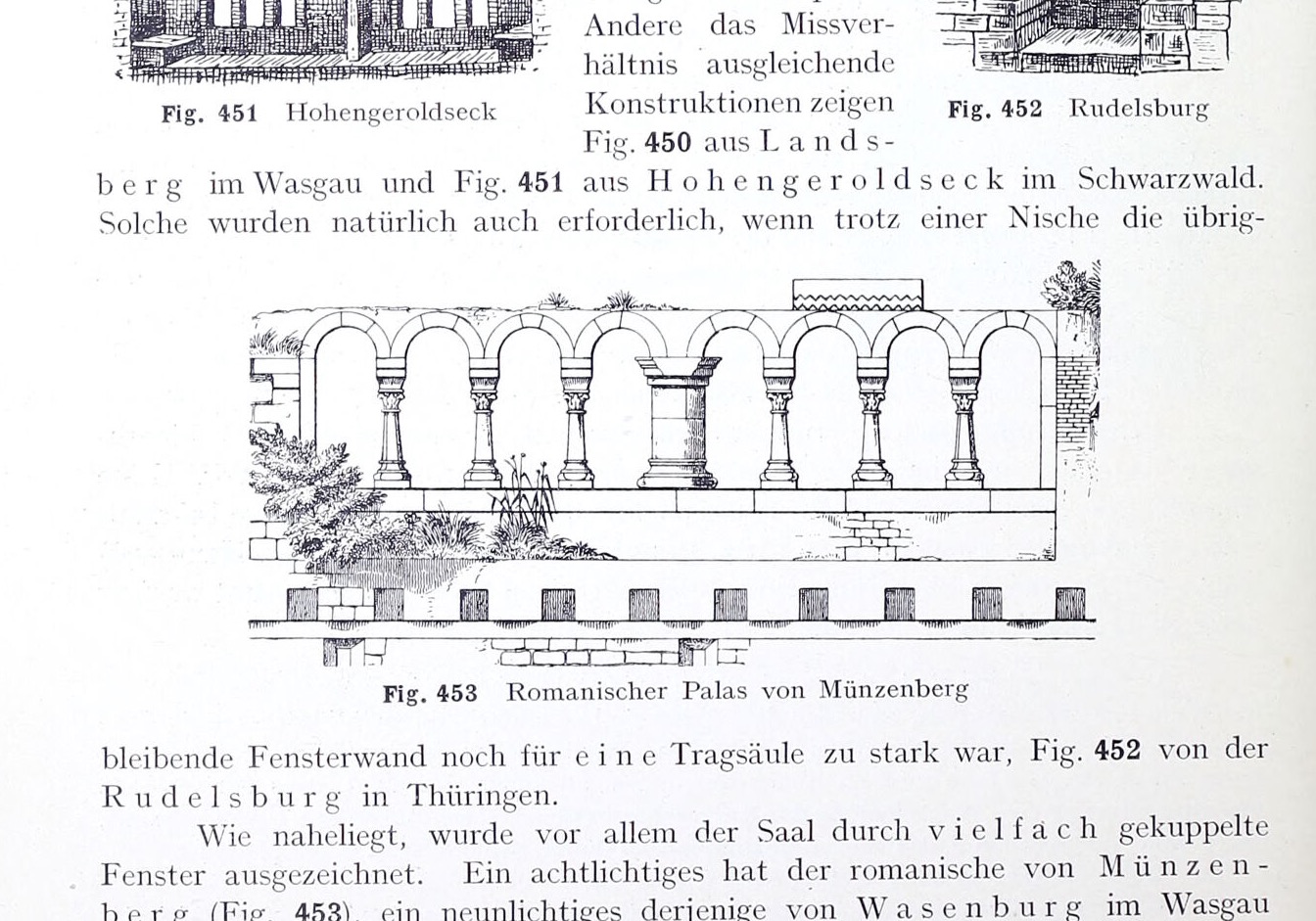
Fig. 453 Romanischer Palas von Münzenberg
1912 · Otto Piper, Burgenkunde (1912)
Public domain


