
Poland · Restored
Royal Castle in Warsaw
Zamek Królewski w Warszawie
The Royal Castle in Warsaw is the historic royal residence and administrative centre of Polish monarchs, sited at the entrance to the Old Town on Castle Square. The building is a long, multi-wing palace dominated by a central clock tower and smaller corner turrets and today functions as a state museum and national monument.
First raised
1598
Its prime
1628
Today
Restored
As it stood in 1628
What Royal Castle in Warsaw looked like in its prime.
A long, five-wing palace with warm ochre plastered façades set on a light stone base and quoins, a steep red-tile roof pierced by small dormers, and a tall square central clock tower topped by a slender copper spire; two smaller corner towers end the wings with bulbous green-patinated copper domes. Three regular storeys of rectangular windows and an arched central stone portal open onto a broad cobbled Castle Square, with painted coats-of-arms visible on the Curia Maior façade.
Its story
The story of Royal Castle in Warsaw.
The Masovian Dukes and the Seat of the Sejm
Warsaw's earliest written record dates from 1339, when the papal legate there heard Casimir III the Great's case against the Teutonic Order; the site was then Duke Trojden's seat. Duke Casimir I built the brick Great Tower, and the Castle Tower of the mid-14th century survives to its first storey. Between 1407 and 1410 Janusz I the Elder raised the Curia Maior, a hall block of 47.5 by 14.5 metres whose scale lifted the site to a prince's manor in 1414.
Masovia passed to the Kingdom of Poland in 1526 and the ducal castle became royal. After the Union of Lublin in 1569 it was the regular seat of the parliament of the joined Crown and Grand Duchy, and alterations begun that year under Giovanni Battista di Quadro fitted the Curia Maior out for it, the Chamber of Deputies below and the Senate Chamber above, one of the first attempts in Europe at a building meant for parliamentary use alone.
Sigismund III's Five Wings and the Deluge
Sigismund III Vasa moved the royal residence from Kraków and enlarged the castle between 1598 and 1619, with Giovanni Trevano in charge. Matteo Castelli, taking the lead after 1614, added the western and southern wings to make a five-winged block in mannerist and early baroque style; Sigismund's Tower followed in 1619, 60 metres high at the centre of a west front 90 metres long. On 29 October 1611 Tsar Vasili IV of Russia, taken prisoner by the hetman Stanisław Żółkiewski, paid homage to the king in the Senators' Chamber.
The Vasa collections of paintings and tapestries were plundered or destroyed in the Deluge of 1655–1657, when Warsaw was occupied three times. The Swedes took some 200 paintings, the royal library and the crown archive, and ran a field hospital in the castle. Rebuilding began in 1657, but the residence was in such poor condition that Michael I Korybut took up residence at Ujazdów Castle in 1669.
The Saxon Elevation and the Constitution of 3 May 1791
Fire destroyed the west elevation and part of Sigismund's Tower on 31 May 1732, and the Vistula front was rebuilt in late baroque to Gaetano Chiaveri's design by 1747. Under Stanisław II Augustus, king from 1764 to 1795, the interiors were recast in the neoclassical Stanisław Augustus style, and it was in the Senate Chamber that the Great Sejm passed the Constitution of 3 May 1791, the first of its type in Europe. The royal offices left the building only with the final partition of Poland in 1795.
During the November Uprising the Sejm sitting in the castle dethroned Tsar Nicholas I as king of Poland on 25 January 1831; from 1836 it housed the Tsar's governor Ivan Paskievich, with Russian soldiers quartered in the Parliament Hall.
Shelled in 1939, Detonated in 1944
The castle had been the president's residence since 1918 when German artillery shelled it on 17 September 1939. Fire took the roof and turrets, and the ceiling of the Ballroom fell with Bacciarelli's fresco The Creation of the World on it. Occupation troops began demolishing it at once, stripping out even the heating and ventilation plant for Germany. On 4 October Hitler ordered from Berlin that it be blown up, and on 10 October special units supervised by art historians and museum officials began dismounting floors, marbles, sculptures and fireplaces for removal to Germany or Kraków. Polish museum staff under Professor Stanisław Lorentz defied those orders at the risk of being shot, saving works of art along with stucco, parquet and panelling later used in the rebuilding. Wehrmacht sappers then bored tens of thousands of holes for charges in the emptied walls.
In 1944, after the Warsaw Uprising had collapsed and the fighting had stopped, the Germans detonated them. The demolition served the Pabst Plan, which intended a Nazi party hall on the site and the Germania Monument in place of Sigismund's Column. Of the six-hundred-year-old building there remained a pile of rubble and two fragments of wall, one still carrying a stucco cartouche with the motto of the Order of the White Eagle: PRO FIDE, LEGE ET REGE, for Faith, Law and King.
Rebuilt by Subscription, 1971–1984
Work to save the surviving walls, foundations and cellars began in 1945, and in 1949 the Polish parliament passed a bill to rebuild the castle as a monument to Polish history and culture. The decision to begin was postponed repeatedly, and taken only on 20 January 1971. The work was paid for by voluntary contribution, raised by committees in Poland and abroad; by May 1975 the fund stood at 500 million zlotys, and more than a thousand works of art had been given by Poles at home and overseas. The reconstruction ran to 1984 and returned the building to its 17th-century appearance.
Step inside
9 places to explore in 1628.
The record describes 9 distinct spots at Royal Castle in Warsaw, including 6 interiors: inner courtyard (quadrangle), summit of sigismund's tower (viewpoint), old chamber of deputies (ground floor) and more. Create your own photoreal reconstruction and explore every one, more scenes means more rooms, more angles, and more of the place to stand in.
Build Your Own Castle
Recreate Royal Castle in Warsaw with AI to explore it.
The artist rebuilds it as it stood in 1628, a photoreal reconstruction that belongs to you alone. Pay with coins, no subscription needed.
Recreate this castle →Defend this castle →Whose castle
Clans who held Royal Castle in Warsaw.
The families that held Royal Castle in Warsaw for a decade or more across its history, follow a name to its clan.
Piast
Residence of the Piast dukes of Masovia, Trojden, Casimir I and Janusz I the Elder among them, from the 13th-century Curia Minor and Great Tower until the castle passed to the Polish kings.
From the archive
Royal Castle in Warsaw on paper: the measured plan and period views.
The survey plan and photographs below are the ground truth this page's reconstructions are checked against, drawn and photographed while the castle was still a working garrison. Every image is public-domain or openly licensed, with its source named.
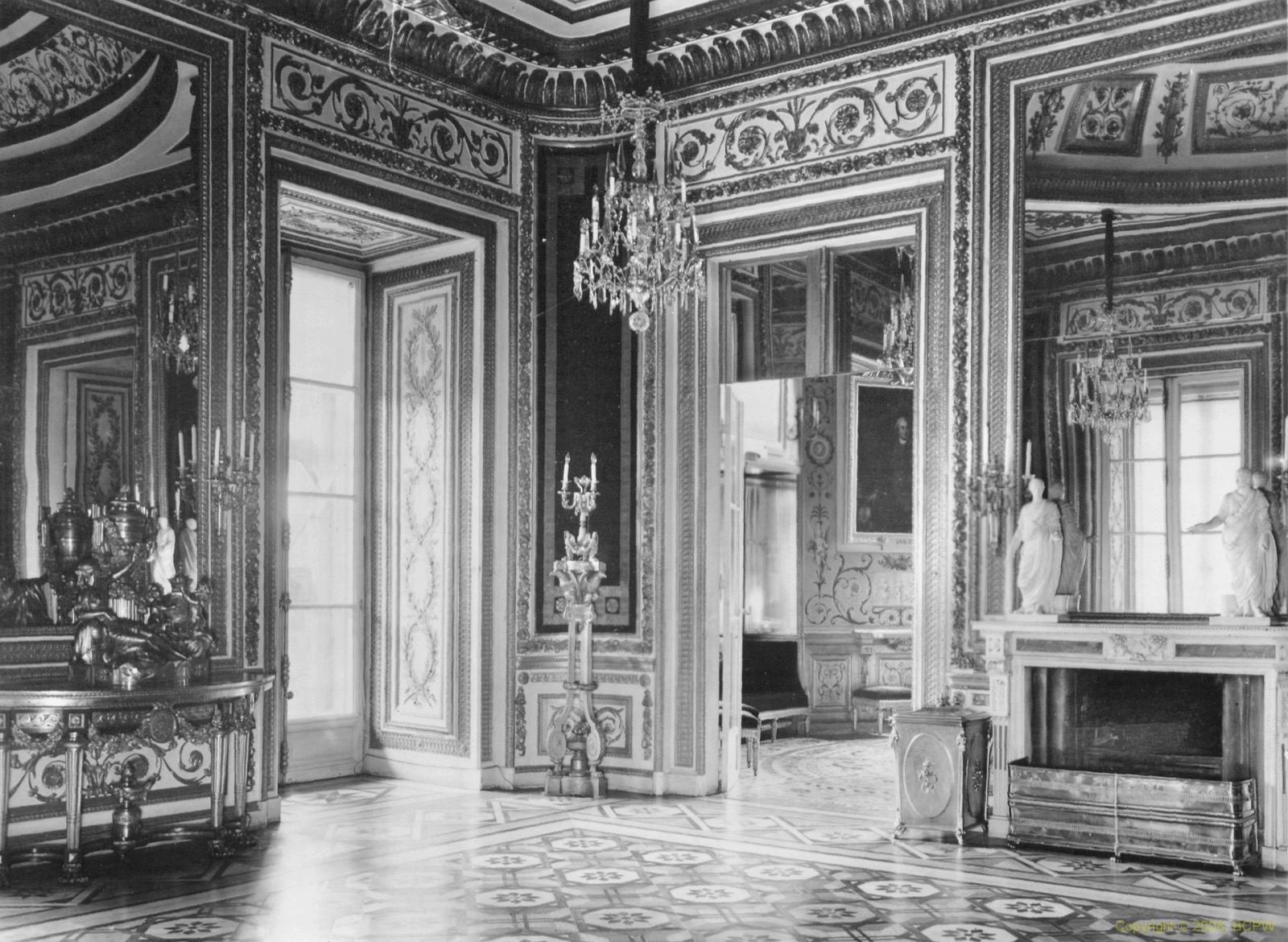
Royal Castle in Warsaw. Throne Room
1929 · Digital Library of the Warsaw University (via Europeana)
Public domain
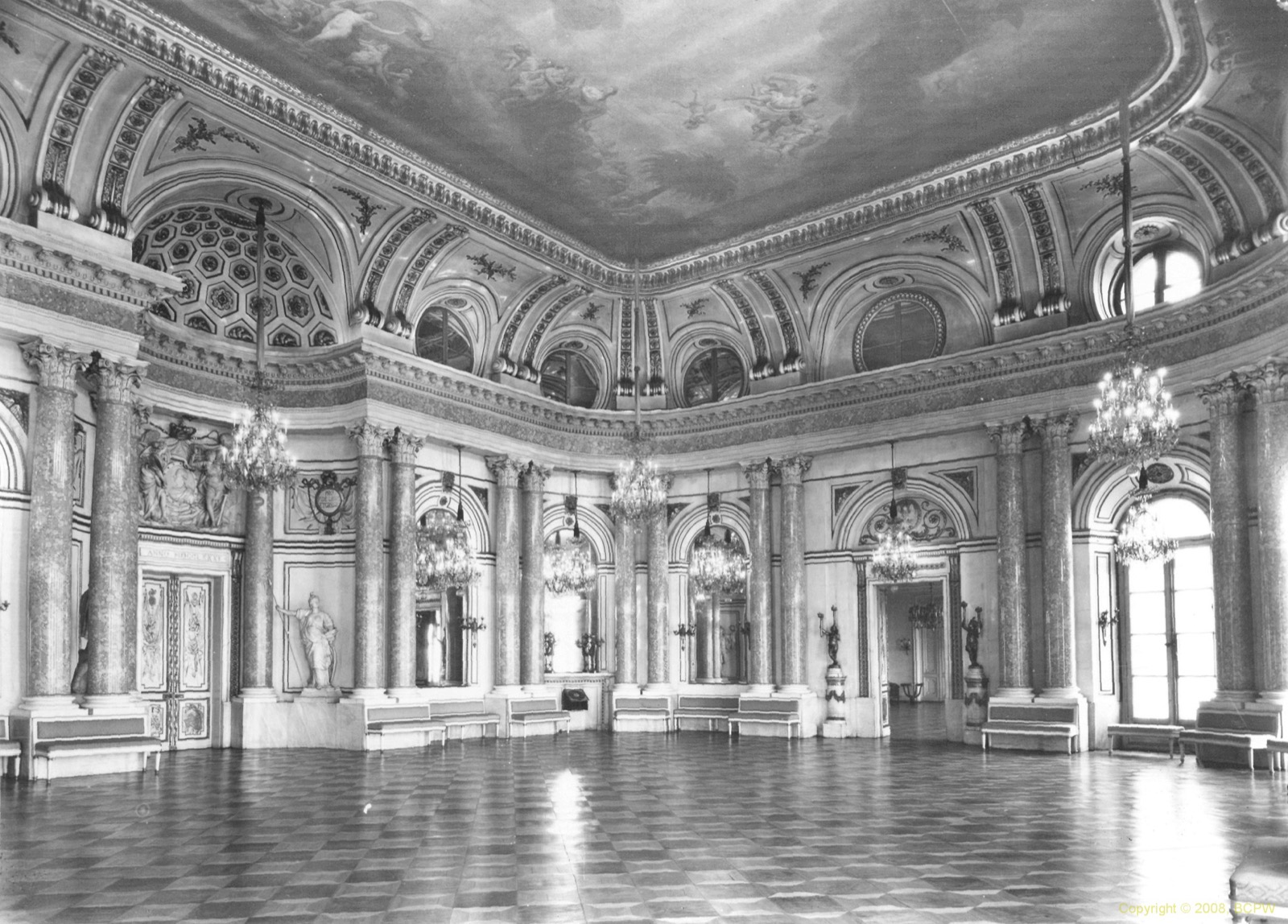
Royal Castle in Warsaw. Great Hall
1929 · Digital Library of the Warsaw University (via Europeana)
Public domain
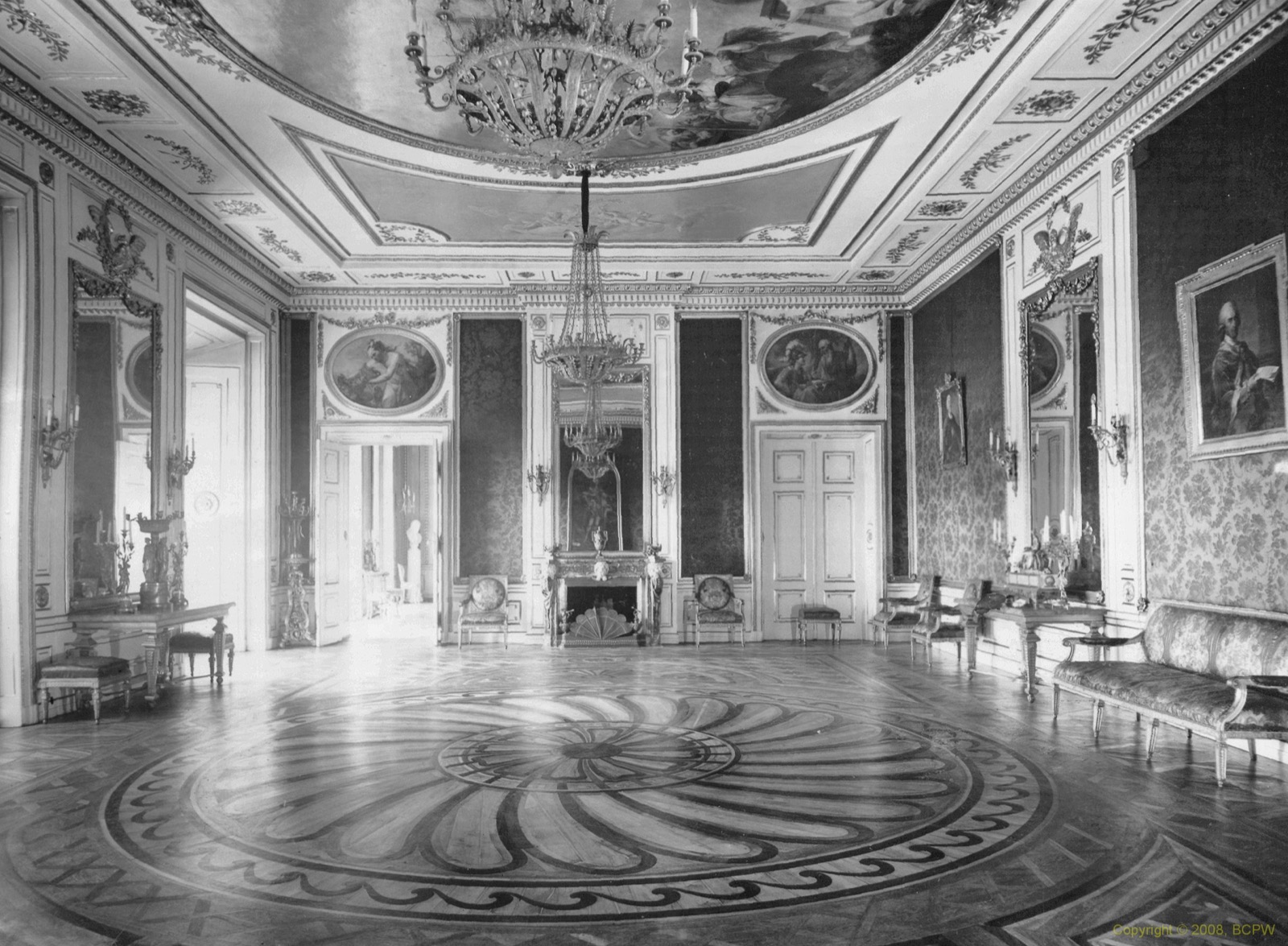
Zamek Królewski w Warszawie. Pokój Audiencjonalny Stary
1929 · Digital Library of the Warsaw University (via Europeana)
Public domain
Nearby
Landmarks within reach of Royal Castle in Warsaw.


Questions about Royal Castle in Warsaw
What is the history of Royal Castle in Warsaw?
What is inside Royal Castle in Warsaw?
Why was Royal Castle in Warsaw built, and what was it used for?
Where is Royal Castle in Warsaw?
When was Royal Castle in Warsaw built?
Was Royal Castle in Warsaw ever attacked or besieged?
Which family or clan held Royal Castle in Warsaw?
What did Royal Castle in Warsaw look like in its prime?
Is Royal Castle in Warsaw still standing, or is it a ruin?
Who built Royal Castle in Warsaw?
Can you visit Royal Castle in Warsaw?
More castles of Poland


Explore the city


