
Scotland · Ruin
Dalquharran Castle
Dalquharran Castle is a late 18th-century country mansion on the Dalquharran estate in South Ayrshire, Scotland, designed by Robert Adam and completed around 1790. It stands near the Water of Girvan and is accompanied by an older ruined medieval keep on the same estate. The Adam house was roofed and occupied into the 20th century but is now a ruin.
Its prime
1790
Today
Ruin
As it stood in 1790
What Dalquharran Castle looked like in its prime.
A symmetrical, four-floor stone mansion in the classical manner, arranged around a central entrance axis. The south façade faces the north bank of the Water of Girvan and includes a projecting round bastion turret on the south front. Long low stable ranges extend to the north and are linked to the main block by screen walls with gateways forming a forecourt. The house contains a top-lit central spiral staircase, an oval dining room in the east wing and bedchambers on the two upper floors.
Its story
The story of Dalquharran Castle.
Gilbert Kennedy's Charter of 1474
The first lord of Dalquharran on record was Gilbert Kennedy, named in a 1474 charter for the nearby Crossraguel Abbey; the property already had a castle on it, and the Kennedys held the estate for centuries afterwards. That first castle began as a rectangular keep and was greatly enlarged into what a later report calls a “stately castle” in about 1679. Over the years it has also been recorded as Dalqhrin, Dahuharra Castle, Old Place of Dalwharn and Dolquharran.
Late in the 17th century the estate and its castle were bought by Sir Thomas Kennedy of Kirkhill, Lord Provost of Edinburgh, who also acquired Dunure Castle and its lands. Dalquharran was occupied by his son, Thomas Kennedy of Dunure.
Robert Adam Builds for His Brother-in-Law, 1785–1790
Thomas Kennedy of Dunure had married Robert Adam's sister, and between about 1785 and 1790 Adam designed him a new house on the estate, a castle-style country mansion rather than anything defensible. It was arranged symmetrically about a central entrance hall with a top-lit spiral staircase of the kind Adam had used at Culzean, begun for David Kennedy around 1776, and rose through four floors with the services buried in the basement. To the north Adam laid out a long low stable range tied to the house by screen walls and gateways to form a forecourt, though the outbuildings were finally put up in a plainer style than he had drawn, possibly after his death in 1792.
When the new castle was finished in 1790 Kennedy moved out of the old one, some 300 metres to the south-east and nearer the river, and it was left to fall. The remains were listed as a monument in 1935, as substantial standing structures and buried archaeology together with an area enclosing the outer defences.
Nine Children and the Cost of the Wings, 1880–1881
Francis Thomas Romilly Kennedy, grandson of the Thomas Kennedy who died in 1819, needed room for a wife and nine children, and in 1880–1881 had Wardrop and Reid of Edinburgh add wings in a matching style. The cost very nearly bankrupted the family, and from the late 19th century house and estate were let out again and again.
H. H. Asquith rented it for the winter of 1904–1905. Ettie Grenfell set down a family weekend there in her journal, and Asquith's daughter Violet Bonham Carter wrote in her diary on 5 August 1905: “Oh for Dalquharran with its Raeburns and ruins and long green garden full of clematis! and the fishless stream and the beech trees!” A biographer of the novelist John Buchan, a friend of Asquith's son Raymond, has suggested Dalquharran as the model for the house in Buchan's 1922 novel Huntingtower.
Hostellers, Evacuees and the Stripped Roof, 1936–1967
The Kennedys sold in the 1930s to a timber merchant, who leased the house to the Scottish Youth Hostel Association from 1936 to 1939. During the Second World War it took in the evacuated Glasgow Deaf and Dumb Institution, and in the same years the estate was sold to John Stewart, a produce merchant, who lived in the new castle with his family and farmed the land.
It was abandoned in the end as simply too large and too expensive to keep. In 1967 the lead roof was taken off so that the owners could declare the building uninhabitable and escape the rates. It was designated a category A listed building in 1971, the entry describing “a castle-style mansion by Robert Adam, circa 1790”; the interiors had still been sound in the late 1960s, but photographs published in early 2017 showed them in total ruin, with entry forbidden on safety grounds.
Schemes That Were Never Built, 1990–2019
Outline permission came in 1990 for two golf courses, a hotel, a conference centre, a country club and hundreds of holiday homes. Nothing was done. The property went to developers in 2001, and consents followed in 2004 and again in 2009 for smaller schemes to turn the castle into a hotel; by June 2014, when conditional approval was given for 60 dwellings and five fractional houses, the hotel had dropped out of the plans altogether. Not one of the buildings proposed since 1990 was ever built. In June 2019 the whole 261-acre estate was offered for sale at a guide price of £800,000, advertised as medieval ruins, the mansion house, farmland and woodland.
Step inside
9 places to explore in 1790.
The record describes 9 distinct spots at Dalquharran Castle, including 6 interiors: central entrance hall and top-lit stair, drawing room in the south bastion (ground floor), library in the south bastion (upper floor) and more. Create your own photoreal reconstruction and explore every one, more scenes means more rooms, more angles, and more of the place to stand in.
Build Your Own Castle
Recreate Dalquharran Castle with AI to explore it.
The artist rebuilds it as it stood in 1790, a photoreal reconstruction that belongs to you alone. Pay with coins, no subscription needed.
Recreate this castle →Defend this castle →Whose castle
Clans who held Dalquharran Castle.
The families that held Dalquharran Castle for a decade or more across its history, follow a name to its clan.
Held by the Kennedys from Gilbert Kennedy's 1474 charter record until the family sold the estate in the 1930s.
From the archive
Dalquharran Castle on paper: the measured plan and period views.
The survey plan and photographs below are the ground truth this page's reconstructions are checked against, drawn and photographed while the castle was still a working garrison. Every image is public-domain or openly licensed, with its source named.
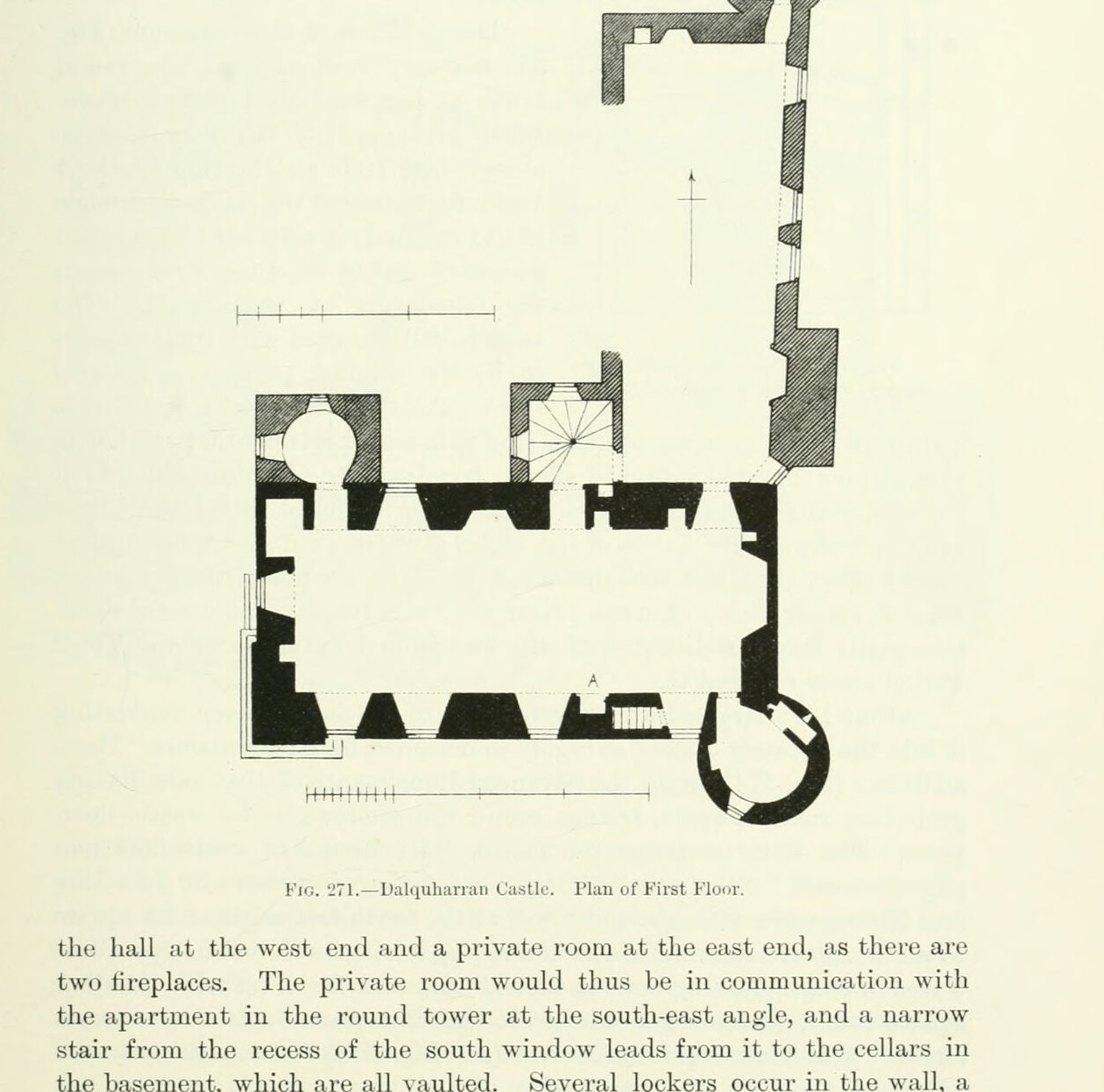
Fig. 271. Dalquharran Castle. Plan of First Floor.
1889 · MacGibbon & Ross, vol. 3 (1889)
Public domain


