Scotland · Restored
Fyvie Castle
Fyvie Castle is a multi-towered stone castle in the village of Fyvie near Turriff in Aberdeenshire, Scotland, with origins in the 13th century. Successive owners added towers and ranges over centuries; the site includes landscaped grounds, an eastern walled garden and Fyvie Lake, and today the property is managed by the National Trust for Scotland and open to visitors.
First raised
1300
Its prime
1890
Today
Restored
As it stood in 1890
What Fyvie Castle looked like in its prime.
An irregular, continuous stone range punctuated by five discrete towers of differing heights and profiles; the oldest tower (Preston) appears at the far right when facing the main facade, while the Seton tower marks the principal entrance. Ranges link the towers into a single frontage with rooflines of pitched roofs and chimneys. The castle sits within landscaped grounds beside Fyvie Lake and incorporates a series of walled gardens; in its prime it is fully roofed and intact.
Its story
The story of Fyvie Castle.
A Royal Stronghold Until Otterburn, 1388
The earliest parts of Fyvie Castle date from the 13th century, some sources claim it was built in 1211 by William the Lion. Robert the Bruce held an open-air court here, and Charles I lived at Fyvie as a child for four years. Its time as a royal stronghold ended after the Battle of Otterburn in 1388, when Robert III granted the castle to Henry Preston.
Five Families, Five Towers
From Preston the castle passed through four more families (Meldrum, Seton, Gordon and Forbes-Leith), and each of the five added a tower. The Preston Tower is the oldest, dating to between 1390 and 1433; the Seton Tower, forming the entrance, was erected in 1599 by Alexander Seton, who commissioned the wheel staircase several years later; the Gordon Tower followed in 1777 and the Leith in 1890. Inside, the castle keeps that wheel stair, a display of original arms and armour, and portraits by Henry Raeburn, Pompeo Batoni and Thomas Gainsborough.
Legend clings to the ownership itself. The "Curse of the Weeping Stones", traditionally attributed to the 13th-century seer Thomas the Rhymer, is said to explain why eldest sons of the families who owned Fyvie allegedly failed to inherit the estate; of the three stones said to be involved, one is displayed in the Charter Room. The castle's "Green Lady" is identified with Lilias Drummond, wife of Alexander Seton; tradition holds her name was carved into a stone windowsill on the night of her husband's remarriage.
Montrose at Fyvie, 28 October 1644
On 28 October 1644 Manus O'Cahan and Montrose fought the Covenant Army at the castle. The battlefield was added to the Inventory of Historic Battlefields in Scotland on 30 November 2011, and in August 2024 re-enactors gathered at Fyvie to stage the fight again. Anne Halkett stayed at the castle from 1650 to 1652 with the Countess of Dunfermline, treating wounded soldiers and local illnesses and negotiating with the English major of a company of Commonwealth soldiers and with three colonels, Lilburne, Fitts and Overton.
From Baron Leith to the National Trust
The grounds and adjoining Fyvie Lake were landscaped in the 18th century by Colonel William Gordon, and a walled garden to the east, where Scottish fruits are cultivated, joins evidence of two other walled gardens west and south of the castle, one appearing on an estate plan of 1768. The Scottish industrialist Alexander Leith, later Baron Leith of Fyvie, bought the castle in 1885, and his descendants sold it to the National Trust for Scotland in 1984, which owns and manages it today.
Step inside
12 places to explore in 1890.
The record describes 12 distinct spots at Fyvie Castle, including 5 interiors: wheel staircase, charter room, sealed medieval dungeon and more. Create your own photoreal reconstruction and explore every one, more scenes means more rooms, more angles, and more of the place to stand in.
Build Your Own Castle
Recreate Fyvie Castle with AI to explore it.
The artist rebuilds it as it stood in 1890, a photoreal reconstruction that belongs to you alone. Pay with coins, no subscription needed.
Recreate this castle →Defend this castle →Whose castle
Clans who held Fyvie Castle.
The families that held Fyvie Castle for a decade or more across its history, follow a name to its clan.
Preston
Granted to Henry Preston by Robert III after the Battle of Otterburn in 1388, ending Fyvie's time as a royal stronghold.
Seton
One of the prominent families through whose hands Fyvie passed, between the Prestons and the Gordons.
Held Fyvie after the Prestons and Setons, among the prominent families who shaped the castle.
Leith
Bought by industrialist Alexander Leith, later Baron Leith of Fyvie, in 1885; his descendants sold it to the National Trust for Scotland in 1984.
From the archive
Fyvie Castle on paper: the measured plan and period views.
The survey plan and photographs below are the ground truth this page's reconstructions are checked against, drawn and photographed while the castle was still a working garrison. Every image is public-domain or openly licensed, with its source named.
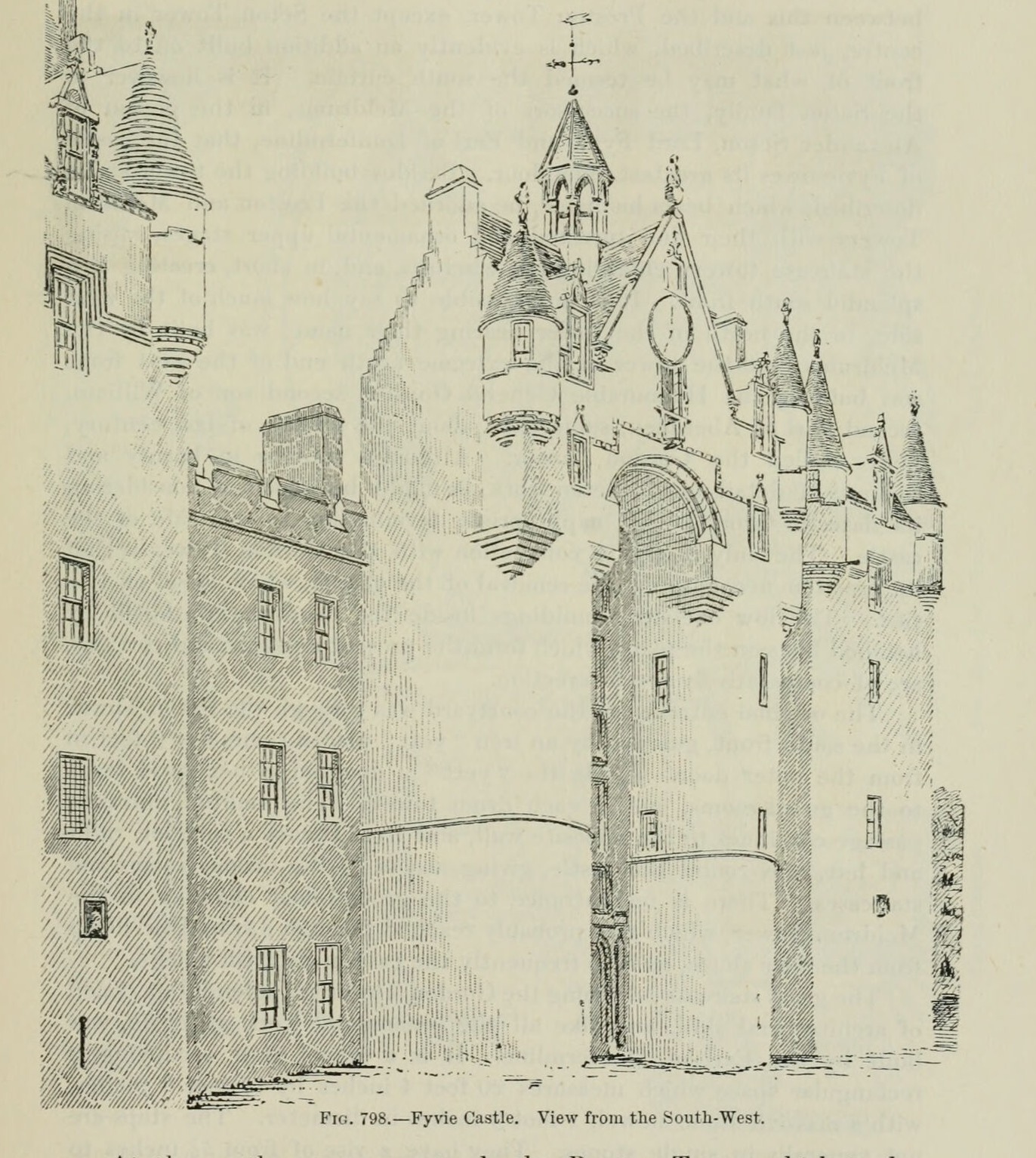
Fig. 798. Fyvie Castle. View from the South-West.
1887 · MacGibbon & Ross, vol. 2 (1887)
Public domain