Scotland · Restored
Dean Castle
Dean Castle is a 14th-century stone castle in Kilmarnock, East Ayrshire, originally built for the Boyd family and set within a large wooded park. The complex comprises a tall defensive keep and an attached palace block with projecting battlements and a pitched slate roof, and today houses museum collections and is open to the public.
First raised
1350
Its prime
1350
Today
Restored
As it stood in 1350
What Dean Castle looked like in its prime.
A compact medieval complex of warm honey-brown sandstone: a tall rectangular keep with very thick walls and few small windows stands at one end, linked to a lower palace block with a steep slate roof punctured by triangular dormers. Both keep and palace display crenellated parapets and projecting corbel courses; the Laigh (low) tower projects from the palace end. The castle sits in a wooded valley beside lawns and a curving approach drive, fully roofed and intact at its prime.
Its story
The story of Dean Castle.
Clan Boyd and the Keep of 1350
Sir Robert Boyd was rewarded with the lands of Kilmarnock and West Kilbride by Robert the Bruce in 1316 for his service at the Battle of Bannockburn, and Clan Boyd held Kilmarnock (as the castle was known until 1700, when it gradually took its name from the dean, or wooded valley), for more than 400 years. Around 1350, Sir Robert Boyd's son Sir Thomas Boyd built the keep for defence: its walls run two to three metres thick, it has few windows, and the original entrance was set high above ground level. It has no arrowslits, which is very rare for a Scottish castle of the period; all shooting was done from the battlements at the top.
A Royal Marriage, Covenanters and the Fire of 1735
A sister of James III married into the Boyd family, and Covenanters were held prisoner within the castle. In 1735 an accidental fire broke out in the palace kitchen, spread to the thatched roof and then to the roof of the keep, and left the castle a ruin. William Boyd, 4th Earl of Kilmarnock, the resident of the time, had financial problems and could not afford to repair it; some buildings stayed in use, but Dean stood neglected for almost two centuries.
The 4th Earl's Beheading and the Owners Who Followed, from 1746
The 4th Earl joined Bonnie Prince Charlie's rebellion and was beheaded for treason in London on 18 August 1746. Legend holds that his head was carried back to Dean and stored in a large chest still kept in the Laigh Tower. James Boyd sold the castle in 1746, and the estate changed hands many times. Robert Burns was encouraged to publish his poetry by the Earl of Glencairn, who owned Dean at that time.
Restoration under the 8th Lord Howard de Walden, 1908–1946
The 8th Lord Howard de Walden inherited the castle and began its restoration, completing the keep in 1908 and the palace in 1946. The present gatehouse, entirely built in 1935–36, had never been part of the original castle; it was carefully copied from real sixteenth-century buildings, its overall design and its decorative but usable gun loops taken from the gatehouse built at Tolquhon Castle in Aberdeenshire in the 1580s.
Kilmarnock's Castle, 1971 Onwards
The castle and gatehouse were designated a Category A listed building in 1971. In 1975 the 9th Lord Howard de Walden gave the castle, the estate, his father's collection of arms and armour, and his grandfather's collection of musical instruments to the people of Kilmarnock. Restoration work running from 2020 to late 2022 or early 2023 addressed pointing and structural defects in the main castle structure, funded in part by a £1.5 million award from the Heritage Lottery Fund and £500,000 from Historic Environment Scotland, within a total project cost of £5.2 million. The castle, owned and operated by East Ayrshire Leisure within the 200-acre Dean Castle Country Park, displays those collections alongside a Kilmarnock Edition of Robert Burns's poetry.
Step inside
11 places to explore in 1350.
The record describes 11 distinct spots at Dean Castle, including 6 interiors: great hall (first floor of the keep), minstrel's gallery, solar and private chapel (second floor) and more. Create your own photoreal reconstruction and explore every one, more scenes means more rooms, more angles, and more of the place to stand in.
Build Your Own Castle
Recreate Dean Castle with AI to explore it.
The artist rebuilds it as it stood in 1350, a photoreal reconstruction that belongs to you alone. Pay with coins, no subscription needed.
Recreate this castle →Defend this castle →Whose castle
Clans who held Dean Castle.
The families that held Dean Castle for a decade or more across its history, follow a name to its clan.
Stronghold of the Boyds, lords of Kilmarnock for over 400 years, from Sir Robert Boyd's reward of the lands in 1316 for his service at Bannockburn.
Howard de Walden
The 9th Lord Howard de Walden gave the castle, estate and family collections to the people of Kilmarnock in 1975.
From the archive
Dean Castle on paper: the measured plan and period views.
The survey plan and photographs below are the ground truth this page's reconstructions are checked against, drawn and photographed while the castle was still a working garrison. Every image is public-domain or openly licensed, with its source named.

Dean Castle, Kilmarnock, Scotland-LCCN2002695002
ca. 1890-1900 · Photochrom Prints Collection (via Wikimedia Commons)
Public domain
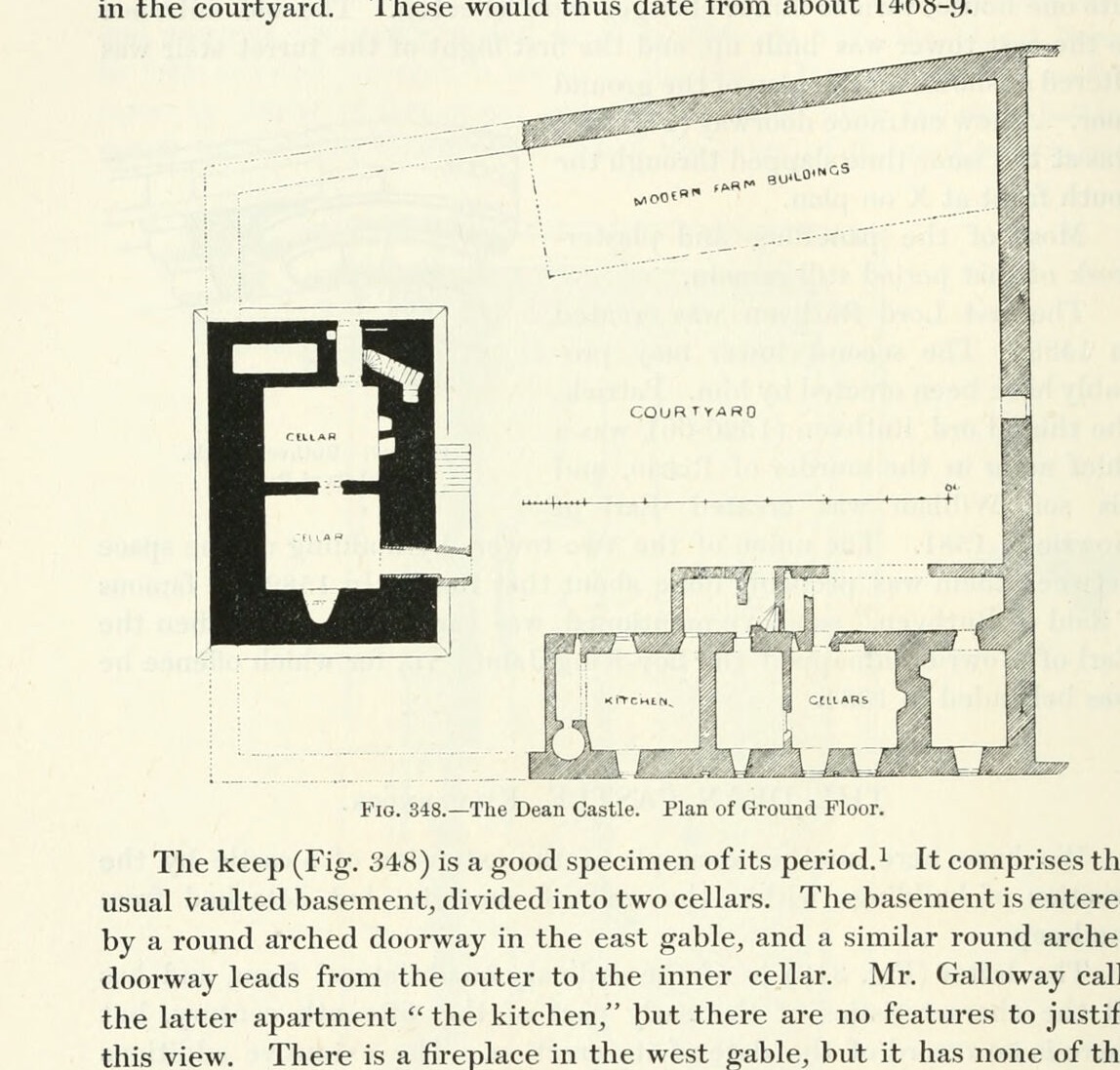
Fig. 348. The Dean Castle. Plan of Ground Floor.
1887 · MacGibbon & Ross, Castellated and Domestic Architecture of Scotland, vol. 1 (1887)
Public domain
Nearby