
Hungary · Restored
Buda Castle
Budavári Palota
Buda Castle is the historical royal palace complex on Castle Hill in Budapest that has housed the Hungarian kings and today contains major museums and a national library. The site includes a long Baroque palace block with a central dome, extensive fortified retaining walls down the hillside, and the surrounding Castle Quarter with churches and government buildings.
Its prime
1769
Today
Restored
As it stood in 1769
What Buda Castle looked like in its prime.
A long U-shaped Baroque palace with a central, copper-clad dome rises from a broad terrace on the southern tip of Castle Hill above the Danube. The main block is a continuous three- to four-storey stone façade punctuated by regular rows of tall sash windows, a central columned portico and low mansard roofs with green patina. Massive pale stone retaining and curtain walls descend the steep hillside to the river; the Chain Bridge and riverside buildings sit before the terrace.
Its story
The story of Buda Castle.
Béla IV's Walls and Duke Stephen's Tower
After the Mongol invasion Béla IV walled the largely uninhabited plateau of Castle Hill, and the fortified town inside took the name Buda. The first royal residence there went up in his reign, between 1247 and 1265, though whether it stood on the southern tip or the northern elevation is not certain. The oldest part of the present palace came in the 14th century from Stephen, Duke of Slavonia, younger brother of King Louis I: a keep known as Stephen's Tower above barrel-vaulted cellars, of which only foundations survive. Louis I began turning the group into a royal seat, pushing the defences out with an eastern zwinger facing the Danube and a wall running down to the river that secured the water supply and watched the port.
Sigismund's Gothic Palace and Matthias's Renaissance Court
Sigismund chose Buda as his main seat and enlarged it heavily; building began in the 1410s and was largely done by the 1420s. At the north-western corner of the courtyard rose a great residential tower, roughly square, each side about 36 metres, its walls four metres thick, modelled on the keep his father Charles IV had built at Karlstein to hold the imperial regalia. It was never finished (by Bonfini's day it was called the Broken Tower), and its basement served as a dungeon while its upper floors probably held the royal jewels. In the northern wing, the Fresh Palace, stood the Roman Hall, some seventy metres long on eight columns and probably standing by 1424. The result was probably the largest Gothic palace of the late Middle Ages.
Matthias Corvinus finished the Gothic palace early in his reign, and after his marriage to Beatrice of Naples in 1476 Italian humanists and craftsmen came to Buda, making the capital the first centre of the Renaissance north of the Alps. Statues of John Hunyadi, László Hunyadi and the king stood on the façade, a fountain with a Pallas Athene in the courtyard, and a great bronze Hercules in the forecourt where jousts were held. Under John Zápolya Italian military engineers built the Great Rondella on the southern tip of the hill.
Ottoman Buda, 1526–1541
The Ottomans occupied the evacuated town on 11 September 1526. Buda was sacked and burned but the palace was not damaged, though Suleiman the Magnificent carried the bronze statues of the Hunyadis, Pallas Athene and Hercules to Constantinople, where a rebellion destroyed them soon after. The army returned in 1529 and left the palace badly damaged, and on 29 August 1541 Buda passed to the Ottomans without resistance. The new government let the palace decay, using it in part as barracks, store and stables.
"The Black Soup Is Still to Come": the Fall of Buda, 1541
After Mohács the kingdom lay divided between the Ottomans pressing from the east and the Habsburgs who had inherited the title of King of Hungary. The Ottoman vassal John I died in 1540 and his infant son John II was crowned under the regency of his mother Isabella Jagiellon and Bishop George Martinuzzi, which Suleiman accepted so long as the tribute continued. Ferdinand of Austria would not, and sent 50,000 men drawn from Austria, the German principalities, Bohemia and Habsburg Hungary under Wilhelm von Roggendorf to take Buda in the summer of 1541. The siege was badly managed and several assaults failed with very heavy losses. Suleiman took personal command of the relief army, 6,362 Janissaries among it; on 21 August it reached Buda and broke Roggendorf's force, twenty thousand of whom were killed or drowned in the river, and Roggendorf himself died of his wounds two days later.
The city was celebrating its deliverance when it was taken. Suleiman invited the infant John Sigismund and the Hungarian lords into his tent, while Turkish soldiers drifted into the fortress in ones and twos as sightseers admiring the buildings; at a signal they took up their weapons and disarmed the guards and then the whole garrison. In the tent the noblemen grew uneasy and asked to leave, and at the sultan's cry ("the black soup is still to come") they were disarmed in their turn. All were allowed to go except Bálint Török, whom Suleiman judged a dangerous opponent; he was carried off to the Yedikule fortress and spent the rest of his life there. The court, the nobility and the townspeople were permitted to leave with their possessions unharmed. Charles V heard of his brother's defeat when he landed at Genoa on 8 September and set out on an expedition against Algiers that ended in defeat as well; Ferdinand's attempt to recover Buda and Pest in 1542 was thrown back.
The Holy League's Second Siege and the Ruin Pulled Down, 1686–1715
Habsburg attempts to retake the town failed in 1542, 1598, 1603 and 1684, each doing serious damage. An earlier powder explosion, in 1578, is held to have destroyed much of the medieval palace, though other accounts have it standing largely intact until 1686. In 1686 the Holy League came back with an army put at between 65,000 and 100,000 men against 7,000 Turkish defenders. Under bombardment Stephen's Tower, which the Ottomans had turned into a powder magazine, exploded when a single cannon shot struck it, said to have been fired by a friar called Gábor, remembered as Fiery Gabriel. Contemporary sources put the dead at as many as 1,500 Turkish soldiers and describe a wave on the Danube that washed away batteries on the far shore.
The Holy League had been formed on 5 March 1684, with the Pope's help, by Jan Sobieski of Poland, Emperor Leopold I and the Republic of Venice, and its first attempt on Buda ended in withdrawal with great losses after 108 days. The army that came back two years later was far larger, with German, Hungarian, Croat, Dutch, English, Spanish, Czech, Italian, French, Burgundian, Danish and Swedish soldiers in it and other Europeans serving as volunteers, gunners and officers. A general assault on 27 July was repulsed with the loss of five thousand men, three hundred Spaniards of the Tercio de Flandes having led it against the walls. A Turkish relief army under the Grand Vizier Sarı Süleyman Paşa reached Buda in mid-August, but the defenders inside could mount nothing to meet it, and their commander Abdurrahman Abdi Arnavut Pasha, whose defence has been called heroic, was killed in action shortly afterwards. Prince Eugene of Savoy and his dragoons did not enter the city but held the rear against the relief force; according to a Hungarian chronicler the final assault was led by Spanish troops ahead of the Bavarian contingent.
The Turks had refused several offers to surrender, and the city was given over to plunder when it fell. The victorious soldiers, enraged by their own losses, spared neither age nor sex; over three thousand Turks were killed before the Elector of Bavaria and the Duke of Lorraine ordered the butchery stopped, which saved more than two thousand lives. The violence fell on the Jewish population as well, who as Ottoman subjects had fought beside the Turks: about half of the city's thousand Jews were killed, hundreds of Jews and six thousand Muslims were taken to be held for ransom in punishment for that loyalty, and Jewish homes and property were looted and destroyed. The mosques and minarets were pulled down and three synagogues burned along with a quantity of valuable books. The captives were sent to Vienna, Pozsony and Mikulov; most of the Jews who remained left with the retreating Turks. Johann Dietz of Brandenburg, a doctor with the besieging army, wrote of it: "Not even the babies in their mother's wombs were spared. All were sent to their deaths. I was quite horrified by what was done here. Men were far more cruel to each other than wild beasts." The imperial troops buried their own dead and threw the bodies of the Turks and the Jews into the Danube.
Ottoman rule in Hungary had been ended not by a Hungarian rising but by Habsburg intervention, and the settlement said so. At Pressburg in November 1687 the Hungarian parliament recognised that the inheritance of the Hungarian crown had passed to the Habsburgs, with no right to object or resist, and undertook to crown each successor in his father's lifetime; on 9 December 1687 Leopold's nine-year-old son Joseph was crowned with the Crown of St Stephen as the first hereditary king. A monument in Budapest marks the place where the Spanish troops breached the walls, with a plaque honouring the Catalans who served in the contingent.
The castle fell that September, and the burned-out shell decayed until Charles III ordered the ruins demolished in 1715; the moats were filled for a flat terrace and the southern zwingers buried under earth.
Maria Theresa's Palace and Hentzi's Last Stand, 1749–1912
In 1748 Count Antal Grassalkovich appealed for public subscription to finish the derelict shell on the site, the Hungarian nobility having stood by Maria Theresa through the War of the Austrian Succession. Jean Nicolas Jadot drew the U-shaped Baroque palace, his plans modified after 1753 by Nicolò Pacassi, and the foundation stone was laid on the queen's birthday, 13 May 1749. Money ran out in 1758 and work halted for seven years; the St Sigismund Chapel was consecrated in 1769. The queen never meant to live there: she gave a wing to the Sisters of Loreto, then moved the university of Nagyszombat in, and in 1791 the palace became the residence of the Habsburg Palatine.
The Austrian army under Windisch-Grätz occupied Buda on 5 January 1849 and its commander lodged in the royal palace, from which General Heinrich Hentzi later shelled the Pest embankment. On 4 May the Hungarian army under Artúr Görgey laid siege; the palace was the last Austrian stronghold and became a site of heavy artillery fighting. The Hungarians carried it by assault on 21 May, and the fire that followed gutted the central and southern wings. Rebuilt in the 1850s, the palace was then doubled again by a Hungarian government intent on matching any royal residence in Europe, Vienna's Hofburg in particular: Miklós Ybl's master plan of 1885 mirrored the Baroque block across the court of honour, and after his death in January 1891 Alajos Hauszmann carried the work on, crowning a 304-metre Danube façade with a dome bearing a copy of the Crown of St Stephen. The palace was inaugurated in 1912.
The Siege of Budapest and the Gutting of the Hauszmann Palace
On 16 October 1944 a German commando unit under Otto Skorzeny seized the palace and forced the regent Miklós Horthy to abdicate. Buda Castle was the last major stronghold held by Axis forces in Budapest through the siege that ran from 29 December 1944 to 13 February 1945. The garrison's attempt to break the Soviet blockade on 11 February failed (the Red Army is said to have known the plan and ranged its heavy weapons on the escape routes hours beforehand), and few of the men who set out got clear. Shellfire and fire left the palace in ruins, the dome burned out and the southern and western wings gutted; only the Palatinal Crypt survived, and its graves were looted.
Excavation began at once, under László Gerő from 1946 and László Zolnay from 1967, and recovered important parts of the Sigismund and Matthias palaces from beneath the fill. Against the accepted principles of reconstruction the medieval fortifications were rebuilt entire: the Great Rondella, the gatehouse, the Mace Tower, the walls and the zwingers. Above ground the communist government treated the palace as a symbol of the old regime: Polish experts called in during 1952 proposed rebuilding Hauszmann's palace, but the interiors were gutted through the 1950s instead, undamaged rooms included, with the Habsburg Steps, the dome and the riding school demolished and the façades simplified. The building was finished in 1966 and the interiors only in the 1980s.
The rebuilt palace became a cultural centre. The Budapest History Museum occupies the southern wing over four floors, taking in the restored Royal Chapel and the rib-vaulted Gothic Hall, with the Gothic statues of Buda Castle and a fourteenth-century silk tapestry bearing the Angevin arms among its holdings; the Hungarian National Gallery fills Buildings A to D, and the only interior to survive from the pre-war palace, the Palatinal Crypt, belongs to it. The National Széchényi Library holds Building F, and among its codices are thirty-five Corvina volumes from the library Matthias Corvinus kept in the medieval castle.
In March 2006 the National Office of Cultural Heritage judged that the modernisation of 1952-66 had done irreversible damage and proposed rebuilding parts of the façades, the dome and the Habsburg Steps; no decision followed. In 2008 a consortium began an underground garage for 700 cars beneath the former Csikós Court and was given permission to demolish a 4.5-metre length of the fifteenth-century castle wall, which was pulled down despite objections from archaeologists and the public; the site had already yielded medieval children's toys and a tooth from the pet leopard of Matthias Corvinus. The National Hauszmann Program, named for the palace's last major architect, has run since 2016 to restore the castle over the period to 2030: the Royal Riding Hall, the Stöckl Staircase and the Castle Guards' Barrack were finished by 2019, and in that year the prime minister's residence was moved to the castle from the Parliament building.
Step inside
10 places to explore in 1769.
The record describes 10 distinct spots at Buda Castle, including 3 interiors: baroque court (inner courtyard), roman hall, royal chapel and lower church. Create your own photoreal reconstruction and explore every one, more scenes means more rooms, more angles, and more of the place to stand in.
Build Your Own Castle
Recreate Buda Castle with AI to explore it.
The artist rebuilds it as it stood in 1769, a photoreal reconstruction that belongs to you alone. Pay with coins, no subscription needed.
Recreate this castle →Defend this castle →From the archive
Buda Castle on paper: the measured plan and period views.
The survey plan and photographs below are the ground truth this page's reconstructions are checked against, drawn and photographed while the castle was still a working garrison. Every image is public-domain or openly licensed, with its source named.
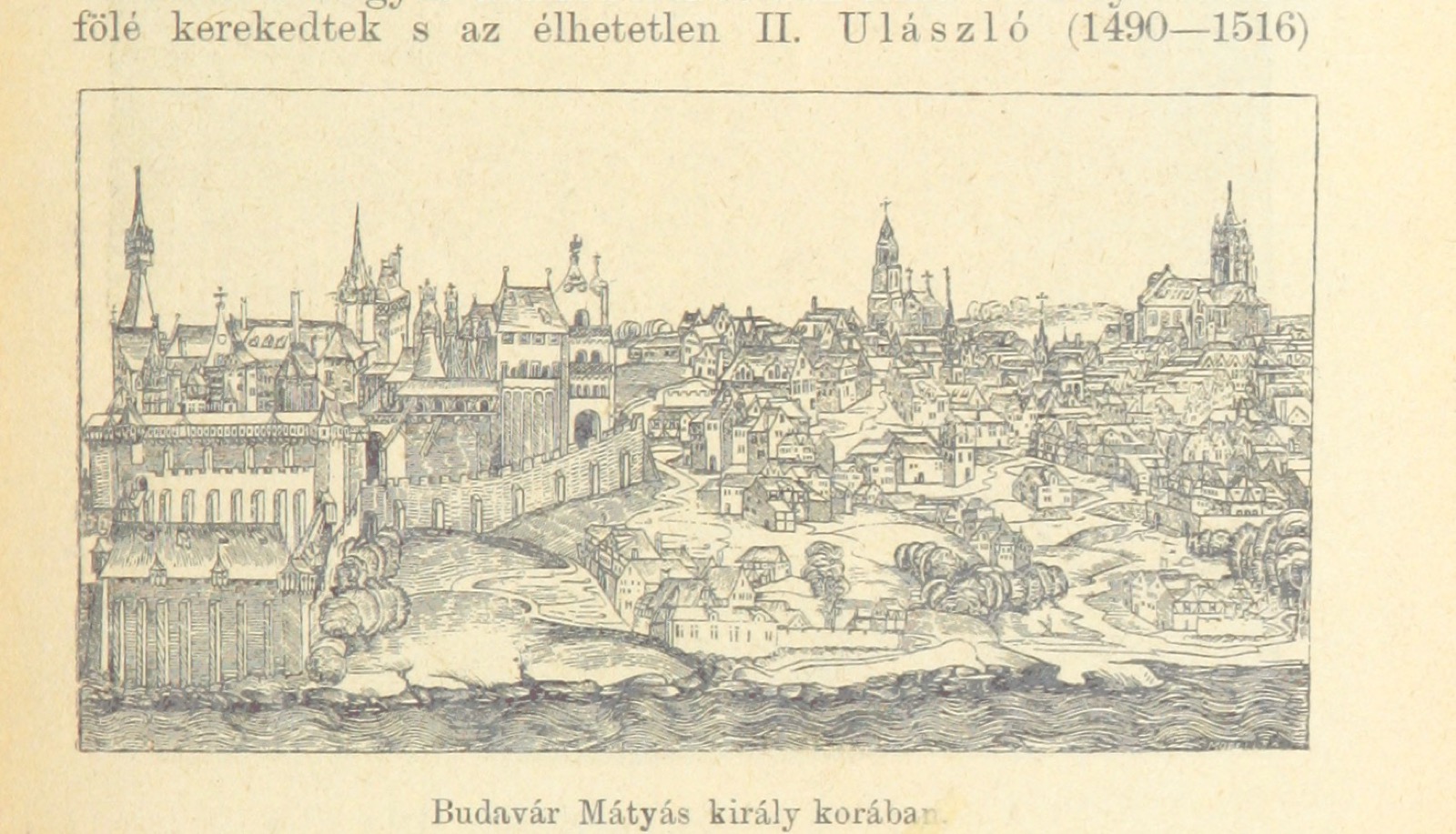
The era of King Matthias Buda Castle from "Világtörténelem, a polgári fiúiskolák számára, ... térkép
1888 · The British Library (via Europeana)
Public domain
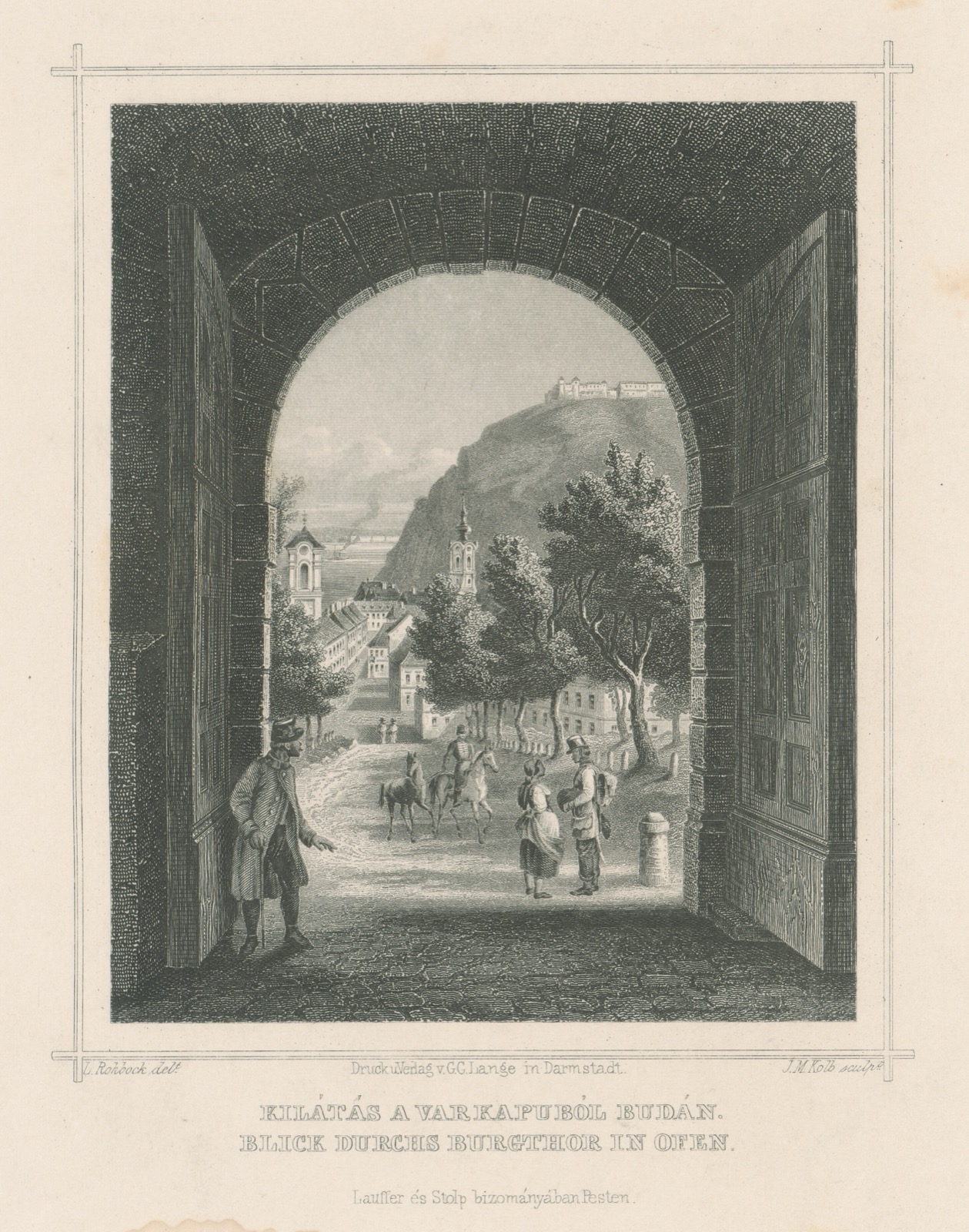
Pohľad cez Budínsku hradnú bránu
1857 · Slovak national gallery (via Europeana)
Public domain
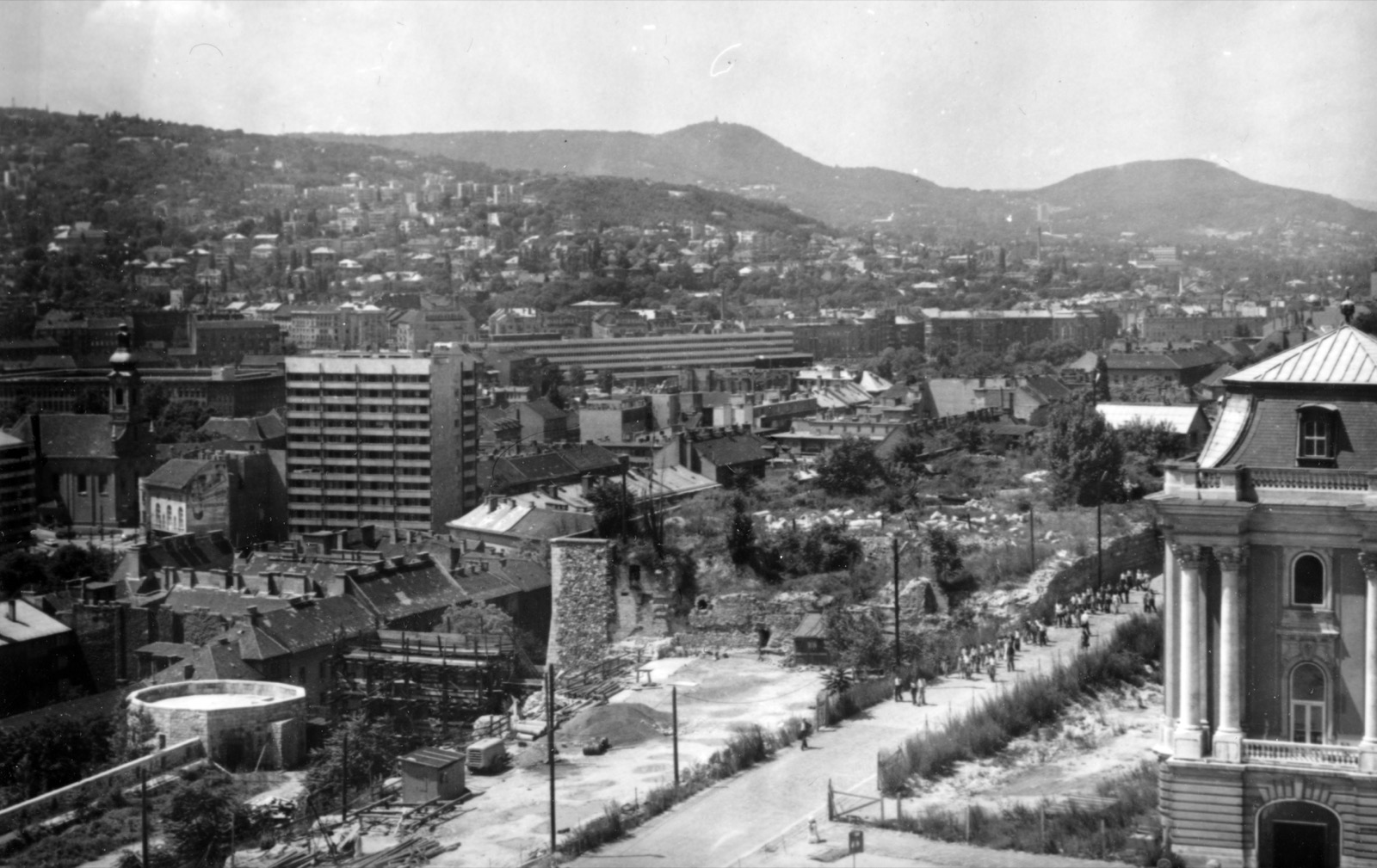
Kilátás a Budavári Palotából
1974 · Fortepan (via Europeana)
CC BY-SA
Nearby
Landmarks within reach of Buda Castle.


Questions about Buda Castle
What is the history of Buda Castle?
What is inside Buda Castle?
Why was Buda Castle built?
Does anyone live in Buda Castle now?
Where is Buda Castle?
When was Buda Castle built?
Was Buda Castle ever besieged?
What does Buda Castle look like?
Is Buda Castle still standing?
Who built Buda Castle?
Can you visit Buda Castle?
More castles of Hungary


Explore the city
