
Hungary · Still standing
Vajdahunyad Castle
Vajdahunyad vára
Vajdahunyad Castle is an eclectic, historicist castle complex in Budapest's City Park assembled from architectural models drawn from across the former Kingdom of Hungary. Built in 1896 for the Millennial Exhibition and rebuilt in stone by 1908, it functions today as a museum complex and park landmark.
Its prime
1908
Today
Still standing
As it stood in 1908
What Vajdahunyad Castle looked like in its prime.
A composite castle of pale limestone and warm beige masonry with steep red-brown tiled roofs, numerous pointed gables and small conical turrets. A central square stone tower with a tall pyramidal roof anchors a run of linked wings that display Gothic pointed arches, Renaissance mullioned windows and Baroque gables; a slender turret capped in green copper rises among them. Curtain walls and arcades connect the towers. The complex sits inside a city park beside a long reflecting pool and is fully roofed and complete at its prime.
Its story
The story of Vajdahunyad Castle.
A Thousand Years of Hungary in Wood, 1896
The castle was built for the Millennial Exhibition of 1896, which marked a thousand years since the Hungarian conquest of the Carpathian Basin in 895. Ignác Alpár designed a complex of 21 parts, officially the Historical Building Group, intended to present a thousand years of Hungarian architecture in three dimensions: Romanesque, Gothic, Renaissance and Baroque wings, each quoting emblematic buildings from across the medieval Kingdom of Hungary. The deadline and the cost meant it was raised mostly in wood and cardboard. The exhibition closed on 31 October 1896 and the temporary pavilions began to come down.
Reprieved by the Public, 1897–1899
Protest from the public saved it. The National Hungarian Economic Association proposed keeping the building for the new Museum of Hungarian Agriculture, founded during the exhibition itself on 20 June 1896, and the city authorities gave way. The castle reopened to visitors on 12 September 1897 as the Royal Hungarian Agricultural Museum, its collections assembled, under a decree of the agriculture minister Ignác Darányi, from the millennial agricultural displays and from donations made during 1896.
The flimsy materials told against it. The structure became dangerous, it was closed on 27 July 1899 and pulled down in the same year, and the museum moved out to Kerepesi, now Rákóczi, út 72.
Rebuilt in Stone, 1902–1908
Artists, museum staff, the Ministry of Religion and Public Education and Darányi all pressed for a second castle, and in 1902 building began again to Alpár's plans, this time in stone and brick. The Gothic and Renaissance–Baroque wings were finished by 1904 and the Romanesque group by 1908; the museum moved back in 1904, and on 9 June 1907 Franz Joseph opened its exhibitions to the public. Dénes Györgyi completed the interiors in 1912.
What the Castle Copies
The main block is a scaled-down copy of the castle of Vajdahunyad in Transylvania, the residence of the governor János Hunyadi and of Erzsébet Szilágyi, and it is from that front, the façade facing Heroes' Square, that the building takes its everyday name. Elsewhere the complex borrows the abbey portal at Ják, the ground plan of the church at Lébény, the clock tower of Segesvár and the Katherine Gate of Brassó. The Ják chapel is no mere replica: consecrated on 8 August 1915 and placed in the hands of the Roman Catholic church, it holds Mass every Sunday.
Miklós Ligeti's statue of Anonymus, the unnamed chronicler at the court of King Béla III, was set in the courtyard in 1903, and a niche in the outer wall carries a bust, added in 2003, of the Hungarian-American actor Béla Lugosi, who played Count Dracula in the 1931 film. The building still houses the Museum of Hungarian Agriculture, described as the largest agricultural museum in Europe.
Step inside
7 places to explore in 1908.
The record describes 7 distinct spots at Vajdahunyad Castle, including 1 interior: museum entrance and ground-floor spaces. Create your own photoreal reconstruction and explore every one, more scenes means more rooms, more angles, and more of the place to stand in.
Build Your Own Castle
Recreate Vajdahunyad Castle with AI to explore it.
The artist rebuilds it as it stood in 1908, a photoreal reconstruction that belongs to you alone. Pay with coins, no subscription needed.
Recreate this castle →Defend this castle →From the archive
Vajdahunyad Castle on paper: the measured plan and period views.
The survey plan and photographs below are the ground truth this page's reconstructions are checked against, drawn and photographed while the castle was still a working garrison. Every image is public-domain or openly licensed, with its source named.
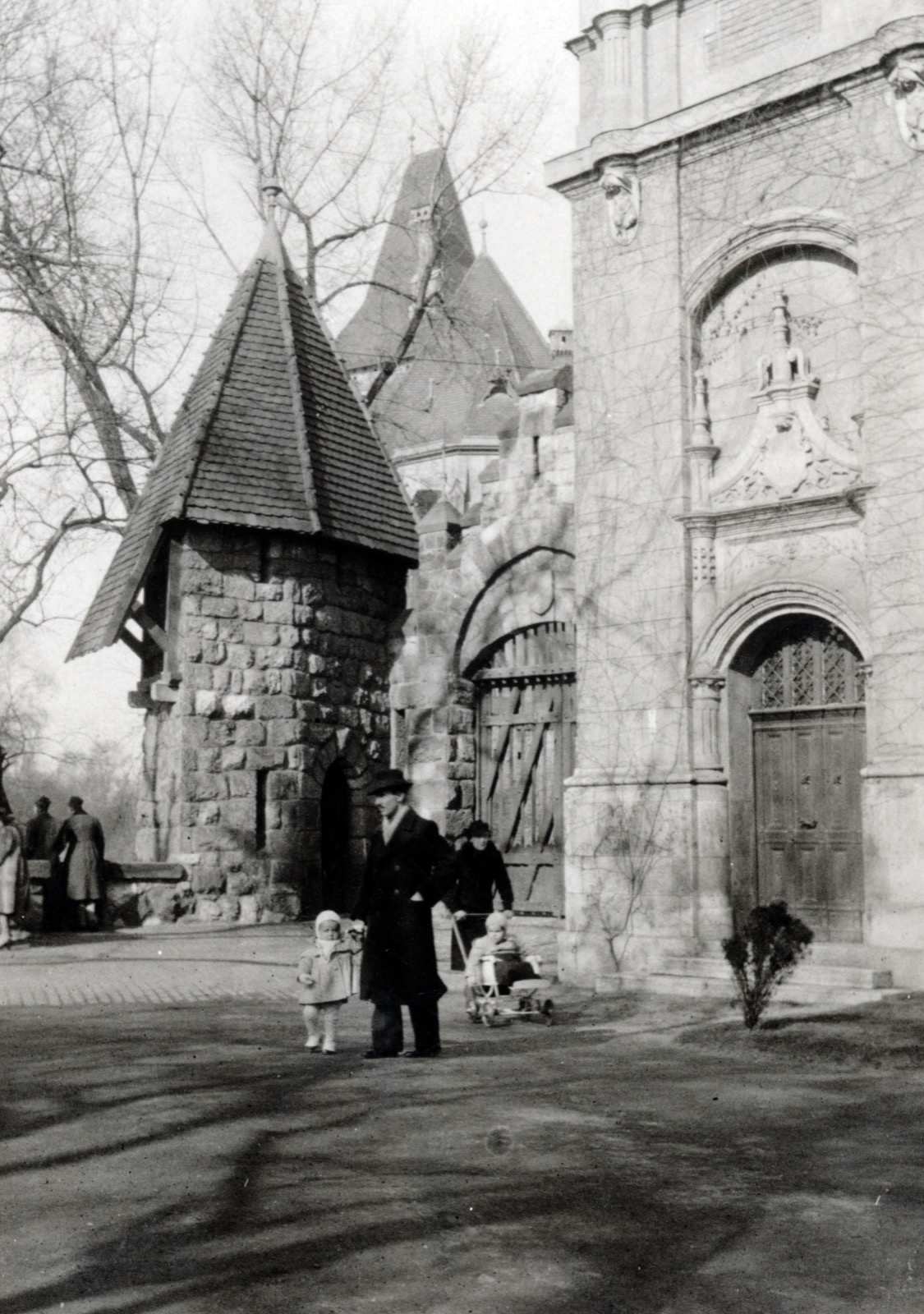
Budapest, Vajdahunyad vára
1939 · Fortepan (via Europeana)
CC BY-SA
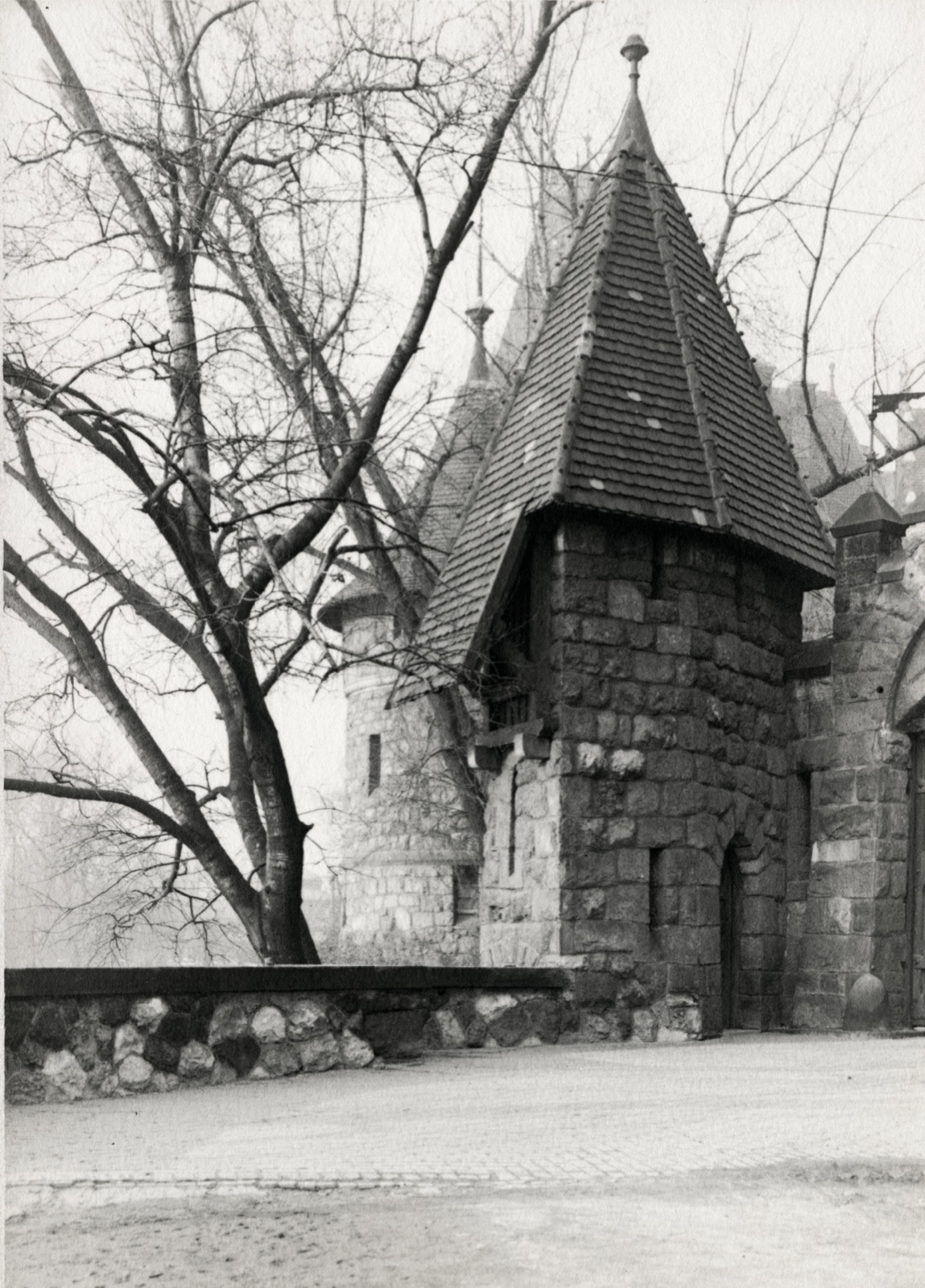
Vajdahunyad vára
1926 · Fortepan (via Europeana)
CC BY-SA
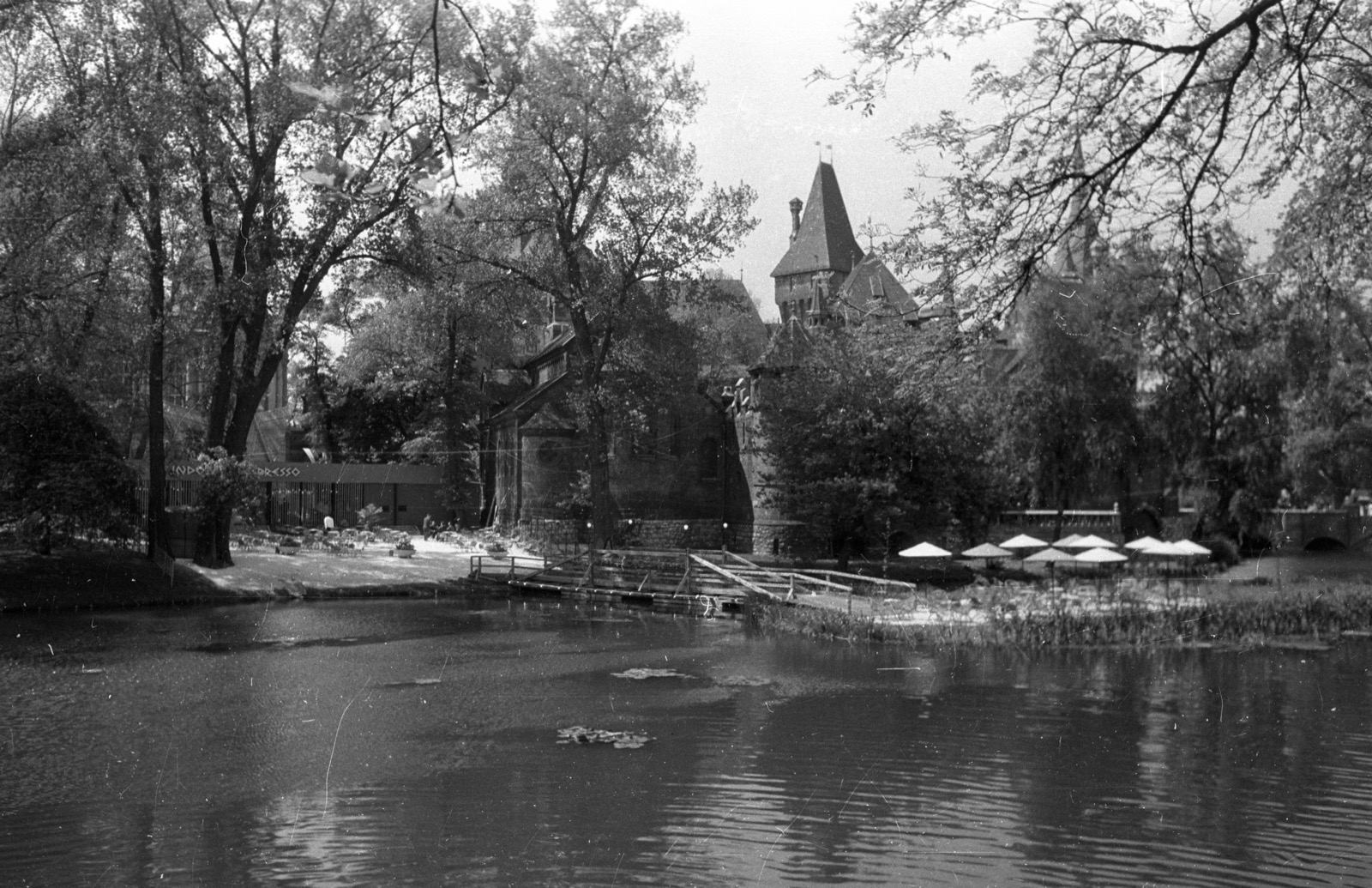
Vajdahunyad vára
1967 · Fortepan (via Europeana)
CC BY-SA
Nearby
Landmarks within reach of Vajdahunyad Castle.


Questions about Vajdahunyad Castle
What is the history of Vajdahunyad Castle?
What is inside Vajdahunyad Castle?
Why was Vajdahunyad Castle built, and what was it used for?
Where is Vajdahunyad Castle?
What did Vajdahunyad Castle look like in its prime?
Is Vajdahunyad Castle still standing, or is it a ruin?
Who built Vajdahunyad Castle?
Can you visit Vajdahunyad Castle?
More castles of Hungary


Explore the city
