
Italy · Restored
Castel Sant'Elmo
Castel Sant'Elmo is a large bastioned fortress on Vomero Hill overlooking Naples, Italy. Built in late medieval and Renaissance phases and reshaped into a hexagonal star fort in the 16th century, it now houses cultural institutions and museum spaces.
First raised
1537
Its prime
1601
Today
Restored
As it stood in 1601
What Castel Sant'Elmo looked like in its prime.
Massive hexagonal-star fortress of pale volcanic tufa standing on a wooded hilltop, with six angular bastions and high, straight curtain walls pierced by rows of embrasures. A taller rectangular central block rises above the inner courtyard; the outer faces are mostly blank masonry punctuated by gun-ports and a single principal entrance topped by a carved inscription and imperial coat-of-arms. The fortress dominates the skyline above terraces of trees and the dense city below.
Its story
The story of Castel Sant'Elmo.
Belforte on the Hill of Sant'Erasmo, 1275–1343
Documents record a structure on Vomero Hill from 1275, in the era of Charles of Anjou. Known as Belforte (its origin traced to a Norman observation tower) it was likely a fortified residence ringed by walls, its gate marked by two turrets. From 250 metres above the sea a garrison could watch the whole city, the gulf and every road descending from the surrounding heights, and that command of the approaches made the hilltop a coveted possession ever after.
In 1329 King Robert of Naples ordered a palace built on the summit, to designs by the Sienese architect Tino da Camaino, who also supervised the adjacent Carthusian monastery of San Martino. By 1336 documents were calling the palace a castrum; the work passed through the hands of Attanasio Primario and Francesco di Vico and was finished in 1343. The name came from a 10th-century church of Sant'Erasmo on the site, worn down through 'Ermo' to 'Elmo'; by 1348 the building was the castrum Sancti Erasmi.
The Hungarian Siege and the Angevin Century, 1348–1456
The castle's baptism of fire came in January 1348, when Louis I of Hungary descended on Naples to avenge his brother Andrew, whose murder was laid at the door of Queen Joanna I. After the queen's surrender the castle was occupied by Charles of Durazzo. In 1416 Queen Joanna II sold the fortress to Alfonso of Aragon for 10,500 ducats, and it remained a prized military objective as France and Spain contested the Kingdom of Naples. An earthquake in 1456 wrecked the Angevin work, demolishing the outer walls and the towers.
Escrivà's Six-Pointed Star, 1537–1547
The castle in its present form is Spanish. Viceroy Don Pedro de Toledo, prompted by Emperor Charles V, ordered its rebuilding in 1537 as part of a scheme to fortify the landward perimeter of Naples around four strongholds. The Valencian military architect Pedro Luis Escrivà gave it a hexagonal star plan, cut partly from the living yellow tuff of the hill, its six points projecting twenty metres, with great gun embrasures set in the re-entrant angles and no towers at all. The design drew such fierce criticism that in 1538 Escrivà published an Apologia in its defence; the same year an inscription surmounted by Charles V's double-headed imperial eagle went up over the gate. Gian Giacomo dell'Acaya carried the work to completion in the 1540s.
The finished fortress was an autonomous military outpost whose governor held absolute authority over soldiers and civilians alike. In 1587 lightning struck the powder magazine and the explosion killed 150 men, destroyed the church of Sant'Erasmo, the castellan's house and the officers' quarters, and damaged the city below. Reconstruction began in 1599 under the architect Domenico Fontana, and despite successive rebuildings the castle kept its original structure.
Prison of Philosophers and Patriots, 1604–1952
From 1604 to 1608 the philosopher Tommaso Campanella, branded a heretic, was held in its cells. In the Neapolitan revolt of 1647 the viceroy, the Duke of Arcos, took refuge in the castle and bombarded the city from its walls; the rebels, divided among themselves, never managed to take it. Austrian forces besieged the castle in 1707, the Bourbons in 1734.
In 1799 the castle was seized by the people and then held by the republicans, who bombarded the lazzari resisting the French below, planted the first liberty tree on 21 January and raised the flag of the Neapolitan Republic on the 22nd. The prison then filled with the patriots of that cause (Mario Pagano and Gennaro Serra di Cassano before the revolution, Domenico Cirillo and Luisa Sanfelice after the Republic fell), and through the Risorgimento its cells held Carlo Poerio and Silvio Spaventa.
The Bourbon garrison departed in 1860, but the castle remained a military prison until 1952, when the prison was transferred to Gaeta, and military property until 1976. A seven-year restoration then freed the fortress of centuries of accretions, recovering the original galleries, parapet walkways and underground chambers, and it opened to the public on 15 May 1988 as a museum and exhibition space.
Step inside
10 places to explore in 1601.
The record describes 10 distinct spots at Castel Sant'Elmo, including 4 interiors: officers' quarters around the parade, church (1547) and sacristy, underground chambers / magazine and more. Create your own photoreal reconstruction and explore every one, more scenes means more rooms, more angles, and more of the place to stand in.
Build Your Own Castle
Recreate Castel Sant'Elmo with AI to explore it.
The artist rebuilds it as it stood in 1601, a photoreal reconstruction that belongs to you alone. Pay with coins, no subscription needed.
Recreate this castle →Defend this castle →From the archive
Castel Sant'Elmo on paper: the measured plan and period views.
The survey plan and photographs below are the ground truth this page's reconstructions are checked against, drawn and photographed while the castle was still a working garrison. Every image is public-domain or openly licensed, with its source named.
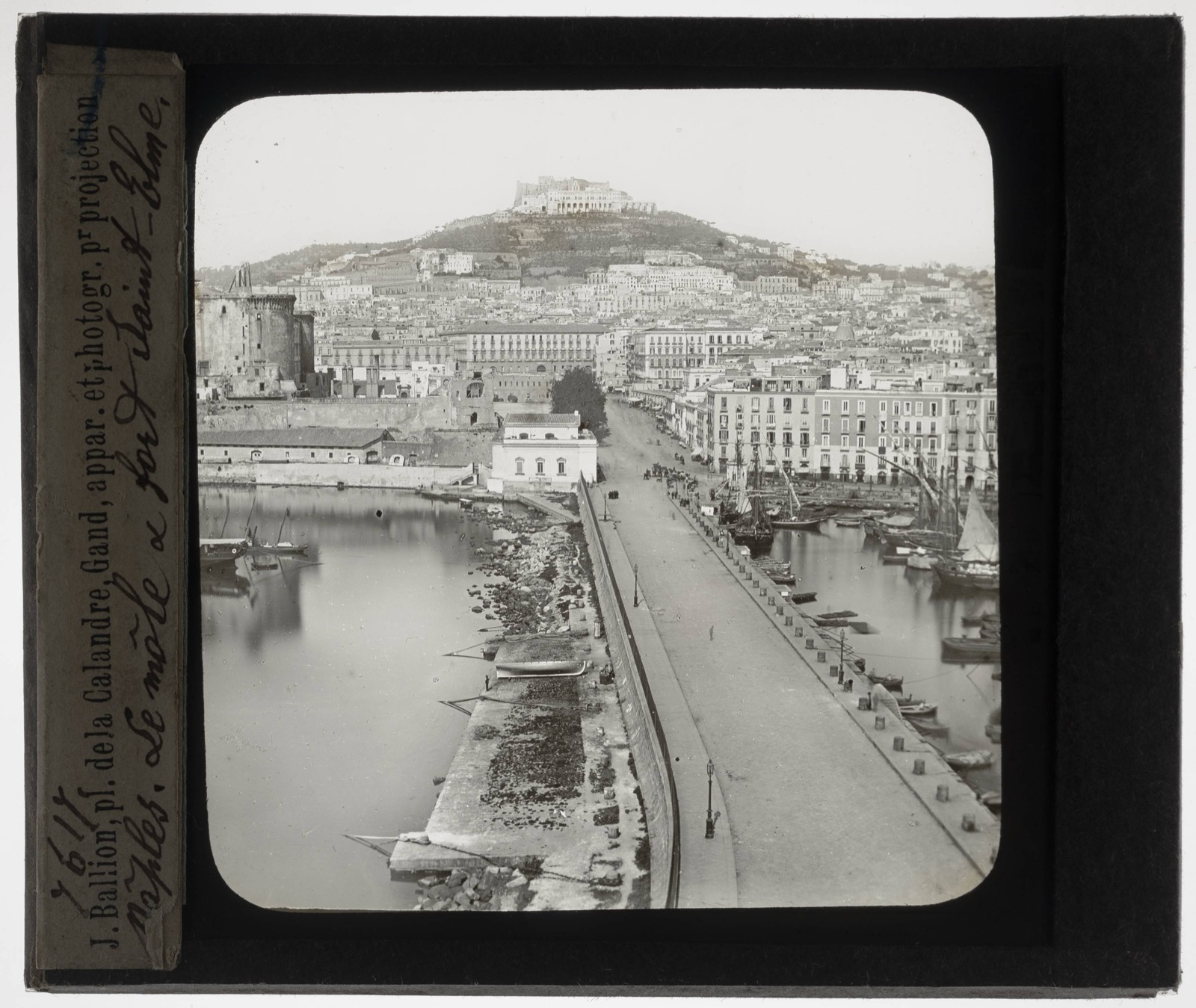
Napoli. Panorama met op de achtergrond het Castel Sant'Elmo
· Catholic University of Leuven (via Europeana)
Public domain
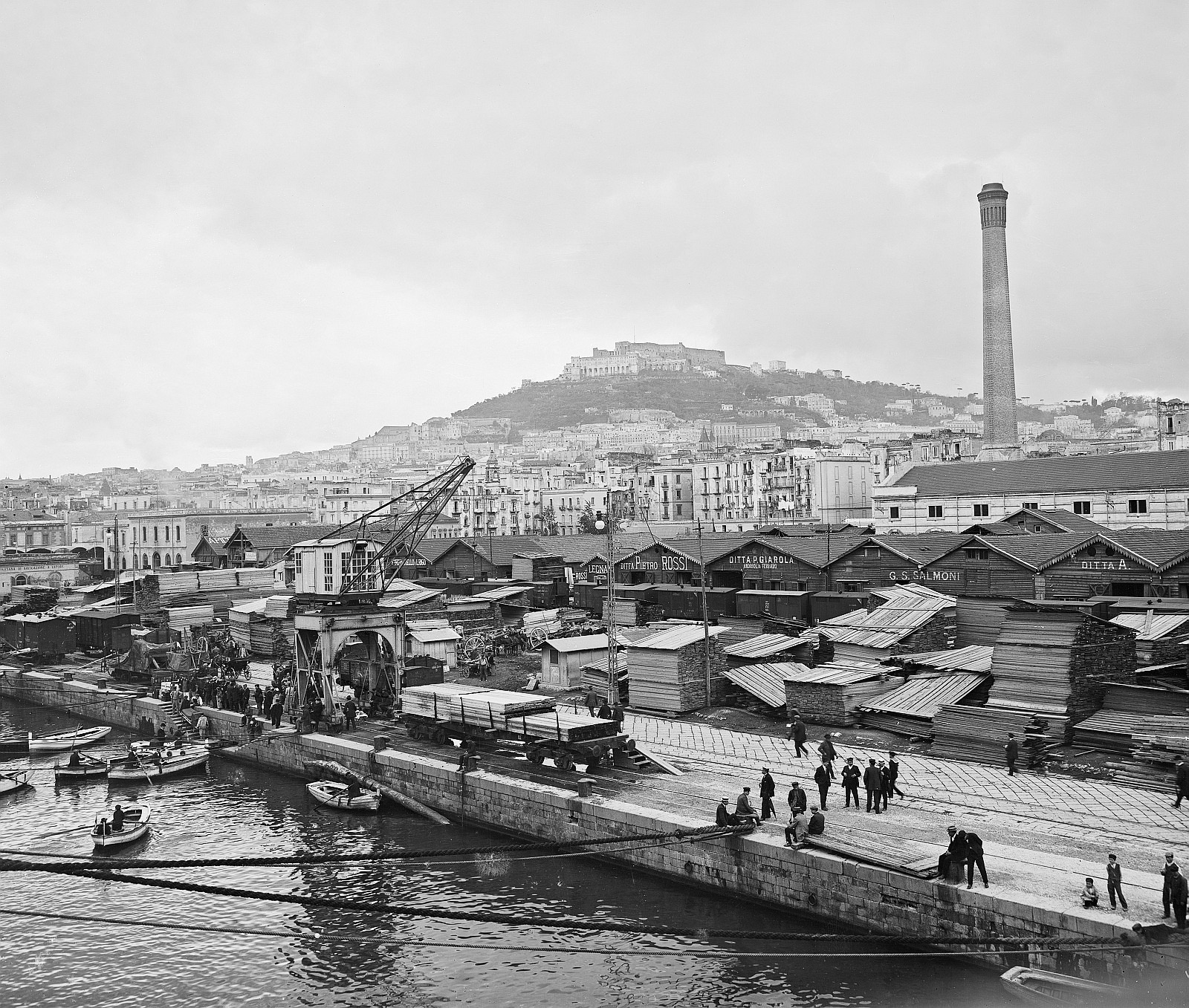
Neapel (Italien). Blick über den Hafen zum Monte Calvario mit Castel Sant'Elmo
· Deutsche Fotothek (via Europeana)
Public domain
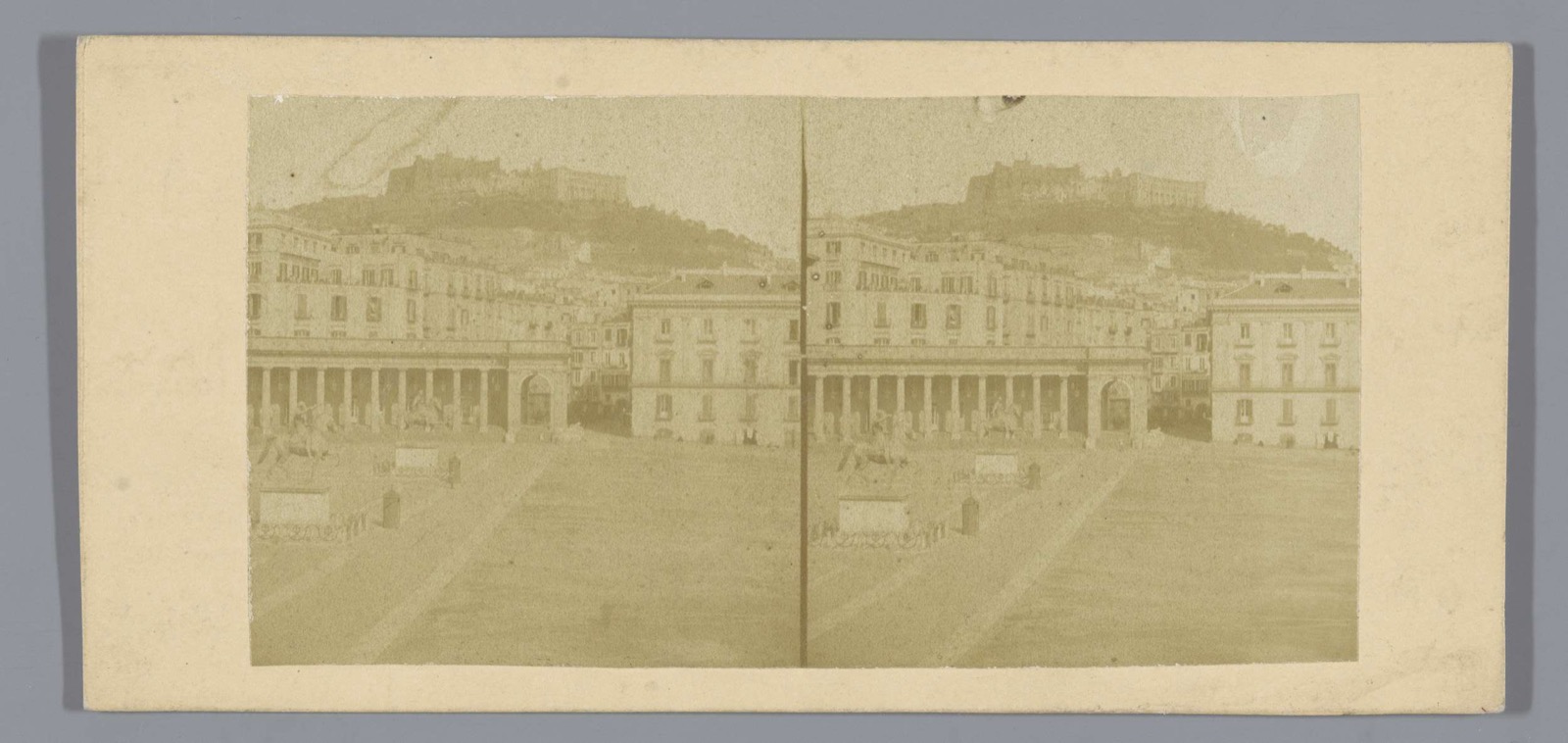
Piazza del Plebiscito te Napels, met zicht op het Castel Sant'Elmo
· Rijksmuseum (via Europeana)
Public domain
Nearby
Landmarks within reach of Castel Sant'Elmo.


Questions about Castel Sant'Elmo
What is the history of Castel Sant'Elmo?
What is inside Castel Sant'Elmo?
Why was Castel Sant'Elmo built, and what was it used for?
Where is Castel Sant'Elmo?
When was Castel Sant'Elmo built?
Was Castel Sant'Elmo ever attacked or besieged?
What did Castel Sant'Elmo look like in its prime?
Is Castel Sant'Elmo still standing or is it a ruin?
Can you visit Castel Sant'Elmo?
More castles of Italy


Explore the city


