
Portugal · Restored
Castle of Saint George
Castelo de São Jorge
São Jorge Castle (Castelo de São Jorge) is a hilltop medieval citadel in central Lisbon with extensive crenellated curtain walls and a rectangular inner castle. The site served as a royal alcáçova, military fortress and archive over the centuries and today is a national monument and museum open to visitors.
Its prime
1498
Today
Restored
As it stood in 1498
What Castle of Saint George looked like in its prime.
Perched on a central hill, the castle presents a roughly rectangular plan with continuous pale-yellow limestone curtain walls and ten square, flat-topped towers capped by crenellations. Walls step down the slope and are pierced by narrow arrow slits; a taller central tower flies a flag. The citadel contains a large terraced square and the remnants of a royal palace; stairways lead up to a raised wall-walk and towers offering panoramic views across the Tagus.
Its story
The story of Castle of Saint George.
The Hill Before Afonso Henriques
The oldest fortifications on the castle hill date from the 2nd century BC, though people had occupied the height since the Iron Age: Celtic tribes used it first, then Phoenicians, Greeks and Carthaginians, who held it as a defensive outpost before it passed in turn to the Romans, the Suebi, the Visigoths and the Moors. From 139 BC the town below, Olisipo, served the consul Decimus Junius Brutus Callaicus as a base against the Lusitanian bands scattered after the killing of their leader Viriathus, which is why some kind of defensive work is assumed on the hill by that date.
In the 8th century the hill passed under Muslim rule, and the geographers of that world describe walls defending the qasabah, the alcáçova that was the seat of al-Ushbuna's political and military power: roughly square, about 60 metres to a side, with walls running east and west down to the river to enclose the town below. The circuit remembered as the Cerca Moura is credited to Berber builders of the 10th century, though it may have begun as a late-Roman wall rebuilt and enlarged under Islamic rule. Christian arms reached the city more than once without holding it: Alfonso II of Asturias sacked it in 796 and withdrew, and in the spring of 1093 al-Mutawakkil of Badajoz handed Lisbon, Santarém and Sintra to Alfonso VI of León and Castile in the hope of a defensive alliance that came to nothing, leaving the three towns Muslim under the Almoravids.
The Three-Month Siege of 1147
After taking Santarém, Afonso Henriques turned on the Moorish fortification at Lisbon with the help of Norman, Flemish, German and English crusaders who had put in on their way to the Holy Land. The place capitulated in 1147 after a hard siege of three months, an episode set down in De expugnatione Lyxbonensi, the letter of an English crusader who took part in it; set against the Second Crusade as a whole, the taking of Lisbon was that failed expedition's only notable success. An oft-repeated legend tells of the knight Martim Moniz who, noticing one of the castle doors ajar, threw his own body into the gap so that the Moors could not close it, and died letting his companions through.
With the castle taken, the Christian defence of Lisbon held to the end of the 12th century, and between 1179 and 1183 it withstood the Muslim forces that harried the country between Lisbon and Santarém. The day of the conquest, 25 October, is kept today as the Day of the Army, an institution whose patron in Portugal is Saint George.
Capital, Cerca Fernandina and the Castilian Wars
When Lisbon became capital of the Kingdom of Portugal in 1255, the castle served as the alcáçova, the fortified residence of Afonso III in his role as governor, and entered its high period as royal palace, palace of bishops, lodging for the nobles of the court and military fortification all at once. King Denis renovated it extensively around 1300, turning the Moorish alcáçova into the Royal Palace of the Alcáçova; earthquakes in 1290, 1344 and 1356 each did it damage.
In February and March 1373 Castilian forces sacked and burned the suburbs of the capital, and that same year Ferdinand I ordered a new wall, the Cerca Fernandina, raised by the master builders João Fernandes and Vasco Brás. Finished in two years, it enclosed all but the north flank of the castle, took in parts of the city that had never been protected, and ran 5,400 metres with 77 towers and more than thirty gates. The Castilians struck at the suburbs again in March 1382, and in the succession crisis that followed Lisbon was heavily besieged in 1384 by John I of Castile. It was in these late fourteenth-century years that John I of Portugal, husband of the English princess Philippa of Lancaster, dedicated the castle to Saint George, the warrior-saint popular in both kingdoms. From 1378 many of the kingdom's records were kept in the castle tower known today as the Tower of Ulysses, and there they stayed until the earthquake of 1755; the Portuguese royal archive is still called the Torre do Tombo after it.
Lions from Ceuta and the Move to the Ribeira
After the conquest of Ceuta in 1415 John I brought two Barbary lions back to Lisbon and installed them in a large room in his palace in the citadel, a quarter known ever after as the Casa dos Leões; the German humanist Hieronymus Münzer, in Lisbon for five days in 1494, called them the most beautiful wild beasts he had ever seen. Through the same century the place was converted piece by piece from fortified castle into royal residence, with payments for stonework, labour and materials running on until 1452. As royal palace the castle received Vasco da Gama on his return from opening the sea route to India in 1498, and in 1502 it served as a theatre when Gil Vicente staged his Monólogo do Vaqueiro to honour the birth of Manuel I's heir, the future John III.
Once the Ribeira Palace went up beside the Tagus early in the 16th century, the Palace of the Alcáçova began to lose its importance, and an earthquake in 1531 hastened the decay. In 1569 King Sebastian ordered the royal apartments rebuilt, intending the castle as his official residence, and in 1577 Filippo Terzi demolished one of the towers near the principal facade of the Church of Loreto as part of the work. Little of it was finished. The young king's apparent death at the Battle of Alcácer Quibir and the dynastic crisis that followed opened the way to sixty years of Spanish rule, and the castle was turned into military barracks and a prison.
Restoration Engineers, the 1755 Earthquake and the Rebuilt Walls
At the Restoration of Independence the castle's alcaide, honouring the oath of homage he had sworn, surrendered the place to the Restorers only in 1640, and only after Margaret of Savoy, Duchess of Mantua and until then vicereine of Portugal, sent him instructions to yield. With independence won, the fortification works passed to the Portuguese government: from 1648 Nicolau de Langres and then the military architect Mateus do Couto designed a new enceinte enclosing both the castle and the city walls of Lisbon, and building followed Couto's plans as late as 1733.
The Lisbon earthquake of 1755 undid much of that. Apart from the walls of the old castle, the soldiers' hospital and the Recolhimento were left in ruins, and the need to keep a military force inside the capital pushed the site further into the roles of garrison and presidio. The charitable Casa Pia occupied the citadel from 1780 to 1807 while soldiers were still quartered there, and the castle afterwards served Jean-Andoche Junot as his headquarters. A decree of 16 June 1910 classified it a National Monument, but by the 1930s it had all but disappeared from the Lisbon skyline, buried behind and beneath later annexes. Salazar's government took it in hand as part of the celebrations of the foundation of nationhood and the restoration of independence, and the rebuilding campaign of the 1940s raised much of the walling and heightened many of the towers, so the medieval character of the whole is largely the work of that campaign rather than an unbroken inheritance from the Middle Ages.
Step inside
9 places to explore in 1498.
The record describes 9 distinct spots at Castle of Saint George, including 3 interiors: tower of ulysses (torre do tombo), casa ogival (royal palace room), casa dos leões (lions' house) in the royal palace. Create your own photoreal reconstruction and explore every one, more scenes means more rooms, more angles, and more of the place to stand in.
Build Your Own Castle
Recreate Castle of Saint George with AI to explore it.
The artist rebuilds it as it stood in 1498, a photoreal reconstruction that belongs to you alone. Pay with coins, no subscription needed.
Recreate this castle →Defend this castle →From the archive
Castle of Saint George on paper: the measured plan and period views.
The survey plan and photographs below are the ground truth this page's reconstructions are checked against, drawn and photographed while the castle was still a working garrison. Every image is public-domain or openly licensed, with its source named.
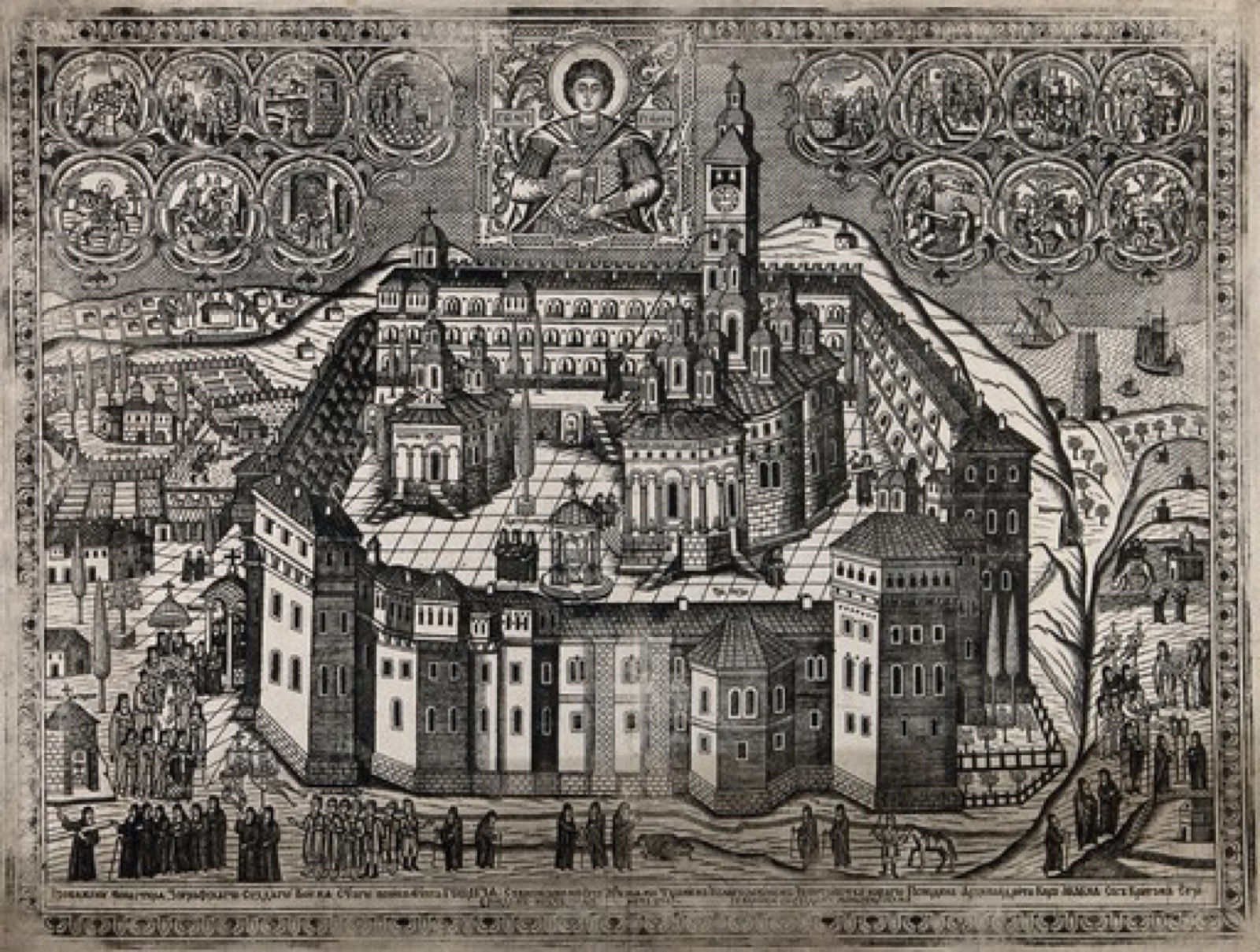
Saint George
· Wellcome Collection (via Europeana)
CC BY
Nearby
Landmarks within reach of Castle of Saint George.


Questions about Castle of Saint George
What is the history of Castle of Saint George?
What is inside Castle of Saint George?
Why was Castle of Saint George built, and what was it used for?
Where is Castle of Saint George?
Was Castle of Saint George ever attacked or besieged?
What did Castle of Saint George look like in its prime?
Is Castle of Saint George still standing or is it a ruin?
Can you visit Castle of Saint George?
More castles of Portugal


Explore the city


