Clan Rising
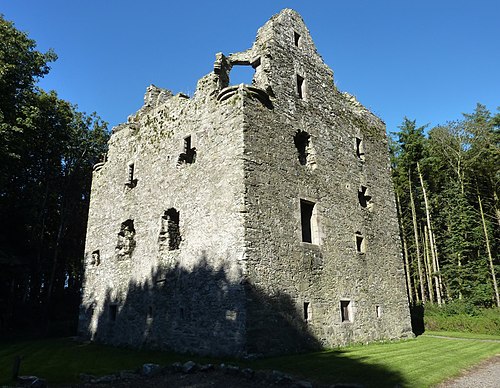
Mains Castle today

Scotland · Restored

Mains Castle

Mains Castle (also Claverhouse or Fintry Castle) is a 16th-century Scottish castle in Caird Park, Dundee, formerly the seat of the Grahams of Fintry. The complex comprises a large square tower house and ranges of buildings around a central courtyard, sited above the Dichty valley beside the Gelly Burn. It is a Category A listed building and was renovated in the late 20th century.

Photograph via Wikimedia Commons

Its prime

1582

Today

Restored

As it stood in 1582

What Mains Castle looked like in its prime.

A compact courtyard castle of reddish-brown sandstone featuring a tall, six-storey square tower house with dressed cornerstones and a steep gabled roof with end chimneys. Lower two-storey ranges with steep slate roofs and small vertical windows enclose a yard; the southern range is simpler and lower, the northern and eastern ranges more domestic with dormer windows. A stone curtain wall with an arched western gateway fronts the approach. The site sits in parkland above a small burn and valley.

Its story

The story of Mains Castle.

Mains Castle, also known as Claverhouse or Fintry Castle, stands in Dundee's Caird Park, overlooking the Dichty valley beside the Gelly Burn. An earlier castle here was held by the Douglas Earls of Angus from the 14th century until 1530, when it passed to the Grahams. The 16th-century castle ranges several buildings around a courtyard, dominated by a six-floor square tower house with dressed cornerstones.

The seat of the Grahams of Fintry until the 19th century, it was sold by Robert Graham to David Erskine, on condition that his family retained the territorial title of Graham of Fintry and that the estate reverted to its older name of Lumlathen or Linlathen. Shipley Gordon Stuart Erskine later sold the estate to James Key Caird, who gifted castle and lands to the town council in 1913 as the site of a public park.

Across the burn lie the mausoleum of the Graham family and the Mains cemetery, formerly the site of the district's kirk. The Category A listed castle was renovated in the late 20th century, and it even earned a poem, The Castle of Mains, from the Dundee poet William McGonagall.

Step inside

8 places to explore in 1582.

The record describes 8 distinct spots at Mains Castle, including the full exterior approach. Create your own photoreal reconstruction and explore every one, more scenes means more rooms, more angles, and more of the place to stand in.

Approach: western gatewayBase of the tower houseCentral courtyardEastern range (family quarters)Northern family buildingsSouthern servants' quartersView over the burn and Dichty valleyWestern gateway keystone detail

Build Your Own Castle

Recreate Mains Castle with AI to explore it.

The artist rebuilds it as it stood in 1582, a photoreal reconstruction that belongs to you alone. Pay with coins, no subscription needed.

Recreate this castle →

Castle Siege

Play Castle Siege at Mains Castle.

A strategy game played on Mains Castle’s real ground plan: the same surveyed walls shown in the archive below. Post your finite garrison on the battlements between assaults, then hold out as rams, siege towers, trebuchets and sappers arrive in ever-worse waves.

Sign in free to see the garrison muster. One castle costs 150 Clan Coins and is yours forever.

Sign in to take command →

See every castle’s leaderboard →

Whose castle

Clans who held Mains Castle.

The families that held Mains Castle for a decade or more across its history, follow a name to its clan.

  • Douglas

    An earlier castle held by the Douglas Earls of Angus from the 14th century until 1530.

  • Graham

    Seat of the Grahams of Fintry from 1530 until Robert Graham sold the lands in the 19th century.

  • Erskine

    Bought by David Erskine in the 19th century; Shipley Gordon Stuart Erskine later sold the estate.

From the archive

Mains Castle on paper: the measured plan and period views.

The survey plan and photographs below are the ground truth this page's reconstructions are checked against, drawn and photographed while the castle was still a working garrison. Every image is public-domain or openly licensed, with its source named.
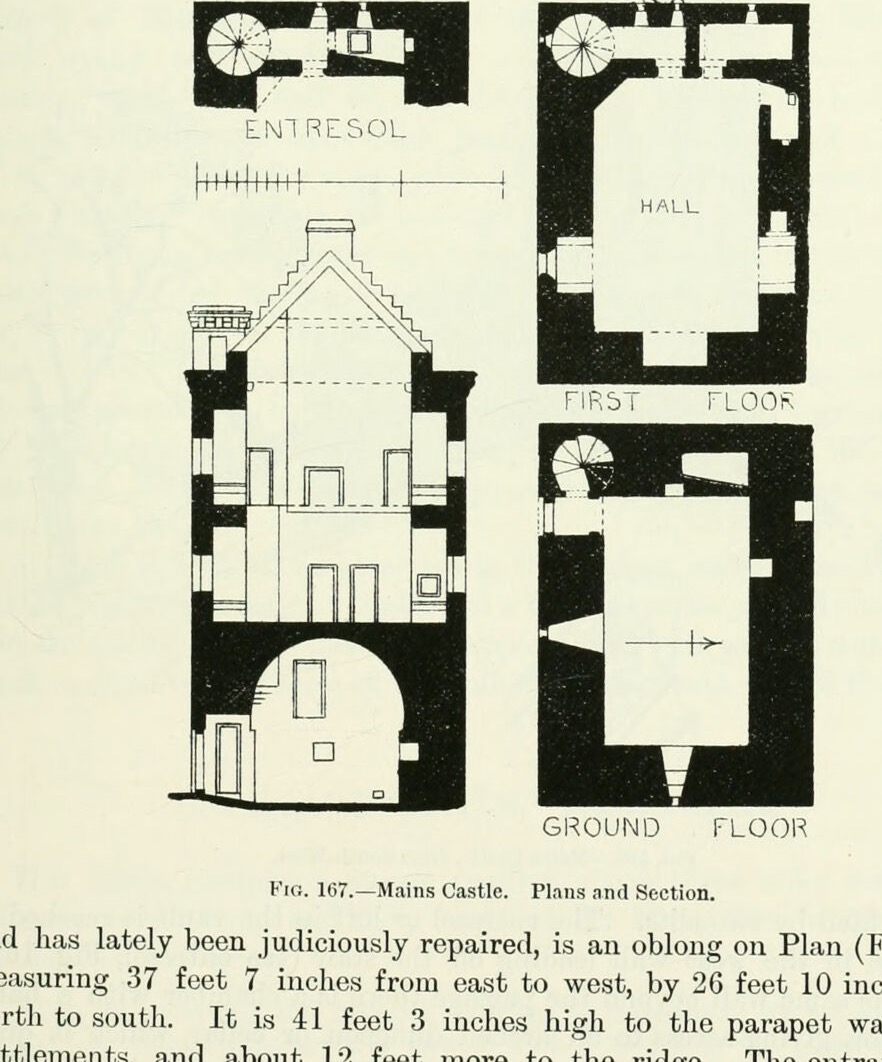
Fig. 167. — Mains Castle. Plans and Section., Mains Castle

Fig. 167. — Mains Castle. Plans and Section.

1889 · MacGibbon & Ross, vol. 3 (1889)

Public domain
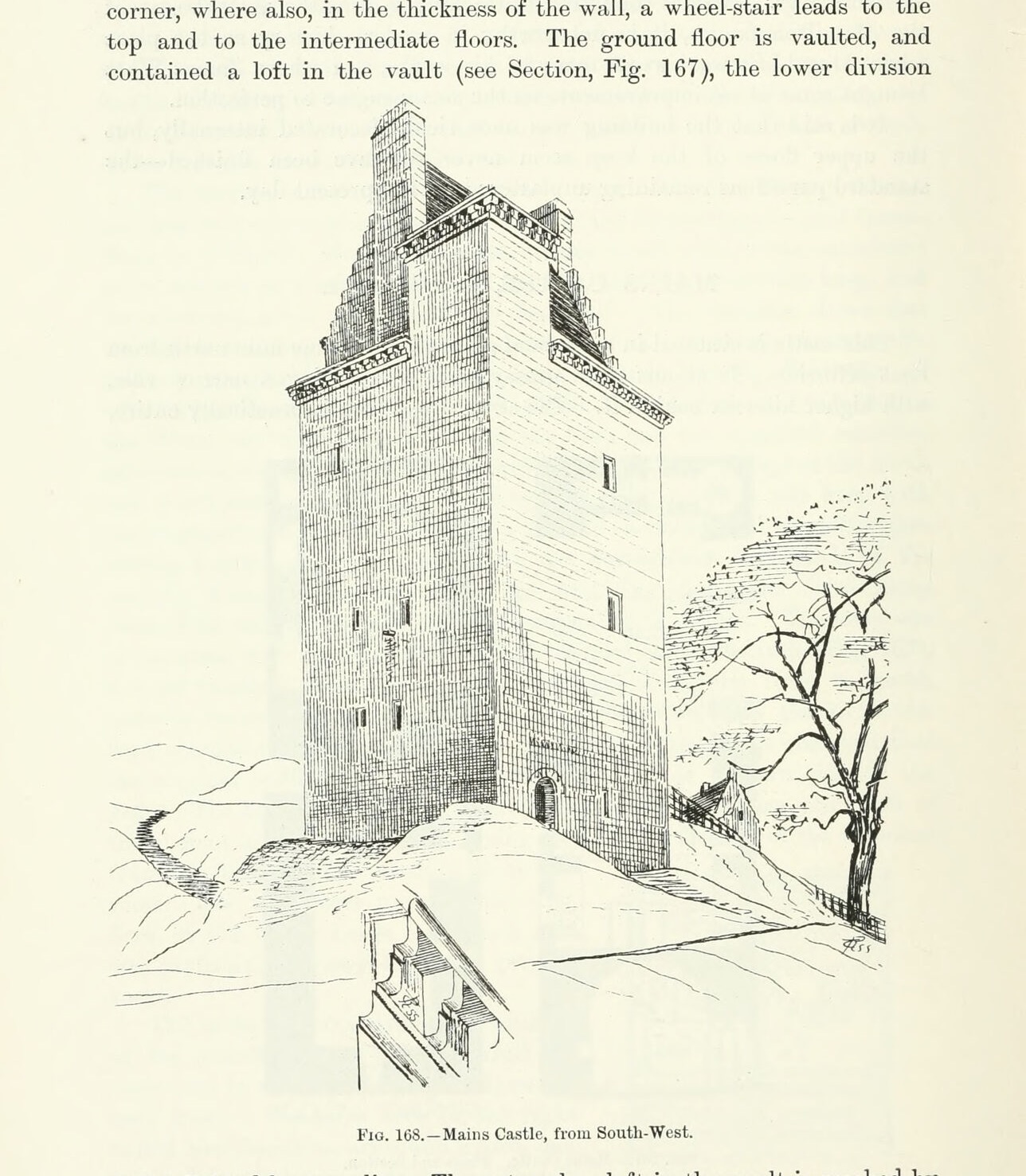
Fig. 168. — Mains Castle, from South-West., Mains Castle

Fig. 168. — Mains Castle, from South-West.

1889 · MacGibbon & Ross, vol. 3 (1889)

Public domain

Questions about Mains Castle

What is the history of Mains Castle?

Mains Castle is a 16th-century castle whose earlier site passed from the Douglas Earls of Angus to the Grahams in 1530. It remained the seat of the Grahams of Fintry until the 19th century, when Robert Graham sold the lands to David Erskine. James Key Caird later gifted the castle and its lands to the town council in 1913, and Mains Castle was renovated in the 1980s.

What is inside Mains Castle?

Inside Mains Castle are a central courtyard and several surrounding ranges. The northern and eastern buildings contained the family quarters, while servants occupied the southern quarters. The castle also has a large, six-floor square tower house, although several original western buildings no longer exist.

Where is Mains Castle?

Mains Castle is in Caird Park in Dundee, overlooking the Dichty valley beside the Gelly Burn. It stands to the north of the city, with the Graham family mausoleum and Mains cemetery on the opposite side of the burn. The cemetery was formerly the site of the district’s kirk.

When was Mains Castle built?

Mains Castle was built in the 16th century. The exact first-raised year is not recorded, while dates of 1562 and 1582 are associated with its construction: a western gateway keystone bears 1562, and a beam in an eastern courtyard door bears 1582. The latter may indicate completion.

Which family or clan held Mains Castle?

Mains Castle was held by the Douglas Earls of Angus from the 14th century until 1530. It then became the seat of the Grahams of Fintry, who retained it until Robert Graham sold the lands in the 19th century. David Erskine bought it, and Shipley Gordon Stuart Erskine later sold the estate.

What did Mains Castle look like in its prime?

Mains Castle is a compact courtyard castle of reddish-brown sandstone. Its tall, six-storey square tower house has dressed cornerstones and a steep gabled roof with end chimneys. Lower ranges with steep slate roofs enclose the yard, while a stone curtain wall and arched western gateway face the approach.

Is Mains Castle still standing or is it a ruin?

Mains Castle is still standing and has been restored. The Category A listed building was renovated in the late 20th century, including work in the 1980s when many of its buildings had become roofless. Several original western buildings no longer exist, but the tower house and surrounding ranges survive.
All castles of Scotland · Castles of Europe · the best castles in Europe · explore the finished reconstructions.