
Scotland · Restored
Rossend Castle
Rossend Castle is a historic 16th-century tower house in Burntisland, Fife, built largely in the 1500s on earlier foundations. The building was long associated with local abbots and later aristocratic owners, and contains a surviving early-17th-century painted timber ceiling that was once in situ.
Its prime
1554
Today
Restored
As it stood in 1554
What Rossend Castle looked like in its prime.
Compact rectangular tower-house finished in smooth white harling, three storeys with an attic and a low-pitched tiled roof, pierced by several tall, slender chimneys. The south-facing façade shows regularly spaced narrow windows and a principal doorway with a dated stone lintel and heraldic arms (22 May 1554). A rounded stair-turret rises at one corner and the 13th-century basement is evident from small lancet windows near ground level; set in a gravel forecourt within the town.
Its story
The story of Rossend Castle.
Rossend, on the south coast of Fife at Burntisland, was known by 1382 as Abbot's Hall, the home of the Abbot of Dunfermline; the present tower house was built largely in the 1500s on earlier foundations. On 11 May 1590 Sir Robert Melville hosted the Danish Admiral Peder Munk here, on his way to Falkland Palace to take possession of lands granted to Anne of Denmark as part of her dowry.
In April 1594 James VI came from Leith with his guard and tried, unsuccessfully, to capture two rebel supporters of the Earl of Bothwell, Archibald Wauchope of Niddrie and John Wemyss of Logie, Melville having been instructed to make "his house of Burntyland patent" for the king's reception. Cromwell's soldiers captured the castle in 1651, and in the later 17th century the Wemyss family owned it and remodelled the top floor.
By 1765 it belonged to Murdoch Campbell, a Highlander from Skye who probably gave the building its current name. The Town Council acquired it in 1952; in 1975 the architecture firm Robert Hurd & Partners bought and restored it as their offices, and private owners who bought it in 2019 have restored it again. An early-17th-century painted timber ceiling from the castle survives.
Step inside
6 places to explore in 1554.
The record describes 6 distinct spots at Rossend Castle, including 3 interiors: abbot's hall with painted timber ceiling, 13th-century basement (lancet windows / chapel), private bedchamber (site of mary's bed). Create your own photoreal reconstruction and explore every one, more scenes means more rooms, more angles, and more of the place to stand in.
Build Your Own Castle
Recreate Rossend Castle with AI to explore it.
The artist rebuilds it as it stood in 1554, a photoreal reconstruction that belongs to you alone. Pay with coins, no subscription needed.
Recreate this castle →Defend this castle →Whose castle
Clans who held Rossend Castle.
The families that held Rossend Castle for a decade or more across its history, follow a name to its clan.
Melville
The house of Sir Robert Melville in the 1590s, when it received the Danish Admiral Peder Munk and James VI.
Wemyss
Owned by the Wemyss family in the later 17th century, when they remodelled the top floor.
From the archive
Rossend Castle on paper: the measured plan and period views.
The survey plan and photographs below are the ground truth this page's reconstructions are checked against, drawn and photographed while the castle was still a working garrison. Every image is public-domain or openly licensed, with its source named.
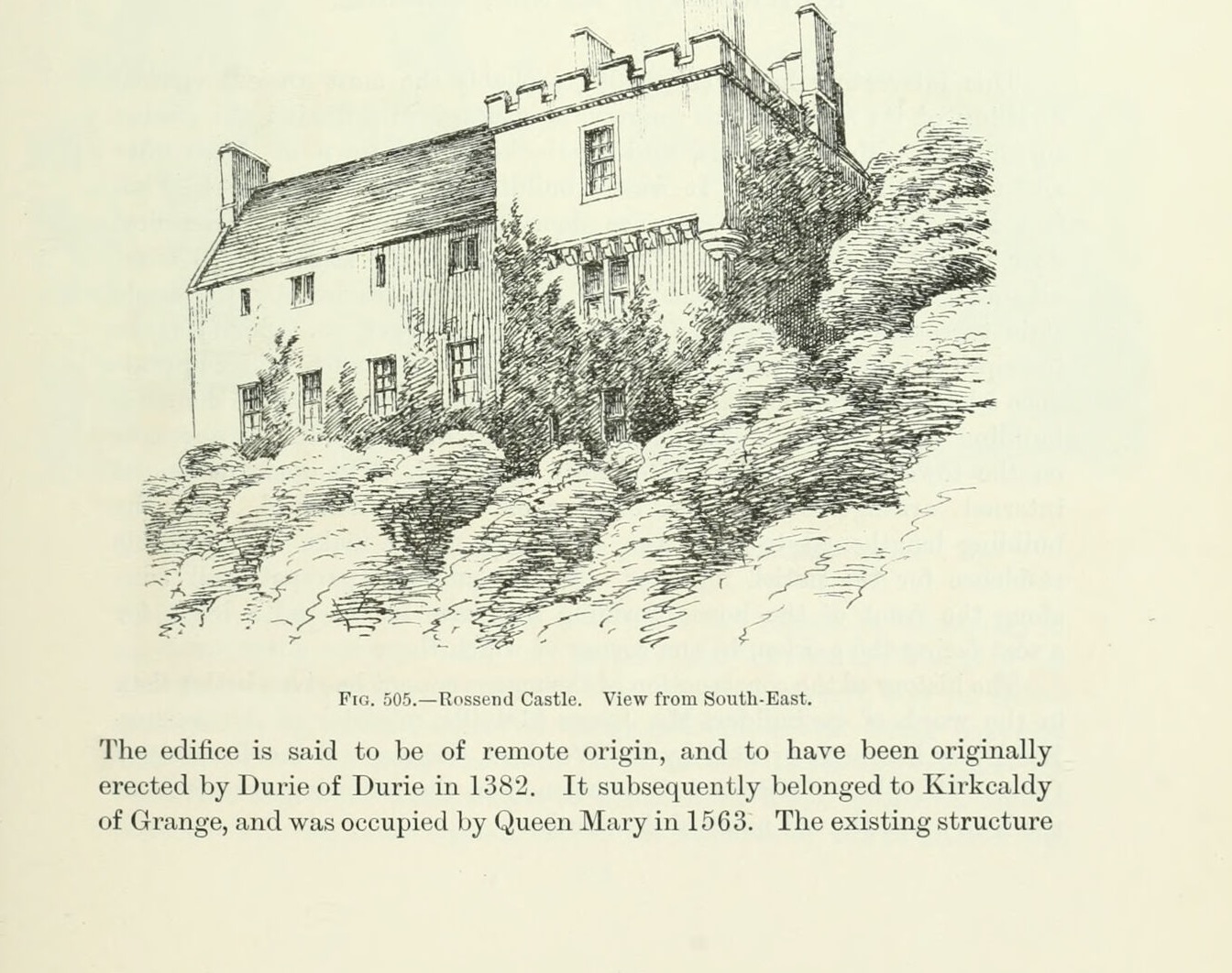
Fig. 505. Rossend Castle. View from South-East.
1889 · MacGibbon & Ross, vol. 3 (1889)
Public domain
Nearby
Landmarks within reach of Rossend Castle.


Questions about Rossend Castle
What is the history of Rossend Castle?
What is inside Rossend Castle?
Why was Rossend Castle built, and what was it used for?
Where is Rossend Castle?
When was Rossend Castle built?
Was Rossend Castle ever attacked or besieged?
Which family or clan held Rossend Castle?
What did Rossend Castle look like in its prime?
Is Rossend Castle still standing, or is it a ruin?
Who built Rossend Castle?
Who owns Rossend Castle now?
More castles of Scotland


Explore the city


