
Italy · Still standing
Castel Sant'Angelo
Castel Sant'Angelo is a massive cylindrical mausoleum on the right bank of the Tiber in Rome, originally built for the Emperor Hadrian and later converted by the popes into a fortress and residence; it now houses a museum. The structure began as a decorated rotunda and has been altered repeatedly, but remains a dominant circular tower beside the bridge (Pons Aelius/Ponte Sant'Angelo).
First raised
139
Its prime
139
Today
Still standing
Ranked among Europe’s castles
As it stood in 139
What Castel Sant'Angelo looked like in its prime.
A monumental, decorated cylindrical rotunda rising directly from the riverbank, its smooth drum pierced by regularly spaced decorative bands and shallow niches; a broad, planted roof terrace crowns the cylinder and is surmounted by a large golden quadriga. The building presents a compact, symmetric silhouette against the skyline, sitting at the end of a straight bridge across the Tiber, its masonry surfaces catching light and showing Roman-era stone and brick facing.
Its story
The story of Castel Sant'Angelo.
Hadrian's Mole, Finished in 139
Hadrian's tomb went up on the right bank of the Tiber in the 130s and was completed under Antoninus Pius in 139: a square base faced in Luna marble, a travertine-clad drum above it, and on top a planted mound crowned by a bronze quadriga driven by Hadrian in the guise of the sun. At some 50 metres to the top of the mound it overtopped everything else in the city.
His ashes were placed here a year after he died at Baiae in 138, with those of his wife Sabina and his adopted son Lucius Aelius. Emperors kept arriving after him (Marcus Aurelius, Commodus, and Septimius Severus with his wife Julia Domna) down to the last recorded deposition, Caracalla, in 217. Hadrian also built the Pons Aelius to run straight onto the mausoleum.
The Goths at the Walls, 410 and 537
The tomb stopped being a tomb at the turn of the fifth century, when it was absorbed into the city's defences beyond the Tiber: converted to a fortress around 401 and taken into Honorius's Aurelian Walls by 403. From that point it was called a castellum. In 410 Visigothic looters scattered the urns and ashes during Alaric's sack of Rome, and the decorative bronze and stone statuary was thrown down on attackers from the walls; Procopius describes this against the Goths besieging Rome in 537, while another tradition places the same defence during Alaric's sack and Genseric's Vandals in 455. The Barberini Faun was later recovered from the fortress ditch. By the early sixth century Theodoric was using it as a state prison.
The name arrived in 590. With Rome under plague, Pope Gregory I led a penitential procession, and crossing the Aelian bridge he saw the Archangel Michael on the summit sheathing his sword, read as a sign the epidemic was ending.
Marozia's Wedding and the Castrum Crescentii
In the first half of the tenth century the castle was the stronghold of the senator Theophylact, then of his daughter Marozia, who used it as a prison, a function the building kept until 1901. In 932 Marozia held her third wedding, to Hugh of Provence, in the imperial burial chamber itself; during the banquet her son by her first marriage, Alberic II, appeared in the castle, forced Hugh to flee and seized power. Marozia ended her days obscurely in one of its cells.
The Crescenzi took it in the second half of the tenth century and strengthened it so thoroughly that their name attached to the building: Castrum Crescentii, which it carried long after passing to the Pierleoni and then the Orsini. Pope Nicholas III, of that same family, judged the Lateran Palace unsafe and moved part of the apostolic seat here, building the Passetto di Borgo, the covered fortified corridor to St Peter's. The Orsini ceded the castle to the Church around 1365, and in 1367 its keys were handed to Urban V to press him to return from Avignon. In 1379 a Roman crowd, enraged at the French garrison Urban had left in it, came close to levelling the place; Boniface IX began the rebuilding in 1395 under the military architect Niccolò Lamberti.
Seven Months Against Charles V's Landsknechte, 1527
Nicholas V (1447–1455) installed the first papal residence inside the building and raised three bastions at the corners of the outer quadrilateral. Alexander VI went further, setting Antonio da Sangallo the Elder to work: four pentagonal bastions named for the Evangelists swallowed those earlier structures, a cylindrical tower went up at the bridgehead, and a ditch round the walls was flooded with Tiber water.
Those works paid off thirty-two years later. Charles V's Landsknechte opened the Sack of Rome on 6 May 1527, and Clement VII, sheltering in the castle, held out through a seven-month siege. In 1542 Paul III had the place remodelled by Raffaello da Montelupo and Antonio da Sangallo the Younger, the apartment he built intended to give the pope somewhere fit to stay in any future siege. The pentagonal bastioned enceinte was begun under Paul IV (1555–1559) and completed by Francesco Laparelli under his successors; in 1630 Urban VIII destroyed all the earlier fortifications, including the Borgia tower between bridge and castle.
The Sammalò Cell and Forte Sant'Angelo
The worst cell, the Sammalò behind the bastion of San Marco, had been one of four ancient shafts giving air to the imperial burial chamber before the Middle Ages turned it into a dungeon: the condemned man was lowered in from above and could neither stand up nor lie down. Executions were carried out in the small inner courtyard. Beatrice Cenci was held here, Giordano Bruno for six years, and Cardinal Giovanni Battista Orsini on the charge of trying to poison Alexander VI. Benvenuto Cellini, confined between 1538 and 1539, lowered himself from the top of the enceinte on a rope of bedsheets during a feast and broke a leg in the fall; recaptured, he was shut in the escape-proof segrete, in the cell where the preacher of Foiano had been starved to death, and pardoned a year later.
The nineteenth century narrowed the castle to a political prison under the name Forte Sant'Angelo, and it was decommissioned in 1901. After unification it served as a barracks before the Royal Army's engineers, led by Colonel Luigi Durand de la Penne and taking up an idea of Captain Mariano Borgatti's, set about returning the monument to its ancient appearance, stripping two thousand years of accumulated fabric to do it. A museum of military engineering opened on 13 February 1906 with Borgatti as its first director; the building is now the Museo Nazionale di Castel Sant'Angelo.
Step inside
4 places to explore in 139.
The record describes 4 distinct spots at Castel Sant'Angelo, including 1 interior: treasury room (inner funerary chamber). Create your own photoreal reconstruction and explore every one, more scenes means more rooms, more angles, and more of the place to stand in.
Build Your Own Castle
Recreate Castel Sant'Angelo with AI to explore it.
The artist rebuilds it as it stood in 139, a photoreal reconstruction that belongs to you alone. Pay with coins, no subscription needed.
Recreate this castle →Defend this castle →From the archive
Castel Sant'Angelo on paper: the measured plan and period views.
The survey plan and photographs below are the ground truth this page's reconstructions are checked against, drawn and photographed while the castle was still a working garrison. Every image is public-domain or openly licensed, with its source named.
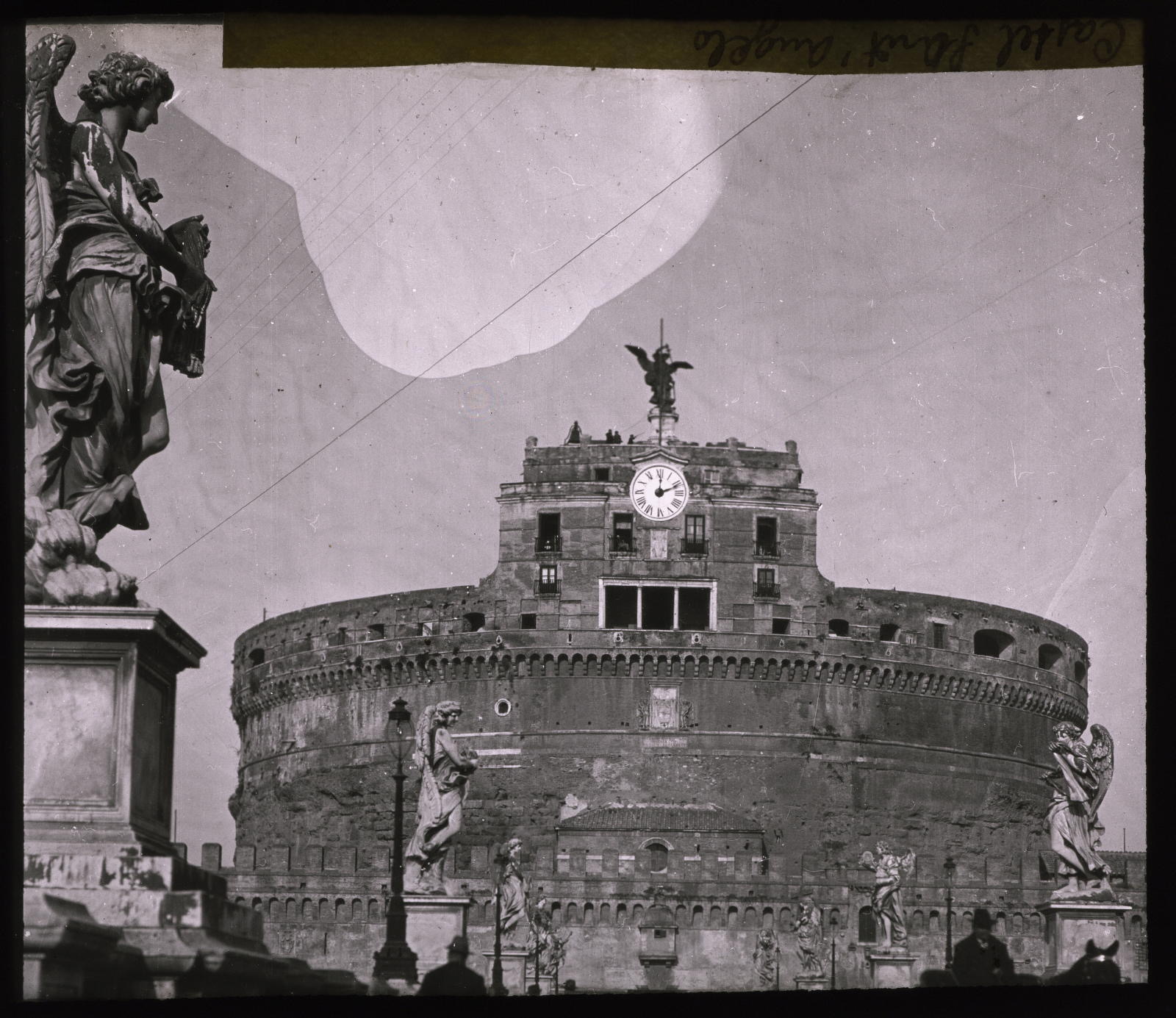
Castel Sant’ Angelo
· Ajuntament de Girona (via Europeana)
Public domain
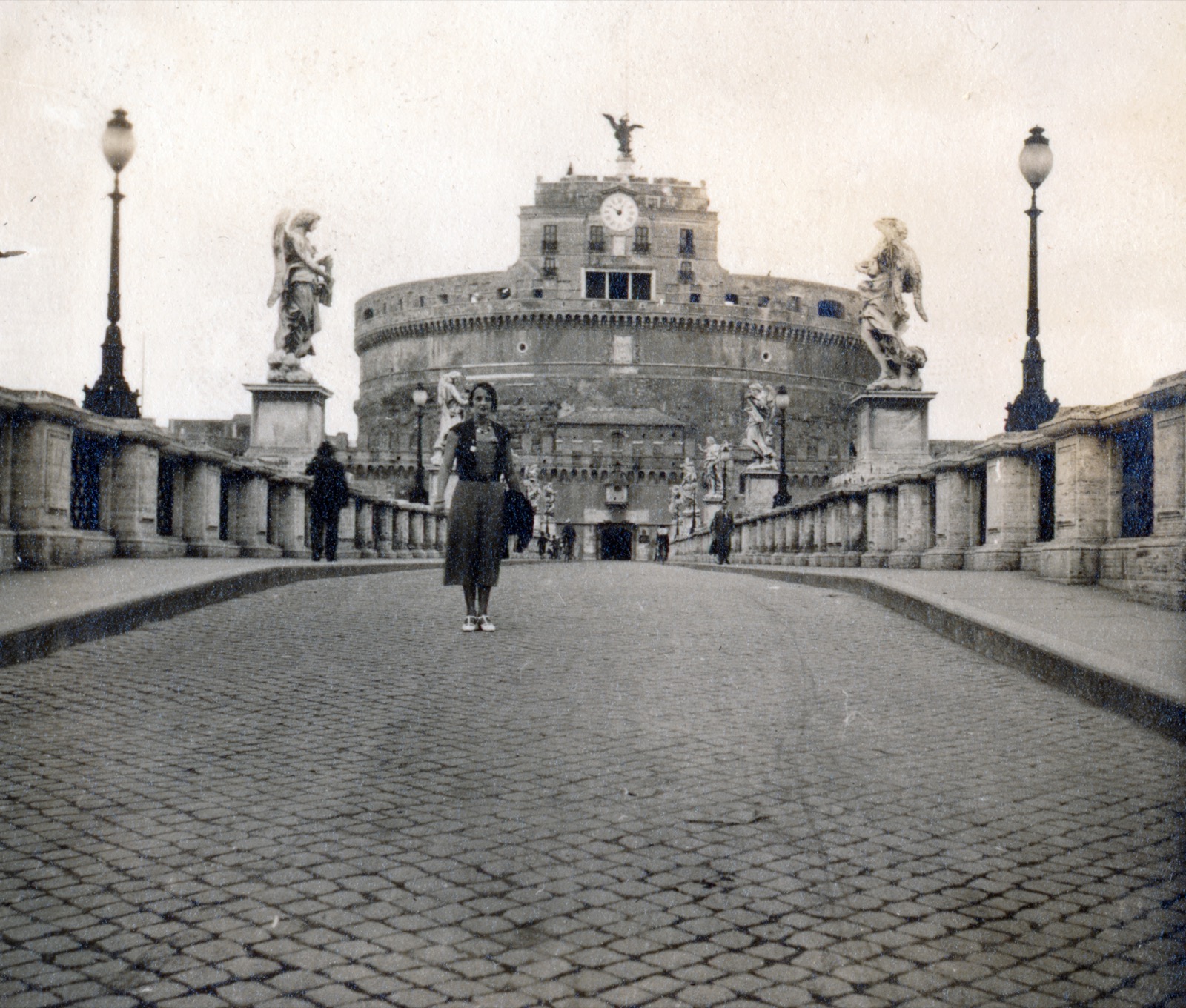
Angyalvár (Castel Sant'Angelo)
1934 · Fortepan (via Europeana)
CC BY-SA
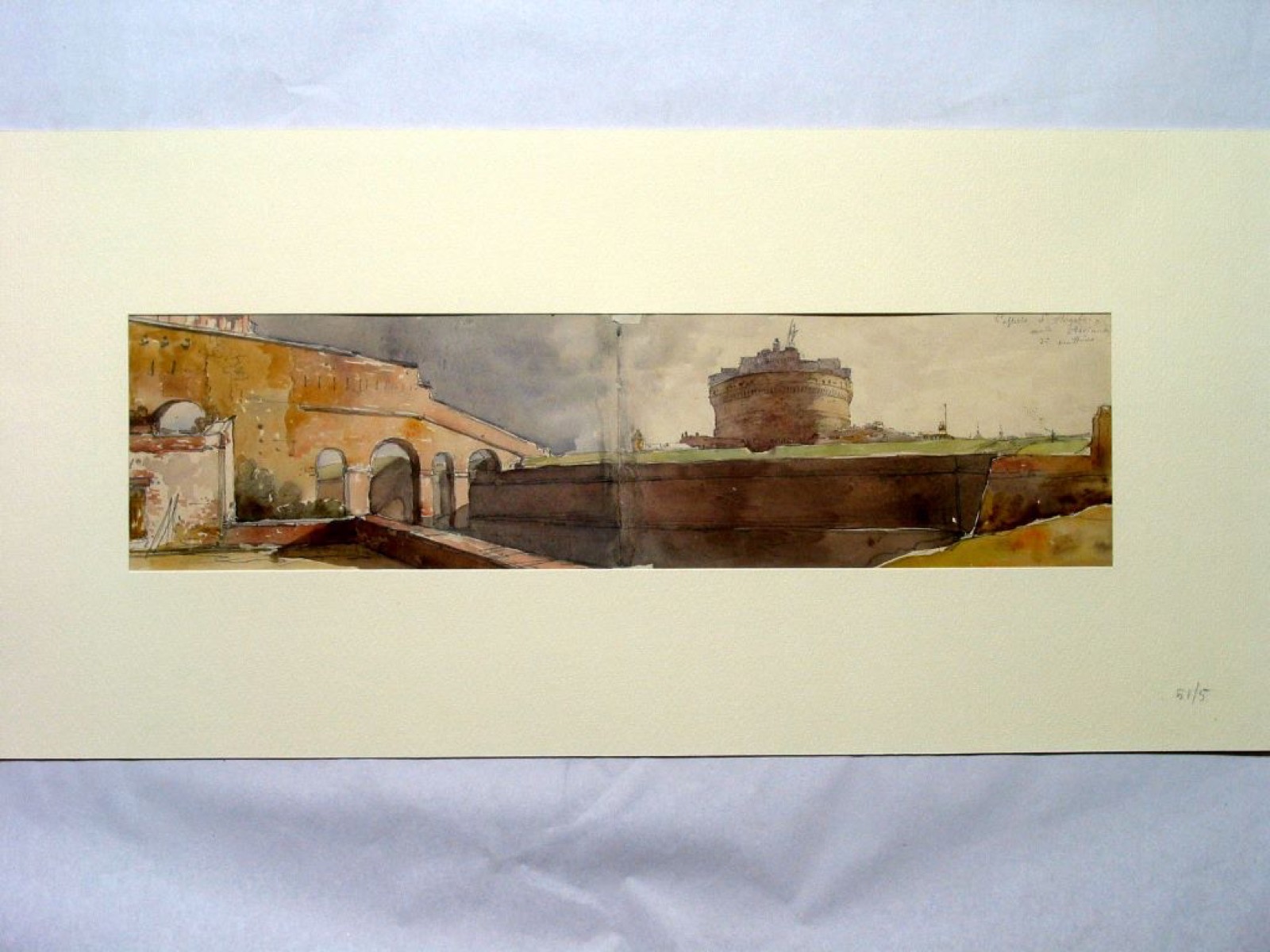
View of Castel Sant'Angelo
· Turin Gallery for Modern and Contemporary Art (via Europeana)
CC BY
Nearby
Landmarks within reach of Castel Sant'Angelo.


Questions about Castel Sant'Angelo
What is the history of Castel Sant'Angelo?
What is inside Castel Sant'Angelo?
Who owns Castel Sant'Angelo now?
Why was Castel Sant'Angelo built?
Does anyone live in Castel Sant'Angelo now?
Where is Castel Sant'Angelo?
When was Castel Sant'Angelo built?
Was Castel Sant'Angelo ever attacked or besieged?
What did Castel Sant'Angelo look like in its prime?
Is Castel Sant'Angelo still standing?
Who built Castel Sant'Angelo?
Can you visit Castel Sant'Angelo?
More castles of Italy


Explore the city


