
Scotland · Ruin
Redcastle
Redcastle (an Caisteal ruadh) is a medieval L‑plan castle on the Black Isle in northern Scotland, long associated with Clan Mackenzie. The standing structure is an approximately three‑storey stone block incorporating rubble and ashlar masonry, and was remodelled in the 19th century; it remained inhabited until the mid‑20th century.
Its prime
1850
Today
Ruin
As it stood in 1850
What Redcastle looked like in its prime.
An L‑shaped, three‑storey stone castle of red‑coloured masonry combining rough rubble and ashlar dressings, its two wings meeting at a re‑entrant angle; the roof is now absent but in its prime the building presented a continuous roofline over both ranges. The silhouette is a compact rectangular main block with a projecting wing, regular vertical window openings, and visible 17th‑ and 19th‑century masonry repairs set within the pastoral grounds of the Black Isle.
Its story
The story of Redcastle.
From Edirdovar to Clan Mackenzie, 1179–1790
Redcastle stands in Killearnan on the Black Isle; historically known as Edirdovar and Ederdour, it takes its present name from the colour of its stone. A castle was first built on the site in 1179 for William the Lion. Sir John Bysset held it in 1230, and by 1278 it was held by Sir Andrew de Besco. The Black Isle was annexed to the Crown in 1455, and by 1492 the castle and its lands had come under Kenneth Mackenzie, 7th of Kintail; Clan Mackenzie retained possession until 1790.
Rebuilding, the Burton Estate and Listing, 1641–1971
The present building carries the date 1641, though it incorporates earlier rubble and ashlar masonry typical of older construction, and it was remodelled again in the 19th century by William Burn. Colonel H. D. Baillie bought the estate in 1838, and it passed into the family of Lord Burton of Dochfour.
The army requisitioned Redcastle during the Second World War, and it was finally vacated and partly stripped in the 1950s; until then it had been one of the oldest inhabited houses in Scotland. The L-plan structure, roughly three storeys of rubble and ashlar, now stands roofless and ruinous. It is protected as a category B listed building, a designation dating to 25 March 1971.
Step inside
5 places to explore in 1850.
The record describes 5 distinct spots at Redcastle, including 1 interior: upper floor interior looking out. Create your own photoreal reconstruction and explore every one, more scenes means more rooms, more angles, and more of the place to stand in.
Build Your Own Castle
Recreate Redcastle with AI to explore it.
The artist rebuilds it as it stood in 1850, a photoreal reconstruction that belongs to you alone. Pay with coins, no subscription needed.
Recreate this castle →Defend this castle →Whose castle
Clans who held Redcastle.
The families that held Redcastle for a decade or more across its history, follow a name to its clan.
Bysset
Held by Sir John Bysset in 1230, and by Sir Andrew de Besco in 1278.
Held by Clan Mackenzie from 1492, under Kenneth Mackenzie, 7th of Kintail, until 1790.
Baillie
Bought by Colonel H. D. Baillie in 1838; passed to the family of Lord Burton of Dochfour.
From the archive
Redcastle on paper: the measured plan and period views.
The survey plan and photographs below are the ground truth this page's reconstructions are checked against, drawn and photographed while the castle was still a working garrison. Every image is public-domain or openly licensed, with its source named.
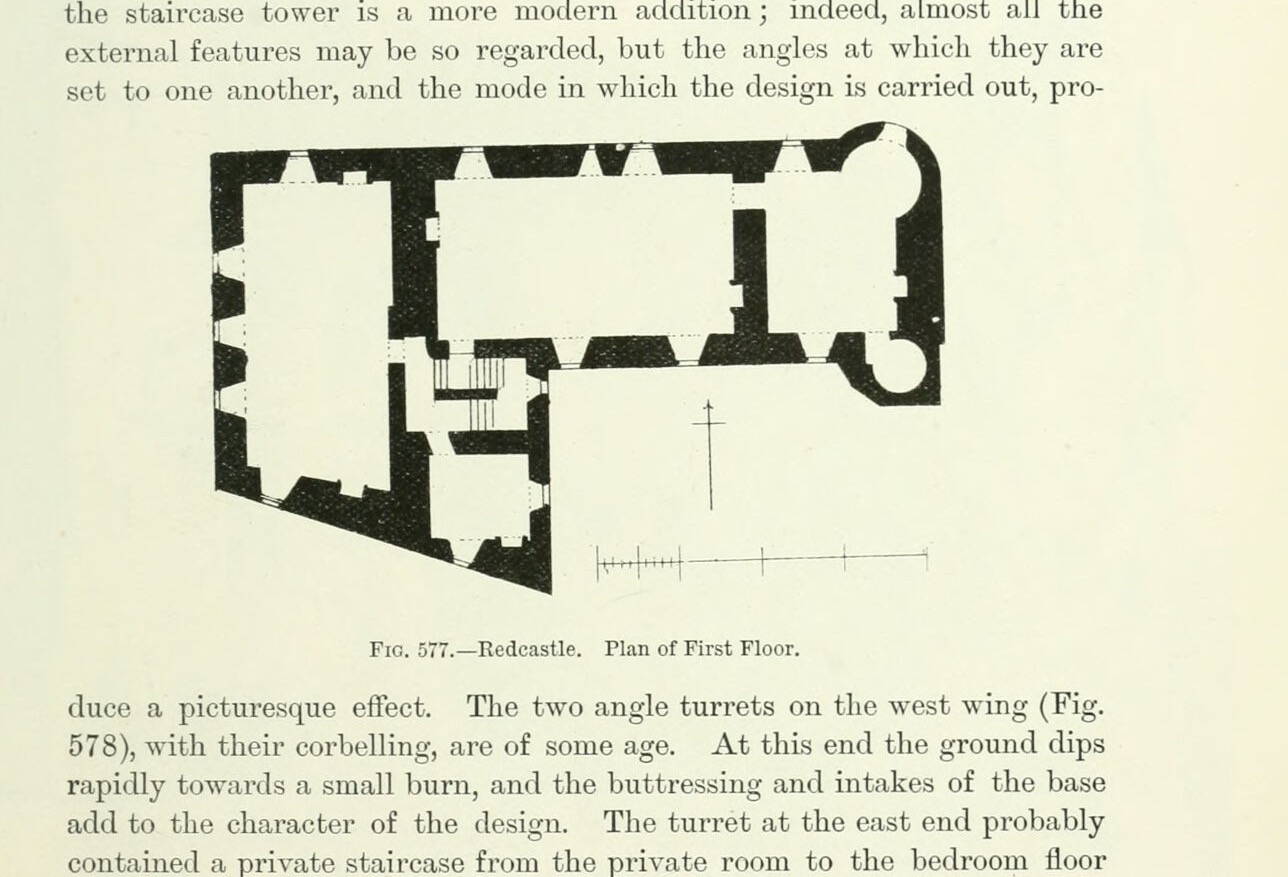
Fig. 577. Redcastle. Plan of First Floor.
1889 · MacGibbon & Ross, vol. 3 (1889)
Public domain
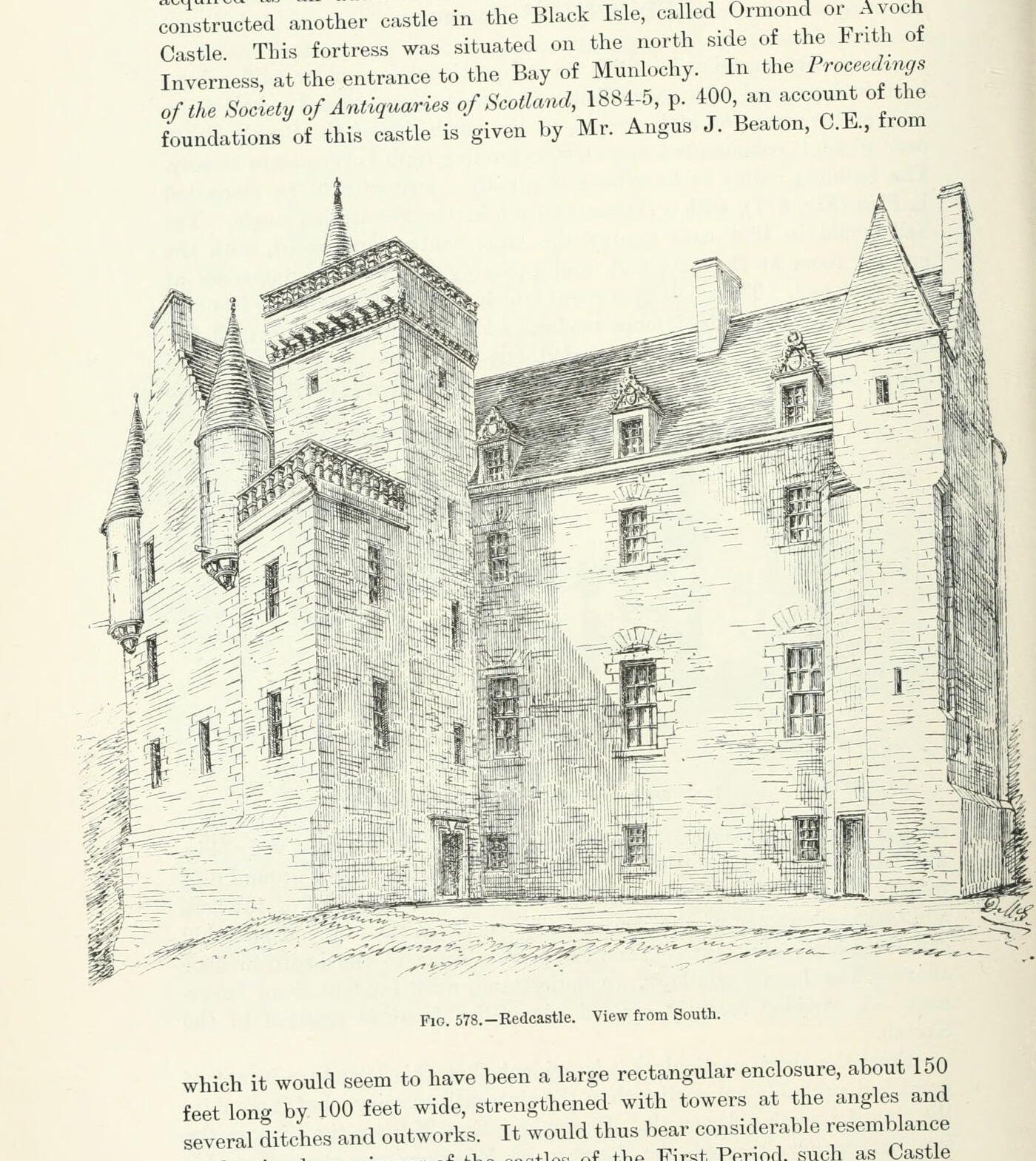
Fig. 578. Redcastle. View from South.
1889 · MacGibbon & Ross, vol. 3 (1889)
Public domain
Questions about Redcastle
What is the history of Redcastle?
Where is Redcastle?
Which family or clan held Redcastle?
What did Redcastle look like in its prime?
Is Redcastle still standing or is it a ruin?
Does anyone live in Redcastle now?
More castles of Scotland


Explore the city


