Burton
The fortified farmstead, a name from a hundred villages.
- Origin
- West Midlands, England
- Famous bearer
- Sir Richard Francis Burton (1821–1890), explorer and translator
- Register
- English family
Where the Burton name comes from
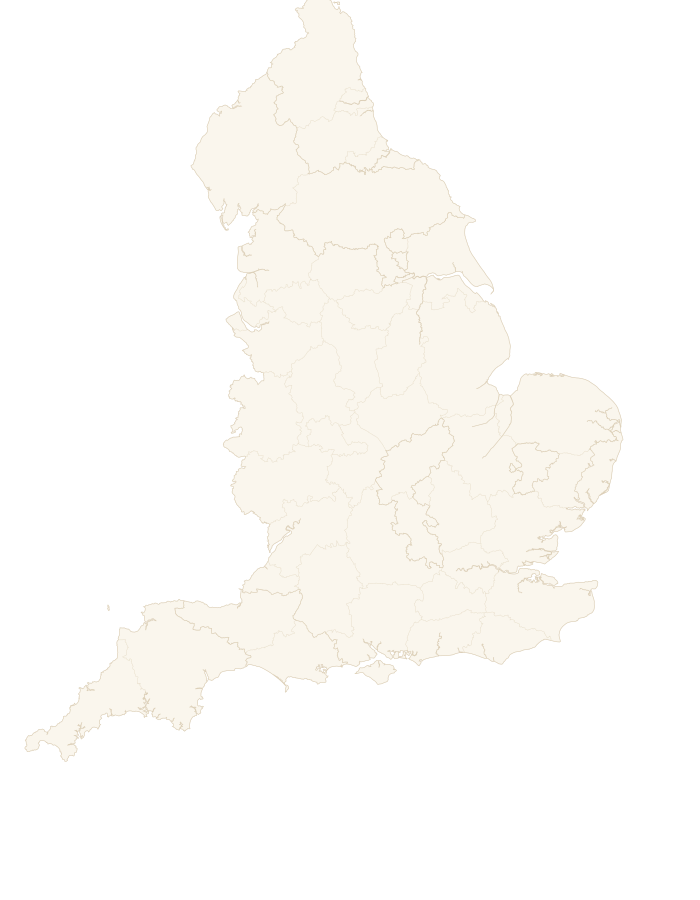
CoreHistoric reach
The seat of Burton
Seat vacantChief
No one leads the Burton community yet. When the movement opens, you can stand for its leadership, or help elect whoever does.
Current mission
No shared goal set yet. Once Burton has leadership, it sets the public focus: a restoration, a gathering, a real-world project that helps its own.
The Burton clan is being rebuilt. Join the waiting list for the movement today, and you help decide who leads it and what it does.
Help rebuild the Burton clan →What does the Burton name mean?
Locational, from Old English burh-tun, a 'fortified farmstead' or the home-farm attached to a stronghold. Burton place-names are scattered the length of England, the most famous being Burton upon Trent in Staffordshire, whose hard gypsum-rich water made it the brewing capital of England. A Burton family is named for whichever of those many villages it came from.
The history of Burton
The farm inside the fortification
Burton is Old English burh-tun: the fortified farmstead, or the home-farm attached to a stronghold. Burh is the defended place, tun the working settlement beside it, and that second element is one of the busiest words in English place-naming. Its sense moved with the county: tun could mean an enclosure in one name, and a farmstead, a village, a manor or a whole estate in others.
That is why the map carries Burtons the length of England rather than one Burton somewhere. A stronghold worth defending had a farm working the land beneath it, and each of those farms could reasonably be called the burh-tun. The name is a fossil of how the English settled and defended their ground.
It follows that the surname has many roots rather than one. A Burton household is named for whichever of those villages it left, and two Burton families from opposite ends of the country are, as a rule, no relation at all. There is no founding line to trace and no seat that belongs to the name, only dozens of separate starting points sharing a spelling.
Why an English village name outlived its English lords
The places these families are named for went through the sharpest change in English landholding after 1066. William confiscated the estates of the English lords who had fought and died with Harold, granted the land to his followers, and threw up castles and fortifications in unprecedented numbers, mostly motte-and-bailey, to hold down the revolts the confiscations provoked. By the time the Domesday Book was completed in 1086, only about five per cent of land in England south of the Tees was left in English hands.
Domesday also recorded, shire by shire, the holdings of every tenant-in-chief and who had held that land before the conquest. Here is the part that matters for a name like Burton: the invasion changed the owners but barely touched the place-names. It had little impact on what English settlements were called, so the Old English burh-tun kept its English name under a French-speaking lord.
The new elite named itself differently. Some of the Norman nobility marked themselves out by putting de before their village or estate in France, a territorial surname growing straight out of feudal landownership. The English who later took the name Burton were doing something that only looks similar: they were named for a working village, and the name came to them from the parish rather than from a title deed.
The century a place turned into a name you kept
Early English bynames were descriptive and disposable. A man was distinguished by his trade, his father's name, his birthplace or how he looked, and the label did not necessarily pass to his son. Christopher Daniell puts the first recorded use of a modern surname inherited across generations at 1140. Only by about 1400 had most English families, and those of Lowland Scotland, settled into hereditary surnames, which is when a Burton stopped being a man from Burton and became a Burton whether he saw the village again or not.
Habitation names of this kind point to small communities rather than great cities, for a plain reason: in medieval Europe people moved from the smaller place to the bigger one, and it was the newcomer who needed a name that set him apart. In his own village nobody called him Burton, since half the parish was equally from Burton. Elsewhere it was the most useful thing anyone could say about him.
The system was not always welcomed. In late medieval England mandatory surnames were resisted precisely because they were associated with taxes: a fixed name meant a man could be found, listed and assessed. A four-year study led by the University of the West of England, which concluded in 2016, found more than ninety per cent of the 45,602 surnames in its dictionary to be native to Britain and Ireland; its project leader Richard Coates set out the class a Burton sits in: names linked to a place rather than to a trade or a father.
Wool, the pulpit and the Commons
The earliest Burtons in the record are the sort of men the name would predict: not barons, but people substantial enough to be written down. Thomas Burton, who died in 1495 or 1496, was a wool merchant at Loughborough in Leicestershire, a county that still holds one of the surname's clusters.
The seventeenth century produced two Burtons in the world of books and belief, near-contemporaries and, on the evidence, nothing to each other. Robert Burton (1577-1640) was an English scholar, cleric and author; Henry Burton (1578-1648) was an English puritan and theologian.
Thomas Burton, who died in 1661, sat as Member of Parliament for Westmorland from 1656 to 1659. The name returns to the Commons later in Henry Burton (1876-1947), Conservative member for Sudbury from 1924 to 1945, and in Henry Burton-Peters (1792-1875), Whig member for Beverley from 1830 to 1837.
The gypsum water at Burton upon Trent
Of all the Burtons on the map, one made the word famous for something other than itself. Burton upon Trent in Staffordshire sits on hard, gypsum-rich water, and that water made it the brewing capital of England. The name also carries a peerage: Baron Burton, created in 1886 and 1887 in the Peerage of the United Kingdom.
The surname's own weight sits in the same country. The deepest clusters are the midland ones, Staffordshire and Derbyshire, with Leicestershire and Rutland alongside them and a strong presence in West Yorkshire; older records spread the name into Cheshire, Lincolnshire, Lancashire and Nottinghamshire. That distribution is not one family radiating outward, but several unrelated stocks sitting near the villages that named them.
Mecca in disguise, and the drawing board
The towering Victorian bearer is Sir Richard Francis Burton (1821-1890), explorer, translator and orientalist, and all three at full stretch. He entered Mecca in disguise, went looking for the source of the Nile, and brought the Arabian Nights and the Kama Sutra into English.
The name also belongs to men who worked at the other end of the temperament. Decimus Burton (1800-1881) was an English architect and garden designer, Harry Burton a British Egyptologist, Maurice Burton (1898-1992) an English zoologist and author, and Reginald George Burton (1864-1951) an officer of the British Indian army, a sportsman and a military historian.
Two Victoria Crosses and a Yorkshire cyclist who beat the men
Twice the name appears on the shortest list in the British honours system. Alexander Burton (1893-1915) was an Australian recipient of the Victoria Cross; Richard Henry Burton (1923-1993) was an English recipient of the same award.
The hardest-driven Burton of the modern era was Beryl Burton (1937-1996), the Yorkshire racing cyclist who ruled women's competition for two full decades and often beat the men's times of her day. Hers is the rare sporting record needing no allowance made for it, and it belongs to the county where the surname has long been thick on the ground.
The name at the far end of the migrations
Burtons went out with the nineteenth-century emigrations and left marks in the countries they reached. New Zealand's photographic record carries the name twice over, in Alfred Henry Burton (c. 1834-1914) and Walter John Burton, both working photographers there. In the United States, Alfred Edgar Burton (1857-1935) became the first Dean of the Faculty at MIT, and Harold Hitz Burton (1888-1964) rose to the Supreme Court.
The name kept turning up wherever things were being made. Virginia Lee Burton (1909-1968) was an American illustrator and children's author, Nancy Jane Burton (1891-1972) a Scottish artist, Sarah Burton creative director of Alexander McQueen. In music and film the spread is as wide: Gary Burton (b. 1943) on jazz vibraphone, Cliff Burton (1962-1986) on bass for Metallica, Sir Humphrey Burton (1931-2025) the classical music presenter and producer, and Tim Burton (b. 1958), director of Edward Scissorhands and Batman.
None of them descends from a common Burton, and that is the point of a name like this. Anyone looking for the single family tree will not find one, because the name was coined dozens of times over at dozens of separate fortified farms, and every one of those beginnings is as genuine as the rest.
The castles of the homeland
The great strongholds of the homeland, look one up, see what it looked like in its prime, and recreate it to explore.
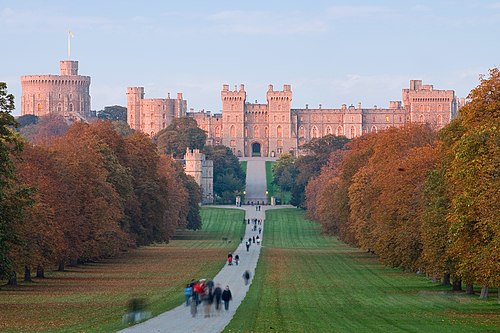 Windsor CastleRestored · prime 1820
 Tower of LondonRestored · prime 1285
 Bamburgh CastleRestored · prime 1904
All castles in England → · Strongest castles in England → · Castles of Europe
Play As Your Clan
Hold a real castle against whatever you choose to send at it, take a ship out in her own service years, or stand at the shoulder of someone the record remembers. The chronicler sets the scene; the deeds are yours.
Notable bearers of the Burton name
- Sir Richard Francis Burton (1821–1890), explorer and translator
- Tim Burton (b. 1958), American filmmaker
- Beryl Burton (1937–1996), champion cyclist