Dawson
Son of Daw, a Yorkshire patronymic.
- Origin
- Yorkshire & the Humber, England
- Famous bearer
- Les Dawson (1931–1993), comedian
- Register
- English family
The Dawson arms and country

Coat of armsDawson of Penn EscutcheonBorne by the Penn Escutcheon line, one branch of the name rather than all of it.Robin S. Taylor · CC BY-SA 4.0 
Coat of armsEscutcheon of the Dawson Baronets of Edgwarebury (1920)Borne by the Edgwarebury line, one branch of the name rather than all of it.Charles Matthews · CC BY-SA 4.0

.svg)
- Coat of arms: Granted to an individual and inherited down that one documented line. These are the arms of particular families of the name, not of everyone who shares the surname.
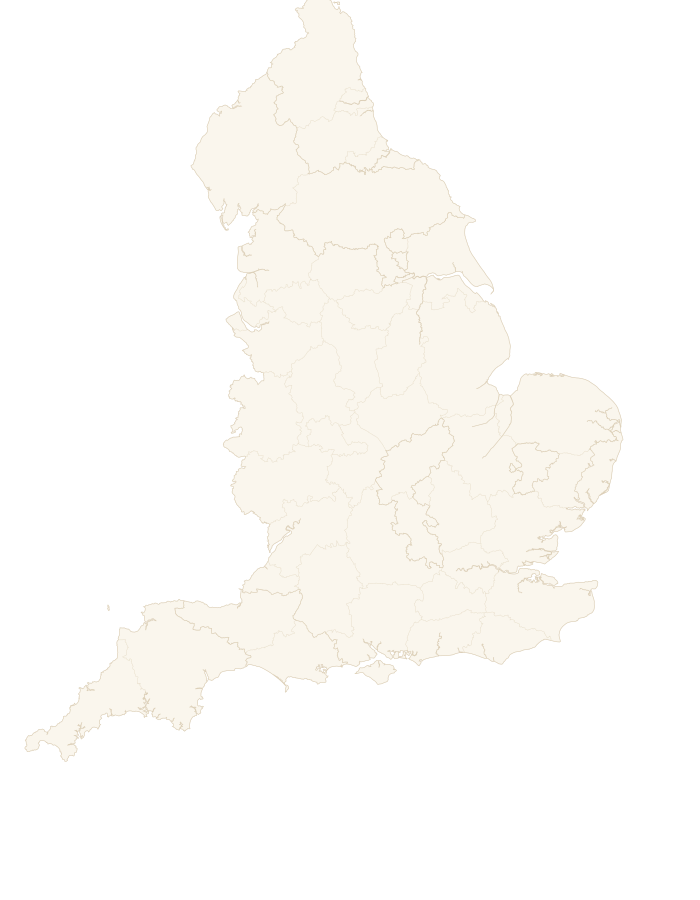
CoreHistoric reach
The seat of Dawson
Seat vacantChief
No one leads the Dawson community yet. When the movement opens, you can stand for its leadership, or help elect whoever does.
Current mission
No shared goal set yet. Once Dawson has leadership, it sets the public focus: a restoration, a gathering, a real-world project that helps its own.
The Dawson clan is being rebuilt. Join the waiting list for the movement today, and you help decide who leads it and what it does.
Help rebuild the Dawson clan →What does the Dawson name mean?
A patronymic, son of Daw, where Daw is a medieval pet-form of David (and, in some lines, of Ralph). The name belongs to the Pennine north, densest through the West Riding of Yorkshire and east Lancashire, where the -son patronymic was most productive.
The history of Dawson
Daw, the everyday David of a crowded font
England built its surnames out of a very small stock of given names. Of the boys born in London in 1510, 24.4 per cent were christened John, 13.3 per cent Thomas and 11.7 per cent William, and through the early modern period the three commonest male names accounted for close to half the male population. David is one of the Hebrew names that supply so much of the English font-name stock. A parish where a dozen men answered to the same handful of names needed shorthand, and it got it in clipped pet-forms, one worn smooth for each formal name. Daw was the one that did duty for David.
A pet-form with -son fixed to it is the oldest and commonest way an English surname is made, and Dawson belongs squarely in that class alongside Jackson, Wilson, Watson, Robinson and Nicholson: the father's working name, turned hereditary. The four-year study led by the University of the West of England, which closed in 2016 after reading sources from the 11th century to the 19th across 45,602 surnames for the Oxford English Dictionary of Family Names in Britain and Ireland, sets Dawson among the patronymics, the names its project leader Richard Coates described as those which "originally enshrined the father's name". In some northern lines the Daw behind it stood not for David but for Ralph.
How a nickname became a thing a family could not put down
The byname came centuries before the inheritance. Norman lords who arrived after 1066 marked themselves off with a de and the name of a French village or estate, a territorial surname that followed from feudal landholding, and the fixed family name spread downward from that nobility and gentry rather than upward from the fields. Christopher Daniell dates the first recorded use of a modern surname inherited by multiple generations to 1140, and the Domesday Book, completed by 1086, is generally credited with introducing family names to England in the first place.
Ordinary families were in no hurry. In the late Middle Ages compulsory surnames were resisted in England precisely because they were associated with taxes: a name that stuck was a name a collector could follow from one year to the next. Resistance or not, by 1400 most English families, and most in Lowland Scotland, carried hereditary surnames. Henry VIII, who reigned from 1509 to 1547, then ordered that marital births be recorded under the father's surname.
The Pennine ground the name settled into
The north the surname would fill had been broken and remade first. William advanced into Northumbria in 1069, beat off an attempt to block his crossing of the swollen River Aire at Pontefract, took York, and wore his crown there ceremonially on Christmas Day 1069; over the winter of 1069 to 1070 his forces systematically devastated the province in the Harrying of the North.
The -son patronymic was at its most productive in the north, and Dawson runs densest through the West Riding of Yorkshire and the valleys of east Lancashire. Its core country is West Yorkshire, Lancashire, North Yorkshire and Greater Manchester, with older strength in Cumbria, South Yorkshire, the East Riding and Cheshire. That is textile ground, and the name stayed with the trade as the parishes turned into mill towns rather than draining away from them.
A Manchester comedian and an England scrum-half
The surname's most familiar voice came out of its own heartland. Les Dawson (1931 to 1993) was a Manchester comedian, and Greater Manchester is one of the four counties where the name is thickest. He built an act on mother-in-law jokes and on piano-playing that was wrong on purpose, and he was a household name on British television.
Matt Dawson (born 1972) took the name onto a different stage as England's rugby scrum-half, and was part of the side that won the World Cup in 2003.
George Mercer Dawson and the Canadian west
George Mercer Dawson (1849 to 1901) was a Canadian geologist and a pioneer surveyor of the western territories, and Dawson City in the Yukon carries his name. The town gave its own name onward in turn, to the Dawson City Nuggets hockey team.
The western map is thick with the surname around him. The Yukon has a Dawson electoral district and a Dawson Range among the Yukon Ranges; British Columbia has Dawson Creek in the province's northeast, a second Dawson Range and Dawson Falls. Further east the name sits on Dawson, Ontario, on Dawson Township in the Manitoulin District, on the Dawson Bridge at Edmonton, on Dawson College in Quebec, and on the Old Dawson Trail, the 19th century route run between Thunder Bay and Winnipeg.
Four counties and a ghost town in the United States
American settlement scattered the name across the map at every scale. Four states carry a Dawson County: Georgia, Montana, Nebraska and Texas, with Dawson Forest set aside for public use inside the Georgia one. Towns and villages of the name stand in Georgia, Illinois, Iowa, Minnesota, Nebraska, North Dakota and Texas, and there is a Dawson borough in Pennsylvania with the Dawson Historic District at its heart in Fayette County. Smaller Dawsons sit in Alabama, Maryland, Missouri, Ohio, Oregon and West Virginia, and Dawsonville, Missouri has gone from the map altogether.
Some of the rest are odder. Dawson, New Mexico is a ghost town. Dawson Springs, Kentucky was once Dawson City. Dawson is a neighbourhood of Austin, Texas; Camp Dawson in West Virginia is an Army National Guard facility; Dawson Peak stands in the Angeles National Forest in California; Dawson Community College is at Glendive, Montana; the Dawson Bank Museum keeps a historic building in Dawson, Minnesota, and the Dawson School is a historic schoolhouse in Tulsa, Oklahoma.
Magellan's strait, the Antarctic ice and the far side of the Moon
The name travelled as far as the century that carried it would allow. Dawson Island lies in the Strait of Magellan in Chile. New Zealand's Te Rere o Kapuni is also known as Dawson Falls. Australia has a Dawson River in Queensland and another in New South Wales, the Dawson Highway, the federal Division of Dawson in Queensland, a locality and former town called Dawson in South Australia, and a closed Dawson railway station in Victoria. There is a Dawson public housing estate in Queenstown, Singapore, and Dawson Tower stands on Kadugannawa in the Kadugannawa Pass.
Beyond the settled world the name kept going. Antarctica holds Dawson Head in Palmer Land, Dawson Nunatak in Mac. Robertson Land and Dawson Peak in the Ross Dependency. The United States Navy gave the name to USS Dawson, an attack transport of the Second World War. And a crater on the far side of the Moon is called Dawson. For a surname made in a Pennine parish out of a boy's short name for David, that is a long way from the register.
The castles of the homeland
The great strongholds of the homeland, look one up, see what it looked like in its prime, and recreate it to explore.
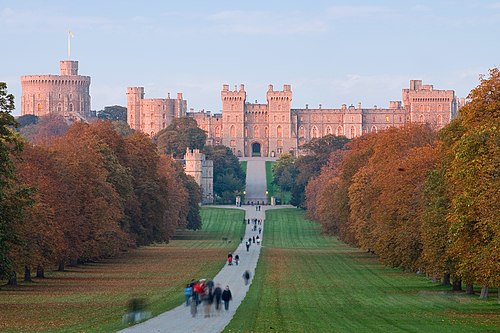 Windsor CastleRestored · prime 1820
 Tower of LondonRestored · prime 1285
 Bamburgh CastleRestored · prime 1904
All castles in England → · Strongest castles in England → · Castles of Europe
Play As Your Clan
Hold a real castle against whatever you choose to send at it, take a ship out in her own service years, or stand at the shoulder of someone the record remembers. The chronicler sets the scene; the deeds are yours.
Notable bearers of the Dawson name
- Les Dawson (1931–1993), comedian
- Matt Dawson (b. 1972), World Cup-winning rugby player
- George Mercer Dawson (1849–1901), Canadian geologist