Hanson
also Hansen, Hanssen
Son of Hann, a Pennine patronymic.
- Origin
- Yorkshire & the Humber, England
- Famous bearer
- James Hanson, Baron Hanson (1922–2004), industrialist
- Register
- English family
The Hanson arms and country

Coat of armsEscutcheon of the Hanson baronets of Fowey (1918)Borne by the Fowey line, one branch of the name rather than all of it.Charles Matthews · CC BY-SA 4.0 
Coat of armsEscutcheon of the Hanson baronets of Bryanston Square (1887)Borne by the Bryanston Square line, one branch of the name rather than all of it.Charles Matthews · CC BY-SA 4.0
.svg)
.svg)
- Coat of arms: Granted to an individual and inherited down that one documented line. These are the arms of particular families of the name, not of everyone who shares the surname.
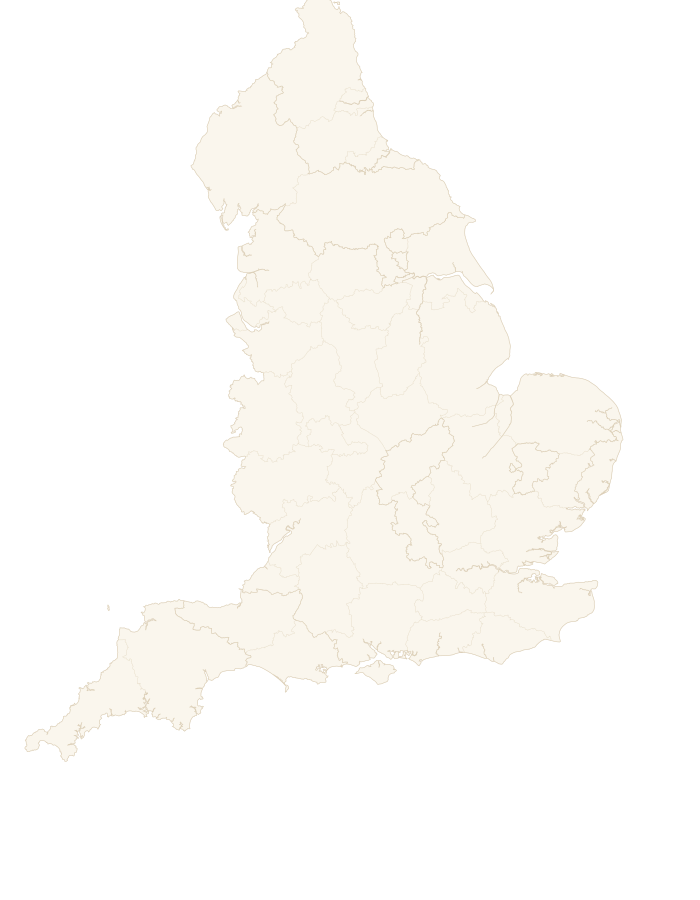
CoreHistoric reach
The seat of Hanson
Seat vacantChief
No one leads the Hanson community yet. When the movement opens, you can stand for its leadership, or help elect whoever does.
Current mission
No shared goal set yet. Once Hanson has leadership, it sets the public focus: a restoration, a gathering, a real-world project that helps its own.
The Hanson clan is being rebuilt. Join the waiting list for the movement today, and you help decide who leads it and what it does.
Help rebuild the Hanson clan →What does the Hanson name mean?
A patronymic, son of Hann, where Hann is a medieval English pet-form of Johan (John), or in some lines of Henry or Randolph. The form is densest in the West Riding -son belt, where Yorkshire and the Danelaw coast also fed it through the Scandinavian Hansen (son of Hans, itself a contraction of Johannes). The two streams are practically inseparable in the modern surname pool.
The history of Hanson
Son of Hann, in a country with almost no names
Medieval England ran on a startlingly small stock of given names. Of the boys born in London in 1510, 24.4 per cent were christened John, 13.3 per cent Thomas and 11.7 per cent William; through the early modern period the three commonest male names between them accounted for close to half the male population. Hann was the everyday English pet-form of Johan, the John who was everywhere, and some lines used the same short form for Henry or Randolph. Hann's son, written down often enough, became Hanson.
What turned that description into an inheritance was the slow hardening of the English surname. Christopher Daniell dates the first recorded English surname passed down through generations to 1140; the practice began among the feudal nobility and gentry after the Domesday Book of 1086 and worked downward, so that by the 14th century most English people carried one, in places grudgingly, since compulsory naming was associated with taxation. In the West Riding that freeze caught a living patronymic mid-sentence: from then on a Hanson's father need not have been a Hann at all. The University of the West of England study completed in 2016, reading sources from the 11th to the 19th century, found more than 90 per cent of 45,602 British and Irish surnames native to these islands, with Richard Coates placing the names that "originally enshrined the father's name" among the largest classes.
The same John stood behind a second stream. Across the North Sea, Hans is a contraction of Johannes, and Hansen, son of Hans, was the third most common surname in Denmark as of 2008, shared by 4.3 per cent of the whole population, and by 2016 the single most common surname in Norway. It stands second in the Faroe Islands, third in Schleswig-Holstein and fifth in Hamburg; Sweden's parallel form is Hansson. Nordic families arriving in English-speaking countries anglicised the spelling to Hanson to fit English orthography.
Two Hansons in the Lord Mayor's chain
The name reached the top of the City of London twice in one generation. Sir Reginald Hanson (1840–1905) served as Lord Mayor of London and sat as a Member of Parliament; Sir Charles Hanson, 1st Baronet (1846–1922) was likewise a British MP and Lord Mayor. Two men, both carried to the mayoralty and to Parliament: a measure of how far a Pennine patronymic had travelled into the English governing class by the late Victorian decades.
The Hanson baronetcy carried on into the next century with Sir Charles Hanson, 2nd Baronet (1874–1958), also a British politician. Commerce and public argument ran alongside the offices: T. Anderson Hanson (1819–1912), an English merchant and activist, kept a mercantile career and a campaigning one in the same lifetime.
Chancellor Hanson's Maryland
The oldest hard American anchor for the name is judicial. Alexander Contee Hanson Sr. (1749–1806) was an attorney and chancellor of Maryland. A second Alexander Contee Hanson stands in the same record as an American lawyer, publisher and statesman, carrying the same three names into print and politics.
Below that the name settles into the ordinary machinery of American public life. Benedict H. Hanson (died 1882), Herman W. Hanson (1859–1938) and James C. Hanson (1862–1946) held office in the nineteenth-century and turn-of-century United States; Hector A. Hanson (1904–1993) was a farmer and politician, Rudolph Hanson (1903–2002) a lawyer and politician, and Ole Hanson (1874–1940) combined real estate development with elected office.
Old Flintlock, a rear admiral and a Marine Corps flier
The American Civil War put the name in the field: Roger Hanson, nicknamed "Old Flintlock" (1827–1863), served as a general in the Confederate army. Two generations later the name belonged to the sea services, where Edward Hanson (1889–1959) rose to rear admiral in the United States Navy.
Robert M. Hanson (1920–1944) flew as an American Marine Corps aviator. Under the Scandinavian spelling of the same patronymic the record runs parallel: Percy Hansen (1890–1951), a Dane, was a recipient of the Victoria Cross, while Helmer Hanssen (1870–1956) took the Norwegian form to the polar ice as an explorer.
Two prime ministers and the doctor who found the cause of leprosy
The bearers who kept the continental spelling made their own history, and twice it was made from the head of a government. Per Albin Hansson (1885–1946) was Prime Minister of Sweden; H. C. Hansen (1906–1960) was Prime Minister of Denmark from 1955 to 1960.
The laboratories held as many. Gerhard Armauer Hansen (1841–1912), a Norwegian physician, discovered the cause of leprosy; Emil Christian Hansen (1842–1910) was a Danish fermentation physiologist, and Peter Andreas Hansen (1795–1874) and Julie Vinter Hansen (1890–1960) were Danish astronomers.
Benches and parliaments of the settler world
Emigration put the name on the highest courts of the British settler colonies. Richard Hanson (1805–1876), British-Australian, became chief justice of South Australia. In Canada, another Richard Hanson (1879–1948) sat as a politician.
In the United States the name reached two state supreme courts: Ephraim Hanson (1872–1952) served as a justice of the Utah Supreme Court, and Sam Hanson (born 1939) as an Associate Justice of the Minnesota Supreme Court. Policing and the church supplied the rest. Frederick Hanson was Commissioner of the New South Wales Police from 1972 to 1976; Richard Hanson (1916–1988) was bishop of Clogher in the Church of Ireland from 1970 to 1973; Mark Hanson (born 1946) became Presiding Bishop of the Evangelical Lutheran Church in America; and Margus Hanson (born 1958) sits among Estonia's politicians.
The composer, the sculptor and the man who made Bones
Howard Hanson (1896–1981) worked as an American composer, conductor and educator. In American art the name belongs to Duane Hanson (1925–1996), a sculptor, and to Jo Hanson (1918–2007), an environmental artist and activist.
On stage and screen the name is Swedish first: Lars Hanson (1886–1965) was a Swedish stage and film actor and Einar Hanson (1899–1927) a Swedish film actor. Alexander Hanson (born 1961) acts in Britain and Charlie Hanson produces and directs there. Curtis Hanson (1945–2016) directed American films, and Hart Hanson (born 1957) created the television series Bones. Ann-Louise Hanson (born 1944) sings in Sweden; Jeff Hanson (1978–2009) was an American singer-songwriter.
Dr Helen Hanson's three vocations
Helen Hanson (1874–1926) was a British physician, a missionary and a suffragist: three vocations in a single life. Gillian Hanson (1934–1996) was likewise a British physician, and Jutta Hanson (born 1967) holds a German professorship in electrical engineering.
The name also sits in the seminar rooms. Norwood Russell Hanson (1925–1967) was an American philosopher; Victor Davis Hanson (born 1953) writes as an American military historian and political essayist; Paul D. Hanson (1939–2023) was an American biblical scholar and Robin Hanson (born 1959) is an American professor of economics. Margaret Murray Hanson works as an astronomer, and Linda N. Hanson served as President of Hamline University.
The castles of the homeland
The great strongholds of the homeland, look one up, see what it looked like in its prime, and recreate it to explore.
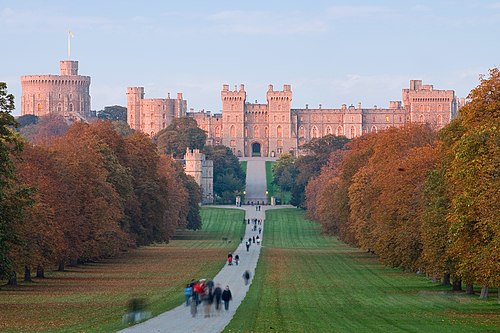 Windsor CastleRestored · prime 1820
 Tower of LondonRestored · prime 1285
 Bamburgh CastleRestored · prime 1904
All castles in England → · Strongest castles in England → · Castles of Europe
Play As Your Clan
Hold a real castle against whatever you choose to send at it, take a ship out in her own service years, or stand at the shoulder of someone the record remembers. The chronicler sets the scene; the deeds are yours.
Notable bearers of the Hanson name
- James Hanson, Baron Hanson (1922–2004), industrialist
- Hanson (Isaac, Taylor & Zac), Tulsa pop trio
- Pauline Hanson (b. 1954), Australian politician