Lowe
also Low, Lowes
Dweller by the mound, a Marches hill-name.
- Origin
- North West, England
- Famous bearer
- Arthur Lowe (1915–1982), actor (Dad's Army)
- Register
- English family
The Lowe arms and country

Coat of armsEscutcheon of the Lowe baronets of Edgbaston (1918)Borne by the Edgbaston line, one branch of the name rather than all of it.Charles Matthews · CC BY-SA 4.0
.svg)
- Coat of arms: Granted to an individual and inherited down that one documented line. These are the arms of particular families of the name, not of everyone who shares the surname.
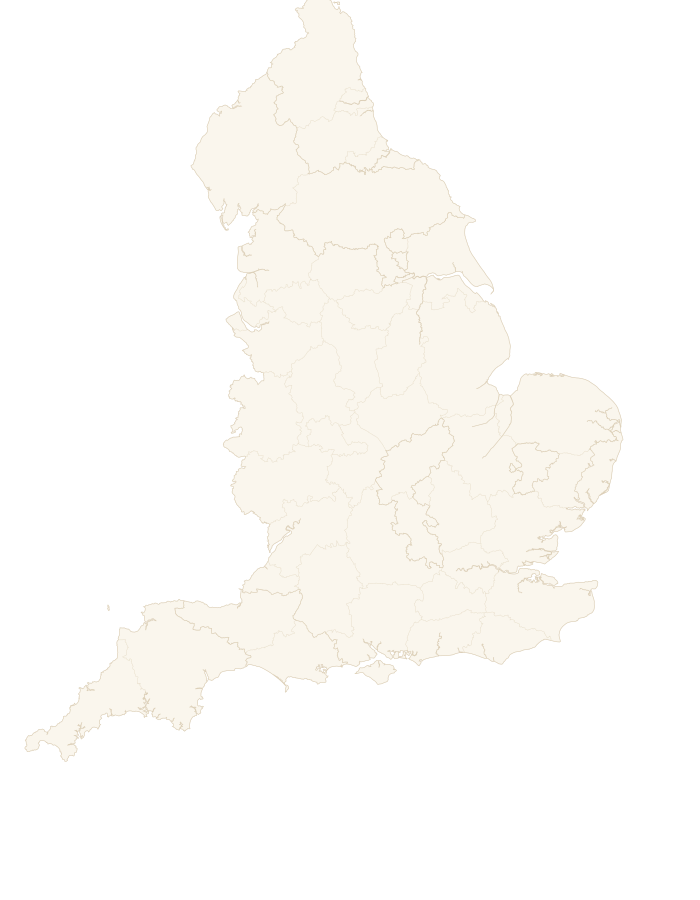
CoreHistoric reach
The seat of Lowe
Seat vacantChief
No one leads the Lowe community yet. When the movement opens, you can stand for its leadership, or help elect whoever does.
Current mission
No shared goal set yet. Once Lowe has leadership, it sets the public focus: a restoration, a gathering, a real-world project that helps its own.
The Lowe clan is being rebuilt. Join the waiting list for the movement today, and you help decide who leads it and what it does.
Help rebuild the Lowe clan →What does the Lowe name mean?
Chiefly locational, from Old English hlaw, a hill, mound or ancient burial-tumulus, so 'dweller by the low', the many Lowe and Low hamlets scattered through Cheshire, Derbyshire and Shropshire. A second strand is a pet-form of Lawrence (Lowe being a clipped Law-rence), and a third a nickname from Old French lou, the wolf. Context and parish sort the three.
The history of Lowe
The hlaw, and why three Lowes are not one family
Hlaw is Old English for a hill, a mound, and above all the grassy burial-tumulus, and it is some of the oldest landscape vocabulary the language kept. A man known as the dweller by the low was named for a lump of ground his neighbours could point at, and the hamlets called Lowe and Low across Cheshire, Derbyshire and Shropshire are the same word fossilised as a place. This is the ordinary machinery of habitation surnames, which attach to homesteads, farms, enclosures, hamlets and villages; the standard example given for the type is Hill, or Green for a village green.
Two other strands run into the same six letters. Lowe is also a clipped pet-form of Lawrence, Law-rence shortened until only the front survived, and it is also a nickname from Old French lou, the wolf, which belongs to the broadest surname class of all, the ones minted from what a man looked like or acted like. By 1400 most English families had settled into hereditary surnames, and all three strands were frozen in place by then. Context and parish can usually sort them. Kinship cannot, because there is none to find: most people called Lowe are not related to most other people called Lowe.
Nothing about that hardening was voluntary. Hereditary surnames entered England from the top after the Conquest, spreading from the feudal nobility and gentry downward, and the Norman incomers who took land here marked themselves with a de and the name of a village they had left. A man beside a Cheshire mound needed no such badge. He acquired one anyway, because the machinery of taxation and inheritance wanted every subject fixed to a single label, and in late medieval England mandatory surnames were resisted for precisely that reason: people understood exactly what they were for.
The Lowes the register cannot tell apart
The clearest proof that the name is not one family is that the standard roll of its bearers keeps giving up. Charles, Chris, David, George, Harry, James, John, Mary, Peter, Robert, Stephen and Thomas Lowe do not resolve to a person each. Every one of them resolves to a further list of people who need separating. That is not what a family looks like in a record. It is what a word looks like after it has been minted independently in a dozen parishes and then carried into a dozen professions.
The doubling happens at close range too. Douglas Lowe (1902-1981) was a British sprinter; Douglas Lowe (1922-2018) was a World War II pilot who rose to Royal Air Force commander. There are three Alex Lowes on the same list, an English actor born in 1968, an American mountaineer who lived from 1958 to 1999, and the singer and guitarist of Hurricane No. 1. Nothing connects any of them except spelling, and assuming otherwise is the exact error this surname invites.
A fifth officer and a flying ace
Harold Lowe (1882-1944) was fifth officer on the RMS Titanic. That is worth pausing on, because of all the ways a surname can enter the most-picked-over crew list in maritime history, this one entered it through a working ship's officer, fifth in the line. Where the name turns up in the great set-piece events, it tends to sit somewhere in the ranks rather than at the top of the manifest.
Cyril Lowe (1891-1983) managed two records in one life, as a British rugby player and as a flying ace. William H. M. Lowe (1861-1944) was a British army officer. Set against that run of uniformed service, titles are scarce: Sir Francis Lowe, 1st Baronet (1852-1929), a British politician, is the unusual Lowe with a handle in front of the name. A surname coined for the man who farmed beside the mound did not, on the whole, end up owning the manor.
Two governors of two small islands
Hudson Lowe (1769-1844) was an Anglo-Irish military officer who became Governor of St Helena. The order of that description is the point: soldier first, governor second. It is the through-line of the whole name, office reached out of a service career rather than inherited with land.
The pattern then repeats under another flag entirely. Richard Barrett Lowe (1902-1972) served as Governor of American Samoa and as Governor of Guam, two island administrations run by the United States. Nothing links the two governors but the spelling. What it does show is how far a Cheshire hill-word travelled once the English-speaking empires needed administrators, and how ordinary it had become by the time they did.
A hill-name taken up the mountains
There is a joke buried in the etymology that the twentieth century made good on. The word behind the surname means a low mound, the sort of hummock a Peak District farmer walks round without thinking, and three separate Americans carried it into serious mountaineering. Alex Lowe (1958-1999) was a mountaineer, Jeff Lowe (1950-2018) an alpinist, and Greg Lowe a mountain climber.
No relation between the three is on record, and none should be assumed. The cluster is instead a good measure of how common the name became: once a surname is carried by enough people, it will show up several times over inside any pursuit large enough to hold a few hundred names, and it will occasionally do so in a field that reads as a direct contradiction of what the word originally meant. Of the roughly forty-five thousand surnames traced in the standard British dictionary of family names, better than nine in ten are native to Britain and Ireland, and Lowe is squarely one of them.
Naturalists, ornithologists, one surname
English natural history is thick with Lowes. Richard Thomas Lowe (1802-1874) was a British naturalist. Edward Joseph Lowe (1825-1900) worked as a botanist, a meteorologist and an astronomer at once, in the manner of the century. Percy Lowe (1870-1948), an English surgeon and ornithologist, and Willoughby Prescott Lowe (1872-1949), an English ornithologist and naturalist, were near-exact contemporaries in the same specialism under the same name.
Rosemary Lowe (1921-2014) carried it into the next century as an ichthyologist, ecologist and limnologist. It is tempting to read a family trade here, and it would be wrong. Natural history was not a craft passed from father to son in a workshop the way smithing was; there is no recorded connection between any of these five. The recurrence is arithmetic. A surname at its densest through the west-midland and Pennine-fringe parishes will reappear wherever the English professions grew.
The English-born American, and the name abroad
Titus Lowe (1877-1959) is described in a single phrase as an English-born American clergyman, which is the entire diaspora mechanism compressed into three words: one man, one surname, two countries, no change of spelling. The name had naturalised fast enough on the far side to put men into American public life well before he was born. Enoch Louis Lowe (1820-1892), Ralph P. Lowe (1805-1883) and Jesse Lowe (1814-1868) were all American politicians of the nineteenth century, and none of them is recorded as kin to the others.
It went everywhere else the English went. Annie Lowe (1834-1910) was an Australian suffragist; Ruth Lowe (1914-1981) a Canadian pianist and songwriter. Thaddeus S. C. Lowe (1832-1913), an American aeronaut, scientist and inventor, and Florence Leontine Lowe (1901-1975), an American aviator, both put the name in the air. And the spelling is not the property of the English Marches alone: Adolph Lowe (1893-1995) was a German sociologist and economist, Jacques Lowe (1930-2001) a German photographer.
The castles of the homeland
The great strongholds of the homeland, look one up, see what it looked like in its prime, and recreate it to explore.
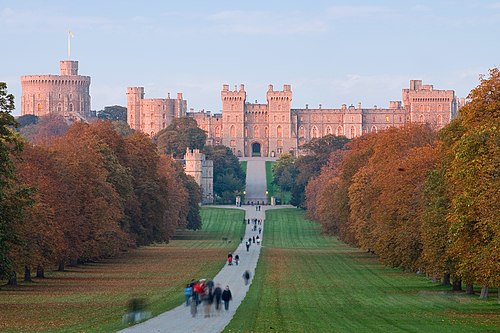 Windsor CastleRestored · prime 1820
 Tower of LondonRestored · prime 1285
 Bamburgh CastleRestored · prime 1904
All castles in England → · Strongest castles in England → · Castles of Europe
Play As Your Clan
Hold a real castle against whatever you choose to send at it, take a ship out in her own service years, or stand at the shoulder of someone the record remembers. The chronicler sets the scene; the deeds are yours.
Notable bearers of the Lowe name
- Arthur Lowe (1915–1982), actor (Dad's Army)
- Rob Lowe (b. 1964), American actor
- Daisy Lowe (b. 1989), model and broadcaster