Pearce
also Pierce, Piers, Pears
From Piers, the Norman face of Peter.
- Origin
- South West, England
- Famous bearer
- Guy Pearce (b. 1967), Australian actor
- Register
- English family
The Pearce arms and country

Coat of armsEscutcheon of the Pearce baronets of Cardell (1887)Borne by the Cardell line, one branch of the name rather than all of it.Charles Matthews · CC BY-SA 4.0
.svg)
- Coat of arms: Granted to an individual and inherited down that one documented line. These are the arms of particular families of the name, not of everyone who shares the surname.
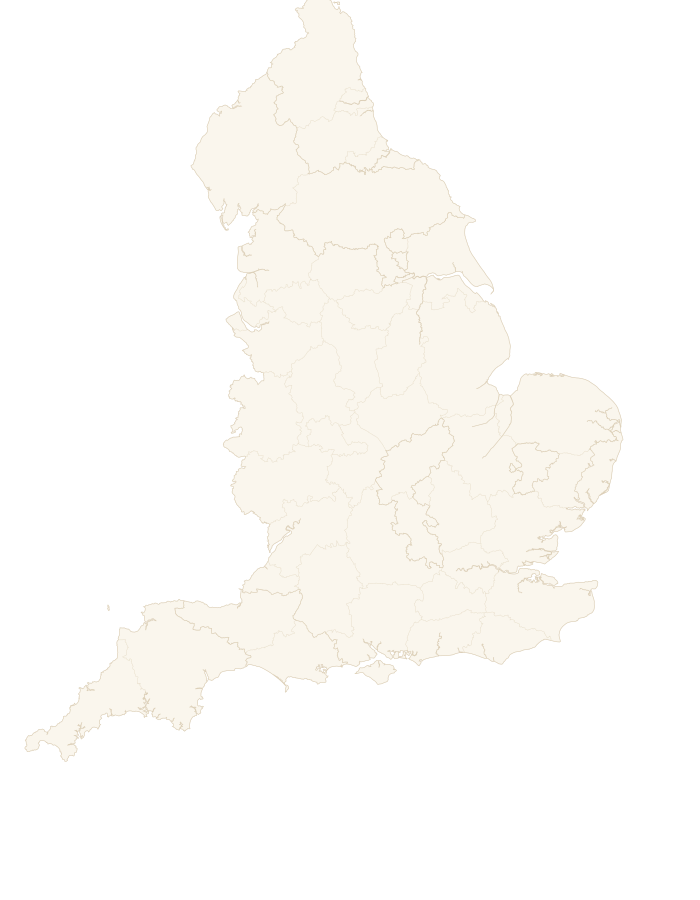
CoreHistoric reach
The seat of Pearce
Seat vacantChief
No one leads the Pearce community yet. When the movement opens, you can stand for its leadership, or help elect whoever does.
Current mission
No shared goal set yet. Once Pearce has leadership, it sets the public focus: a restoration, a gathering, a real-world project that helps its own.
The Pearce clan is being rebuilt. Join the waiting list for the movement today, and you help decide who leads it and what it does.
Help rebuild the Pearce clan →What does the Pearce name mean?
From the medieval personal name Piers, the Norman-French form of Peter (Greek Petros, 'rock'), introduced at the Conquest and for centuries the everyday spoken form of the saint's name in England. Pearce, Pierce and Pearse are its surname offspring; the name is densest in the West Country, above all in Cornwall and Devon. The Latin learned form gives the separate doublet Peters.
The history of Pearce
Where the clerk wrote Petrus, the parish said Piers
William's fleet landed at Pevensey on 28 September 1066 and he was crowned at Westminster on Christmas Day; within a generation Anglo-Norman, a northern dialect of Old French, had displaced Old English among the ruling class. Names came over with the language. William, Robert and Richard were soon common in England, and Piers travelled the same road: the everyday spoken Norman French form of Peter, from the Greek Petros, 'rock'. Where the clerk wrote Petrus in his Latin, the man himself answered to Piers, and it was Piers, not Peter, that Langland gave his ploughman.
The spoken form is what hardened into a surname. Christopher Daniell dates the first recorded modern surname inherited by multiple generations to 1140, and the English habit is generally traced to the preparation of the Domesday Book in 1086, taking hold first among the feudal nobility and gentry and spreading downward until, by 1400, most English families used hereditary names. Patronymics are the oldest and commonest class of all: the four-year University of the West of England study published in 2016 as the Oxford Dictionary of Family Names in Britain and Ireland, led by Richard Coates, described patronymic surnames as those which 'originally enshrined the father's name'. Pearce, Pierce and the Cornish Pearse are three settlements of one such name.
Exeter, Montacute and the country the name struck root in
The south-west did not take the Conquest quietly, and the Normans had to garrison it twice over. In 1068 William besieged rebels in Exeter, Harold Godwinson's mother Gytha among them, and negotiated the town's surrender only after heavy losses. Harold's sons, sheltering in Ireland, raided Somerset, Devon and Cornwall from the sea.
In the revolts of the following year Harold's sons launched a second raid and were beaten at the Battle of Northam in Devon by Norman forces under Count Brian, a son of Eudes, Count of Penthièvre. Rebels from Devon and Cornwall attacked the Norman garrison at Exeter, were repulsed by the defenders and scattered by a relief force under Count Brian. Rebels from Dorset, Somerset and the country around besieged Montacute Castle and were broken by an army gathered out of London, Winchester and Salisbury under Geoffrey of Coutances. Norman lordship in the west was held by castle and garrison, and the French names the conquest brought in spread with the new ruling class. Cornwall, Devon and the Somerset and Bristol country are where the name sits thickest today, with Gloucestershire, Dorset and Wiltshire, Hampshire and the Isle of Wight, and Worcestershire and Herefordshire behind them.
Three bishops, a preacher and the painters
The name reached the bench of bishops and returned to it. Zachary Pearce (1690–1774) was an English bishop; Ernest Pearce (1865–1930) and Edmund Pearce (1870–1935) were English bishops in their turn. Outside the cathedral close, Mark Guy Pearse (1842–1930), carrying the Pearse spelling, worked as a British preacher, lecturer and author.
The workshops did as well as the pulpits. Stephen Pearce (1819–1904) worked as an English painter and Arthur Ernest Pearce (1859–1934) as an English sculptor and ceramic artist. Bryan Pearce (1929–2007) was a British painter of the twentieth century. In commerce, Francis Tring Pearce (1846–1935) was an English director of Priday, Metford and Company Limited, and Austin Pearce (1921–2004) a British businessman. Irene Pearce (1900–2012) outlasted them all as a British supercentenarian.
The prize ring, the sculls and the county grounds
Hen Pearce (1777–1809) fought as an English prizefighter in the bare-knuckle era. Denis Pearce (1896–1968) took up a very different weapon as a British fencer, and Shaun Pearce (born 1969) competed as a British canoeist. On the water the name went furthest of all: Bobby Pearce (1905–1976) sculled as an Australian-Canadian, a racing career two countries can claim.
On the cricket field the Pearces run in a long file. Stanley Pearce (1863–1929) and Alec Pearce (1910–1982) played the English county game, and Tom Pearce (1905–1994) played it too before serving as a rugby union official. Martin Pearce (born 1983) followed as an English cricketer and Sam Pearce (born 1997) took the name into Welsh cricket. In football, Andy Pearce (born 1966), Ian Pearce (born 1974) and Jason Pearce (born 1987) played the English professional game, and Stuart Pearce (born 1962) went on from playing to coach it.
The name in Australia, New Zealand and beyond
The bearer record carries the name well outside England, and the southern hemisphere entries are the thickest of it. Arthur Pearce (1881–1902) played Australian rules football; Sandy Pearce (1883–1930) played Australian rugby league and boxed besides; Sydney Pearce (1883–1930) played the Australian rugby league game as well. Col Pearce (1917–2004) refereed the Australian league game, and Wayne Pearce (born 1960) captained the Balmain Tigers from 1982 to 1990.
Beyond the football grounds, Vera Pearce (1895–1966) worked as an Australian actress and Ivy May Pearce (1914–1998) as an Australian pilot and business owner. Augustus Baker Peirce (1840–1919), who went by Gus Pierce, made his life in Australia as a traveller, riverboat captain and artist. In New Zealand, Arthur Fairchild Pearce (1903–1990) played jazz and Allan Pearce (born 1983) played football and worked as a physiotherapist. Adrienne Pearce built her career as a South African actress, and Barcley Pearce (born 1970) played Canadian ice hockey.
From the War of 1812 to Iwo Jima
The American branches took the name into uniform early. Cromwell Pearce (1772–1852) served as a colonel in the United States Army during the War of 1812, and Lovick Pierce, an American pastor, went to the same war as a chaplain. More than a century on, Francis Junior Pierce (1924–1986) was a United States Navy Corpsman who received the Medal of Honor for his actions in the Battle of Iwo Jima.
The name also sat in legislatures for the better part of a century. Dutee Jerauld Pearce (1789–1849) and James Pearce (1805–1862) both served as American politicians, and Henry L. Pierce (1825–1896) represented Massachusetts in Congress. Gilbert A. Pierce (1839–1901), an author, journalist and playwright as well as a member of the Indiana state legislature, became the eighth Governor of Dakota Territory and then a senator for North Dakota. Walter M. Pierce (1861–1954) was Governor of Oregon and afterwards a member of the United States House of Representatives.
The schoolroom, the laboratory and the Brooklyn Atlantics
Sarah Pierce (1767–1852) worked as an American educator in the first generation of the republic. G. W. Pierce (1872–1956) held a professorship of physics at Harvard and worked as an inventor in the development of electronic telecommunications; W. Dwight Pierce (1881–1967) made his name as an American entomologist. Marjorie Pierce (1900–1999) practised as an American architect through the twentieth century.
Sport took the name up just as readily. Dickey Pearce (1836–1908) was an early baseball player who started with the Brooklyn Atlantics in 1856; Bunny Pearce (1885–1933) and Billy Pierce (1927–2015) followed him onto American diamonds. In business, James Pieronnet Pierce (about 1825 to 1897) built a career as a California entrepreneur, and Byron Root Pierce (1829–1924) practised as an American dentist.
Page, stage and screen in the twentieth century
Philippa Pearce (1920–2006) wrote for children as an English author. Donn Pearce (1928–2017) wrote Cool Hand Luke; Michael Pearce (1933–2022) wrote out of Anglo-Egyptian Sudan; Tamora Pierce (born 1954) built an American career in fantasy fiction. Fred Pearce (born 1951) works as an English journalist and Sarah Pearce (born 1965) as a British professor of history.
On stage and screen the name is thick on the ground. Lennard Pearce (1915–1984) and Jacqueline Pearce (1943–2018) were British actors, Eve Pearce (1929–2023) a Scottish actress and Alice Pearce (1917–1966) an American one, while Perce Pearce (1900–1955) worked as an American producer, director and writer. In music the range runs from Judith Pierce (1930–2003), an English operatic soprano, and Colman Pearce (born 1938), the Irish pianist and conductor, to Al Pearce (1898–1961) and Bill Pearce (1926–2010), American singers, Nat Pierce (1925–1992), the jazz pianist and arranger, and Webb Pierce (1921–1991), an American country music singer.
The castles of the homeland
The great strongholds of the homeland, look one up, see what it looked like in its prime, and recreate it to explore.
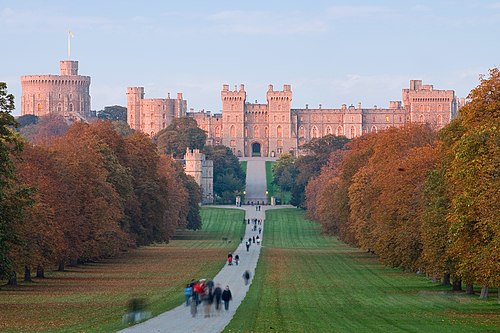 Windsor CastleRestored · prime 1820
 Tower of LondonRestored · prime 1285
 Bamburgh CastleRestored · prime 1904
All castles in England → · Strongest castles in England → · Castles of Europe
Play As Your Clan
Hold a real castle against whatever you choose to send at it, take a ship out in her own service years, or stand at the shoulder of someone the record remembers. The chronicler sets the scene; the deeds are yours.
Notable bearers of the Pearce name
- Guy Pearce (b. 1967), Australian actor
- Franklin Pierce (1804–1869), 14th US President