James
also Iago, ap Iago
From Jacob, through Latin Iacomus to Welsh Iago to Tudor English James.
- Origin
- South West, England
- Famous bearer
- Henry James (1843–1916), novelist (The Portrait of a Lady)
- Register
- English family
The James arms and country

Coat of armsArms of the family James, Barons NorthbourneBorne by Barons Northbourne: the ennobled line of the name, not the name at large.Englishhigheditior Shield is my own work, combined the image of the dolphin - which is for free public use · CC BY-SA 4.0

- Coat of arms: Granted to an individual and inherited down that one documented line. These are the arms of particular families of the name, not of everyone who shares the surname.
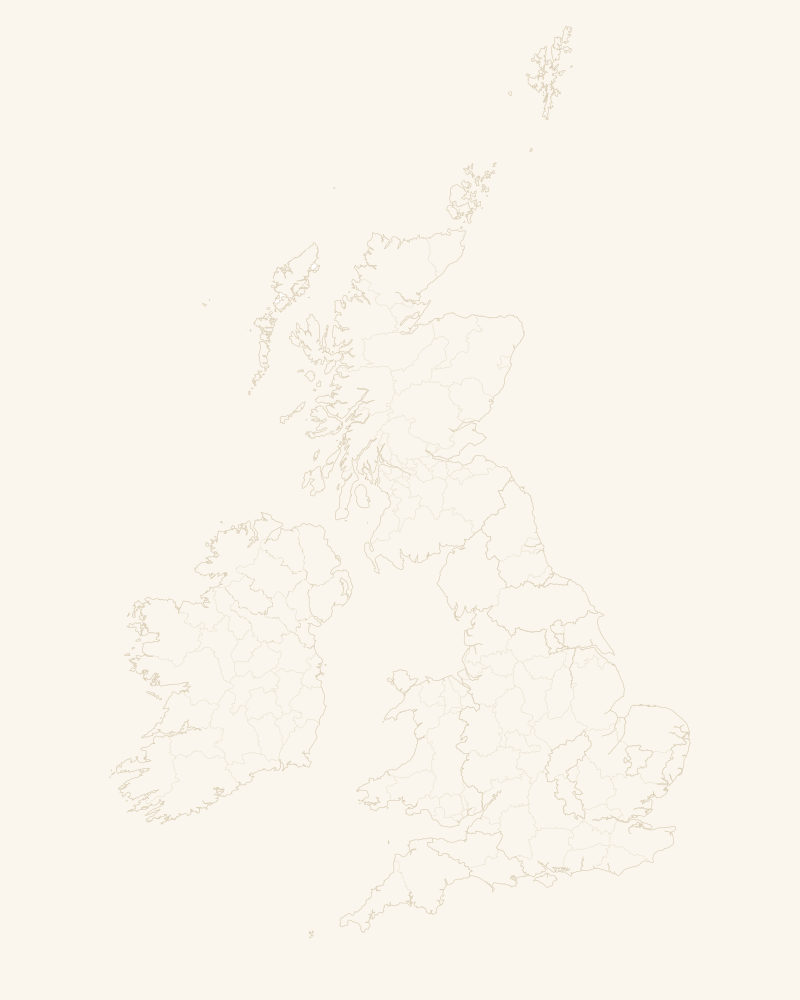
This name is thick on both sides of the border, so the map shows the whole of Britain and Ireland with every region it touches highlighted. It is a regional pattern for the surname, not proof that your branch lived in each place.
CoreHistoric reach
The seat of James
Seat vacantChief
No one leads the James community yet. When the movement opens, you can stand for its leadership, or help elect whoever does.
Current mission
No shared goal set yet. Once James has leadership, it sets the public focus: a restoration, a gathering, a real-world project that helps its own.
The James clan is being rebuilt. Join the waiting list for the movement today, and you help decide who leads it and what it does.
Help rebuild the James clan →What does the James name mean?
Patronymic from James, the vernacular Late-Latin Iacomus, itself from Hebrew Ya'aqov (Jacob). The same biblical name produced two distinct English surnames: James (from the Latinate form) and Jacob (from the older Hebrew form). Two compression streams converged in the modern James pool: (1) English James, with the standard -s genitive added in Tudor surname fixation; (2) Welsh ap Iago, Iago being the Welsh form of James, recorded in Anglican parish registers as James once Tudor surname policy compressed the patronymic. The Welsh James pool is densest in the south-west: Carmarthenshire, Pembrokeshire and the south Wales valleys.
The history of James
Iacomus in Norman mouths, Iago in Welsh ones
The Conquest put a dialect of Old French into the mouths of England's ruling class and, with it, a new stock of given names: William, Robert and Richard displaced the Anglo-Saxon names of the men the Normans had dispossessed. James arrived on that tide, as Old French James, a variant of Jacme, from the Late Latin Jacomus, itself a variant of Latin Jacobus and beyond that the Hebrew Ya'aqov. The same biblical name left England two separate surnames rather than one: James from the Latinate form the Normans carried, Jacob from the older Hebrew form.
Two pools then ran together. In England the given name took the -s genitive that Tudor clerks were fixing onto half the country's patronymics at the same moment. In Wales the name was Iago, and a man was ap Iago, son of Iago, renamed generation by generation; when Wales was united with England under Henry VIII in 1536 and hereditary surnames followed, Anglican parish registers simply wrote such men down as James. That is why the name lies thickest in Carmarthenshire, Pembrokeshire and the south Wales valleys, and why two unrelated descents now share one spelling.
Nicholas James in the Commons, Edward James the martyr
The oldest James in the record is a City man. Nicholas James, who died in 1433, sat as a Member of Parliament for the City of London, which puts the surname in the government of the capital before the middle of the fifteenth century, already hereditary and already established in the city. London remains one of the historic homes of the name, alongside Kent, Gloucestershire and the Berkshire-Oxfordshire country.
The Reformation century caught the name on the losing side at least once. Edward James, born about 1557, died in 1588 an English Catholic priest and martyr. A generation on, the name sat inside the new learning rather than against it: Richard James (1592-1638) worked as an English scholar and librarian. Elinor James (1644-1719) ran a press and wrote for it, a British printer and writer.
In the Georgian and Victorian professions the name is everywhere in the record books. John James (1673-1746) practised as an English architect; Robert James (1703-1776) as an English physician; Paul Moon James (1780-1854) as an English banker and lawyer; Edwin James (c. 1812-1882) as an English lawyer, Member of Parliament and would-be actor, a combination that suggests the courtroom was not enough for him. George Payne Rainsford James (1799-1860) made a living as a novelist and historical writer.
The anthem, the Archdruid and the hymn-writer called Gwyrosydd
Wales gave the name its loudest single moment. Evan James (1809-1878) is credited as composer of the Welsh national anthem, and James James (1833-1902), Welsh musician, as composer of Land of my Fathers - the surname appears twice over in the authorship of the song a nation stands up for. It is a fitting return for a name that Wales only acquired because Tudor administration flattened ap Iago into an English spelling.
The Welsh-language tradition carried the name long before and long after. Angharad James (1677-1749) wrote as a Welsh-language poet; Edward James (1569-1610?) worked as a Welsh clergyman and translator; Daniel James (1848-1920), who wrote under the bardic name Gwyrosydd, was a Welsh poet and hymn-writer; Christine James, born 1954, is a Welsh poet and academic and was the first woman to serve as Archdruid of Wales. Henry James (1864-1949) was Dean of Bangor Cathedral from 1934 to 1940, and John Ernest James (1884-1945) carried the Welsh Congregational ministry to Australia.
The valleys put the same name on the field. Evan James (1869-1901) and David James (1866-1929) played rugby for Wales as internationals; David James (1906-1981) crossed to the professional rugby league code, as Mel James (1948-2022) did later. Carwyn James (1929-1983) was a Welsh rugby player, and Dafydd James, born 1975, played as a Welsh rugby union international and a British Lion. In football the name belongs to Leighton James (1953-2024) and Robbie James (1957-1998), and in the modern track cycling era to Becky James, born 1991.
The Goodnestone parson's son who ran King's
Montague Rhodes James was born at Goodnestone Parsonage in east Kent on 1 August 1862, the youngest of the four children of an Evangelical Anglican clergyman. The family moved when he was three to the Suffolk rectory at Great Livermere, and that fenland-rectory village and its churchyard became the landscape he would put behind almost everything he wrote.
He won a King's Scholarship to Eton at thirteen and the Newcastle Scholarship there at eighteen, then went up to King's College Cambridge in 1882. He took a first in the Classical Tripos in 1885, was elected to a King's fellowship in 1887, served as Dean of King's from 1889, and in 1905 was elected Provost of the college, an office he held for thirteen years.
The administration ran alongside a body of scholarship that outlasted it. James catalogued the medieval-manuscript collections of King's, St John's, Trinity, Corpus Christi, Pembroke, Peterhouse and Gonville and Caius - the reference catalogues that remain standard for those libraries, compiled by one man working college by college. He was elected a Fellow of the British Academy in 1903 and received the Order of Merit in 1930.
Canon Alberic, read aloud on Christmas Eve 1893
The ghost stories began as a Cambridge Christmas habit. James read the first of them, Canon Alberic's Scrap-book, aloud to a circle of friends on Christmas Eve 1893, and kept the practice up for thirty years. Thirty-eight stories accumulated, gathered into Ghost Stories of an Antiquary in 1904, More Ghost Stories of an Antiquary in 1911, A Thin Ghost and Others in 1919 and A Warning to the Curious in 1925.
What he built in them was a template the genre has worked on ever since: an antiquarian scholar, a manuscript or object that should have been left alone, a slow atmospheric intrusion, and horror assembled out of cumulative detail rather than shock. The material was his own working life - the medieval manuscripts he catalogued by day supplied the objects that turn on the reader by night.
He left King's in 1918 for the Provostship of Eton College, which he held for the last eighteen years of his life, so that the same man had governed both of the foundations that trained him. He was made a Companion of Honour in 1928, and died at the Eton Provost's Lodging on 12 June 1936, seventy-three years old. He is buried in the Eton College burial ground.
The novelist, the philosopher and the diarist
Nineteenth-century American letters carried the name at its centre. Henry James, Sr. (1811-1882) worked as an American theologian, and the novelist and critic Henry James (1843-1916) carried his name into The Portrait of a Lady, The Wings of the Dove and The Ambassadors, the books on which the modern psychological novel was founded; he took British nationality only at the very end of his life. William James (1842-1910), the American philosopher, and Alice James (1848-1892), the American diarist, sit in the same generation of the name, and a later Henry James (1879-1947) won the 1931 Pulitzer Prize for Biography.
British crime and criticism took it next. P. D. James (1920-2014) wrote the Adam Dalgliesh novels and was created Baroness James of Holland Park in 1991, which put the surname in the Lords on the strength of detective fiction. Clive James (1939-2019) worked as an Australian writer, poet, essayist, critic and commentator on popular culture. Robert Rhodes James (1933-1999) combined the two trades of British historian and Conservative Member of Parliament.
The name kept selling in the modern market. Bill James (1929-2023) and Erica James, born 1960, both wrote novels under it, and E. L. James, born 1963, wrote Fifty Shades of Grey. Edward James (1907-1984) worked the other side of the trade as a British poet and art patron, and Margaret Calkin James (1895-1985) as a graphic designer.
The Missouri brothers and the builders who followed
The most notorious bearers are two brothers out of a Kentucky-Welsh line. Robert S. James (1818-1850) fathered them; Frank James (1843-1915) and Jesse James (1847-1882) were the American outlaws of the James-Younger Gang, and Jesse's death in 1882 turned the surname into a fixture of American myth. Jesse E. James (1875-1951) was the outlaw's only surviving son, and carried the name on past the legend.
Other emigrant bearers built rather than robbed. Daniel James (1801-1876) was one of the co-founders of Phelps, Dodge & Co., and Daniel Willis James (1832-1907) followed him in American business. Edwin James (1797-1861) worked as an American botanist, geographer, geologist and explorer. Richard T. James (1914-1974) co-invented the Slinky and Betty James (1918-2008) was the American businesswoman who named it. Jack James (1920-2001) engineered for NASA's Mariner programme.
In American public office the name reaches the Senate, the statehouses and the Pentagon. Charles Tillinghast James (1805-1862) served as U.S. Senator from Rhode Island, Charles Pinckney James (1818-1899) as a federal judge, and W. Frank James (1873-1945) as a United States Congressman and Benjamin F. James (1885-1961) as a Republican member of the House from Pennsylvania. William H. James (1831-1920) was the second governor of Nebraska, Arthur James (1883-1973) Governor of Pennsylvania, and Fob James, born 1934, the 48th Governor of Alabama. Deborah Lee James, born 1958, served as United States Secretary of the Air Force.
The Ordnance Survey, lutetium and the barons of Northbourne
One James mapped Britain. Henry James (1803-1877), a British Army officer, was director-general of the Ordnance Survey, the office that fixed the shape of the country on paper. Others went outward: Frank Linsly James (1851-1890) worked as an English explorer, and Henry Evan Murchison James (1846-1923) as a British officer of the Indian Civil Service, explorer and writer. Frederick Seton James (1870-1934) and Edmond James (1874-1952) served as British colonial administrators, and Walter James (1863-1943) sat as Premier of Western Australia from 1902 to 1904 and backed the federation movement.
In the laboratories the name is attached to a discovery and to a transporter. Charles James (1880-1928), British-born, was a discoverer of lutetium. Reginald W. James (1891-1964) worked as an English and South African naturalist and physicist, Ioan James (1928-2025) as a British mathematician, Peter Wilfred James (1930-2014) as a British botanist and S. P. James (1870-1946) as a British physician and parasitologist. David James, born 1958, identified the glucose transporter GLUT4, and Helen F. James, born 1956, works as an American paleornithologist.
The name also went up into the peerage more than once. Sir Walter James, 1st Baronet (1759-1829), was the last warden of the Royal Mint. Walter James, 1st Baron Northbourne (1816-1893), sat as a Member of Parliament, his successor the 2nd Baron (1846-1923) as a Liberal politician, the 4th Baron (1896-1982) as a British Olympic rower and agriculturist, and Christopher James, 5th Baron Northbourne (1926-2019), as a British farmer and aristocrat - one titled line carrying the surname down four recorded holders. Henry James, 1st Baron James of Hereford (1828-1911), was an English lawyer and statesman, and Eric James, Baron James of Rusholme (1909-1992), an English peer and academic.
Champions of the James name
The bearers whose lives are inseparable from this surname. Each has their own page, biography, achievements, geography, connection to the family.
Also found in
The James name has substantial historical presence beyond England. See it on Wales.
Historic Places, Rebuilt
Explore the streets and seats the James name knew, rebuilt with AI as they stood in history.
The castles of the homeland
The great strongholds of the homeland, look one up, see what it looked like in its prime, and recreate it to explore.
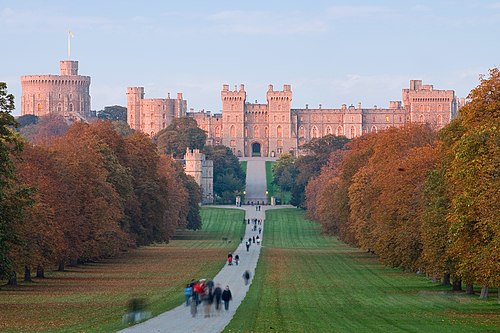 Windsor CastleRestored · prime 1820
 Tower of LondonRestored · prime 1285
 Bamburgh CastleRestored · prime 1904
All castles in England → · Strongest castles in England → · Castles of Europe
Play As Your Clan
Hold a real castle against whatever you choose to send at it, take a ship out in her own service years, or stand at the shoulder of someone the record remembers. The chronicler sets the scene; the deeds are yours.
Notable bearers of the James name
- Henry James (1843–1916), novelist (The Portrait of a Lady)
- P. D. James (1920–2014), detective novelist (Adam Dalgliesh series)
- Jesse James (1847–1882), American outlaw
- Sid James (1913–1976), Carry On actor