
Palace · Austria · Restored
Belvedere
Schloss Belvedere
The Belvedere is a Baroque palace complex in Vienna composed of two palaces (Upper and Lower Belvedere), an Orangery, stables, and formal terraced gardens. Built as Prince Eugene of Savoy's summer residence, the ensemble functions as a unified garden and museum complex with grand façades, terraces, cascades and richly decorated state rooms.
First raised
1714
Its prime
1723
Today
Restored
As it stood in 1723
What Belvedere looked like in its prime.
A symmetrical Baroque palace ensemble of pale stone façades and rusticated bases, punctuated by green patinated copper mansard roofs and domed pavilions; a central pedimented corps de logis with tall arched windows faces a broad axial garden of trimmed parterres, clipped hedges and a large reflecting basin, linked by terraces, steps, cascades and balustrades, with sculpture and formal geometry extending along the central axis.
Its story
The story of Belvedere.
Prince Eugene's Belvedere, 1697–1740
On 30 November 1697, a year after beginning work on his Stadtpalais inside the walls, Prince Eugene of Savoy bought a plot of ground south of the Rennweg, the main road out of Vienna towards Hungary. The area was then largely undeveloped and suited to a landscaped garden and a summer palace, and he added neighbouring plots in 1708, 1716 and 1717–18 so that the grounds could be enlarged in stages. For the new work he passed over Johann Bernhard Fischer von Erlach, the architect of the Stadtpalais, and chose Johann Lukas von Hildebrandt, whom he had met on campaign in Piedmont and who had already built him Ráckeve Palace in 1702 on Csepel, an island in the Danube south of Budapest. The Belvedere went up during a period of heavy construction in Vienna, then the imperial capital and residence city of the Habsburg monarchy, in a spell of prosperity that followed the prince's campaigns against the Ottoman Empire.
A pleasure building of 1694–97 had come with the ground, and Hildebrandt converted it into the Lower Belvedere between 1712 and 1717. Construction had begun by 1712, and on 5 July 1713 the prince submitted a request for a building inspection. Work moved quickly: Marcantonio Chiarini of Bologna began the quadratura painting in the central hall in 1715, and in April 1716 a diplomatic representative from the southern Netherlands was shown both the Lower Belvedere and the Stadtpalais. The Marble Hall at the centre of the building was made for the ceremonial reception of guests, and its ceiling painting by Martino Altomonte shows Eugene as a youthful hero and as Apollo among the muses.
The Upper Belvedere was first conceived only as a small building to close the garden at its top end. Further land purchases changed that, and Hildebrandt enlarged the design and built it at its present scale between 1717 and 1723. Eugene went on living in the Lower Belvedere while the upper palace served for display, ceremony and receptions rather than as a private residence; he was able to receive the Turkish ambassador Ibrahim Pasha there in 1719, while the interior decoration was still in hand. In that year he commissioned the Italian painter Francesco Solimena for the altarpiece of the Palace Chapel and the ceiling painting of the Gold Cabinet, and Gaetano Fanti for illusionistic quadratura in the Marble Hall; in 1720 Carlo Innocenzo Carlone was entrusted with the Marble Hall ceiling fresco, which he executed between 1721 and 1723. The Sala Terrena, originally open to the garden, soon developed structural problems, and in the winter of 1732–33 Hildebrandt installed a vaulted ceiling carried on four Atlas pillars, which is how the room still stands. Between 1731 and 1740 the engineer Salomon Kleiner documented the whole complex in a ten-part publication of ninety plates recording the ensemble as it was in the first half of the eighteenth century.
The Terraced Garden and the Imperial Picture Gallery, 1700–1833
The garden is the oldest part of the complex, laid out around 1700, shortly after the purchase of the ground, by Dominique Girard, a pupil of Le Nôtre who had trained in the gardens of Versailles, and finished in 1725. It runs between the two palaces over three broad terraces. Because the Upper Belvedere stands some twenty-three metres above the Lower, the sculptural theme is the ascent from the underworld to Olympus, and the programme is threaded with mythological allusions to the prince's own rise, linking him to Apollo. Eugene obtained permission to draw on the imperial court water main and had numerous fountains installed. East of the Upper Belvedere his menagerie occupied a semicircular enclosure whose outline is still legible; after his death the animals went to the imperial menagerie at Schönbrunn.
Prince Eugene died in his City Palace in Vienna on 21 April 1736 without leaving a legally binding will. A commission set up by Charles VI, Holy Roman Emperor, named Eugene's niece Princess Maria Anna Victoria of Savoy as heir. She moved into the estate, then known as the Gartenpalais, in July 1736 but soon looked to sell, and she had the entire inventory and the prince's library auctioned off, so that nothing of the original furnishing remains. In 1752 Maria Theresa acquired the complex, and in 1754 she transferred what had been a private purchase to the imperial treasury, that is to state property, while reserving decisions over its use to her family. Under the monarchy it was known as the k. k. Lustschloss Belvedere. The imperial family never used it as a principal residence and for a time the buildings stood underused; Maria Theresa created a gallery of Habsburg ancestors in the Lower Belvedere, and in 1770 a masked ball was held there for the marriage of Archduchess Maria Antonia, the future Marie Antoinette, to the French Dauphin, later Louis XVI.
In 1776 Maria Theresa and her son, Emperor Joseph II, decided to move the Imperial Picture Gallery from the Stallburg to the Upper Belvedere, the transfer running through the following years. Shaped by the ideals of enlightened absolutism, the imperial collection was to be made accessible to the public, and the Belvedere is often described as one of the world's first public art museums. Its own chronology gives 1777 for the inauguration of the Picture Gallery at the Upper Belvedere; by other accounts the public opening came in 1781. The garden has been open to the public since 1780. While the upper palace served as a picture gallery, the Lower Belvedere housed members of the royal family who had fled the French Revolution, among them Marie Thérèse Charlotte, the surviving child of Marie Antoinette and Louis XVI, and Archduke Ferdinand, formerly governor of the Duchy of Milan. After the Treaty of Pressburg of 1805 the Habsburg monarchy ceded Tyrol to Bavaria and a new home was needed for the imperial collection from Ambras Castle near Innsbruck; its arrival in the Lower Belvedere is dated to 1806, when Napoleon threatened to march into Tyrol, in some accounts and to an order of Emperor Francis II in 1811 in others. From 1833 the Collection of Egyptian Antiquities and the Antiquities Room were added, and the arrangement held until the collections were moved out to the newly built Kunsthistorisches Museum on the Ringstraße.
Bruckner, Franz Ferdinand and the Republic, 1895–1929
With the imperial collections gone, both palaces ceased for a time to work as public museums. In 1895 Emperor Franz Joseph I allowed the composer Anton Bruckner, who in his last years had difficulty walking and could no longer manage stairs, to take an apartment in the Belvedere: rooms on the ground floor of the custodians' wing south of the Upper Belvedere, the Kustodenstöckl at Prinz-Eugen-Straße 27. Bruckner died there on 11 October 1896. In 1896 the emperor also decided that the Upper Belvedere should serve as the official residence of the heir to the throne, Archduke Franz Ferdinand, who had the palace remodelled under the architect Emil von Förster. The grand staircase, open on both sides since Hildebrandt built it, was closed off with glazed doors and windows in 1904 during that conversion. Franz Ferdinand displayed more than eighteen thousand ethnographic objects from his world journey in the palace and kept his military chancellery in the Lower Belvedere, which reached its height when Franz Joseph appointed him Inspector General of the entire armed forces in 1913. He lived in the Upper Belvedere with his family until his assassination, with his wife Sophie, Duchess of Hohenberg, in 1914.
The Moderne Galerie opened in the Lower Belvedere on 2 May 1903, the first state collection in Austria devoted to modern art, established in part through the efforts of the Vienna Secession and intended to set Austrian art beside international modernism. Early acquisitions included works by Vincent van Gogh, Claude Monet and Giovanni Segantini. In 1912 it was converted into the Austrian State Gallery, presenting Austrian art from the Middle Ages to the present, and continuous museum use of the Belvedere dates from the 1903 opening.
Emperor Karl I made no claim on the palace in 1916, and only in 1917 did his younger brother, Archduke Maximilian Eugen, move in with his family. In the course of that move the private possessions of Franz Ferdinand's family still at the Belvedere were taken to Schloss Artstetten and stored there, and for that reason they were not expropriated in 1918–19 as the holdings at his Bohemian castle of Konopiště were; they make up most of what is now the Archduke Franz Ferdinand Museum. On 12 November 1918 the palace passed, with the rest of the former court treasury, into the ownership of the Republic proclaimed that day, and the garden has been administered by the federal gardens service ever since. After the war the art historian Franz Haberditzl asked the Ministry of Education to assign the Belvedere palaces to the Staatsgalerie, and the request was granted in 1919. A reorganisation of the former imperial collections prepared by Hans Tietze in 1920–21 set out plans for an Österreichische Galerie and a Moderne Galerie; during the rearrangement of 1921–23 the Baroque Museum was added in the Lower Belvedere, and the Moderne Galerie opened in the Orangery in 1929.
Schuschnigg, the Nazi Years and the State Treaty, 1938–1955
Under the Ständestaat the dictatorially governing chancellor Kurt Schuschnigg lived in an official apartment in the Upper Belvedere. After the annexation of Austria by Nazi Germany in March 1938 he was held there under house arrest and watched by the Gestapo before being arrested. From 22 March 1938 the Moderne Galerie, with its twentieth-century works, stayed shut; the works on show there were put into store, and the holdings of so-called degenerate art were left untouched as a result. The nineteenth-century gallery and the Baroque Museum remained open at first and were closed only in 1944 to protect the collections in them. The regime used the Upper Belvedere for receptions and for conferences, among them the Vienna Award of 2 November 1938 and that of 30 August 1940.
The palaces were damaged during the Second World War, the Upper Belvedere by air raids, with harm to the Marble Hall there and to the Hall of Grotesques in the Lower Belvedere, and restoration continued after 1945. In March 1950 a fire that began in the Golden Cabinet on the upper floor of the Upper Belvedere damaged several rooms and works displayed in them; a number of state rooms were destroyed and never rebuilt. One of them, the Hall of Mirrors, is recorded in a detailed painting made in 1926 by Josef Pögl (1867–1956), now in a private collection. The Österreichische Galerie reopened on 4 February 1953, followed by the Baroque Museum, and the Museum of Medieval Austrian Art opened in the Orangery on 5 December 1953. On 15 May 1955 the Austrian State Treaty was signed at the Upper Belvedere, re-establishing Austria as an independent and democratic state after the Allied occupation that followed the war; the palace has housed the Österreichische Galerie Belvedere since that year.
Restoration, Restitution and Three Venues, 1994–2020
The waterworks between the Upper and Lower Belvedere could not be run from 1994 because of heavy water losses, and the garden's twelve fountains were restored between 2005 and 2010. In 1996 the World Monuments Fund added the Belvedere gardens to its Watch List, citing the need to restore the historic garden ensemble and parts of the architectural fabric; the garden has since been restored in stages under the obligations that come with World Heritage status, the palace and garden ensemble forming part of the Baroque heritage of the Historic Centre of Vienna. The buildings are protected as listed objects in Austria. After an invitation-only competition the architect Susanne Zottl converted the Orangery into a modern exhibition space while keeping its Baroque fabric, and it opened in March 2007. A few months later the Lower Belvedere reopened after redesign work by the Berlin architect Wilfried Kuehn, its Baroque state rooms remaining open to visitors. The museum now runs three venues: the Upper Belvedere for the permanent collection, which holds works by Gustav Klimt including The Kiss, the Lower Belvedere for temporary exhibitions, and Belvedere 21 for contemporary Austrian and international art, film and music.
Under Austria's Art Restitution Act of 1998 the Belvedere researches the provenance of works made before 1945 and acquired since 1933, some 5,400 paintings, sculptures and works on paper; since 1999 its dossiers have gone to Austria's Commission for Provenance Research and to the Art Restitution Advisory Board, which recommends on restitution. In 2006 Austria returned five paintings by Klimt from the Belvedere to the heirs of Ferdinand and Adele Bloch-Bauer, among them the Portrait of Adele Bloch-Bauer I, and in November of that year, after a long dispute, Edvard Munch's Summer Night at the Beach was returned to Marina Fistoulari-Mahler, granddaughter and heir of Alma Mahler. Also in 2006 the Austrian arbitration panel decided that Klimt's unfinished Portrait of Amalie Zuckerkandl should stay in the Belvedere, a decision criticised because Amalie Zuckerkandl and her daughter were murdered in the Holocaust and because questions over the painting's ownership history were unresolved. In 2014 the Belvedere was required to restitute Wilhelm Leibl's Farmer's Kitchen to the heirs of Martha Liebermann, widow of Max Liebermann, on the ground of Nazi persecution. Egon Schiele's Four Trees was claimed in 1959 by the Holocaust survivor Alice Morgenstern, who stated that it had belonged to her family and had not been sold voluntarily. In 2020 the Art Restitution Advisory Board recommended its restitution to the heirs of Josef Morgenstern.
Step inside
9 places to explore in 1723.
The record describes 9 distinct spots at Belvedere, including 4 interiors: upper belvedere: marble hall, golden cabinet (goldener saal), palace chapel and more. Create your own photoreal reconstruction and explore every one, more scenes means more photos, more angles and more of the immersive experience.
Build Your Own Castle
Recreate Belvedere with AI to explore it.
The artist rebuilds it as it stood in 1723, a photoreal reconstruction that belongs to you alone. Pay with coins, no subscription needed.
Recreate Palace to Explore →Whose seat
Families who held Belvedere.
The families tied to Belvedere across its history, follow a name to its page.
Savoy
Built in the early eighteenth century as the summer residence of Prince Eugene of Savoy; sold by his heir and acquired by Maria Theresa in 1752.
Habsburg
Acquired by Maria Theresa in 1752 and held by the Habsburg dynasty, though not used as a principal residence.
Nearby
Castles within reach of Belvedere.
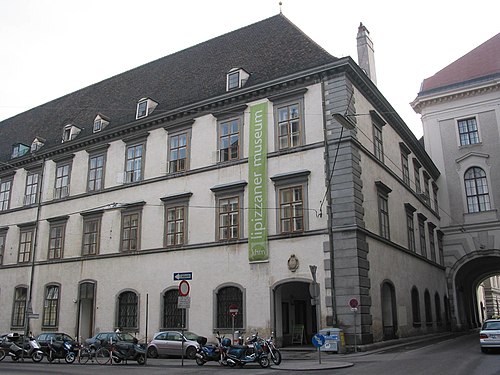


Landmarks within reach of Belvedere.


More landmarks of Austria

Explore the city


