Stadium · Germany · Restored
Waldstadion
Deutsche Bank Park
Waldstadion (Deutsche Bank Park) is a large football stadium in Frankfurt, Germany, opened in 1925 and rebuilt several times. It is the home ground of Eintracht Frankfurt and a multi-use arena for football, American football and major events.
First raised
1925
Its prime
2006
Today
Restored
As it stood in 2006
What Waldstadion looked like in its prime.
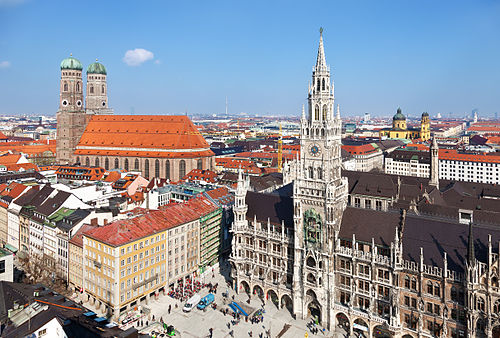
A large oval bowl of pale cast concrete piers and open tiers wrapped by a low outer colonnade, topped by a white, scalloped, retractable membrane roof that forms a repeating cushion pattern around an open rectangular centre exposing the green pitch. Steel masts and roof cables rise from the bowl rim above dark spectator seating; four tall rectangular concrete towers stand outside the ring. The stadium sits in a wooded park with access roads, flagpoles and a rail station nearby.
Its story
The story of Waldstadion.
Built on the Old Rifle Range, 1925–1937
Frankfurt laid its Waldstadion out on the ground of a former military shooting range, planning a sports park around it with a fairground and an integrated cycling and swimming stadium. Max Bromme, the city's director of horticulture, drew the scheme for the complex as a whole, and the city building councillor Gustav Schaumann designed the grandstand building. The stadium opened on 21 May 1925 after four years of work and at a total cost of 3.7 million marks, with the swimming lanes following on 5 July and the cycle track on 15 September. It held 35,000 people. The banks were built mostly of piled earth, the south stand raised on the rifle range's old bullet trap, and only the main stand on the north side was made of reinforced concrete, its facade modelled on an ancient Greek theatre.
The first national event came on 7 June 1925, when 1. FC Nürnberg beat the local club FSV Frankfurt 1–0 in the final of the German football championship. From 24 to 28 July the ground held the first Workers' Olympiad, an important meeting of the German workers' sports movement, whose football final between Germany and Finland drew a crowd of 40,000. Internationals against Italy and Switzerland and an athletics match against the Swiss followed in the same decade. The city's intended bid for the 1936 Olympic Games was withdrawn in favour of the capital, Berlin. In 1937 the back straight was extended and the capacity raised to 55,000.
The Sportfeld under the Nazis and the American Victory Stadium
Under the National Socialists the ground was renamed the Sportfeld and used through the 1930s for political events, above all marches and rallies, with as many as 150,000 taking part. Rudolf Harbig set a world record over 400 metres there on 12 August 1939, and on 14 July 1940 Germany beat Romania 9–3 in a match in which the 19-year-old Fritz Walter, later the national side's honorary captain, scored three times on his international debut.
After the war American soldiers requisitioned the stadium, renamed it the Victory Stadium and used it for their own purposes. It was released for German events again in July 1946. The German athletics championships were held there that year; Oberliga derbies between Eintracht, FSV and Kickers Offenbach filled it; Max Schmeling made his comeback there on 28 September 1947 with a knockout win over Werner Vollmer; and the Frankfurt gymnastics festival followed in 1948.
Two Rebuildings for Football, 1953–1980
A match in May 1953 forced the first complete rebuilding. Nearly 70,000 tickets had been sold for a ground laid out for 55,000; thousands more supporters forced their way in, fighting broke out and more than 200 people were hurt. The city decided on a thorough modernisation, and the enlarged Waldstadion was handed back to sport on 14 May 1955 after nineteen months of work. The German athletics championships of 1955 and internationals against Switzerland and Spain followed, and on 23 May 1959, in the final round of the German championship, 81,000 watched Eintracht Frankfurt beat FK Pirmasens, an attendance record that still stands. Eintracht went on to beat Kickers Offenbach in the final in Berlin and became German champions for the first and so far only time.
Floodlighting was installed in 1960, probably the most modern in Germany at the time, and in the European Cup of 1959/60 Eintracht beat Glasgow Rangers 6–1 in the semi-final before 77,000 and took the second leg 6–3 as well, before losing the final in Glasgow to Real Madrid 3–7. An ice rink opened inside the oval of the cycle track in December 1960, and Eintracht's ice hockey team played its home games there until 1981. The first Bundesliga match at the Waldstadion was played on 24 August 1963, a 1–1 draw with 1. FC Kaiserslautern on the opening day of the new national league. The world track cycling championships came in 1966, and on 10 September that year Muhammad Ali beat Karl Mildenberger for the world heavyweight title in front of 22,000, the fight ending in the twelfth round.
The second complete rebuilding was required by the 1974 World Cup. From May 1972 to January 1974 the stadium was effectively built anew to meet the tournament's requirements for comfort and safety. The opening ceremony of the World Cup was held there on 13 June 1974, and five group matches followed, among them the second-round tie of 3 July remembered as the Water Battle of Frankfurt, in which Germany beat Poland 1–0 on a pitch reckoned almost unplayable, went through to the final and won it in Munich against the Netherlands. Drainage and undersoil heating were put in during 1978. Four years after the Water Battle an international against Hungary had to be abandoned in the sixtieth minute at 0–0, this time in heavy fog. The DFB-Pokal final and the German athletics championships were held at the ground in 1976, and Eintracht's UEFA Cup run of 1979/80 ended with the trophy, won on 21 May 1980 by a 1–0 in the second leg of the final against Borussia Mönchengladbach.
Concerts, the Galaxy and the End of the Old Ground, 1982–2007
The 1980s brought the German gymnastics festival of 1983, the athletics championships of 1988 and the European Championship matches of that summer, for which a modern video board was installed and the first VIP facilities built. Five DFB-Pokal finals were played at the old Waldstadion in all, in 1966, 1969, 1976, 1982 and 1984, and the Supercup came in 1987 and 1988. The German Protestant Kirchentag of 1987 and open-air concerts brought in audiences of another kind: Supertramp in 1983, Bruce Springsteen in 1985 and 1988, Madonna in 1987, Prince in 1988, the Rolling Stones and Tina Turner in 1990, and in the 1990s Marius Müller-Westernhagen, Dire Straits, U2, Bon Jovi and Michael Jackson, for whose show Eintracht's league match against Bayern Munich was moved.
American football arrived on 23 March 1991, when Frankfurt Galaxy lost the opening match of the World League of American Football 11–24 to the London Monarchs, and it stayed for sixteen years, broken only by the league's pause in 1993 and 1994. The stadium held the World Bowl in 1998, in 2000 and on 23 June 2007, when Galaxy lost 28–37 to the Hamburg Sea Devils in the last match NFL Europe ever played. Football at the Waldstadion was often second-division from the mid-1990s, Eintracht going down in 1996 for two years, in 2001 for two more and in 2004 for one. On 23 May 2002 the first final of the new women's European Cup was played there, 1. FFC Frankfurt beating Umeå IK 2–0 to take the first title, and on 17 June 2002, with the season over, a symbolic bite of a digger's bucket began the rebuilding.
The Fourth Stadium and the Fight over Its Name, 2002–2027
The ground that stands today is the fourth on the site. Gerkan, Marg und Partner of Hamburg designed it in 2000 with the Stuttgart engineers Schlaich Bergermann und Partner, and it was built between 2002 and 2005 stand by stand, with matches going on throughout; officially a conversion, it was in practice a new stadium on the same ground. Giving up the athletics track let the tiers come forward, so that no place is more than 60 metres from the pitch where seats in the old stadium had been as much as 125 metres away. The tent roof of 37,500 square metres carries 3,000 tonnes on 44 main supports, and its inner roof covers the whole pitch and folds away into the video cube hung at the centre; the roof won its architects and engineers the Outstanding Structure Award of the IABSE in 2007. The stadium opened on 15 June 2005 with the first match of the Confederations Cup, Germany beating Australia 4–3, and it held the final of that tournament as well, Brazil against Argentina, in rain that gathered in a hollow of the new roof through a fault in its bracing and drained away through an overflow valve by the corner flag.
A sponsorship agreement renamed the ground the Commerzbank-Arena in 2005 for an initial ten years, the bank paying about 30 million euros to the city's operating company. Because Commerzbank was not a FIFA partner, the stadium had to be called the FIFA World Cup Stadium Frankfurt for the 2005 Confederations Cup and the 2006 World Cup, and the FIFA Women's World Cup Stadium Frankfurt in 2011. The renaming was contested. Many supporters went on calling the ground the Waldstadion and sang against the commercialisation of the name, and Rolf Müller, president of the Hessen state sports federation, saw in the loss of the historic name a loss of sporting identity. On 13 September 2014 the supporters' organisation Nordwestkurve e.V. staged an action it called Reclaim the Name: fans met at a kiosk to play the lottery together, intending to enter the bidding for the naming rights that were to be reallocated in 2015. They won 384.20 euros, offered that sum to the operator for the naming rights for a single Eintracht home match day and got no answer; the operator invited them in to talk, and Commerzbank would not comment on the matter. Commerzbank let the contract lapse on 30 June 2020 after fifteen years, and Deutsche Bank took the naming from 1 July 2020 under a contract to 30 June 2027, extended in January 2025 to 2035.
The city owns the stadium through its Sportpark Stadion Frankfurt company. The operating contract held by Stadion Frankfurt Management ran from 2005 and ended on 30 June 2020, the same day as the Commerzbank naming rights, and since 1 July 2020 Eintracht Frankfurt's football company has been the main tenant on a fifteen-year agreement carrying the rights to run and market the ground; Eintracht have played their home matches there since the Bundesliga began in 1963. The site holds further pitches, the stadium baths, a beach volleyball court and a gymnastics hall, and Eintracht's professional camp stands where the tennis courts were, while the cycle track, the artificial ice rink and the crazy golf have all gone. The Eintracht Frankfurt museum opened in the stadium in November 2007 with more than 400 square metres of exhibition on the club's history. Beyond league football the ground has taken the German Bowl from 2008 to 2010 and again in 2019 and 2021, the European championship of American football in July 2010, in which Germany beat France 26–10 in the final on 31 July, a Bundesliga handball match on 6 September 2014 watched by 44,189, a world record crowd for an indoor handball game, and two NFL regular-season fixtures in November 2023, the Kansas City Chiefs beating the Miami Dolphins 21–14 and the Indianapolis Colts the New England Patriots 10–6, both sold out at a little over 50,000. The women's teams have set their own marks there: 27,500 saw 1. FFC Frankfurt beat Umeå IK 3–2 on 24 May 2008 to win the UEFA Women's Cup for the third time, a record for women's club football, and 23,200 watched Eintracht's women open the 2022/23 season against Bayern Munich, a record for the women's Bundesliga. The stadium has staged matches at the World Cups of 1974 and 2006, the European Championships of 1988 and 2024 and the 2011 Women's World Cup, including that tournament's final, and has been awarded the 2027 Europa League final. The upper tier of the north-west curve was turned back to standing in November 2023, raising the capacity to 58,000, and from the 2026/27 season it is 60,100, the sixth largest football ground in Germany. At the end of February 2025 the city councillors approved a 12,000-seat multi-purpose hall on the P9 car park beside the stadium, costed at 250 million euros or more.
Step inside
8 places to explore in 2006.
The record describes 8 distinct spots at Waldstadion, including 3 interiors: lower-tier touchline (pitchside), upper-tier midfield view, hospitality and meeting rooms level / concourse. Create your own photoreal reconstruction and explore every one, more scenes means more photos, more angles and more of the immersive experience.
Build Your Own Castle
Recreate Waldstadion with AI to explore it.
Rebuilds stop at 1945, so the artist raises this site as it stood in 1925, not today's building, as a photoreal reconstruction that belongs to you alone. Pay with coins, no subscription needed.
Recreate Stadium to Explore →Nearby
Castles within reach of Waldstadion.


Landmarks within reach of Waldstadion.

More landmarks of Germany


Explore the city