Germany · Restored
Alter Hof
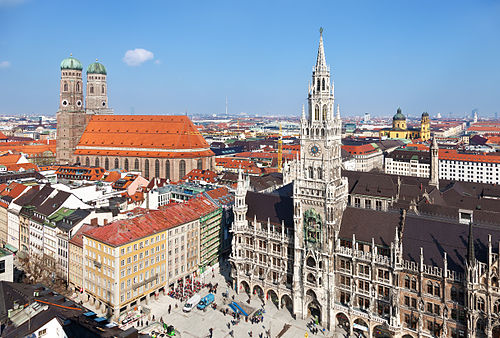
The Alter Hof in central Munich is the former imperial and ducal residence of the Wittelsbachs, notably used by Louis IV, Holy Roman Emperor. The complex comprises five wings, Burgstock, Zwingerstock, Lorenzistock, Pfisterstock and Brunnenstock, and is linked on the north side by an arch to the Renaissance-era Alte Münze (mint). Largely rebuilt after World War II, parts now house offices and a small exhibition in the medieval cellar.
First raised
1253
Its prime
1620
Today
Restored
As it stood in 1620
What Alter Hof looked like in its prime.
A compact five-winged urban castle surrounding an enclosed courtyard: the late-Gothic Burgstock with its prominent tower and a decorated projecting oriel window (the local 'Affentürmchen'), the adjoining Zwingerstock forming the west wing, the Pfisterstock with its stepped Renaissance gables, and the Brunnenstock (originally brewhouse) to the south; the north side opens under a stone arch to the adjacent Mint yard whose inner courtyard has Renaissance arcades. The central courtyard floor and walls bear the lozenge-shaped painted scheme applied in the late 15th century; a vaulted cellar beneath dates to c.1300.
Its story
The story of Alter Hof.
A Ducal Castle in Munich, Late 12th Century–1350
Excavations have shown that a castle already stood on the site in the late twelfth century; it may have been founded by Otto von Wittelsbach and extended by his son, Louis the Kelheim. After the first partition of Bavaria in 1255, the Alter Hof became the residence of Louis II, Duke of Bavaria, in what was then the north-eastern corner of the town. The town's great fire of 1327 also reached the ducal castle. The Lorenz Chapel on its north side was rebuilt as a new, more spacious church around 1324, a date fixed by inscription, and housed the imperial regalia until 1350.
Louis the Bavarian's Imperial Residence, 1314–1330
Louis IV, first of the Wittelsbachs to take the German royal throne in 1314, was crowned emperor by the Roman people in 1328 and returned from Italy to Bavaria in 1330. He chose the Alter Hof as a fixed seat, making it the first permanent imperial residence in the Holy Roman Empire, though he still travelled the Empire frequently in the older tradition of itinerant kingship.
Duke Sigismund's Additions and the Move to the Neuveste, 1385–1550
Duke John II began building a new residence, the Neuveste, in the north-eastern corner of the town from 1385, in part to keep the court in a defensible position against an unruly city; over later centuries the Neuveste grew into today's Munich Residenz. At the end of the fifteenth century Duke Sigismund still lived at the Alter Hof and enlarged it further, adding lozenge-patterned painting to the courtyard and a gothic oriel window on the Burgstock carrying rows of Wittelsbach coats of arms; the window is traditionally called the 'Monkey Tower' after a legend of a ducal menagerie ape carrying off the infant Louis the Bavarian, though the tower itself is thought to date only from the mid-fifteenth century. In the first half of the sixteenth century Duke William IV transferred the residence permanently to the Neuveste, after which the Alter Hof served only as the seat of government departments, including the stewardship, court chamber and court library.
Rebuilding and the Loss of the Lorenz Chapel, 1591–1832
The Pfisterstock, with gables typical of the Renaissance, was built in 1591–92 and is attributed to Wilhelm Egkl. A brewhouse and brewing office, later known as the Brunnenstock, went up in the first half of the seventeenth century. The Lorenz Chapel was closed in 1806 and demolished in 1816; the neoclassical Lorenzistock was built along the Hofgraben in its place in 1816–19, and the adjoining gate tower, also taken down in the same period, was later rebuilt. Georg Friedrich Ziebland replaced the old Brunnenstock in 1831–32 with a new building on its foundations for the tax cadastre commission.
War Damage and Rebuilding, 1945–2006
Like most of the old town, the complex was partly destroyed in the Second World War; the Lorenzistock, Pfisterstock and Brunnenstock were rebuilt with simple means after 1950, while the Burgstock and Zwingerstock kept their older roof timbers and historical detail. The Bavarian state later fully restored the Burgstock and Zwingerstock, and in 2001 the postwar Lorenzistock, Pfisterstock and Brunnenstock were demolished and rebuilt for a private investor, becoming offices and apartments by 2005–06, a scheme the public received with dismay.
The Alter Hof is a listed architectural heritage monument in Bavaria. The Zwingerstock now houses a Manufactum store, and the medieval cellar beneath the Burgstock, dating from around 1300, holds an exhibition on the site's history; a donation plate of 1324 and a fresco of the Wittelsbach dukes painted after 1460, both once inside the complex, are now held by the Bavarian National Museum.
Step inside
9 places to explore in 1620.
The record describes 9 distinct spots at Alter Hof, including 2 interiors: st. lorenz chapel on the north side, basement vaulted cellar (c.1300). Create your own photoreal reconstruction and explore every one, more scenes means more rooms, more angles, and more of the place to stand in.
Build Your Own Castle
Recreate Alter Hof with AI to explore it.
The artist rebuilds it as it stood in 1620, a photoreal reconstruction that belongs to you alone. Pay with coins, no subscription needed.
Recreate this castle →Defend this castle →Whose castle
Clans who held Alter Hof.
The families that held Alter Hof for a decade or more across its history, follow a name to its clan.
Wittelsbach
Wittelsbach ducal and imperial residence from 1255, the first permanent imperial residence in the Holy Roman Empire under Louis IV, until William IV moved the court to the Neuveste in the 16th century.
From the archive
Alter Hof on paper: the measured plan and period views.
The survey plan and photographs below are the ground truth this page's reconstructions are checked against, drawn and photographed while the castle was still a working garrison. Every image is public-domain or openly licensed, with its source named.
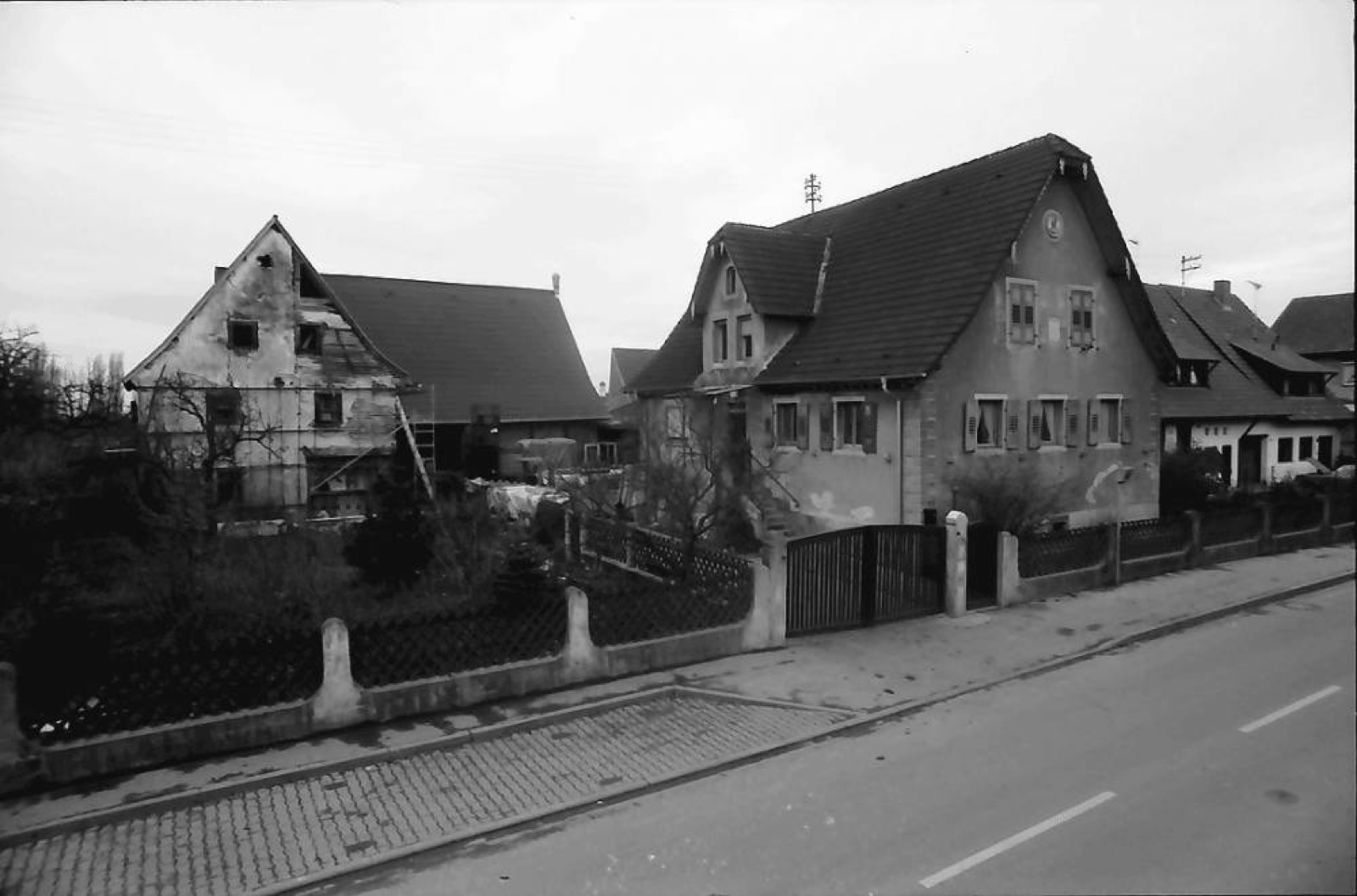
Ehrenstetten: Alter Hof
· State Archives of Baden-Württemberg (via Europeana)
CC BY
Ehrenstetten: Alter Hof
· State Archives of Baden-Württemberg (via Europeana)
CC BY
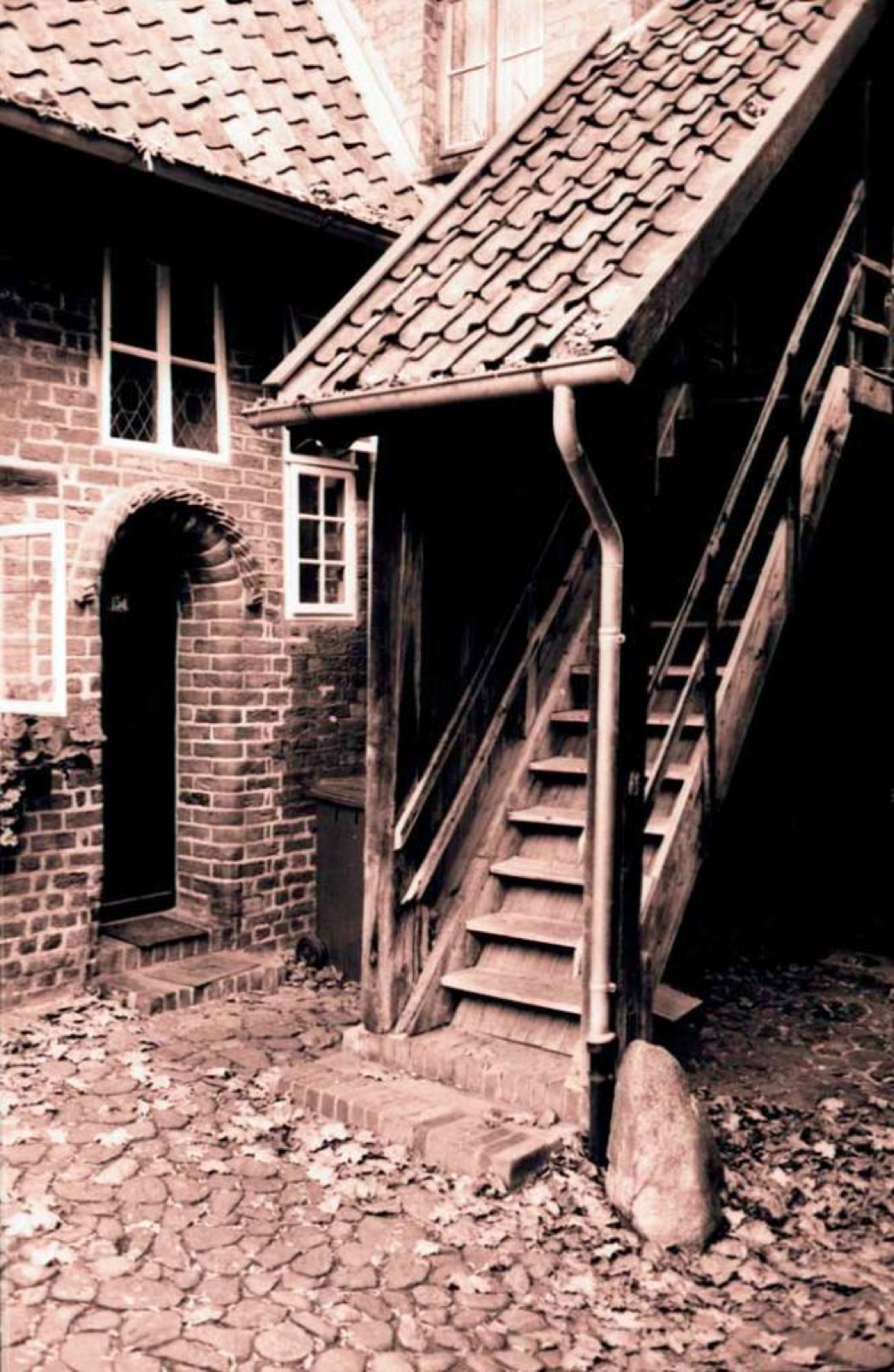
Lüneburg: Alter Hof
· State Archives of Baden-Württemberg (via Europeana)
CC BY
Nearby
Landmarks within reach of Alter Hof.


Questions about Alter Hof
What is the history of Alter Hof?
What is inside Alter Hof?
Why was Alter Hof built, and what was it used for?
Where is Alter Hof?
When was Alter Hof built?
Which family or clan held Alter Hof?
What did Alter Hof look like in its prime?
Is Alter Hof still standing or is it a ruin?
Can you visit Alter Hof?
More castles of Germany


Explore the city