Brontë
also Bronte
The howling moor, Haworth Parsonage in one breath.
- Origin
- Yorkshire & the Humber, England
- Famous bearer
- Charlotte Brontë (1816–1855)
- Register
- English family
Where the Brontë name comes from
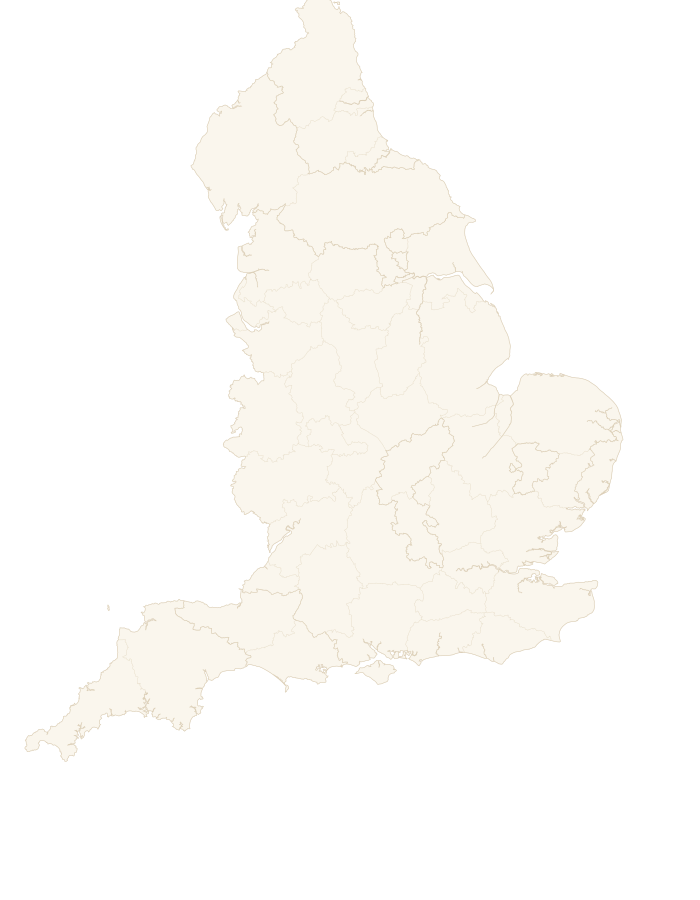
The seat of Brontë
Seat vacantChief
No one leads the Brontë community yet. When the movement opens, you can stand for its leadership, or help elect whoever does.
Current mission
No shared goal set yet. Once Brontë has leadership, it sets the public focus: a restoration, a gathering, a real-world project that helps its own.
The Brontë clan is being rebuilt. Join the waiting list for the movement today, and you help decide who leads it and what it does.
Help rebuild the Brontë clan →What does the Brontë name mean?
Hellenising literary spelling of Irish Prunty / Brunty, the father Patrick Brontë anglicised on Cambridge intake; the diaeresis was daughter Charlotte's Classicising flourish.
The history of Brontë
The scribes of Ó Pronntaigh, and a name respelled at Cambridge
The name is Irish before it is Yorkshire. It traces to Ó Pronntaigh, literally descendant of Pronntach, a family of hereditary scribes and literary men in Fermanagh. The root is pronntach or bronntach, related to bronnadh, meaning giving or bestowal, with pronn an Ulster form of bronn. Patrick Woulfe printed Ó Proinntigh instead, deriving it from proinnteach, a monastery refectory, and Edward MacLysaght repeated him, but the scribes who wrote in Irish through the seventeenth and eighteenth centuries all used Ó Pronntaigh. In English the name was written Prunty, and sometimes Brunty.
Patrick Brunty was born on 17 March 1777 at Loughbrickland in County Down, into a family of farm workers of moderate means. His mother, Alice McClory, was Roman Catholic and his father, Hugh, a Protestant, and Patrick was brought up in his father's faith. He read under the Reverend Thomas Tighe and won a scholarship to St John's College, Cambridge, where he studied divinity and ancient and modern history. It was there that the spelling changed, and the pronunciation with it: he went up as Brunty and came down as Brontë.
Nobody has settled why. Cambridge may simply have made the old spelling feel too Irish. As a man of letters he knew classical Greek, where bronte is thunder. Clement Shorter proposed in 1896 that he was attaching himself to Horatio Nelson, who held the title Duke of Bronte. His brother William may also have fallen foul of the authorities over the United Irishmen, which would have made distance from the name Brunty prudent. The diaeresis on the final e, marking the name as two syllables, settled later; Branwell used an acute accent instead in a long poem about Nelson. Ordained on 10 August 1806, Patrick carried the new spelling into the register of every parish he served.
A perpetual curate in an old chapelry of Bradford
In 1811 Patrick Brontë was appointed minister at Hartshead-cum-Clifton, and that year published Cottage Poems; The Rural Minstrel followed in 1814, with pamphlets and newspaper pieces. The father was a published author before any of his children were. In 1812 he married Maria Branwell, then twenty-nine, of Penzance in Cornwall. Maria was born at Clough House, Hightown, Liversedge, and Elizabeth after the move to Market Street, Thornton in 1815; then came Charlotte on 21 April 1816, Branwell on 26 June 1817, Emily on 30 July 1818 and Anne on 17 January 1820, all four in Market Street, Thornton.
In April 1820 the household crossed the moors to Haworth, where Patrick took the perpetual curacy of St Michael and All Angels. The odd title is parish law rather than modesty: Haworth was an ancient chapelry inside the very large parish of Bradford, so its clergyman could be neither rector nor vicar. The village was a weaving settlement above the Worth valley whose population climbed from barely a thousand to 3,365 in fifty years, with no sewage system, well water fouled by the hilltop cemetery, and a life expectancy under twenty-five. Wool was spun and woven in the cottages until the mills went up on the banks of the Worth. It had a pharmacy and John Greenwood's stationery shop, where the parsonage were the best customers: the paper for everything that follows came from there.
Maria died on 15 September 1821. Her sister Elizabeth Branwell came up from Penzance that year, aged forty-five, and never went back: she taught the children their letters, arithmetic, sewing and embroidery, and subscribed to Fraser's Magazine for them. The servant Tabitha Aykroyd, Tabby to the children, told them local legends in Yorkshire dialect while she cooked. Patrick bought the books and toys they asked for, gave them the run of his library and his newspapers, and expected them to follow politics. In 1824 the four eldest girls went to the Clergy Daughters' School at Cowan Bridge, a charity foundation for poorer clergy; Maria and Elizabeth fell gravely ill there and died in 1825, and their father withdrew Charlotte and Emily and taught them at home. Cowan Bridge became Lowood in Jane Eyre, and its headmaster, the Reverend Carus Wilson, became Mr Brocklehurst.
Twelve wooden soldiers, and books built to their scale
In June 1826 Patrick brought Branwell a box of twelve wooden soldiers from Leeds. Charlotte, then ten, wrote the scene down on 5 June: Branwell came to the door with the box, she and Emily jumped out of bed, and she snatched one up and declared it the Duke of Wellington and hers. Emily's was a grave-looking fellow they named Gravey; Anne's was a queer little thing much like herself; Branwell chose Buonaparte. The children called them the Young Men, or the Twelves.
The writing began in December 1827 with Glass Town, a set of islands off a fictionalised West Africa, one to each child, which grew into the Glass Town Confederacy and then, for Charlotte and Branwell, into the empire of Angria. From 1831 Emily and Anne withdrew to build Gondal, an island continent in the North Pacific ruled by a woman. Neither pair gave the game up on leaving childhood: Emily was still writing diary papers about Gondal in her twenties, and at twenty-eight she and Anne acted out scenes from the little books on the train to York.
The objects are as remarkable as the writing. The books were about an inch and a half by two and a half, roughly 38 by 64 millimetres, stitched with thread and filled with minute writing, often in capitals and without punctuation, with maps and plans of buildings: made at the scale at which the soldiers could read them. Branwell was the systematiser, documenting the geography, history and government of Glass Town and Angria in encyclopedic lists, footnotes and sketches. The juvenilia historian Christine Alexander noted the division of labour: when Branwell killed off an important character, Charlotte resurrected him for the next story, and when he tired of the magazine he was editing she took it over and kept it running for years.
It was fed by reading. Girls were not admitted to the village library, so Branwell borrowed books and shared them out. A Blackwood's Magazine article of June 1826 on central African exploration, and the map printed with it, gave the Glass Town tales the Mountains of the Moon and the river Niger; Byron reached the children through the same magazine in August 1825.
Roe Head, Law Hill and the years of paid work
In 1831, at fifteen, Charlotte was sent twenty miles to Roe Head at Mirfield, the school kept by Margaret Wooler. She made two friends there, Ellen Nussey and Mary Taylor, who corresponded with her for the rest of her life; both remembered her old-fashioned clothes and her Irish accent, inherited from her father. She came home in June 1832 to teach Emily and Anne, and returned to Roe Head as a teacher from 1835 to 1838. Emily went with her in July 1835, her fees partly covered by Charlotte's salary, lasted a few months, and was replaced by Anne, who stayed until Christmas 1837.
In December 1836, just before her twenty-first birthday, Charlotte sent poems to the Poet Laureate, Robert Southey, and told him her ambition was to be forever known. His answer was the verdict of the age: literature cannot be the business of a woman's life, and it ought not to be. She thanked him for the advice and told him plainly that she intended to go on writing. At the end of 1839 she wrote Farewell to Angria, closing the door on the imaginary world she had lived in since childhood.
Emily's only paid post was at Law Hill School near Halifax from September 1838, where a seventeen-hour working day exhausted her and she declared she preferred the company of the house dog to that of her pupils. She wrote poems there, and went home in April 1839 to run the household, teach herself German out of books and become an accomplished pianist on the instrument her father had bought in 1833 or 1834. Charlotte went out as a governess to the Sidgwicks at Stone Gappe in 1839 and to Mrs White at Rawdon in 1841, and disliked both places.
Anne took the work furthest. She went at nineteen, in April 1839, to the Ingham family at Blake Hall near Mirfield, a household of indulged small children she was not permitted to discipline; Blake Hall became the first schoolroom of Agnes Grey. From 1840 to 1845 she was governess at Thorp Green Hall near York to the children of the Reverend Edmund Robinson, and there she succeeded: the Robinson girls became lifelong friends and wrote to her long after she resigned. She went with the family each summer to Scarborough, collected semi-precious stones there and took up geology, which she later put into her novels as a pursuit equally suitable for men and women. All three struggled as governesses; Anne was the one who made a success of it.
The Pensionnat Heger in the Rue d'Isabelle
The plan behind Brussels was a business plan. The sisters meant to open a school of their own in the parsonage, where they already taught Sunday classes, and a school for young ladies had to offer modern languages, which meant going abroad to learn them properly. Paris and Lille were rejected: the Revolution and the Napoleonic wars were not forgotten in a Tory clerical household. A pastor in Brussels recommended Belgium, where German and music could be had as well as French, and Aunt Branwell found the money. In February 1842 Charlotte and Emily arrived with their father and enrolled for six months at the school in the Rue d'Isabelle kept by Claire Heger, whose husband Constantin taught the higher French classes.
Both were older than their fellow pupils, both were Protestants in an overwhelmingly Catholic school, and both were working in a language they did not yet have; within the term they were writing literary and philosophical essays in advanced French. Emily learned German and the piano, and refused to change her dress for Belgian fashion, answering the other students' jokes by saying she wished to be as God made her. Heger thought her the more powerful mind of the two, and told Mrs Gaskell years afterwards that she should have been a man and a great navigator, with a head for logic and an imperious will that no opposition would have daunted. She made one friend there, a sixteen-year-old Belgian student, Louise de Bassompierre, and gave her a signed drawing of a storm-ravaged pine.
Madame Heger offered them a further stay without charge in exchange for lessons, English from Charlotte and music from Emily. The death of Aunt Branwell in October 1842 brought them home, and Heger wrote to Patrick asking for them back. Emily stayed at Haworth to keep the house; Charlotte returned to Brussels alone in January 1843 and taught there for about a year. The Rue d'Isabelle came back as Villette in 1853, whose Lucy Snowe teaches in a foreign boarding school and falls in love with a man she cannot marry, and it shaped The Professor before it. In 1980 a plaque went up at the Centre for Fine Arts in Brussels, on the site of Madame Heger's school, in honour of the two sisters.
Currer, Ellis and Acton Bell
In February 1844 Emily went through everything she had written and copied it into two notebooks, one labelled Gondal Poems. In the autumn of 1845 Charlotte found one lying open in the drawer of Emily's writing desk and recognised the hand. What she read stopped her: not common effusions, she wrote later, and not at all like the poetry women generally write, but condensed and terse, with a peculiar music that was wild, melancholy and elevating. Emily was furious at the invasion of her privacy and took days to be talked round, relenting, by Charlotte's account, when Anne produced poems she had also been writing in secret.
Aunt Branwell had left each niece just under three hundred pounds, and that legacy paid the printer. Aylott and Jones of 8 Paternoster Row agreed to publish at the authors' risk, and Poems by Currer, Ellis, and Acton Bell appeared in May 1846: nineteen poems by Charlotte, twenty-one each by Emily and Anne. It cost thirty-one pounds and ten shillings, about three-quarters of a year of Anne's salary at Thorp Green. The Critic and the Athenaeum reviewed it favourably and two copies sold in the first year. One went to Fredrick Enoch of Warwick, who wrote to the publisher asking for the authors' autographs; the sheet he was sent is the only surviving document signed by all three sisters in their pen names.
The pseudonyms kept their initials and concealed their sex, and Charlotte later set out the reasoning exactly. They veiled their own names, she wrote, out of a scruple against assuming Christian names positively masculine, while not liking to declare themselves women, because authoresses were liable to be looked on with prejudice: they had noticed how critics use personality as a weapon of chastisement, and flattery as a reward that is not true praise. The surname may have come from Arthur Bell Nicholls, who took up his duties as curate at Haworth on 18 May 1845. Anne went on placing verse as Acton Bell: Fraser's Magazine printed The Three Guides in August 1848 and The Narrow Way that December.
Three novels in a single year
By July 1846 a parcel was going round the London publishers containing a first novel by each sister: Charlotte's The Professor, Emily's Wuthering Heights and Anne's Agnes Grey, offered as three tales, each occupying a volume. It came back to the parsonage so often that Charlotte simply wrote a new address on the same wrapping, at least a dozen times in the year. Thomas Cautley Newby of Cavendish Square took Emily's and Anne's on hard terms, the authors paying fifty pounds towards costs, and then sat on them. The Professor found nobody.
In August 1846 Charlotte was in Manchester at her father's bedside, where his cataract had been operated on successfully, and it was there that she began Jane Eyre. Smith, Elder and Co of Cornhill, run by the twenty-three-year-old George Smith on the advice of his reader William Smith Williams, took it at once and published in October 1847 as the work of Currer Bell. It sold out the first edition in twelve weeks and ran through three editions in the first year. G. H. Lewes called it an utterance from the depths of a struggling, suffering, much-enduring spirit. A first-person narrative by a plain, poor governess who insists on her own worth had not been done, and the English novel did not go back.
Newby, seeing what the Bell name was now worth, brought out Wuthering Heights in December 1847 as the first two volumes of a three-decker whose third volume was Agnes Grey. Emily was twenty-nine, and it was the only novel she wrote. Its two houses, the dignified Thrushcross Grange and the rambling Wuthering Heights, its doubled narration through the tenant Lockwood and the housekeeper Nelly Dean, and its refusal to soften anybody left reviewers at a loss: the Examiner called it wild, confused, disjointed and improbable in 1848, and much of the press assumed a man had written it. Sales were considerable all the same, and Wuthering Heights is now called, in Sutherland's Longman Companion to Victorian Fiction, the twentieth century's favourite nineteenth-century novel. Agnes Grey went out in the same set and was overshadowed by it, though it is the clearest account anyone left of the sisters' working years: Blake Hall's schoolroom, and Thorp Green, which appears in it as Horton Lodge.
The Tenant of Wildfell Hall, and the walk into Cornhill
Anne's second novel appeared in 1848 and rapidly outsold Wuthering Heights. Helen Graham leaves her marriage to protect her son from his father's influence, goes into hiding at Wildfell Hall, and keeps herself and the boy by painting. Every part of that was against the law. Until the Married Women's Property Act of 1870 a married woman had no legal existence separate from her husband: she could own no property and control no custody, he could reclaim her and charge her with kidnapping, and the income she earned was legally his, so that in supporting herself Helen is stealing from him. What the reviewers objected to was not the situation but the author's plain invitation to sympathise with her.
Anne answered them in a preface to the second edition in August 1848, the most direct statement of purpose any of the three left. When we have to do with vice and vicious characters, she wrote, it is better to depict them as they really are than as they would wish to appear: she wished to tell the truth. She then dismissed the business of guessing at an author's sex: if a book is a good one, it is so whatever the sex of the author may be, and she was at a loss to conceive why a woman should be censured for writing what would be proper and becoming for a man. May Sinclair wrote in 1913 that the slamming of Helen Huntingdon's bedroom door against her husband reverberated throughout Victorian England. The book is now counted among the first sustained feminist novels in English.
The pseudonyms broke in July 1848. Newby had put it about that all the Bell novels were the work of one hand, to sell Wuthering Heights on the reputation of Jane Eyre, and Charlotte and Anne took the train to London to disprove it in person. Emily refused to go. They walked into Smith, Elder and Co at Cornhill and handed George Smith the letters addressed to Messrs Currer, Ellis and Acton Bell as proof of who they were; he took them to the opera for Rossini's Barber of Seville. In 1850, in a preface for the combined reissue of Wuthering Heights and Agnes Grey, Charlotte put the three real names into print.
Charlotte's later books came out under the Bell name that was now famous: Shirley in October 1849, on industrial unrest and the position of women, and Villette in 1853. London took her up, and she met Thackeray, Harriet Martineau and G. H. Lewes, but she never left Haworth for more than a few weeks at a time. Thackeray's portrait, a gift from her publisher, still hangs in the parsonage dining room.
Northangerland in the Halifax Guardian, and the portrait with the pillar
Patrick Branwell Brontë, born 26 June 1817, was the only son, and the only one of the four educated entirely at home, by his father and then by tutors. He was given a classical education and earned praise for his poetry and his translations from the classics. Patrick engaged John Bradley of Keighley as drawing master in 1829 and 1830, and Branwell afterwards studied under the portrait painter William Robinson. In 1834 he painted his three sisters on a single canvas, the only portrait of Charlotte, Emily and Anne together that exists; dissatisfied with his own figure, he painted himself out and put a pillar in his place. It hangs in the National Portrait Gallery and is the image by which the world knows their faces.
Inside the invented countries he was the archivist and the engine. He wrote under names drawn from the fiction itself, began Branwell's Blackwood's Magazine in January 1829 when he was eleven, and kept the politics of Glass Town and Angria consistent through fifteen years of collaborative writing. His own hero, Alexander Percy, Earl of Northangerland, was the rival of Charlotte's Duke of Zamorna, and his tale of Percy's all-consuming, death-defying love is thought by some to lie behind Wuthering Heights. He worked as a portrait painter in Bradford in 1838 and 1839, and joined Haworth's Masonic Lodge of the Three Graces in February 1836 at the youngest age it allowed.
Tutoring near Broughton-in-Furness in 1840 put him within reach of the Lake District writers, and he sent poems and translations to Thomas De Quincey and Hartley Coleridge. Coleridge invited him to his cottage and encouraged him to go on with his versions of the Odes of Horace, which Branwell sent him in June 1840. From October 1840 he moved in the artistic circles around Halifax and became a friend of the sculptor Joseph Bentley Leyland, while working for the Manchester and Leeds Railway, from 1 April 1841 as clerk in charge at Luddendenfoot. It was in Halifax that he got into print first: the Halifax Guardian published his poems under the name of his Angrian hero, Northangerland, which made Branwell the first of the four Brontë children to be published.
Haworth as a place of pilgrimage
Charlotte married Arthur Bell Nicholls, her father's curate, on 29 June 1854, and Margaret Wooler, her old teacher at Roe Head, gave her away. Nicholls was an Ulsterman from County Antrim, educated in County Offaly, and the wedding journey took Charlotte to Banagher, where she met his aunt and cousins: the granddaughter of a County Down farmer, brought back to the country her father had left for Cambridge. By every account the marriage suited her and she was happy in it in a way that was new to her. She died on 31 March 1855. The Professor, the novel nobody had wanted in 1846, was published in 1857.
Patrick outlived all six of his children. It was he who asked Elizabeth Gaskell, Charlotte's friend and a novelist in her own right, to write the life; The Life of Charlotte Brontë appeared in 1857, caused a national sensation and made the parsonage a destination. Nicholls found himself shielding the old man from crowds on the short path to the church, where people reached out to touch his cape, and Patrick, when he agreed to meet them, received them with courtesy and told them about his daughters. He died at Haworth on 7 June 1861, aged eighty-four. The hundreds became thousands, from all over Britain and from across the Atlantic, and the flow has never stopped: an estimated 88,000 visitors came in 2017.
Virginia Woolf made the journey in 1904 and wrote it up in The Guardian on 21 December, struck that the household's ordinary utensils and clothes had outlived their owners: Haworth expresses the Brontës, she wrote, the Brontës express Haworth, they fit like a snail to its shell. The Brontë Society, which keeps the Parsonage Museum, has branches from Ireland and France to South Africa, Australia and the United States. In 2018 four commissioned poems were cut into stone between the birthplace and the parsonage, by Carol Ann Duffy, Jackie Kay, Kate Bush and Jeanette Winterson.
The books outran everything. No English edition of Jane Eyre, Wuthering Heights or The Tenant of Wildfell Hall has gone out of print since the year it first appeared, and all three are read in translation across the major languages; Wuthering Heights topped a Guardian poll of the nation's favourite love stories in 2007. Anne took longest to come back, because Charlotte, as her sister's executor, judged the subject of The Tenant a mistake and blocked its reprint. The verdict did not hold: Sally McDonald of the Brontë Society observed in 2013 that Anne is now viewed as in some ways the most radical of the three, for writing about a woman's need to keep her independence. A plaque to the sisters was set in Poets' Corner in Westminster Abbey on 8 October 1939, unveiled formally in 1947 once the war allowed it, and corrected in 2024 when somebody noticed the missing diaeresis. Patrick's own line ended with his children, though his brother's descendants carried the name forward as a given one, in James Brontë Gatenby, who worked on Golgi bodies, and in Peter Gatenby, formerly medical director of the United Nations. A town in Texas is called Bronte after Charlotte, and the parsonage above the Worth is one of the most visited literary houses anywhere.
Champions of the Brontë name
The bearers whose lives are inseparable from this surname. Each has their own page, biography, achievements, geography, connection to the family.
The castles of the homeland
The great strongholds of the homeland, look one up, see what it looked like in its prime, and recreate it to explore.
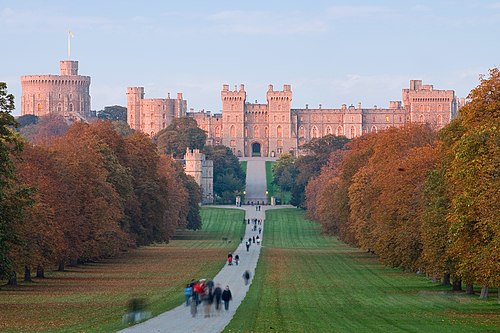 Windsor CastleRestored · prime 1820
 Tower of LondonRestored · prime 1285
 Bamburgh CastleRestored · prime 1904
All castles in England → · Strongest castles in England → · Castles of Europe
Play As Your Clan
Hold a real castle against whatever you choose to send at it, take a ship out in her own service years, or stand at the shoulder of someone the record remembers. The chronicler sets the scene; the deeds are yours.
Notable bearers of the Brontë name
- Charlotte Brontë (1816–1855)
- Emily Brontë (1818–1848)
- Anne Brontë (1820–1849)
Stories of Brontë
Emily and Wuthering Heights
1846In the autumn of 1845, in the dining-room of the parsonage at Haworth, Charlotte Brontë opened her sister Emily's writing-desk in Emily's absence and read the manuscript pages of poems Emily had been keeping for nine years. The discovery led to the joint volume Poems by Currer, Ellis and Acton Bell under the three deliberately ungendered pseudonyms; it sold two copies. By the autumn of 1846 Emily was halfway through Wuthering Heights, the only novel she ever wrote. It was published by Thomas Cautley Newby in December 1847 under the name Ellis Bell, was thought by reviewers to be the work of a violent man, and is now usually reckoned the most extraordinary single novel of nineteenth-century English fiction. Emily was twenty-nine. She had eight months to live when the book came out. She refused to go down to Halifax to consult a doctor. She died of consumption on the nineteenth of December 1848 at the parsonage, in the dining-room where she had written most of the book.
Read the story →
Charlotte alone at Haworth
1849Branwell Brontë died at the parsonage on the twenty-fourth of September 1848. Emily died on the nineteenth of December 1848. Anne died on the twenty-eighth of May 1849 at Scarborough on a sea-trip Charlotte had taken her on in the hope of saving her. By June 1849 Charlotte was the only one of the four Brontë children left in the parsonage, with the father, the elderly servant Tabby, and a curate she would later marry. She sat down at the dining-room table where she and her sisters had walked round and round in the evenings reading their work to each other, and tried to begin Shirley. The novel, which she had started before the deaths, was the first piece of writing she had to finish in a room where no other Brontë would ever read a sentence of it again. She finished it. She finished Villette after it. She married Arthur Bell Nicholls in 1854 and died in childbed in March 1855, the last of them, aged thirty-eight.
Read the story →