Burnham
The homestead by the stream.
- Origin
- East of England, England
- Famous bearer
- Andy Burnham (b. 1970), Mayor of Greater Manchester
- Register
- English family
The Burnham arms and country

Coat of armsArms of the Barons BurnhamBorne by Barons Burnham: the ennobled line of the name, not the name at large.Charles Matthews · CC BY-SA 4.0

- Coat of arms: Granted to an individual and inherited down that one documented line. These are the arms of particular families of the name, not of everyone who shares the surname.
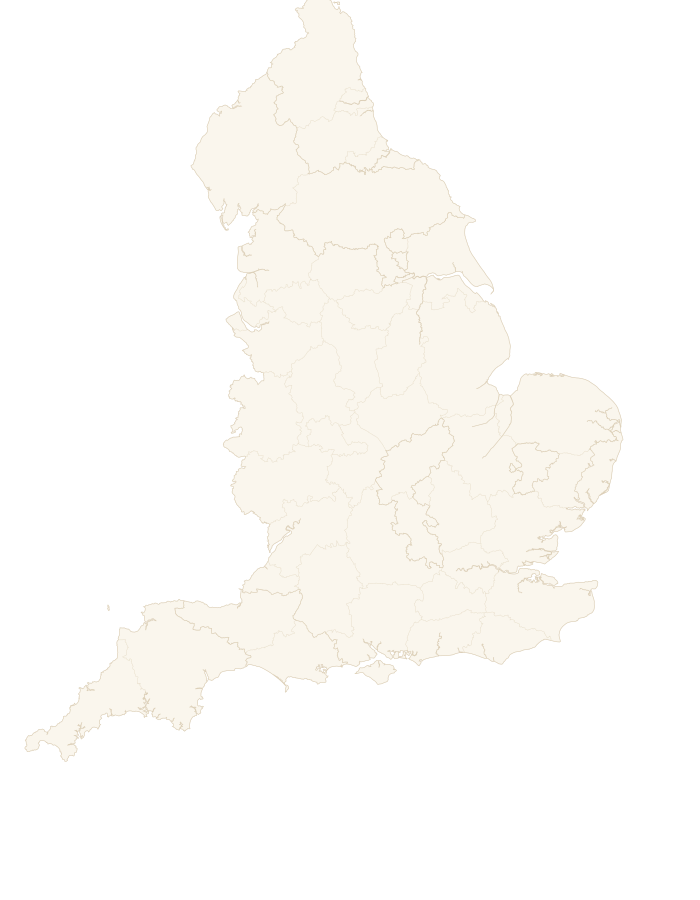
CoreHistoric reach
The seat of Burnham
Seat vacantChief
No one leads the Burnham community yet. When the movement opens, you can stand for its leadership, or help elect whoever does.
Current mission
No shared goal set yet. Once Burnham has leadership, it sets the public focus: a restoration, a gathering, a real-world project that helps its own.
The Burnham clan is being rebuilt. Join the waiting list for the movement today, and you help decide who leads it and what it does.
Help rebuild the Burnham clan →What does the Burnham name mean?
Locational, from Old English burna, a stream, and ham, a homestead or estate, so 'the homestead by the stream'. England carries a cluster of Burnham place-names, the Burnhams of north Norfolk (among them Burnham Thorpe, Nelson's birthplace), Burnham-on-Sea in Somerset, Burnham-on-Crouch in Essex and Burnham in Buckinghamshire, and the surname is the family that came out of one of them.
The history of Burnham
The homestead by the stream, and the villages that repeat it
Burnham is two Old English words doing plain work: burna, a stream, and ham, a homestead or estate. The homestead by the stream. It names the one thing a farming settlement had to have before it had anything else, which is why England did not produce a single Burnham but a scattering of them. There are the Burnhams of north Norfolk, Burnham-on-Sea in Somerset, Burnham-on-Crouch in Essex, and Burnham in Buckinghamshire, each named by people who had never heard of the others and had no need to.
That matters more than it sounds. The surname is not one family that spread; it is several unrelated households, in different counties, each of which took the name of its own parish on leaving it. Anyone following the name back is following it to a village rather than to a single ancestor, and the honest version of the story says so at the start: two Burnhams meeting by chance were far likelier to share a landscape word than a great-grandfather.
A name you only needed once you had left
Nobody who lived in Burnham was called Burnham. A place-name becomes a person's name only when he is somewhere else, said by neighbours who need to tell him from the other John: he is the one from Burnham. Across medieval Europe the traffic ran out of small communities and into the towns, and it was the new arrival, not the man who stayed, who needed a defining second name. Locational surnames are a record of movement, and every Burnham on a modern census descends from somebody who walked out of one.
The machinery has dates attached. Surnames are documented among the barons of England in the 11th century, and their general introduction is usually credited to the preparation of the Domesday Book in 1086; Christopher Daniell puts the first recorded modern surname, inherited by multiple generations, at 1140. Norman incomers marked themselves with de before the name of a village or estate in France, the territorial surname that feudal landholding produced. The habit started with the nobility and gentry and worked slowly downwards, and by 1400 most English families, and those of Lowland Scotland, carried hereditary surnames.
It was not always welcomed. In late medieval England mandatory surnames were resisted, because people associated them with tax. Nor were the words themselves stable: the Old English element tun could mean an enclosure, a farmstead, a village, a manor or an estate, depending on the name it sat in and the century it was written down. Burnham's first element is the fixed point in all of this. A burna is a stream, and it meant a stream in every parish that used it.
An English word that outlived the English earls
The conquest that gave England the surname habit took almost everything else away from the English. William confiscated the estates of the lords who had fallen with Harold and went on confiscating through five years of revolt; the Domesday survey of 1086 records that by then only about five per cent of the land south of the Tees was left in English hands. After 1075 every earldom was held by a Norman. The language of government moved from Old English to Latin, and the language of the hall to Anglo-Norman.
One thing the Normans did not overturn was the map. The invasion had little effect on English place-names, so when the new fashion for naming a man after his ground reached the villages, the words it fastened on were the old ones. Burnham is that survival in miniature: a Norman habit of naming, attached to an Anglo-Saxon stream and an Anglo-Saxon farmstead, and carried thereafter by families who were neither barons nor Frenchmen.
North Norfolk, and the parish that produced Nelson
The deepest cluster is in north Norfolk, where a group of neighbouring villages all carry the name. Among them is Burnham Thorpe, the parish where Horatio Nelson was born. A cluster like that changes how the surname behaves: 'of Burnham' pointed at a district rather than at one house, so several unconnected households could leave those villages inside a generation and be labelled identically by wherever they landed.
A peerage borrowed from a Buckinghamshire village
The other deep cluster is Buckinghamshire, and its Burnham did something the others did not: it supplied a peerage. The Levy-Lawson family, the press proprietors behind the Daily Telegraph, were created Baron Burnham, and the title came off the Buckinghamshire seat rather than out of the family's own surname. The barons of Burnham, in other words, were not Burnhams.
That is worth saying plainly, because it shows exactly how a locational name works. A village is not the property of the people who leave it. The same stream-and-homestead name could become a farming family's surname in one century and a newspaper dynasty's title in another, by two routes that never touched each other. The surname's older weight runs the same direction as everyone else's, out of the villages and into Suffolk and London, which is where a name acquired by leaving tends to end up.
Make no little plans
The name's largest mark on a city is American. Daniel Burnham (1846–1912) was an architect and planner in Chicago, and in 1893 he was director of works for the World's Columbian Exposition, the post that carried responsibility for getting the whole thing built.
He is also the author of the Plan of Chicago, and the words most often quoted alongside his name are his own: 'Make no little plans.' It is a fitting line for a surname that started as a description of a stream and a few houses beside it, and it is why Burnham carries into American civic history as well as sitting on four English village signs.
Where the name stands now
The rest of the English map keeps the name at the water. Burnham-on-Sea sits on the Somerset coast, Burnham-on-Crouch on the Essex river that completes its name, and the modern surname is still strongest across Norfolk, Essex, Somerset and Buckinghamshire, with older weight in Suffolk, London and Greater Manchester. Andy Burnham (b. 1970), Mayor of Greater Manchester, is the most widely recognised British bearer today.
A four-year study led by the University of the West of England, which concluded in 2016 and published its findings in the Oxford English Dictionary of Family Names in Britain and Ireland, worked through 45,602 surnames and found that more than nine in ten of them are native to Britain and Ireland. Burnham sits squarely in that majority, and it is about as native as an English name gets.
There is no chief and no charter at the end of this name, and there was never meant to be. What there is instead is a word two ordinary people used for water and shelter, fixed to a handful of parishes, and then carried away by everybody who left them: into Suffolk and London, and across the Atlantic to the Chicago planner who wrote 'Make no little plans.'
Historic Places, Rebuilt
Explore the streets and seats the Burnham name knew, rebuilt with AI as they stood in history.
The castles of the homeland
The great strongholds of the homeland, look one up, see what it looked like in its prime, and recreate it to explore.
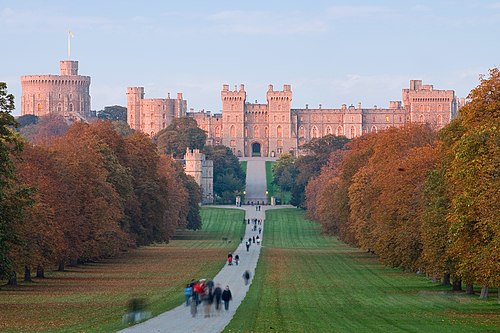 Windsor CastleRestored · prime 1820
 Tower of LondonRestored · prime 1285
 Bamburgh CastleRestored · prime 1904
All castles in England → · Strongest castles in England → · Castles of Europe
Play As Your Clan
Hold a real castle against whatever you choose to send at it, take a ship out in her own service years, or stand at the shoulder of someone the record remembers. The chronicler sets the scene; the deeds are yours.
Notable bearers of the Burnham name
- Andy Burnham (b. 1970), Mayor of Greater Manchester
- Daniel Burnham (1846–1912), American architect and planner