Bush
American political dynasty, four generations of senators, governors and presidents.
- Origin
- East of England, England
- Famous bearer
- Prescott Bush (1895-1972), US Senator for Connecticut
- Register
- English family
Ranked of all time
The 15 Most Powerful English Houses of All Time
Where the Bush name comes from
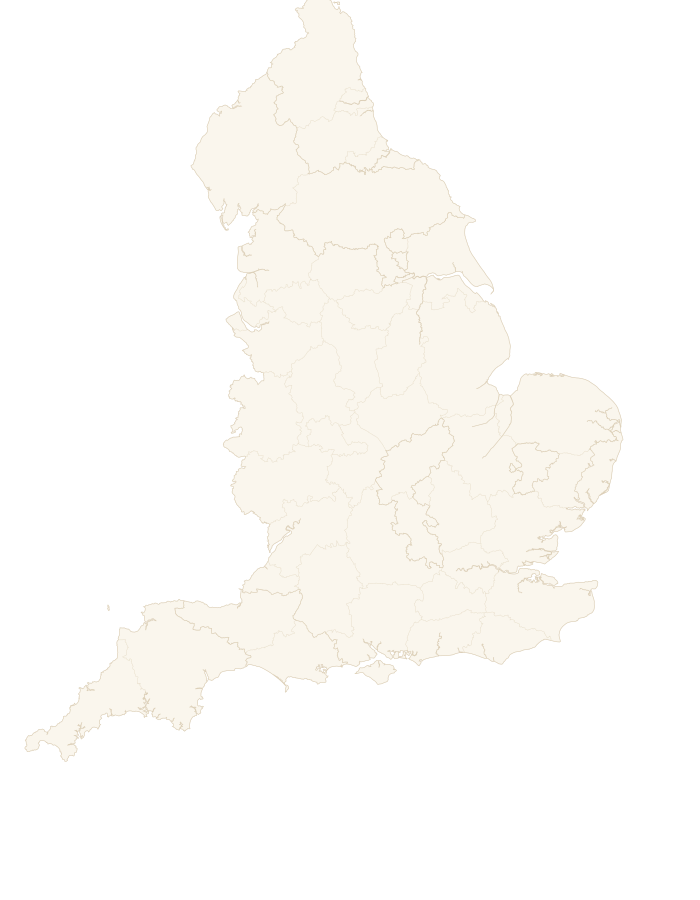
The seat of Bush
Seat vacantChief
No one leads the Bush community yet. When the movement opens, you can stand for its leadership, or help elect whoever does.
Current mission
No shared goal set yet. Once Bush has leadership, it sets the public focus: a restoration, a gathering, a real-world project that helps its own.
The Bush clan is being rebuilt. Join the waiting list for the movement today, and you help decide who leads it and what it does.
Help rebuild the Bush clan →What does the Bush name mean?
From the Old English 'busc', a thicket or shrubbery, originally a topographic surname for someone who lived by a prominent bush or thicket. The American political family descends from English Protestant colonial settlers in 17th-century New England; family tradition places the immigrant ancestor in Essex before the migration. The Bush family produced two US Presidents (the 41st and 43rd) across four generations of senators, governors, ambassadors and federal officeholders.
The history of Bush
The thicket a whole parish could point at
Bush is a description of ground rather than of a trade or a father. It derives from the Old English busc or the Old Norse buskr, two words from two language layers meaning the same thing, a bush or a shrub, and it fastened onto whoever lived at the bushy place: the scrub along a field edge, the thicket standing on a boundary, the single landmark a parish could point at in an age before anyone in it owned a map. Names of that kind sit in the class the onomasts call topographic, alongside Hill and Green, and they are the plainest surnames in the English record. They say only where a man stood.
The word never stopped being an ordinary word, which is why it also stands alone as a settlement name: Bush is still a hamlet in Cornwall. And because two separate languages delivered the identical form, the spelling was slow to settle. Bushe, Bysh and Bysshe run beside Bush in the record, with Boush and Boushe, Bussche, Busch and Buscher, and the Continental cognate Bosch. The family's recorded seat is in Yorkshire, in the north of England.
The distinction between a topographic name and a habitation name matters for how a surname spreads. A habitation name carries a settlement with it, and the Old English elements inside such names shift with period and place: tun alone can mean enclosure in one name and farmstead, village, manor or estate in others. A topographic name needs no settlement at all, only a feature and a man living beside it, so it can arise independently in a dozen parishes at once with no kinship whatever between the families that take it. That is why Bush is widespread, and why its separate lines are so hard to join to one another.
The four centuries in which a byname hardened into a name
England did not decree its surnames; it accumulated them. The introduction of family names is generally attributed to the preparation of the Domesday Book, completed by 1086 after the Norman Conquest, and the earliest recorded use of a modern surname inherited by more than one generation is placed at about 1140. The habit began at the top. Feudal nobility and gentry took fixed names first, some of the Norman arrivals marking themselves with de before the name of a French village or estate, a territorial surname that was a direct consequence of feudal landholding. Everyone below them followed slowly. By 1400 most English families, and those of Lowland Scotland, used hereditary surnames; Wales came to the practice after the union under Henry VIII in 1536.
A descriptive byname such as Bush belonged to the last cohort to be fixed, and fixing was not always welcome. Governments enacted laws requiring people to take a surname, the purpose being to identify subjects uniquely for taxation or for inheritance. In late medieval England mandatory surnames were resisted, for the plain reason that a name which stuck to a family was the instrument by which that family could be taxed. The pressure ran the other way too: as medieval Europeans moved from small communities into towns, a newcomer needed a defining name on arrival, and the feature he had lived beside at home was the readiest one to hand.
The scale of that inheritance was measured in a four-year study led by the University of the West of England, concluded in 2016, which worked through sources from the eleventh century to the nineteenth and covered 45,602 surnames, more than nine in ten of them native to Britain and Ireland. Its leader, Richard Coates, set the occupational names, Smith and Baker, beside the names of place, Hill and Green: two different answers to the same question of how to tell one John from the next.
There is a turn in the story worth naming. The Normans who set England naming itself were Norsemen to begin with. In 911 the Carolingian ruler Charles the Simple granted a band of Vikings under Rollo the land that became Normandy, by the Treaty of Saint-Clair-sur-Epte, in exchange for holding the coast against further raiders; their descendants took up the Old French of their new home and added features from their own Old Norse to it. In 1066 those descendants crossed. William granted lands to his followers, raised castles commanding the military strong points, installed a French-speaking elite in court and church, and had the Great Survey written up by 1086. The class that pushed England into hereditary naming came from the same language stock that supplies the buskr half of Bush.
Four generations, three Johns, one Essex parish
The oldest documented line of the name runs for four generations, from 1510 to 1670, and ends in Essex. John Bush the elder was born in 1510 and lived until 1590. His son John Bush the younger, born in 1535, died in 1595. Reynold Bush, born in 1566, was dead by 1602 while still in his thirties. Reynold's son, the third John Bush, was born at Messing in Essex in 1593 and died in 1670, and he is the last of the line to be recorded on English soil.
The repetition of the given name is not a shortage of imagination; it is the period speaking. Of the boys born in London in 1510, the year the eldest of these Bushes was born, 24.4 per cent were christened John, 13.3 per cent Thomas and 11.7 per cent William. Three names covered close to half the male population, and that concentration held across the whole early modern period. A clerk entering John Bush in a parish register was pairing the commonest given name in England with a byname taken from the commonest feature of an English field edge.
That is precisely why the second half of the entry had to become hereditary to be worth writing down at all. The distinctiveness that names now carry came very late: by 1900 the top three given names accounted for only 22.9 per cent of newborn boys in the United Kingdom, and by 1994 for 11 per cent. For the Bushes of Messing, the surname was doing nearly all the work of identification.
Samuel Bush, born in the colonies in 1647
John Bush of Messing did not die until 1670, but the family's centre of gravity had crossed the Atlantic long before that. Samuel Bush, born in 1647 and living until 1733, was the first of the name born in America, and it is through him that the family's European origin is traced to the seventeenth century. The next generation is Richard Bush, born about 1676 and dead in 1742 at Bristol in Plymouth Colony.
The line then thins in the record at exactly the point where a genealogist most wants it firm. Timothy Bush, born in 1728 and dying at Springport in New York in 1815, may have been Richard's son; the connection is not certain, and the family's own tables say as much rather than papering over it. What is not in doubt is the direction of travel, out of the old Plymouth Colony and into New York State across three generations.
English descent is the main strand but not the only one. The family is of primarily English and German descent, and a further European line is claimed as well: the Swedish Colonial Society traces the family back ten generations to Måns Andersson, a Swedish farmer who left Gothenburg for the colony of New Sweden on the Delaware.
The blacksmith at Penfield and the son who went prospecting
Timothy Bush junior was born in 1761 and died at Penfield in New York in 1850. He was a blacksmith, and his is the one trade the line's own record names outright. It puts the family squarely in the working economy of upstate New York for the first half of the nineteenth century, at the forge every settlement needed before it needed anything else.
His son Obadiah Newcomb Bush, born on 28 January 1797 and dead on 9 February 1851, took the opposite kind of living: he was a prospector and a businessman, a man of the speculative frontier rather than the fixed anvil. Obadiah's own son went in a third direction again. James Smith Bush, born in 1825 and dying in 1889, trained as an attorney and then took orders as an Episcopal priest, serving in New Jersey, in California and in New York.
Iron, the frontier and the church, three livelihoods in three consecutive generations of one household, is about as clean a picture of nineteenth-century American mobility as a single surname is likely to give.
The Swedenborgian minister who wrote a life of Muhammad
Not every Bush in the American record sits on the main descent. George Bush, born in 1796 and dead in 1859, appears in the family's ancestor tables beside a John Bush born in 1761, one branch across from the direct line. He was a biblical scholar and a Swedenborgian minister, and the author of a Life of Mohammed, a subject few American clergymen of his generation went anywhere near.
Around him stand bearers of the name who reached the record by other routes entirely. Sarah Bush, born in 1788 and dead in 1869, is remembered as Sarah Bush Lincoln, stepmother of Abraham Lincoln. Norton Bush (1834 to 1894) was an American landscape painter. Irving T. Bush (1869 to 1948) was an American businessman. Marian Spore Bush (1878 to 1946) worked both as a dentist and as an artist, a combination unusual enough in her lifetime to be worth the record keeping it.
Vannevar Bush, and the name in twentieth-century America
Vannevar Bush, born in 1890 and dead in 1974, was an engineer and inventor who headed the Office of Scientific Research and Development and was involved with the Manhattan Project during the Second World War. His elder sister Edith Bush, born in 1882 and living until 1977, was a mathematician. They are the one pair of siblings the surname's own record names together, each of them entered in it for work done in their own right.
The twentieth-century American bearers spread wide from there. Donie Bush (1887 to 1972) was a baseball player and manager of the early twentieth century, and Guy Terrell Bush (1901 to 1985) was another baseball player. Guy Louis Bush (1929 to 2023) was an evolutionary biologist. Lesley Bush, born in 1947, was an Olympic diver. Lynn J. Bush, born in 1948, sat as a judge of the United States Court of Federal Claims.
Composers, a Welsh fly-half and a constable's George Medal
In Britain the name runs unusually musical. Alan Bush, born in 1900 and dying in 1995, was an English classical composer and pianist whose working life covered nearly the whole of the twentieth century. Geoffrey Bush (1920 to 1998) was likewise an English composer. Kate Bush, born in 1958, is an English musician. In letters, Duncan Bush (1946 to 2017) was a Welsh poet, novelist and dramatist.
The sporting Bushes are Welsh and English in equal measure. Percy Bush, born in 1879 and dead in 1955, played rugby union for Wales. Bryan Bush (1925 to 2008) was an English footballer.
Two of the name earned decorations of very different kinds. Lieutenant James Bush MC, born in 1891 and dead in 1917, was a flying ace of the First World War. Ethel Bush, born in 1916 and living until 2016, was a British police officer awarded the George Medal. Sydney Bush (1929 to 2018) was a British optometrist.
The same pattern of the name in the arts repeats on the other side of the Atlantic. Sam Bush, born in 1952, is an American musician, and Stan Bush, born in 1953, an American singer. Mary Bucci Bush, born in 1949, is an American novelist, and Sophia Bush, born in 1982, an American actress. Wesley G. Bush, born about 1961, is an American business executive, and Tamara Bush an American biomechanical engineer. Four centuries after a clerk at Messing wrote the name into a parish book, it is doing duty in more trades than the Essex Bushes had names for.
Champions of the Bush name
The bearers whose lives are inseparable from this surname. Each has their own page, biography, achievements, geography, connection to the family.
The castles of the homeland
The great strongholds of the homeland, look one up, see what it looked like in its prime, and recreate it to explore.
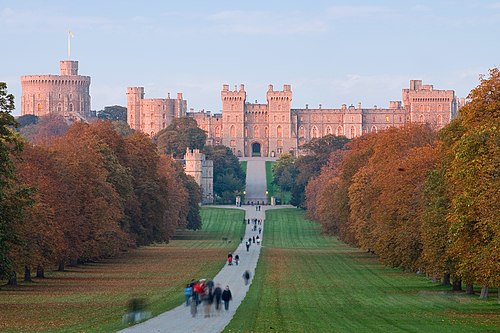 Windsor CastleRestored · prime 1820
 Tower of LondonRestored · prime 1285
 Bamburgh CastleRestored · prime 1904
All castles in England → · Strongest castles in England → · Castles of Europe
Play As Your Clan
Hold a real castle against whatever you choose to send at it, take a ship out in her own service years, or stand at the shoulder of someone the record remembers. The chronicler sets the scene; the deeds are yours.
Notable bearers of the Bush name
- Prescott Bush (1895-1972), US Senator for Connecticut
- George H. W. Bush (1924-2018), 41st President of the United States
- George W. Bush (b.1946), 43rd President of the United States
- Jeb Bush (b.1953), Governor of Florida 1999-2007