Chapman
The merchant, fair and street.
- Origin
- North East, England
- Register
- English family
The Chapman arms and country

Coat of armsChapman (of Resprin, Cornwall) armsBorne by the Resprin line, one branch of the name rather than all of it.Lobsterthermidor · CC BY-SA 3.0
_arms.png)
- Coat of arms: Granted to an individual and inherited down that one documented line. These are the arms of particular families of the name, not of everyone who shares the surname.
CoreHistoric reach
The seat of Chapman
Seat vacantChief
No one leads the Chapman community yet. When the movement opens, you can stand for its leadership, or help elect whoever does.
Current mission
No shared goal set yet. Once Chapman has leadership, it sets the public focus: a restoration, a gathering, a real-world project that helps its own.
The Chapman clan is being rebuilt. Join the waiting list for the movement today, and you help decide who leads it and what it does.
Help rebuild the Chapman clan →What does the Chapman name mean?
Merchant, Old English cēapmann, buyer and seller at market.
The history of Chapman
Ceapmann: the man who bought in order to sell again
Chapman is an English surname built out of the Old English occupational word ceapmann: marketman, monger, merchant. Behind it sit the verb ceapan, cypan, "to buy or sell", and the noun ceap, "barter, business, purchase". The name says neither what a man made nor where he lived, but what he did with other men's goods: bought them in one place, sold them in another, lived on the difference.
The word was in English mouths for centuries before it was anybody's surname, and the clerks who first wrote it as a name wrote what they heard: Caepmon, Cepeman, Chepmon, Cypman, Shapman. The modern spelling is the one that won, not the only one that existed; a forebear entered as Chepman in one register and Chapman in the next is not two families.
Two everyday English words are the same word. Cheap, meaning inexpensive, is a shortening of good ceap, a good buy, and Cheapside in London (historically and still the financial centre of the city) is simply the market place. The British slang chap for a man came out of the abbreviated chapman used to mean a customer: one with whom to bargain.
Kaufmann, Copenhagen, and a word that crossed the North Sea
Chapman and its first element have cognates in every major Germanic language, because they descend from one prehistoric West Germanic root, kaup-. Old Saxon cop, Old Frisian kap "trade, purchase", Middle Dutch coop, Dutch kopen "to buy" and goedkoop "inexpensive" are the same word in other mouths.
So is German Kaufmann, from Old High German choufman, a common German surname to this day: the continental twin of Chapman, made by the same habit of calling a man after his trade. The northern branch gives Old Norse kaup "bargain, pay", Swedish köpa "buy", Danish kjøb "purchase", and Copenhagen, which began as Køpmannæhafn, the merchants' harbour, the buyer's haven.
The common ancestor is Proto-Germanic kaupoz-, probably an ancient Germanic borrowing of Latin caupo, caupon-, "petty tradesman, huckster". From Germanic it was lent onward into Slavic (Old Slavic koupiti, Russian купить), into Baltic (Old Prussian kaupiskan "trade, commerce") and into Finnish kaupata, "to sell cheaply". In the Romance languages it did not survive at all.
The Norman word and the English one
The other English word for the job came in with the conquerors. Merchant is Middle English marchant from Anglo-Norman marchaunt, out of Vulgar Latin mercatare, to trade or deal in. After 1066 Anglo-Norman displaced Old English as the language of the ruling classes, official documents switched from Old English to Latin, and for centuries afterwards English was not well understood by the nobility: William the Conqueror never learned it. Only the demands of trade probably made some Normans and native English bilingual.
That is the ground the two words shared. Merchant belonged to the charter and the counting house; chapman stayed the word of the road, the fair and the parish, and it is the English word, not the French one, that stuck to ordinary men hard enough to become a family name.
It stuck as English bynames were hardening into inherited property. Family names in England are generally traced to the preparation of the Domesday Book in 1086, first among the nobility and gentry and only slowly downward; the earliest recorded surname inherited by several generations is dated to 1140. Early bynames named a man's trade, his father, his birthplace or his body, and were not necessarily passed on. By 1400 most English families, and those of Lowland Scotland, had hereditary surnames, and somewhere in that stretch the man everybody called the chapman stopped being described and started being named.
What a chapman actually carried
Peddlers have been known since antiquity, and chapman is the medieval English word for one. English usage was specific: a chapman travelled the countryside hawking goods to small towns and villages, selling small household items door to door. Food traders were normally badgers; a chapman's pack was pins, cloth, trinkets, remedies, print.
The economics were simple and unforgiving. Peddlers filled the gaps in the formal market economy, working alongside the town markets and fairs where they bought up surplus stock to resell to people who could not easily reach a market, and serving the geographically isolated, the mountainous districts of Europe among them. Customers paid a higher price for door-to-door convenience, and knew it. John Stuart Mill wrote that before society could support shops, wants "fell universally into the hands of itinerant dealers, the pedlars who might appear once a month, being preferred to the fair, which only returned once a year".
A 16th-century commentator wrote of the "many pedlars and chapmen, that from fair to fair, from markett to markett, carieth it to sell in horspakks and fote pakks, in basketts and budgelts, sitting on holydays and sondais in chirche porchis and abbeys dayly to sell all such trifells". Horse packs and foot packs, and the church porch on a Sunday, because that is where the parish already was. In law the thing that defined the man was motion: a pedlar trades as he travels rather than at a fixed place, and when not selling he must keep moving.
Very few chapmen left written records (many were illiterate, and cash trading leaves no day-books), which is why the surname is far commoner than the biographies.
Chapbooks: the man who carried reading into the village
Sellers of chapbooks were chapmen. That is the plain statement of the record, and it is the part of the trade a family should be proudest of. Against the stationer, whose bookshop was fixed and permanent and usually near a university, the chapman was the distribution system for everybody else: ballads, tales, almanacs and cheap print carried on foot to places with no shop at all. Chapbook is itself a 19th-century coinage, and appears to refer to how cheaply such books were made.
The consequence is easy to miss. In a village with no bookseller, the songs people sang and the stories they told had to arrive in somebody's pack. The Pedlar of Swaffham, an English folktale recorded in 1699, and the ballad Robin Hood and the Peddler are stories about the trade that the trade helped to spread.
Art noticed the chapman long before the census did: images of peddlers appear from as early as the 12th century. Hieronymus Bosch painted The Wayfarer around 1500, perhaps the most iconic image of a peddler ever made, and dressed him almost identically to the thieves in his other paintings. By the 19th century the Cheap Jack was a stock literary figure, and Dickens gave him an outing in "Doctor Marigold".
Licensed, suspected, and finally an Act of Parliament
The chapman's name is in English statute law, and has been for a long time. The Oxford English Dictionary cites an ordinance of 1553, in the reign of Edward VI: "No Tinker, Peddler, or petit Chapman shall wander about from the Towne but such as shall be licensed by two Justices of Peace." A petty chapman was a retail dealer, the smallest man in the trade, and the state wanted him carrying a piece of paper.
The suspicion behind that was manufactured. Regulations discouraging small-scale retailing by hawkers and peddlers, issued by English authorities in the 15th and 16th centuries and reinforced by the Church, built the stereotype of the dishonest traveller, and it persisted well into the 20th century. In 1785 Pitt the Younger, trying to buy off opposition to a tax on shopkeepers, came close to having peddlers banned outright.
English law still defines the trade in words a Tudor would recognise: "any hawker, pedlar, petty chapman, tinker, caster of metals, mender of chairs, or other person who, without any horse or other beast bearing or drawing burden, travels and trades on foot and goes from town to town or to other men's houses". Peddling in Britain is governed by the Pedlars Act 1871 and its pedlar's certificate, applied for from the police; street trader's licences under two Acts of 1982 made those certificates rare, but as of 2008 they remained legal and in use.
From the foot pack to the counting house
The Oxford English Dictionary gives chapman four meanings, every one about buying and selling: a man whose business was buying and selling; an itinerant dealer; an agent in a commercial transaction; and a purchaser or customer. The name was fixed before the meaning finished narrowing, which is why a Chapman family may descend from a man with a pack or a man with a warehouse. The world both worked in was small and getting larger. By the 12th century market towns were multiplying and traders were bulking surpluses from small regional markets to resell at the larger centralised ones, with peddlers filling the gaps left in distribution.
Merchant guilds followed (a fraternity at Tiel in the present-day Netherlands in 1020 is believed to be the first), and by the 13th and 14th centuries they could raise guild halls in many market towns. The Company of Merchant Adventurers of London, chartered in 1407, controlled most of the fine cloth imports; the Hanseatic League held most of the Baltic trade.
How far goods moved in 1600 puts the chapman's legs in perspective: grain travelled 5 to 10 miles, wool and woollen cloth 20 to 40, cattle 40 to 70. Within a lifetime or two, calico was coming from India, silk and tea from China, tobacco, sugar and rum from the New World. By the 18th century some peddlers had become travelling representatives for industrial producers: in England they were called Manchester men, selling shop to shop rather than door to door, the precursors of the modern sales representative.
Then the ground shifted under the man on foot. Mass production and cheap freight laid down modern retail and distribution networks that eroded the need for a travelling seller, and the mail order catalogue (Montgomery Ward began in 1872) gave remote households another way to get what no local shop stocked. The railways rewrote the map the chapman had walked, and the surname is what the trade left behind.
The people who carried the name
George Chapman (1559-1634), English dramatist, translator and poet, gave the name its most famous afterlife. His Homer was the one an ordinary English reader could reach, and in 1816 the young John Keats sat up through the night over it and wrote the sonnet that made the moment permanent, a fitting monument for a name that means carrying print to people who could not otherwise get it.
Herbert Chapman (1878-1934), a Yorkshire mining engineer, became the first modern football manager, built title-winning sides at Huddersfield Town and then Arsenal, and died in harness with the English game remade in his image. Graham Chapman (1941-1989) qualified in medicine at Leicester and joined Monty Python instead, played King Arthur and Brian, and was the first British television figure to come out publicly as gay. Edward Thomas Chapman (1920-2002), a Welsh corporal, won the Victoria Cross, and Eddie Chapman (1914-1997) ran as the British double agent Zigzag.
The name travelled with the trade. Fredrik Henrik af Chapman (1721-1808) designed warships for Sweden, and the full-rigged ship af Chapman still lies in Stockholm. In Ireland a Benjamin Chapman was granted Killua Castle in County Westmeath around 1667 (an English soldier of that name is recorded born in 1621) and Killua stayed the seat of the Chapman baronets until the estate was sold in 1949. In America John Chapman (1774-1847), the orchardist remembered as Johnny Appleseed, walked the frontier planting trees: the chapman's job description almost exactly, with seed in the pack instead of pins.
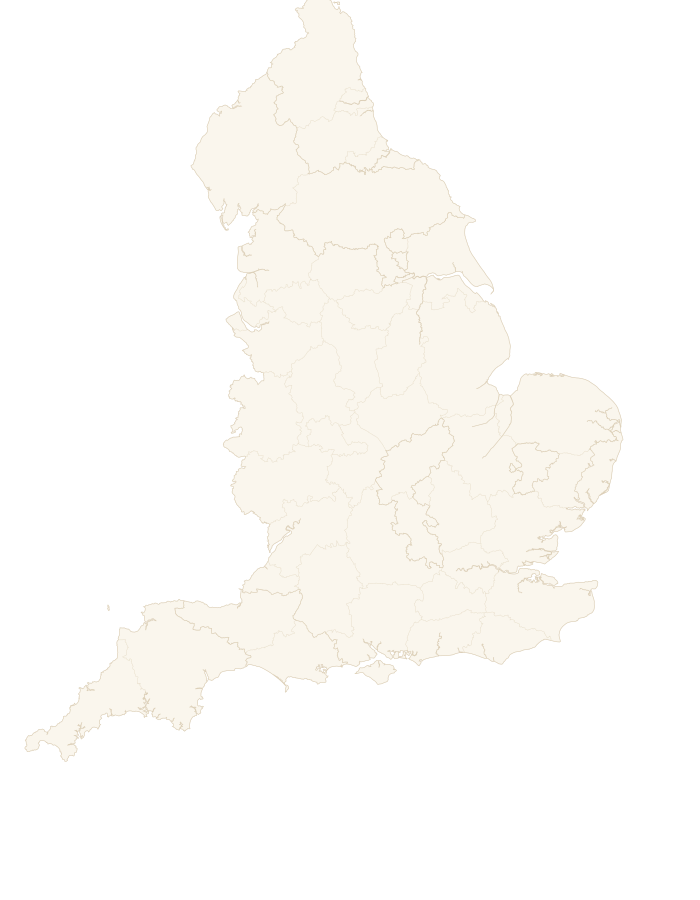
On the map of England the name sits heaviest in the north and east (Northumberland, Tyneside, Durham and Teesside, Cumbria and Lancashire, York and the Ridings, Lincolnshire and the Midland shires) and reaches south into Kent, Sussex and Hampshire. That spread is the trade's own geography: not one family's land, but every market town that needed a man to walk between it and the next. If your name is Chapman, your ancestor was the outside world arriving on foot.
Champions of the Chapman name
The bearers whose lives are inseparable from this surname. Each has their own page, biography, achievements, geography, connection to the family.
- Graham Chapman
The Leicester doctor who joined Monty Python instead of medicine, played King Arthur and Brian, and was the first British television figure to come out publicly as gay.
- Herbert Chapman
The Yorkshire mining engineer who invented the modern football manager, built title-winning dynasties at Huddersfield and Arsenal, and died in harness with the game remade in his image.
Castles the Chapman held
Strongholds this name held for a decade or more, look one up, or rebuild it to explore.
- Killua Castle
Granted to Benjamin Chapman c. 1667; seat of the Chapman baronets until the estate was sold in 1949.
The castles of the homeland
The great strongholds of the homeland, look one up, see what it looked like in its prime, and recreate it to explore.
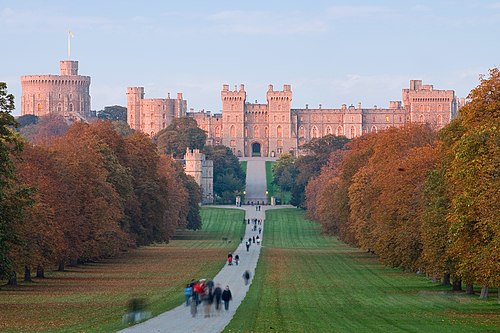 Windsor CastleRestored · prime 1820
 Tower of LondonRestored · prime 1285
 Bamburgh CastleRestored · prime 1904
All castles in England → · Strongest castles in England → · Castles of Europe
Play As Your Clan
Hold a real castle against whatever you choose to send at it, take a ship out in her own service years, or stand at the shoulder of someone the record remembers. The chronicler sets the scene; the deeds are yours.