Churchill
The church on the hill, a ducal surname the world recognises.
- Origin
- South East, England
- Famous bearer
- John Churchill, 1st Duke of Marlborough (1650–1722), general
- Register
- English family
The Churchill arms and country

Coat of armsCoat of arms of the duke of MarlboroughBorne by the Duke of Marlborough: the ennobled line of the name, not the name at large.Saltspan · CC BY-SA 4.0

- Coat of arms: Granted to an individual and inherited down that one documented line. These are the arms of particular families of the name, not of everyone who shares the surname.
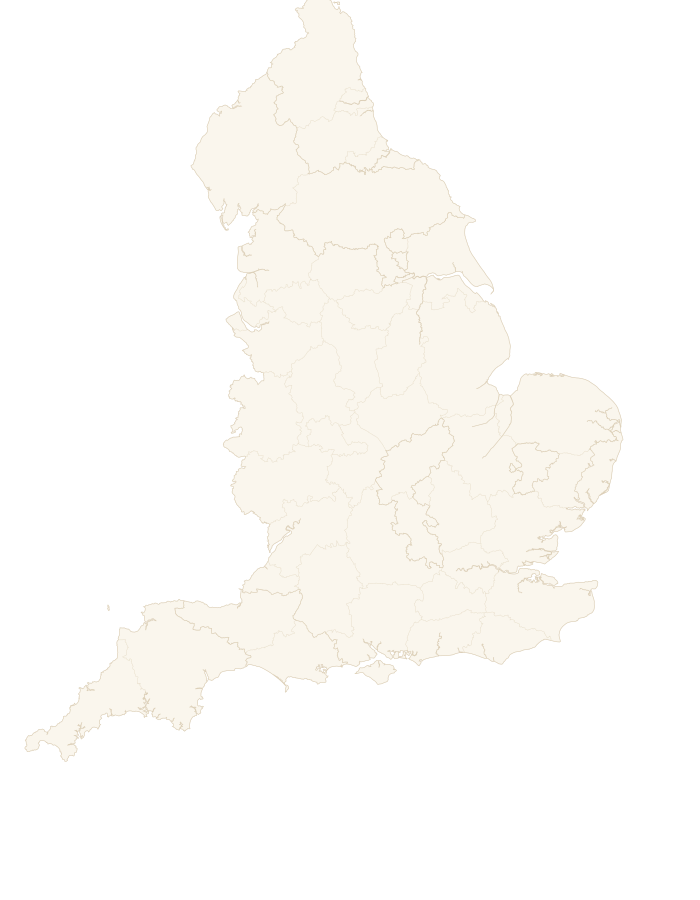
CoreHistoric reach
The seat of Churchill
Seat vacantChief
No one leads the Churchill community yet. When the movement opens, you can stand for its leadership, or help elect whoever does.
Current mission
No shared goal set yet. Once Churchill has leadership, it sets the public focus: a restoration, a gathering, a real-world project that helps its own.
The Churchill clan is being rebuilt. Join the waiting list for the movement today, and you help decide who leads it and what it does.
Help rebuild the Churchill clan →What does the Churchill name mean?
Locative, church on the hill. Old English cirice + hyll. The Churchill family of Oxfordshire and Dorset took a placename as dynastic brand.
The history of Churchill
The church on the hill, and the Curcelle confusion
The name is a locative one, built from two of the plainest words in Old English: cyrice, a church, and hyll, a hill. Churches stand on hills in every English county, so the surname could have been coined at any number of them independently, and probably was. One account complicates the tidy English reading. A Churchill family is recorded in Somerset at a place called Curcelle, a name of Norman origin, and in England that Norman name became confused with the English Churchill and was absorbed into it.
Names of this kind were a by-product of the conquest settlement. In England the introduction of family names is generally attributed to the preparation of the Domesday Book in 1086, and surnames were adopted first among the feudal nobility and gentry before spreading through the rest of society. Norman incomers marked themselves out by putting de in front of the name of their village or estate in France, a territorial surname that followed from feudal landownership. By the fourteenth century most English and most Scottish people used surnames.
Habitation names derive from the settlement a person came from, which could be a homestead, a farm, an enclosure, a hamlet or a village. What separates the Churchills from the many other English families carrying a field name is what they did with it. A West Country gentry family, with roots in Dorset and Devon, attached the name of a place to itself, and that name ended up attached to a dukedom, a palace built at the Crown's expense, an Act of Parliament and an augmented coat of arms.
Faithful but unfortunate: the royalist behind the dukedom
Sir Winston Churchill (1620 to 1688), soldier and politician, is where the family becomes properly visible. He served King Charles I as Captain of the Horse and sat as a Member of Parliament under Charles II. The arms he used had already been borne by his own father in 1619: a black shield with a silver lion rampant, cut across by a red bendlet. That bendlet did one job, which was to distinguish this branch from other Churchill families entitled to the same lion undifferenced. The heraldry itself concedes there were other Churchills.
Around 1662 the restored king granted him an augmentation of honour, a rare mark of royal favour, for his service to the executed Charles I and his loyalty to Charles II. It took the form of a canton of Saint George added to the shield, and once it was in place the distinguishing bendlet was redundant, so he was authorised to omit it. The reward was heraldic rather than financial. Charles II knighted Winston Churchill and other Civil War royalists but did not compensate them for what the war had cost them.
The motto came straight out of that grievance and the family carries it still: Fiel pero desdichado, Spanish for faithful but unfortunate, desdichado meaning without happiness. It is unusual for an Englishman of the period to choose Spanish over Latin, and no one has established why he did. His wife's family supplied the other half of the later ducal achievement. The wyvern that supports the shield derives from the arms of the Drakes of Ash, a red wyvern on silver, still visible on the monument to Sir Bernard Drake, who died in 1586, in Musbury church in Devon.
The ladder John Churchill climbed, 1682 to 1702
John Churchill (1650 to 1722) collected his titles in instalments. On 21 December 1682 he was made Lord Churchill of Eyemouth in the Peerage of Scotland. In 1685 came Baron Churchill of Sandridge in the Peerage of England, and in 1689 the earldom of Marlborough. Shortly after her accession in 1702, Queen Anne made him first Duke of Marlborough and granted the subsidiary title of Marquess of Blandford, used by the duke's eldest son as a courtesy title ever since.
The earldom he took in 1689 was second-hand, and the town it is named for lies in Wiltshire. Marlborough had given its name to an earldom held by the family of Ley from 1626. James Ley, the first earl, was lord chief justice of the King's Bench in Ireland and then in England, a member of parliament and lord high treasurer from 1624 to 1628; his grandson the third earl, a naval officer, was killed in action against the Dutch, and the title became extinct with the fourth earl in 1679. Ten years later the Crown handed a dead family's name to a soldier who fastened it permanently to his own.
The court mattered as much as the field. In 1678 Churchill married Sarah Jennings (1660 to 1744), a courtier who became the queen's influential favourite and served as Mistress of the Robes. They had seven children. One son and one daughter died in infancy, and four of their daughters married into some of the most important families in Great Britain. The victories opened the door; the marriages built the network that carried the name into the eighteenth century, and it was a daughter, not a son, who eventually saved the dukedom.
Blenheim: a battle, a royal manor, and a house built at the Queen's expense
On 13 August 1704 Marlborough led the victory over the French at Blenheim, in the War of the Spanish Succession. Queen Anne's reward was territorial and architectural at once. She granted him the royal manor of Woodstock in Oxfordshire and undertook to build him a house on it at her own expense, to be called Blenheim after the battle. Construction started in 1705. It was a nation paying a soldier in stone, and it produced something unusual in England: a building that is at once a national monument and a private family home.
The house was completed in 1722, the year the first Duke died, so the man it was built for never lived in it finished. Blenheim has remained with the Churchill and Spencer-Churchill family since, and the family's dead are sorted by rank around it. With the exception of the tenth Duke and his first wife, the dukes and duchesses of Marlborough are buried in the palace chapel; most other members of the family lie in St Martin's parish churchyard at Bladon, a short distance from the palace.
The victory also made him a foreign prince, briefly. Emperor Leopold I created him a Prince of the Holy Roman Empire in 1704, and in 1705 Leopold's successor Joseph I gave him the principality of Mindelheim, once the lordship of the noted soldier Georg von Frundsberg. The Treaty of Utrecht obliged him to surrender Mindelheim in 1714 and it returned to Bavaria. He tried to obtain the Austrian landgraviate of Nellenburg in exchange and failed, partly because Austrian law would not allow it to be turned into a sovereign principality.
The Act of Parliament that kept the name alive
The patent creating the dukedom provided that it could be inherited by the heirs-male of the first Duke's body, and by 1703 there were none. One son had died in infancy. The elder, John Churchill, Marquess of Blandford (1686 to 1703), died of smallpox, unmarried. Everything Queen Anne had granted, the title, the royal manor, the half-built palace, was on course to expire with the man it had been granted to, defeating the whole purpose of the gift within a single generation.
So Parliament rewrote the grant. In 1706 it amended the letters patent to let the dukedom pass to the first Duke's daughters, Lady Henrietta, the Countess of Sunderland, the Countess of Bridgewater and Lady Mary, and their heirs-male, and thereafter to all his issue male and female lineally descending, the elder and the descendants of every elder issue preferred before the younger. Unlike the remainder to heirs general found in most peerages it forbids abeyance, and follows a restrictive semi-Salic formula built to keep the succession in the male line wherever one exists.
The machinery was needed at once. When the first Duke died in 1722 the Scottish barony of Churchill of Eyemouth, which the Act did not touch, became extinct, while the Marlborough titles passed to his eldest daughter Henrietta (1681 to 1733), second Duchess of Marlborough, wife of Francis Godolphin, second Earl of Godolphin. Her own son, William Godolphin, Marquess of Blandford (1700 to 1731), then predeceased her without issue. Twice the direct male line failed, and twice the 1706 Act absorbed it.
Sheep money: the house that would inherit Marlborough
The family that caught the dukedom when it fell had made its money on the hoof. The Spencers were founded in the fifteenth century by Henry Spencer, who died about 1478, and from whom all members of the house descend. A close relative, John Spencer, became feoffee, or trustee, of Wormleighton manor in Warwickshire in 1469 and a tenant at Althorp in Northamptonshire in 1486. His nephew Sir John Spencer, who died in 1522, made his living trading in livestock and other commodities and saved until he could buy the land he rented.
He bought Wormleighton from Sir William Cope in 1506 and finished its manor house in 1512. In 1508 he purchased Althorp, a moated house with several hundred acres, where he had grazed sheep since the 1480s, and rebuilt the house that year; at that stage the Warwickshire estate was much the larger, and Wormleighton house four times the size of Althorp. In 1511 he acquired Great and Little Brington with their parish church of St Mary the Virgin from Thomas Grey, second Marquess of Dorset. Henry VIII knighted him in 1519; he died three years later and was buried in the new family chapel at Great Brington.
The wealth outran the pedigree, and the family tried to correct that with a forgery. In the sixteenth century the claim arose that the Spencers were a cadet branch of the older house of Despencer, and about 1595 they abandoned the sea-mews' heads granted them in 1504 for a modified version of the Despencer arms. J. Horace Round demolished the descent in his essay The Rise of the Spencers, arguing it had been fabricated by Richard Leigh, a corrupt Clarenceux King of Arms, and The Complete Peerage dismissed it as an "elaborate imposture" now "incapable of deceiving the most credulous".
The true story needed no help. Sir Robert Spencer (1570 to 1627), Knight of the Garter in 1601 and Baron Spencer of Wormleighton in 1603, was reputed the richest man in England in the reign of James I. When the Earl of Arundel cut him off in the House of Peers with the line that while the Howards' ancestors were doing great things "your ancestors were keeping sheep", Spencer answered at once that when his ancestors were keeping sheep, "your ancestors were plotting treason".
1733, and the fork in the road at Althorp
The bridge between the two families was a marriage. In 1699 Lady Anne Churchill (1683 to 1716), the first Duke's second daughter, married Charles Spencer, third Earl of Sunderland, one of the most heavily employed politicians of the age: Lord Lieutenant of Ireland, Lord Privy Seal, Secretary of State for both the Northern and Southern Departments, Lord President of the Council, First Lord of the Treasury and a Knight of the Garter. Anne died in 1716, before either inheritance reached her, leaving male issue.
When Henrietta died in 1733 the Marlborough titles and estates went sideways to Anne's son Charles Spencer (1706 to 1758), who became third Duke of Marlborough. He was already rich. On the death of his elder brother Robert in 1729 he had inherited the Spencer family estates with the earldom of Sunderland and the barony of Spencer of Wormleighton, and now he had Blenheim too. The two inheritances met in one man and were promptly separated: the Spencer estates in Bedfordshire, Northamptonshire and Warwickshire, Althorp among them, passed to his younger brother John (1708 to 1746).
That division created the two lines the family has run in since. The senior line sat at Blenheim and would take the Churchill name; the cadet line sat at Althorp, where John Spencer (1734 to 1783), a grandson of the third Earl of Sunderland, was created Baron Spencer of Althorp and Viscount Spencer in 1761 and Earl Spencer in 1765. Blenheim produced Winston Churchill; Althorp, by way of the eighth Earl Spencer and his wife Frances Roche, produced Diana, who married the Prince of Wales in 1981.
1817: the royal licence that made Spencer-Churchill
From 1733 the Dukes of Marlborough bore the surname Spencer, and Churchill survived at Blenheim only as a memory attached to the first Duke. In 1817 George Spencer, fifth Duke of Marlborough, obtained permission to assume and bear the surname of Churchill in addition to his own, expressly to perpetuate the name of his illustrious great-great-grandfather, with a Royal Licence to quarter the Churchill arms with his paternal arms of Spencer. Spencer-Churchill has been used since, though members have often preferred to sign themselves simply Churchill.
The heraldry recorded the reasoning. It would be normal for the paternal arms, Spencer, to take precedence over the maternal, Churchill; because the Marlborough dukedom was senior to the Sunderland earldom the procedure was reversed and Churchill placed first, a point noted by Paul Courtenay. English compound surnames were commonly built exactly this way, one family's name added to another as a condition of inheritance, and here the older, grander title dictated which name came first.
A second Churchill peerage was spun off in the same generation. In 1815 Francis Spencer, younger son of the fourth Duke, was created Baron Churchill, of Wychwood in the County of Oxford, and in 1902 his grandson was created Viscount Churchill, of Rolleston in the County of Leicester. The 1817 licence carried one further augmentation: the bearings of the standard of the Manor of Woodstock, on a small shield at the centre of the arms, a cross of Saint George charged with a blue inescutcheon and three gold fleurs-de-lys, the royal arms of France, the power the first Duke had beaten at Blenheim.
Marlborough House, and a century of rented addresses
From 1711 to 1817 the London seat of the Dukes of Marlborough was Marlborough House on The Mall. It went with the fourth Duke: on his death in 1817 the house reverted to the Crown Estate and was earmarked as a London home for Princess Charlotte of Wales, then second in line to the throne. Charlotte died in 1818 before the preparations were complete, and her widower Prince Leopold of Saxe-Coburg-Saalfeld, later King Leopold I of the Belgians, lived there for several years instead. The family never got it back.
What followed was a century of leases, and mostly the duchesses held them. The fifth Duke kept no permanent London residence at all; his wife Susan took 16 Grosvenor Place in Belgravia from 1817 to 1820, then Cavendish Square, then two successive addresses on what is now Park Lane. The sixth Duke's widow Jane lived at 28 Grosvenor Street from 1868 until her death there in 1897, and her son Lord Edward Spencer-Churchill inherited the leasehold and rebuilt the house before his own death in 1911.
The seventh Duke, John Winston Spencer-Churchill (1822 to 1883), took 67 Brook Street in Mayfair as Marquess of Blandford in 1852 and had moved to 10 St James's Square by 14 May 1860, when his daughter Lady Georgiana was born in the house. He gave it up in September 1876 on being appointed Lord Lieutenant of Ireland; by 1880 it was a gentlemen's club, the Salisbury, and since 1922 it has been Chatham House, home of the Royal Institute of International Affairs. He returned from Ireland, leased 29 Berkeley Square in 1882 and died there on 5 July 1883. By the late 1800s dwindling estate income meant the dukes kept no permanent London house at all.
American money at Blenheim
The eighth Duke, George Charles Spencer-Churchill (1844 to 1892), inherited in the middle of a divorce not yet finalised, with the odd result that his first wife Albertha was entitled to be known as Duchess of Marlborough and chose to continue as Marchioness of Blandford instead. In 1888 he remarried, to the wealthy American Lily Price Hamersley, widow of the real-estate millionaire Louis Hamersley, and from 1889 until his death in 1892 leased 3 Carlton House Terrace, which Lily held until 1903.
The second American marriage was on another scale. In 1895 Charles Richard John Spencer-Churchill, ninth Duke, married Consuelo Vanderbilt. Her dowry settled a trust fund of $2,500,000, then £500,000, on her husband, with a further income for life of $100,000 a year paid to her by her father; together they more than doubled the income the ninth Duke drew from his ancestral estates. William Kissam Vanderbilt then contributed an estimated $2,500,000 more between 1901 and 1904 to buy a freehold plot in Mayfair and build a mansion on it for his daughter and son-in-law, named Sunderland House.
The money bought about a decade. The Duke and Duchess lived at Sunderland House until their separation in 1906; Consuelo stayed until 1918, when she vacated it for Government use, and in June 1919 took a smaller lease at 1 Portman Square. The ninth Duke moved to 15 Great College Street and then, in November 1926, to 7 Carlton House Terrace, where he died in 1934; his executors sold the remaining lease and the Crown Estate granted it to the German Government, which already held the neighbouring houses as its embassy. His son, the tenth Duke, sold the family's last great London house, 11 Kensington Palace Gardens, to the French Government in September 1946 for £25,000.
Lord Randolph, Jennie Jerome, and the child born at Blenheim
Lord Randolph Henry Spencer-Churchill (1849 to 1895), known publicly as Lord Randolph Churchill, was a son of the seventh Duke and rose to be Chancellor of the Exchequer and Leader of the House of Commons. He married Jennie Jerome, thereafter Lady Randolph Churchill.
His son Winston Leonard Spencer Churchill (1874 to 1965) was born at Blenheim Palace on 30 November 1874, grandson of the seventh Duke. He trained at Sandhurst, served as a cavalry officer and war correspondent in India, the Sudan and South Africa, and entered Parliament in 1900. He held nearly every senior office of state, including the Admiralty, the Exchequer and the Home Department, and was Prime Minister from May 1940 to 1945 and again from 1951 to 1955. He was knighted in 1953 and made a Knight of the Garter the same year.
He was also a professional writer. The six-volume The Second World War and the four-volume A History of the English-Speaking Peoples brought him the Nobel Prize in Literature in 1953, and in 1963 the United States Congress made him an honorary citizen. His wife Clementine Hozier (1885 to 1977) was created a life peeress in her own right as Baroness Spencer-Churchill in 1965. His own record is set out separately on this site; here he belongs where he was born.
The name inside one twentieth-century household
What is striking about the twentieth-century family is how far the name spread through public life without leaving a single household. Winston's brother Jack Churchill (1880 to 1947) was a soldier. Winston's son Randolph Frederick Edward Spencer-Churchill (1911 to 1968) was a Conservative politician, as was Winston's grandson Winston Churchill (1940 to 2010), and Randolph's daughter Arabella Churchill was a charity founder. Winston's daughter Sarah Churchill was an actress, and another daughter, Mary Spencer-Churchill, married Christopher Soames, Baron Soames, and was made a Lady of the Garter in 2005. Clarissa Spencer-Churchill, a daughter of Jack, married Sir Anthony Eden, Prime Minister of the United Kingdom. Randolph's former wife Pamela Churchill, born Pamela Digby, later became Pamela Harriman.
The Churchills of the war who were not the Prime Minister
One of the oddities of the Second World War is how many unrelated Churchills fought it. Odette Churchill (1912 to 1995) and Peter Churchill (1909 to 1972) were both British spies during the Second World War. Oliver Churchill (1914 to 1997) served as an officer of the Special Operations Executive. Walter Churchill (1907 to 1942) was a Royal Air Force pilot and flying ace. Jack Churchill (1906 to 1996), no relation to Winston's brother of the same name, was a famously eccentric British veteran who went on to serve in the 1948 Palestine war.
None of them belonged to the ducal house. They carried a common English field name that happened, for the duration, to be the most loaded surname in the country. The coincidence makes the etymology's point: a church on a hill stood in parish after parish, and the surname it produced was never the property of one family.
The pattern long predates the war, and much of it runs through print. Awnsham Churchill (1658 to 1728) was a bookseller and politician in the generation after the first Duke; Charles Churchill (1732 to 1764) was a poet, author of the satire The Rosciad; John Spriggs Morss Churchill (1801 to 1875) was an English medical publisher. In the modern period Caryl Churchill, born in 1938, is a British playwright.
The name that crossed the Atlantic and kept going
The surname travelled early and did well. Sylvester Churchill (1783 to 1862) rose to be Inspector General of the United States Army. Thomas James Churchill (1824 to 1905) was an American politician and governor of Arkansas. Both held office in a republic while their namesakes in England were counting London leases, and neither owed anything to Blenheim.
The record also holds two men of exactly the same name. Winston Churchill (1871 to 1947) was a best-selling American novelist; the British Winston Churchill, born in 1874, was the one the world came to know by it.
Elsewhere it kept producing people in fields the dukes would not have recognised. Frank Churchill (1901 to 1942) was an American composer of popular music for films. Owen Churchill (1896 to 1985) was an Olympic sailor and the inventor of the swim fin. Clive Churchill (1927 to 1985) was an Australian rugby league player, and Kim Churchill, born in 1990, is an Australian singer-songwriter. Four centuries after a Dorset gentleman took a hill and a church for a surname, it is at work on three continents, most of it with no connection at all to the house at Woodstock.
Champions of the Churchill name
The bearers whose lives are inseparable from this surname. Each has their own page, biography, achievements, geography, connection to the family.
The castles of the homeland
The great strongholds of the homeland, look one up, see what it looked like in its prime, and recreate it to explore.
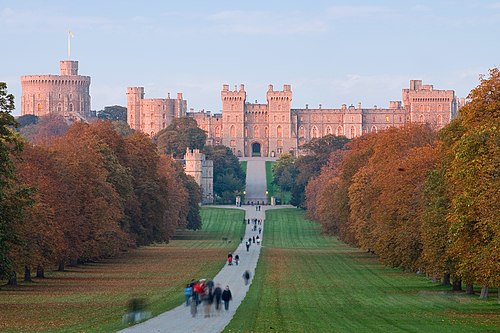 Windsor CastleRestored · prime 1820
 Tower of LondonRestored · prime 1285
 Bamburgh CastleRestored · prime 1904
All castles in England → · Strongest castles in England → · Castles of Europe
Play As Your Clan
Hold a real castle against whatever you choose to send at it, take a ship out in her own service years, or stand at the shoulder of someone the record remembers. The chronicler sets the scene; the deeds are yours.
Notable bearers of the Churchill name
- John Churchill, 1st Duke of Marlborough (1650–1722), general
- Sir Winston Churchill (1874–1965), Prime Minister
Stories of Churchill
We shall fight on the beaches
1940On the morning of the twenty-eighth of May 1940, the third day of his premiership, with the British Expeditionary Force surrounded at Dunkirk and the French government already sounding out terms, Winston Churchill faced the sharpest argument of his political life inside the five-man War Cabinet. The Foreign Secretary Lord Halifax wanted to ask the Italian ambassador to ask Mussolini to ask Hitler what terms he might accept for peace. Churchill argued for three days, in three War Cabinet meetings, that any approach would be the end. He carried the wider Cabinet of twenty-five on the afternoon of the twenty-eighth in a meeting at 10 Downing Street. A week later, with 338,000 men evacuated from Dunkirk, he gave the speech in the Commons that committed the country to fighting on. The thirty-six minutes that ended in the lines about the beaches and the landing-grounds and the fields and the streets and the hills, and never surrendering.
Read the story →
The wilderness years
1932From 1929 to 1939 Winston Churchill held no government office. The Conservative leadership had broken with him over India in 1931 and was content to leave him out. He spent the decade at Chartwell, the house in Kent he had bought in 1922, building dry-stone walls with his own hands, painting, writing the four-volume life of his ancestor Marlborough, and waging, from the back-benches of the Commons, a one-man campaign of speeches and articles warning the country and the world that German rearmament under Hitler would end in war. The country mostly did not listen. The Times under Geoffrey Dawson edited him out where it could. The Foreign Office cabled Berlin assurances that he did not represent the government's view. The intelligence brief that fed his speeches, smuggled to him by junior officials and serving officers in defiance of standing orders, was the most accurate non-official assessment of German air strength in Europe. By the autumn of 1938 it was clear he had been right. He came back into the Admiralty on the third of September 1939, the day the country declared war, with the signal Winston is back sent fleetwide.
Read the story →