Foster
The forester's shortening.
- Origin
- North East, England
- Famous bearer
- Norman Foster, Baron Foster of Thames Bank (b. 1935), Manchester-born British architect; founded Foster + Partners 1967; designs include Hong Kong and Shanghai Bank tower (1985), the Reichstag dome (1999), the Gherkin (2004), Wembley Stadium (2007), Apple Park (2017); RIBA Royal Gold Medal 1983, Pritzker Architecture Prize 1999
- Register
- English family
The Foster tartan and country

TartanFoster Hunting tartanThe hunting sett: the same pattern in muted browns and greens, worn in the field where the brighter colours would show.Micheletb · CC BY-SA 4.0

- Tartan: The checked cloth the family is known by.
What is the Foster clan tartan?
One Foster sett is recorded, and it is the swatch above (the hunting sett, in muted browns and greens). A sett is the block of coloured bands the cloth is built from, repeated in both directions; the whole plaid is that one square enlarged.
Foster is an English name, and the sett is a Scottish invention. Tartan registration grew outward from the Highlands to cover surnames carried well beyond them, and a weaver who could sell a Foster tartan sold one: some of these setts are Victorian and some were designed within living memory. That is how most names outside the Highlands came by a sett at all. Nobody polices any of it. Wearing the Foster sett declares allegiance to the name, not descent from any particular line of it.
CoreHistoric reach
The seat of Foster
Seat vacantChief
No one leads the Foster community yet. When the movement opens, you can stand for its leadership, or help elect whoever does.
Current mission
No shared goal set yet. Once Foster has leadership, it sets the public focus: a restoration, a gathering, a real-world project that helps its own.
The Foster clan is being rebuilt. Join the waiting list for the movement today, and you help decide who leads it and what it does.
Help rebuild the Foster clan →What does the Foster name mean?
Forester, metathesis Foster, or corrupted 'foster-parent' rare; chiefly forest-keeper.
The history of Foster
The office that shortened into a name
The word came first: forester, the man who kept a king's or a lord's wood. The surname is that word with its middle worn away, forester to forster to Foster, and the clipped form travelled beside its longer cousins, so that Foster today gathers Forster and Forrester beneath it. By 1400 most English families had hereditary surnames, and the office of forester had by then been running for three centuries.
A smaller sense stands behind a minority of bearers: foster in the older meaning of the household that raised a child not its own. In England that was ancient in practice and very late in law. Custody ran through wardship in the Chancery Court, used sparingly because it gave the guardian no parental rights; the nineteenth century renamed the practice boarding-out and lived through a run of baby-farming scandals; the first English statutes on adoption and fostering came only in 1926.
Vert and venison, and a third of southern England
Anglo-Saxon kings hunted hard but set no land outside the law of the realm, and historians find no evidence of a forest in the legal sense before 1066. Forest law arrived with the Normans. William the Conqueror, a great lover of hunting, enacted it, and it ran outside the common law to protect what the lawyers called the venison and the vert: the noble beasts of the chase, red and fallow deer, roe and wild boar, and the greenery that fed them. A royal forest was a preserve rather than a wood, and heath, grassland, wetland and open moor all counted so long as they carried deer.
The scale was extraordinary. In the late twelfth and early thirteenth centuries a full third of the land area of southern England lay under forest law. At one stage the whole of Essex was afforested; on his accession Henry II declared the whole of Huntingdonshire a royal forest. Villages and fields caught inside a new boundary came under the law with the land, common rights curtailed rather than extinguished. William Rufus raised the penalties to death and mutilation, and Henry II codified them in the Assize of the Forest of 1184. English feeling is on record early: the Rime of King William, inserted in the Peterborough Chronicle in 1087, is a complaint about the forest laws.
The lodge, the posse and the ladder above him
The forester was not a woodcutter. He held a position reckoned equal to a sheriff or local law officer, could act as arbiter, and worked from a forester's lodge, patrolling the woodland of a lord or noble, which is why woodward served as a synonym for the job. He negotiated sales of lumber and timber and stopped poachers, and when outlaws took refuge in heavy woodland it fell to him to raise an armed posse to capture or scatter them. In wartime foresters were used as scouts to watch enemy movement. The pay and standing of the office were above average, reflecting the responsibility of the role.
Above him stood a ladder of offices the records name precisely. The warden was the chief royal official, usually a magnate too preoccupied to do the work, so a deputy exercised his powers. Below the constable came the foresters-in-fee, later called woodwards, who held land inside the forest for rent and advised the warden; their subordinates were the under-foresters, later the rangers, who patrolled the purlieus at the forest's edge. Agisters collected the pannage and agistment fees, surveyors fixed the boundaries, and regarders came in periodically to check that the foresters had not gone into collusion with local offenders.
Woodmote, swainmote and the forty-day court
The forest ran courts of its own, and the foresters were their arresting officers. The court of attachment, called the Woodmote or Forty-Day Court, sat every forty days under the verderers and the warden: the foresters brought in the men they had attached and had them enrolled, but it could neither try nor convict, so cases passed upward. The court of regard met every third year for one purpose, enforcing the rule that dogs kept within the forest have their front claws removed so they could not run down game.
Swainmote sat three times a year, the fortnight before Michaelmas, about the feast of St Martin, and the fortnight before the feast of St John the Baptist, the first two for agistment and pannage and the third to try offenders before a jury of freemen of the forest. Above it sat the court of justice-seat, or forest eyre, held in theory every three years. Its rules could be brutally short: under bloody hand, a man taken with blood on his hands or body was judged to have killed a deer whether or not anyone had seen him hunt.
The clause that named the foresters
By 1215 the forest officers were a grievance in their own right. Five clauses of Magna Carta deal with the royal forests, and clause 48 names the men themselves: all evil customs relating to forests and warrens, foresters, warreners, sheriffs and their servants were to be investigated in every county by twelve sworn knights and abolished completely and irrevocably within forty days of the enquiry. Clause 47 disafforested at once every forest created in John's reign.
The reform outlived John. Henry III was compelled in 1217 to grant the Charter of the Forest, which established the rights of agistment and pannage on private land inside the forests and, in the words of the record, checked certain of the extortions of the foresters. An Ordinance of the Forest under Edward I checked the officers again and put sworn juries into the forest courts. In 1300 the forests were perambulated and cut back sharply. Later kings kept trying to recover the excluded purlieus, and forest officers kept fining the men who lived in them for missing forest court, which produced complaints in Parliament, royal promises of remedy, and usually nothing.
The counties the office left behind
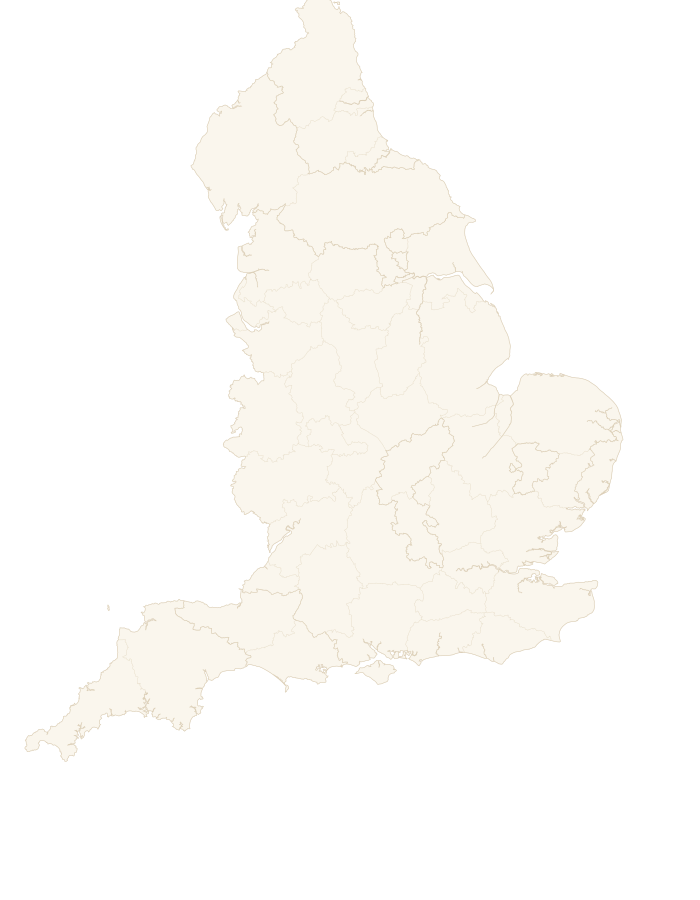
Forests were sited where the ground was hardest to work as farmland, and the map of them runs close to the map the name left. Clay soils in Oxfordshire, Buckinghamshire and Northamptonshire carried one belt of woodland; sandy, gravelly, acid soils carried another across Hampshire, Berkshire and Surrey. Marshland in Lincolnshire was afforested, and so were the upland moors: the Peak Forest of Derbyshire, Dartmoor and Exmoor, and a run of forests on the North Yorkshire moors. Foster's older footprint across Yorkshire, Lincolnshire, Nottinghamshire, the Derbyshire Peak, Northamptonshire, Berkshire and Oxfordshire, Hampshire and Surrey lies on that geology.
The office decayed slowly, and profitably. James I's ministers Robert Cecil and Lionel Cranfield went looking for revenue in forests nobody hunted: Knaresborough Forest in Yorkshire was abolished, Dean's wood was sold for iron smelting, and commissioners raised over 25,000 pounds by compounding with the occupiers. The disafforestations of the 1630s stripped out the commons and set off the Western Rising, enclosures pulled down at Gillingham, Braydon and Dean and riots at Feckenham, Leicester and Malvern. The last serious forest eyre sat about 1635, and when a royal commission counted the surviving crown woods in the late 1780s it found only one north of the Trent, Sherwood. The justice in eyre was abolished in 1817. The office had gone; the name had not.
The Reddish boy who glazed the Reichstag
Norman Foster was born at Reddish, between Stockport and Manchester, in June 1935, the only child of Robert Foster, a machine-tool fitter at the Metropolitan-Vickers works at Trafford Park, and Lilian Smith. He grew up in a two-up two-down on Crescent Grove, left school at sixteen and worked as an office boy at Manchester Town Hall, buying architectural magazines on the way in and reading them at his desk. He applied to the Manchester School of Architecture as a self-paying student in 1956 on the strength of a portfolio drawn in his lunch breaks, and was admitted at twenty-one. A Henry Fellowship took him to Yale in 1961, where he studied alongside Richard Rogers and James Stirling under Paul Rudolph and Vincent Scully.
He came home in 1963 and set up Team 4 in London with Rogers, Wendy Cheesman and Su Brumwell; it produced the Reliance Controls factory at Swindon in 1967 and dissolved that same year. Foster Associates opened in 1967 at the kitchen table of the family flat in Hampstead, with Cheesman, by then his wife, running the office. Five buildings made the reputation: Willis Faber and Dumas at Ipswich in 1975, whose patented joints made its free-form glass curtain wall possible; the Sainsbury Centre at the University of East Anglia in 1978; the Renault distribution centre at Swindon in 1982; the Hong Kong and Shanghai Bank headquarters in 1985, the most expensive building in the world at completion; and Stansted in 1991, which rewrote how airports are planned.
The reconstruction of the Reichstag in Berlin, completed in 1999, glazed the burnt-out shell of the old parliament and crowned it with a cone-shaped viewing dome that became the symbol of reunified German democracy. The Millennium Bridge followed in 2000, 30 St Mary Axe in the City of London in 2004, the Hearst Tower in Manhattan in 2006, the Wembley arch in 2007, and Apple Park at Cupertino and the Bloomberg headquarters in London in 2017. He took the RIBA Royal Gold Medal in 1983, was knighted in 1990, and in 1999 won the Pritzker Prize and was raised to the peerage as Baron Foster of Thames Bank.
Only connect: the Forster at King's
Edward Morgan Forster, who carried the other dominant spelling of the same office, was born in Marylebone on 1 January 1879. From 1883 the family lived at Rooksnest, a house outside Stevenage in Hertfordshire that he loved and later rebuilt almost detail for detail as the title house of Howards End. He went up to King's College, Cambridge in 1897 and was elected to the Apostles, the society that produced the inner circle of what became Bloomsbury, gaining there the lifelong friendships of Lytton Strachey, John Maynard Keynes and Roger Fry.
The Edwardian decade was his most productive: Where Angels Fear to Tread in 1905, The Longest Journey in 1907, A Room with a View in 1908 and Howards End in 1910. By his early thirties he was the most-discussed English novelist of his generation, and the epigraph of Howards End, Only connect, became the most-quoted sentence in English liberal humanism in the century that followed. He served with the Red Cross in Egypt during the First World War and went twice to India, the second time as private secretary to the Maharaja of Dewas Senior; out of those journeys came A Passage to India in 1924, widely held to be his masterpiece.
King's elected him an honorary fellow in 1946 and he lived in college rooms for the rest of his life, writing the essays and broadcasts that carried his reputation through the post-war decades and, with Eric Crozier, the libretto for Benjamin Britten's opera Billy Budd, first performed in 1951. He turned down a knighthood three times, accepted the Order of Merit in 1969, and died on 7 June 1970 at ninety-one.
Champions of the Foster name
The bearers whose lives are inseparable from this surname. Each has their own page, biography, achievements, geography, connection to the family.
- Norman Foster
The Reddish council-flat boy who built the Hong Kong and Shanghai Bank, glazed the Reichstag, and made the steel-and-glass corporate atrium the dominant late-twentieth-century building type.
- E. M. Forster
The Edwardian novelist whose six books defined the English liberal humanist imagination and gave the language the phrase Only connect.
The castles of the homeland
The great strongholds of the homeland, look one up, see what it looked like in its prime, and recreate it to explore.
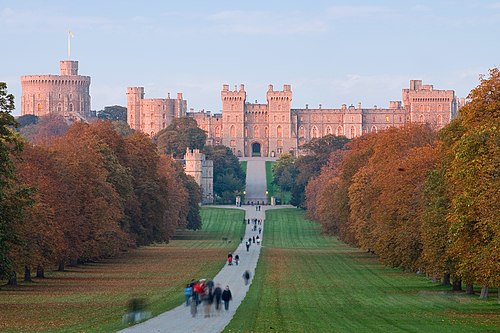 Windsor CastleRestored · prime 1820
 Tower of LondonRestored · prime 1285
 Bamburgh CastleRestored · prime 1904
All castles in England → · Strongest castles in England → · Castles of Europe
Play As Your Clan
Hold a real castle against whatever you choose to send at it, take a ship out in her own service years, or stand at the shoulder of someone the record remembers. The chronicler sets the scene; the deeds are yours.
Notable bearers of the Foster name
- Norman Foster, Baron Foster of Thames Bank (b. 1935), Manchester-born British architect; founded Foster + Partners 1967; designs include Hong Kong and Shanghai Bank tower (1985), the Reichstag dome (1999), the Gherkin (2004), Wembley Stadium (2007), Apple Park (2017); RIBA Royal Gold Medal 1983, Pritzker Architecture Prize 1999