Gibson
Gib's son, industrial northeast.
- Origin
- North East, England
- Register
- English family
The Gibson arms and country

Coat of armsGibson of Pentland armsBorne by the Pentland line, one branch of the name rather than all of it.Czar Brodie · CC BY-SA 3.0

- Coat of arms: Granted to an individual and inherited down that one documented line. These are the arms of particular families of the name, not of everyone who shares the surname.
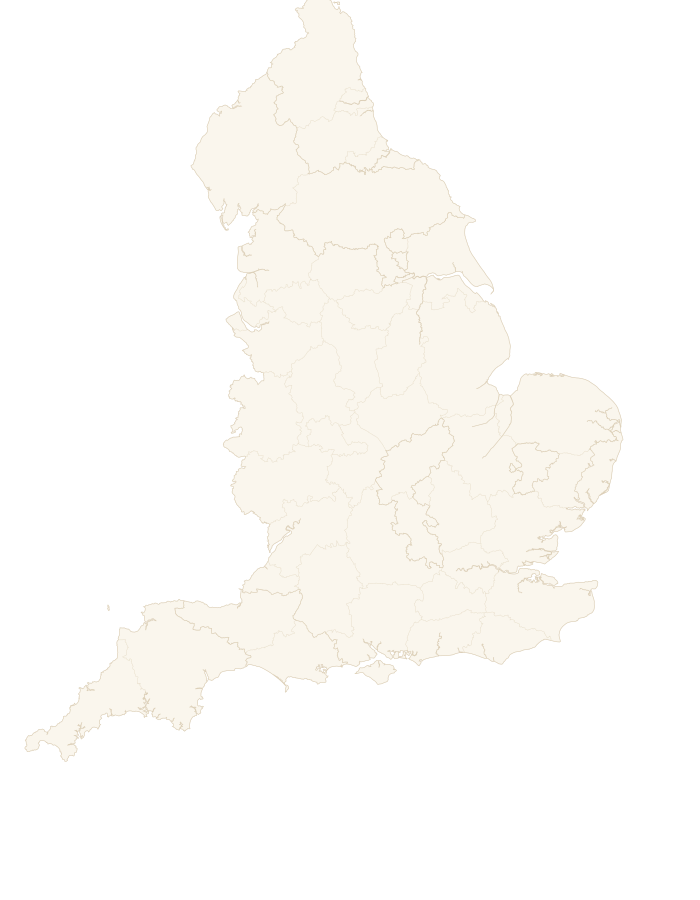
CoreHistoric reach
The seat of Gibson
Seat vacantChief
No one leads the Gibson community yet. When the movement opens, you can stand for its leadership, or help elect whoever does.
Current mission
No shared goal set yet. Once Gibson has leadership, it sets the public focus: a restoration, a gathering, a real-world project that helps its own.
The Gibson clan is being rebuilt. Join the waiting list for the movement today, and you help decide who leads it and what it does.
Help rebuild the Gibson clan →What does the Gibson name mean?
Son of Gib, Gilbert. Northern short-form patronymic.
The history of Gibson
Gib was what the neighbours called him
Gibson means Gib's son, and Gib is the whole story in three letters. Nobody was ever christened Gib. It is Gilbert worn down by daily use, the form a mother shouted from a doorway while the priest went on writing the long version into the register. English surnames were built out of the short form far more often than the formal one, because the family did not choose it. It was applied by the people who already knew what to call the man.
The mechanism shows in name after name. Hickman is Hick's man, Hick being the pet form of Richard. Gibson sits with them, alongside Gibb, Gibbs and Gibbons, all growing off the same clipped Gib. A surname taken from a nickname is not the surname of a baron with a French estate to be named after. It is the surname of a man his village knew well enough to shorten.
How a French name reached an English farmhand
Gilbert was not an English name to begin with. It belongs to the continental stock that came in with the Norman Conquest, which installed Anglo-Norman, a dialect of Old French, as the language of the ruling class over Old English. The shift showed in given names: William, Robert and Richard became common where Anglo-Saxon names had been. The Domesday Book of 1086 records what the newcomers took: by then only about five per cent of the land in England south of the Tees was still in English hands.
What matters for Gibson is what happened next, downward. Intermarriage between Normans and the native English was uncommon in the first generation and ordinary within a century; by the early 1160s Ailred of Rievaulx could write that it ran through all levels of society. The names went with it, until Gilbert was no longer a marker of conquest but simply what a Northumbrian boy was called, and his son was Gib's son.
The century the name stopped changing
For a long time Gib's son was a description, not a surname. If he was called John, his own son was John's son, and the family name changed every generation, as it still does in Iceland.
Hereditary family names in England are generally traced to the Domesday Book of 1086, and the earliest firm case of an inherited modern surname is dated to about 1140. It began with the nobility and gentry and spread downward, and was not always welcome: in the late Middle Ages mandatory surnames were resisted in England as a thing associated with taxation.
By 1400 most English families, and most in Lowland Scotland, had settled hereditary surnames. That is the date that matters to a Gibson: somewhere before it, in a northern parish, one man's byname stopped describing him and began belonging to his descendants.
North of the Tees, and over the line
The Gibson heartland is the far north of England (Northumberland, Tyneside, Wearside and Durham, the Tees valley, and west into Cumbria) with a second belt across Lancashire and the north-west. It is a northern name that travelled south, not a southern name that went north.
It is also a name of the Border country, where the northern English counties and the Scottish Marches shared families and spellings. The Scottish form keeps an older ending: a tombstone by the ruined church of Rait in Perthshire records Jonet Gibsone, wife of William Bruce, laird of Fingask, who died on the last day of April 1647. Gibson and Gibsone are one name on two sides of a line families crossed more easily than armies did.
Later that heartland became the industrial one. Gib is Gilbert trimmed short enough to shout across a shipyard, and Tyneside and Teesside raised generation after generation of Gibsons who riveted hulls and lit gaslight streets under the same patronymic. If your family left for Ohio, Ontario or Otago, the odds are it left from those counties and that trade.
The Gibson who broke the dams
Guy Penrose Gibson was born at Simla in British India in August 1918, the second son of an officer of the Indian Forest Service. He applied to the RAF in 1936 and was commissioned a pilot officer in 1937, aged nineteen.
Operation Chastise was flown on the night of 16 to 17 May 1943. Nineteen Lancasters of No 617 Squadron, each carrying a four-ton mine designed to bounce across a reservoir to the dam wall, took off from Scampton in three waves. Gibson led the attack on the Möhne, going in first, then circling the reservoir alongside each successive aircraft to draw the gunfire off it, a piece of cold control under fire that his citation singled out. The Möhne wall broke; he flew on to the Eder, and that wall broke too. He was awarded the Victoria Cross on 28 May 1943, at twenty-four. He was killed over the Netherlands on 19 September 1944, aged twenty-six, and is buried at Steenbergen, where the town still keeps his grave.
The Gibson who rebuilt a bombed city
The other Gibson worth knowing built rather than broke. Donald Gibson was appointed City Architect of Coventry in 1938, the worst possible timing, and the making of his career. After the bombing, a council that saw no place for the old city pulled down most of the surviving historic buildings, some undamaged, and Gibson rebuilt the centre around one of Europe's first traffic-free shopping precincts. The new Broadgate was opened by Princess Elizabeth in 1948.
Between them the two are a fair picture of what this name has carried: not castles and charters, but skill applied under pressure. Gibson is a working name from the working north, a Norman font-name shortened to one syllable by a man's neighbours and hung on his son. That is the inheritance: a northern parish, a trade, a name that stuck, and a family that carried it far enough for you to be reading this an ocean away.
Champions of the Gibson name
The bearers whose lives are inseparable from this surname. Each has their own page, biography, achievements, geography, connection to the family.
Historic Places, Rebuilt
Explore the streets and seats the Gibson name knew, rebuilt with AI as they stood in history.
The castles of the homeland
The great strongholds of the homeland, look one up, see what it looked like in its prime, and recreate it to explore.
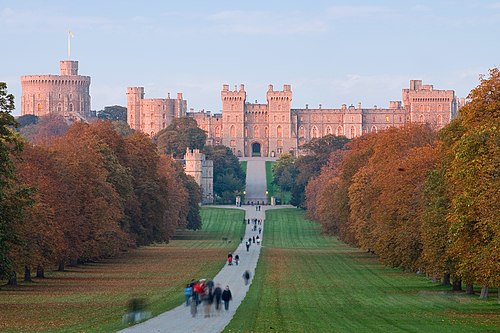 Windsor CastleRestored · prime 1820
 Tower of LondonRestored · prime 1285
 Bamburgh CastleRestored · prime 1904
All castles in England → · Strongest castles in England → · Castles of Europe
Play As Your Clan
Hold a real castle against whatever you choose to send at it, take a ship out in her own service years, or stand at the shoulder of someone the record remembers. The chronicler sets the scene; the deeds are yours.