Harrison
Son of Harry.
- Origin
- North West, England
- Famous bearer
- John Harrison (1693–1776), horologist, inventor of the marine chronometer
- Register
- English family
The Harrison arms and country

Coat of armsCrest, Motto and Arms of Harrison of Layer-de-la-Haye, Essex, properly quartering the Arms of Fiske of Stadhaugh, Suffolk from 1399Borne by the Stadhaugh line, one branch of the name rather than all of it.Fiskeharrison · CC0

- Coat of arms: Granted to an individual and inherited down that one documented line. These are the arms of particular families of the name, not of everyone who shares the surname.
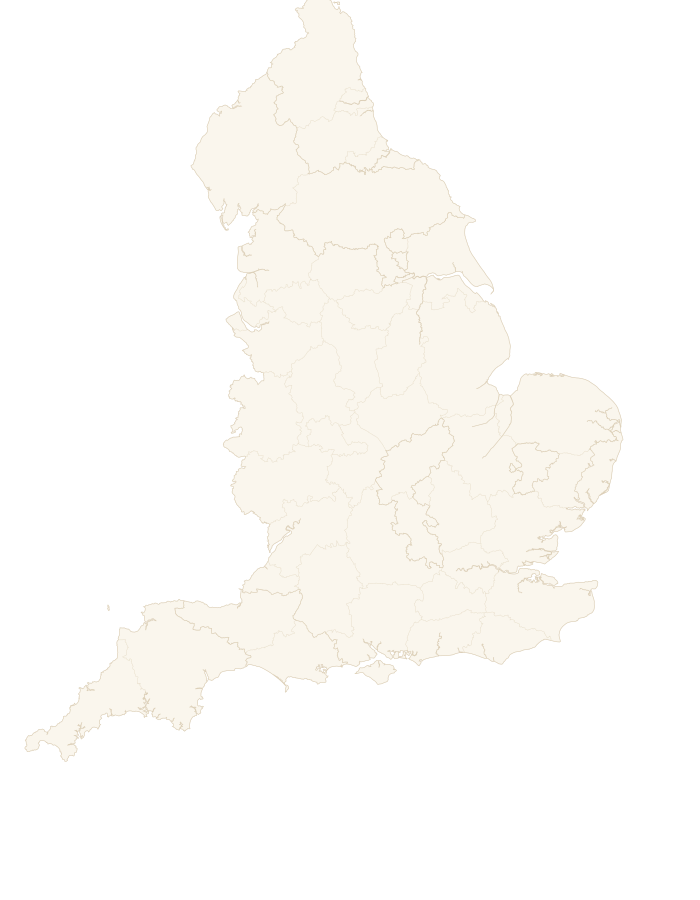
CoreHistoric reach
The seat of Harrison
Seat vacantChief
No one leads the Harrison community yet. When the movement opens, you can stand for its leadership, or help elect whoever does.
Current mission
No shared goal set yet. Once Harrison has leadership, it sets the public focus: a restoration, a gathering, a real-world project that helps its own.
The Harrison clan is being rebuilt. Join the waiting list for the movement today, and you help decide who leads it and what it does.
Help rebuild the Harrison clan →What does the Harrison name mean?
Son of Harry (Henry). Northern -son patronymic.
The history of Harrison
Son of Harry, and why that is not one family
Harrison means son of Harry, and Harry was how Middle English mouths said Henry. The surname is northern English in origin and first appears in the records in the 14th century. Older spellings survive in the documents: Harryson, Harrisson with a doubled s, and Henrison, which fell out of use altogether. Some families used Harrison and Harris interchangeably in early records, so a clerk's choice of ending could split one household into two names on paper.
English bynames described a man by his trade, his father, his birthplace or his looks, and were not at first inherited; by 1400 most English families, and most in Lowland Scotland, had settled into hereditary surnames. The pool of given names they were built from was tiny. Of the boys born in London in 1510, 24.4 per cent were named John, 13.3 per cent Thomas and 11.7 per cent William.
A name as ordinary as Harry therefore produced sons of Harry in parish after parish, independently, with no connection between them. Harrison belongs to the same class as Jackson, Wilson, Robinson and Watson, and two men of the name in one county roll are not kin unless a document says they are. The 2010 census put Harrison 141st among United States surnames, with 181,091 entries.
Yorkshire, Durham, and the arms of Harrison of the North
The documented early Harrisons sit in Yorkshire and County Durham, which is where a -son patronymic would be expected to take hold. Among the earliest with a name and a date is Thomas Harrison (1504-1595), Lord Mayor of York. Genealogists have argued over that northern concentration: several have held that the first Harrisons were Norse warriors who came into north-east England with Cnut the Great, others have made them Celtic. Neither claim is settled, and the name is first securely visible in the northern records rather than in any origin story.
Heraldry gives the sharper evidence. Arms for Harrison of the North were granted in 1574 and arms for Harrison of London in 1613, the second carrying a pedigree reaching back to 1374; both show gold eagles on a dark field. The northern coat, with three eagles, is called the Yorkshire arms, and it is the one that later belonged to William Henry Harrison (1773-1841). The Durham coat has a single eagle and rests on the pedigree of Robert Harrison in 1630, which showed him to be the grandson of Rowland Harrison of Barnard Castle. Two coats, two counties, two separately recorded pedigrees.
Benjamin Harrison I and the seat on the James
The best documented family of the name crossed to Virginia in the 1630s, and it is one family among many unrelated Harrisons rather than the source of the surname. Benjamin Harrison I (1594-1648) came out to the colony by way of Bermuda; one account starts him in Yorkshire, another has him leaving from London. He was in Virginia by 1633, the year he became clerk of the Virginia Governor's Council, and in 1642 he was the first of his name to sit in the House of Burgesses. His descendants are known as the James River Harrisons.
His own parentage was never agreed. The genealogist McConathy made his father a Richard Harrison descended from Rowland Harrison of Durham, while allowing that he might instead be a son of Thomas Harrison, Lord of Gobion's Manor, of St Giles in Northamptonshire; other writers name a Yorkshire merchant, Robert Harrison. J. Houston Harrison records a tradition of four brothers, Thomas coming south in the colonies, Richard and Nathaniel going north to Connecticut and Boston, and Edward staying in England.
What followed in Virginia is a straight run of officeholding. Benjamin Harrison II (1645-1712) was county sheriff, sat in the House of Burgesses and was appointed to the Governor's Council, the upper house of the colony's legislature; he bought Berkeley Hundred in 1691. His son Benjamin Harrison III (1673-1710) was acting Attorney General, then Treasurer of the colony and Speaker of the Burgesses. Benjamin Harrison IV (1693-1745) married Anne Carter and built the family homestead, Berkeley Plantation on the James. Both of the Virginia Harrison families owned and traded enslaved people, and Berkeley and the estates that came after it were worked by them.
The Signer, the bonfire at Berkeley, and the cousins at Amelia
Benjamin Harrison V (1726-1791) followed his father into the House of Burgesses and then into the First and Second Continental Congresses, where the family came to call him the Signer. He was chosen Chairman of the Committee of the Whole and so presided over the final deliberations on the Declaration of Independence. In 1775 he joined Benjamin Franklin and Thomas Lynch on the committee sent to help the newly appointed George Washington find the enlistments and supplies the Continental Army lacked.
The Pennsylvania delegate Benjamin Rush left the best picture of him. Describing the signing on 2 August 1776, Rush remembered a morning of pensive and awful silence as men filed forward to put their names to what they took for their own death warrants, and Harrison breaking it. Turning to the slight Elbridge Gerry of Massachusetts, he said he would have the advantage when they were all hanged: from the weight of his body he would be dead in minutes, while Gerry danced in the air an hour or two first.
The British made him pay for it. In January 1781 Benedict Arnold's troops pillaged plantations along the James, Berkeley among them, meaning to obliterate every image of the treasonous families; they carried every portrait out of Harrison's house and burned them. He returned to the House afterwards and was elected Governor of Virginia, serving from 1781 to 1784. His brother Nathaniel's son Edmund became Speaker and made his home at The Oaks in Amelia, a house that stayed in Harrison hands for 230 years.
Edmund's line produced a quieter kind of Harrison. His son William Henry Harrison (1810-1881), a cousin of the president of that name, kept a family place in Amelia County called the Wigwam and set up a school for boys there, the Amelia Academy, to prepare them for the University of Virginia. His granddaughter Sarah Embra Harrison (1874-1935) asked a salesman stranded in a Danville hotel lobby whether such men ever got to church, and was told nobody had asked him in eight years on the road. She came back in 1920, and before she knew what had happened every man in the lobby, eleven of them, was in one of the cars she had commandeered. In 1927 The American Magazine ran her Pass-It-On Club under the headline that Sarah Harrison had taken 4,000 travelling men to church.
Tippecanoe, the Thames, and two presidents
William Henry Harrison was born at Berkeley on 9 February 1773, the youngest son of the Signer. He left the study of medicine for a commission in the army of the young United States, went west into the Ohio country, and from 1800 governed the Indiana Territory, a region the size of several modern states. As settlers pressed west, the Shawnee leader Tecumseh and his brother, known as the Prophet, built a confederacy of native nations to resist further loss of land. In the autumn of 1811, with Tecumseh away seeking allies in the south, Harrison marched on the confederacy's gathering place at Prophetstown; attacked before dawn on 7 November, his force held its ground and then destroyed the town.
War with Britain came the following year and Harrison was given command in the north-west. After the recapture of Detroit he pursued the retreating British and their allies into Upper Canada and brought them to battle on the Thames River on 5 October 1813. His charge broke the British line and the allied force with it, Tecumseh was killed in the fighting, and the security of the American north-west was settled for a generation. In 1840 the old hero of Tippecanoe defeated the incumbent Martin Van Buren and became the ninth President. His presidency was the briefest in American history, and the Harrison name carries his memory not for that short term but for the soldiering that came before it.
His son John Scott Harrison (1804-1878) sat in Congress for Ohio, and John Scott's son Benjamin Harrison (1833-1901) was a brigadier general in the Union Army during the Civil War, served in the United States Senate from 1881 to 1887 and was elected president in 1888. He had joined the young Republican party in Indiana in 1856, when it was being built in opposition to slavery. The Harrisons are one of only four families to have given the United States two presidents of the same surname.
The Dublin chaplain and the road to the Shenandoah
The second Virginia family of the name reached the Shenandoah Valley by a longer road, and it begins with a clergyman. Thomas Harrison (1619-1682) took his B.A. at Sidney Sussex College, Cambridge, in 1638 and sailed for Virginia in 1640, at twenty-one leading the parish at Elizabeth River. Governor Sir William Berkeley made him his chaplain, and he served a chaplaincy at Jamestown through the attack of 1644. He turned Puritan, moved to Boston near his brothers, and went home to England, where by 1650 he held the parish of St Dunstan-in-the-East in London.
In 1655, by then a widower, he became chaplain to Henry Cromwell and went with him to Ireland, where he formed a close friendship with the writer and cleric Bishop Jeremy Taylor. Taylor's biographer Edmund Gosse judged that Harrison's advice was often asked for and acted upon, and that when he published his manual of piety Topica Sacra in 1658 he was the most popular divine in Ireland. He married Katherine Bradshaw in 1659 and settled in Dublin, where he died in 1682.
The strongest evidence, circumstantial for want of a birth record, makes him the father of Isaiah Harrison (1666-1738), born in Dublin during his residence there. The name Isaiah appears nowhere in the family's records before that and fits a non-conformist household exactly, and Dublin documents show Thomas spelling the surname with a double s, a habit found nowhere else in Ireland or England, which Isaiah and his children carried into their American court records. A rival tradition, cited from the historian John Peyton, made the Valley Harrisons descend instead from Major General Thomas Harrison (1616-1660), but no pedigree for the General's family is recorded at the Herald's College, and the notion is discredited.
Isaiah left Dublin for New York after his father's death, probably on the ship The Spotted Calf, and is recorded at Oyster Bay on Long Island in 1687, the same district his father had left forty years earlier. His uncle Richard had come to Connecticut in 1644 and lived across the Sound at New Haven. Isaiah had five children by his first wife, Elizabeth Wright, and five more by Abigail Smith. The family stayed fourteen years at Oyster Bay, moved to Smithtown by the Nissequogue River for nineteen more, and in 1721 took the Maiden Plantation near Lewes in Delaware.
Founding Harrisonburg, and a president's grandmother
In 1737 the family moved to the Valley of Virginia by way of Alexandria and camped in the Luray area while their land grants were finalised. Isaiah died the following year and was buried on the banks of the Shenandoah. His sons took up the country around them: John settled at Great Spring, Samuel at Linville, and Daniel (1701-1770) made the family's first Virginia land purchase in Rockingham County in 1739. Daniel founded the town of Dayton and his brother Thomas (1704-1785) founded Harrisonburg. On the documents he signed in Rockingham, Daniel used the single-eagle Durham arms as his seal, the one visible thread back to northern England.
Isaiah's daughter Abigail had married Alexander Herring in Delaware, and the couple settled at Linville too. Their daughter Bathsheba Herring (1742-1836) married Captain Abraham Lincoln (1744-1786) of Linville; their son Thomas married Nancy Hanks, and their son Abraham Lincoln (1809-1865) was elected president in 1860. Lincoln put his roots plainly in his short autobiography: his parents were both born in Virginia of undistinguished families, and his paternal grandfather emigrated from Rockingham County.
The Valley Harrisons fought in the wars that came to them. Daniel served as a captain in the French and Indian War and afterwards as deputy sheriff of Augusta County, and his brother Thomas was a lieutenant in the same conflict. Daniel's son, known in the family as Col. Benjamin (1741-1819), commanded a regiment of the Virginia Militia through the Revolution and was then elected to the Virginia House of Delegates. The Daniel Harrison House still stands at Dayton, and Harrison Hall at James Madison University carries the family into the present.
Physicians, professors, and a cookbook at Mr Jefferson's university
What the Valley family did next was teach and heal. Col. Benjamin's son Peachy Harrison (1777-1848) practised medicine, served as county sheriff, and sat in the House of Delegates, the Virginia Senate and the state's Constitutional Convention. His son Dr Gessner Harrison (1807-1862) took an M.D. and an LL.D. at the University of Virginia and in 1828 was appointed a professor there by the university's rector, James Madison; highly regarded in the classics and in linguistics, he served as chairman of the faculty. He declined Thomas Jefferson's invitation to Sunday dinner at Monticello as a desecration of the sabbath, and Jefferson, commending his filial piety, moved the dinner to another evening.
Gessner's daughter Mary Stuart Harrison (1834-1917) made a career of her own at the same university, as an author and translator; her Virginia Cookery Book of 1885 was one of the first modern cookbooks published in the United States. She was among the country's early advocates for women's rights, speaking for Virginia's women at the World's Congress of Women in Chicago in 1893 and, in 1895 at the request of the governor, representing the commonwealth's women workers at the International Exposition in Atlanta. Her daughter married Dr Isaac Carrington Harrison of Danville, and his son J. Hartwell Harrison (1909-1984) became chief of urology at the Peter Bent Brigham Hospital in Boston, professor of surgery at Harvard, and in 1954 a member of the surgical team that brought kidney transplantation to the world.
The Harrisons who share nothing but the name
Because the name was made independently in so many places, the roll of Harrisons is a roll of strangers, and that is its interest rather than its weakness. John Harrison (1693-1776) was the horologist who invented the marine chronometer, and his H4 and the Longitude Prize of 1761 are told as a legend on this site. George Harrison (1943-2001), Liverpool English and a musician of the Beatles, is the bearer most of the world thinks of first, and his son Dhani Harrison is an English musician in turn.
Music and letters carried the name repeatedly and without connection. May Harrison (1890-1959) was an English violinist, Beatrice Harrison (1892-1965) a British cellist, and Sidney Harrison (1903-1986) a British pianist and broadcaster; Rex Harrison (1908-1990) was a British actor and Noel Harrison (1934-2013) an English singer, actor and Olympic skier. M. John Harrison and Carey Harrison (1944-2025) are British writers, and William Jerome Harrison (1845-1908) was a British geologist and photographer. Ruth Harrison (1920-2000) wrote and campaigned in Britain for animal welfare.
The name travelled with the emigrant ships and did the same variety of work abroad: Ross Granville Harrison (1870-1959) the American biologist, Wallace Harrison (1895-1981) the American architect, Lou Harrison (1917-2003) the American composer, and H. C. A. Harrison (1836-1929), a pioneer of Australian football. England also had a habit of promoting the surnames of prominent families into given names, a fashion that began as a way of signalling political support or patronage; Harrison joined that stock, borne at the front of the name by the composer Harrison Birtwistle (1934-2022) and the actor Harrison Ford. For a name that began as a way of telling one man's son from another's in a northern English parish, it has done a great deal of work.
Champions of the Harrison name
The bearers whose lives are inseparable from this surname. Each has their own page, biography, achievements, geography, connection to the family.
The castles of the homeland
The great strongholds of the homeland, look one up, see what it looked like in its prime, and recreate it to explore.
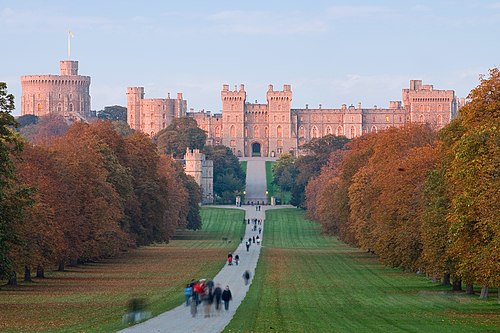 Windsor CastleRestored · prime 1820
 Tower of LondonRestored · prime 1285
 Bamburgh CastleRestored · prime 1904
All castles in England → · Strongest castles in England → · Castles of Europe
Play As Your Clan
Hold a real castle against whatever you choose to send at it, take a ship out in her own service years, or stand at the shoulder of someone the record remembers. The chronicler sets the scene; the deeds are yours.
Notable bearers of the Harrison name
- John Harrison (1693–1776), horologist, inventor of the marine chronometer
- George Harrison (1943–2001), musician